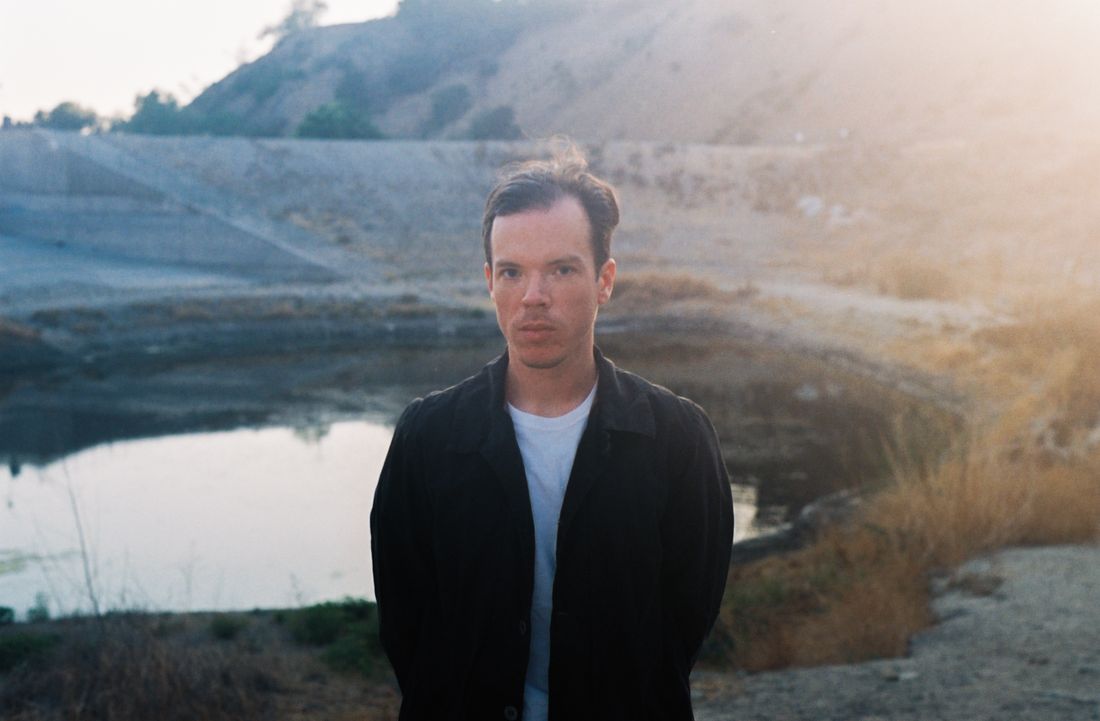
Published
Name: Tim Carr
Occupation: Songwriter, vocalist, multi-instrumentalist
Nationality: American
Current release: Tim Carr's new album Pleasure Drives is out now.
Topic that I am passionate about but rarely get to talk about: I really love playing No Limit Texas Hold’em poker. It’s a fascinating game with many parallels to real life. There’s something therapeutic about sitting at a card table with complete strangers, observing and trying to intuit their actions. The psychological depth of the game draws me in—it feels like good practice for the real world, an exercise in sharpening intuition or something. I used to play it a lot in high school with my friends, so it’s a bit nostalgic as well.
If you enjoyed this Tim Carr interview and would like to stay up to date with his music, visit his official homepage. He is also on Instagram, Facebook, and bandcamp.
Tim also plays drums for Perfume Genius and Hand Habits. For a deeper dive, read our Hand Habits interview.
Where does the impulse to create something come from for you? What role do often-quoted sources of inspiration like dreams, other forms of art, personal relationships, politics etc play?
When I experience something that breaks the vortex, or when my expectations are rattled, I feel the urge to create.
Wonder is where the impulse comes from. Films, books, art, interactions and real -life experiences can trigger it. It’s mysterious, like the feeling of love and the fragility of life. These are moments that feel raw, unexpected, and call out for understanding.
For me, creating is a way of trying to answer that call and of going deeper into that wondrous feeling.
For you to get started, do there need to be concrete ideas – or what some have called a 'visualisation' of the finished work? What does the balance between planning and chance look like for you?
To get started, there usually needs to be some sort of force or exhilaration that moves me into action. This isn’t really controllable, but watching a film, reading something that resonates, or experiencing a strange occurrence will help bring me there.
Once I start, and have a handful of song ideas or demos ready, things become clearer, and I can start to visualize a “world”—what will eventually become an album.
Is there a preparation phase for your process? Do you require your tools to be laid out in a particular way, for example, do you need to do 'research' or create 'early versions'?
I’m not very methodical.
I typically improvise or doodle on an instrument, or make a little beat on my computer. It’s the most accessible form of productivity because all it requires is sitting down and playing around. Songs often emerge out of this practice.
Once early versions take shape, tools, rules and research often follow to solidify their meaning within a collection.
Do you have certain rituals to get you into the right mindset for creating? What role do certain foods or stimulants like coffee, lighting, scents, exercise or reading poetry play?
I make espresso when I wake up, sip it in bed and think about what I need to do for the day. Whether I’m on a roll or not, another espresso in the afternoon can either sustain momentum, or give me an extra boost to see a melody or lyric through.
You mention lighting—that’s also very helpful in setting the right mood for a workspace. I prefer low, diffused yellow or orange light. Lighting can transport me into a different time, and I like writing from that place.
Privacy and isolation are also part of my ritual for getting into the right mindset. Finding a house, room or nook to myself—somewhere I can go a little mad—is essential. All of the music I’ve written, under my name, up to this point has been written in solitude, and in secrecy, before being released. People knew I was working on an album, they just didn’t have a clue of what it sounded like—even my close friends.
There is a certain energy in this dynamic that I think is wild, like I’m doing something I shouldn’t be doing.
For Pleasure Drives, what did you start with? If there were conceptual considerations, what were they?
"Alone Playing Piano” was the earliest song written in this album.
When I wrote it, I had no idea what my next album would become. It was actually a part of a handful of songs that didn’t make the cut. In a way, it’s a little window into my past self.
I think it ultimately made it on because it has a timeless quality and a certain strength in its sentiment. It just needed a production make over once the album shifted in a more electronic direction.
Tell me a bit about the way the new material developed and gradually took its final form, please.
These songs eventually came together and settled into their final form mainly through the influence of the cover photo taken by Cloudy Thoughts.
It’s a projection-lit film portrait of me, with two neon lights splitting my face down the middle. I wear a vacant, doll-like expression and a boyish haircut. When I first received the photo, I didn’t recognize myself, but it evoked an uncanny world that I wanted to score.
I’d say half the album was written and produced with this photo in mind, and the other half was shaped to match it.
What makes lyrics good in your opinion? What are your own ambitions and challenges in this regard?
Lyrics have always been the most challenging part of the process for me. They mean a lot to me, but the more I strain and overthink them, the more detached and forced they start to feel.
Lately, my method has been to catch lyrics that come along with melodies—often while I’m driving or walking—then expand these one or two-liners into a more complete scene.
I also dabble in stream-of-consciousness writing, seeing what flows out naturally, and then find meaning by putting the words together like a puzzle.
What are areas/themes/topics that you keep returning to in your lyrics?
Love, identity, time, isolation, desire and longing.
Many writers have claimed that as soon as they enter into the process, certain aspects of the narrative are out of their hands. Do you like to keep strict control or is there a sense of following things where they lead you?
If I song wants to lead me somewhere, I will always follow. It might take me completely off track or in the opposite direction I’ve been working toward, but to me, that’s exactly where I need to go in that moment.
There are many descriptions of the creative state. How would you describe it for you personally? Is there an element of spirituality to what you do?
It feels like there is a spiritual element tied to the creative state. Some sort of possession or channeling has to happen at some point in the process for me to follow through. This may not be necessary for everyone, but it has been my relationship with music for as long as I remember.
This “spiritual” or “magical” part of music also occurs when listening to other music. It’s really all I’m after. I’m continually learning how to attune myself to that state and capture it.
Once a piece is finished, how important is it for you to let it lie and evaluate it later on? How much improvement and refinement do you personally allow until you're satisfied with a piece?
I tend to give myself too much time to refine and perfect.
That said, I do think there is immense value in the process of revising and sculpting—it helps me get closer to the bullseye of what I’m trying to express. It’s a tricky balance.
For the next album, I’m curious to give myself a strict window of time to write and finish, and see what unfolds under those limitations.
How do you think the meaning, or effect of an individual piece is enhanced, clarified or possibly contrasted by the EPs, or albums it is part of? Does each piece, for example, need to be consistent with the larger whole?
When I’m deciding the final songs and their sequence, I’m thinking of this— and I love thinking about this. It’s like having all these scenes finished and needing to edit them into a movie.
For this album, Pleasure Drives, the songs were all written at different times—some years apart—so they can be quite contrasting. This contrast within a collection is powerful in a cinematic sense. Listening to the album as a whole, is like going on a ride through shifting landscapes, and these changes in scenery, so to speak, can bring new meaning to a song.
This ties back to the idea of playing with expectation. I’m drawn to things I can’t quite place or predict.
Some notable scene changes include: “Looking At Houses,” which contrasts lyrically with the others through its literalism and descriptive style, with a more conversational vocal delivery.
“Melody From Last Night,” in its placement, really breaks out of the cold, electronic world and feels like a healing fountain. Following the hypnotic-circus-hyperpop track “Candy Sick,” “Goodbye Days” feels warm and grounding.
In terms of what they contribute to a song, what is the balance between the composition and the arrangement (including production, mixing and mastering)?
To me, all of these are part of the song. They’re like paintings. The composition, arrangement, production and mixing all happen more or less simultaneously.
In other words, these songs don’t really exist outside of their recordings—they aren’t like jazz standards or classic folk songs in that sense. They often become vignettes or scenes that live in a larger world: the album.
When I sit down to make a beat, I’ll often spend a ton of time mixing it before I even know what the song is. It’s pretty inside out, and can be a painful waste of time, but it helps me hear the world I’m writing into.
After finishing a piece or album and releasing something into the world, there can be a sense of emptiness. Can you relate to this – and how do you return to the state of creativity after experiencing it?
There’s a whole range of feelings when you release something you’ve worked on for so long and in secrecy.
Emptiness can be one of them, but this time around, I’m surrendering to the current landscape and mostly feel relieved the music is out in the orbit. It’s out of my control! I finally feel free to move on and make the next thing, which is the best feeling.
In a way, I don’t even feel like it is me that released this music, it’s someone else—like the person on the cover photo.