Published
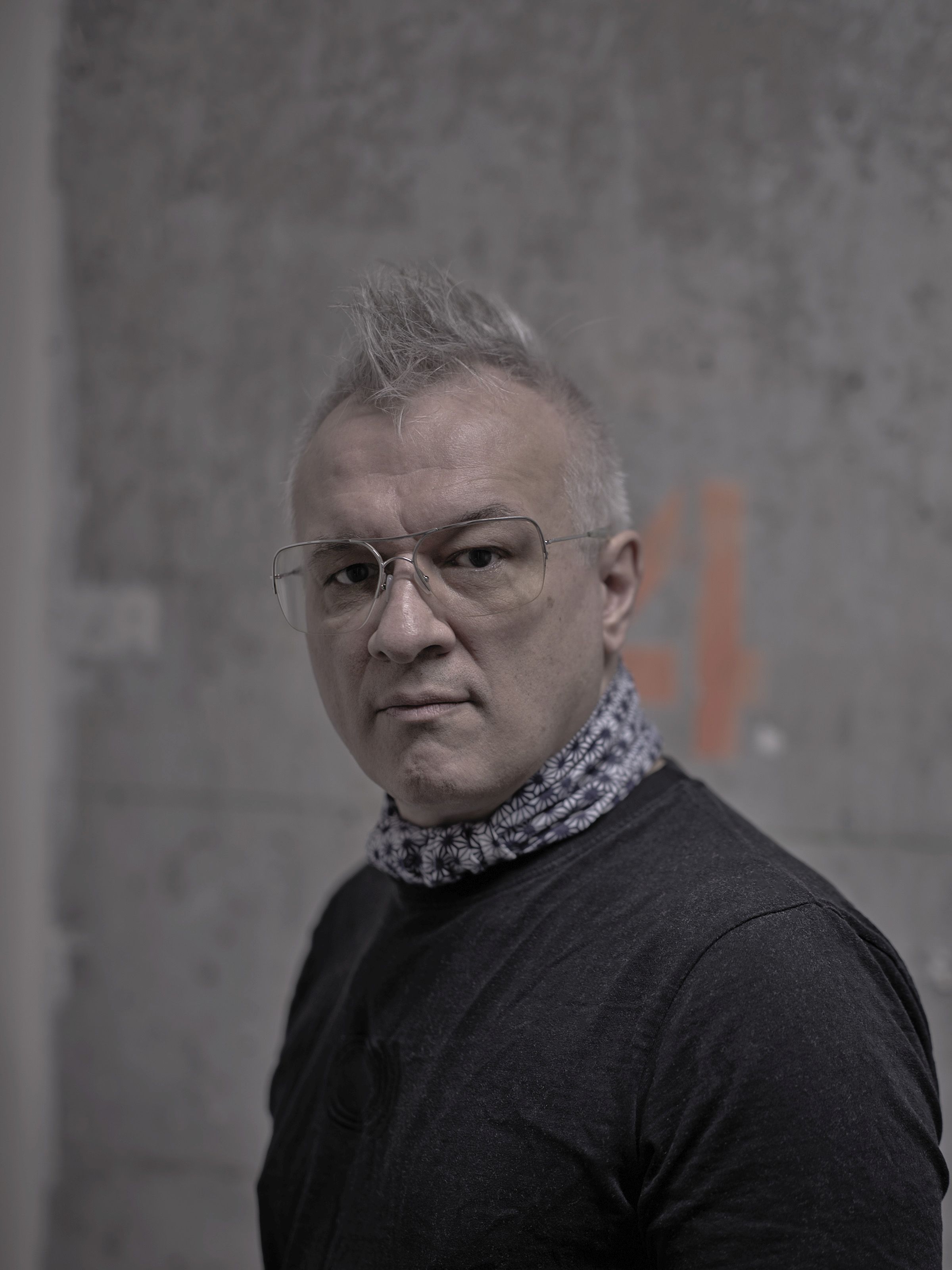
Name: Timothy Archambault
Nationality: American
Occupation: Composer, performer, flute player, architect
Current release: Timothy Archambault's Onimikìg is out September 6th 2024 via Ideologic Organ.
Recommendations: Book: An Indigenous Peoples' History of the United States by Roxanne Dunbar-Ortiz. Art: "et sic infinitum" (and so on to infinity) by Robert Fludd 1617.
If you enjoyed this Timothy Archambault interview and would like to know more about his music, visit him on Instagram.
Where does the impulse to create something come from for you? What role do often-quoted sources of inspiration like dreams, other forms of art, personal relationships, politics etc play?
The impulse to create is multifaceted.
Context, initial cerebral and visceral ideas, and the evolution of my work inspire my next project. The subconscious collection of information is crucial for generating ideas; dreams play a significant role in my process. They have influenced my current album,Onimikìg, and the birch bark carving and inscribing techniques my Memere taught me in the 1970s.
Much of my work involves honoring my ancestors and using music as a form of acoustical divination during performances.
For you to get started, do there need to be concrete ideas – or what some have called a 'visualisation' of the finished work? What does the balance between planning and chance look like for you?
Some projects begin as fragments, gradually shaped into coherence from chaos. Other times, I have a clear vision that remains compositionally set, perhaps influenced by the production process.
I view each album as a novel, with chapters and paragraphs, maintaining a consistent plot throughout while each song has its own subplot.
I think linearly about song progression, especially for vinyl, but acknowledge that in our digital world, tracks can be experienced independently, creating a non-linear narrative akin to Proust and others.
Is there a preparation phase for your process? Do you require your tools to be laid out in a particular way, for example, do you need to do 'research' or create 'early versions'?
I constantly have multiple projects at various stages of development. While one project is in post-production, another might be in the conceptual phase. Typically, one album inspires the next in unforeseen ways until completion.
My research is broad, reflecting a lifelong evolution of traditional and innovative ideas.
Do you have certain rituals to get you into the right mindset for creating? What role do certain foods or stimulants like coffee, lighting, scents, exercise or reading poetry play?
Silence is crucial for me when developing ideas, whether initial sketches or more focused concepts. Inaction promotes contemplation, sparking ideas that may not be immediately musical but inspire others that will be. Isolation is vital to my creative process, providing space for deep introspection. I love coffee for the focus and stamina it offers during composing.
As an audiophile, deep listening maintains my acoustical focus when evaluating music.
What do you start with? And, to quote a question by the great Bruce Duffie: When you come up with a musical idea, have you created the idea or have you discovered the idea?
My process is always evolving but both creative and discovery. The process is a combination of creating new ideas and discovering underlying truths about the human condition.
Composing is an exploration in a more analytical sense (similar to architectural design), and the act of playing music itself reveals truths about cultural traditions, existence, often leading to new insights and revelations.
Many writers have claimed that as soon as they enter into the process, certain aspects of the narrative are out of their hands. Do you like to keep strict control or is there a sense of following things where they lead you?
I maintain strict control over the form and content of my work, focusing on meticulous details and multiple rounds of revisions. This iterative process helps me refine my music to its raw essentials, free from digital or analog effects. I explore the unique, raw qualities of the instrument, which are essential to my work.
While I embrace spontaneity and discovery, I ensure they blend cohesively with the rest of the music through rigorous refinement.
Often, while writing, new ideas and alternative roads will open themselves up, pulling and pushing the creator in a different direction. Does this happen to you, too, and how do you deal with it? What do you do with these ideas?
I'm open to it if it works with the overall conceptual framework of the piece.
There are many descriptions of the creative state. How would you describe it for you personally? Is there an element of spirituality to what you do?
There is an intentional ambiguity of the sacred in my work. The act of creation evokes awe and recognizes the profound, ineffable qualities of life, even amid absurdity.
For me, creation reflects a yearning for understanding and facilitates transcendence, where absurdity gives way to moments of clarity or connection, however fleeting. This forms a unique spiritual experience that does not rely solely on established beliefs.
Once a piece is finished, how important is it for you to let it lie and evaluate it later on?
Gaining distance provides perspective. Letting a piece rest allows for a more objective evaluation, revealing flaws or omissions that might not be apparent during the initial creation. Generally, I resolve these issues before recording.
This period of inactivity invites a deeper appreciation of what has been created and highlights areas needing refinement. I believe in the natural progression of life and find that the greatest works are achieved without force.
How much improvement and refinement do you personally allow until you're satisfied with a piece?
I am committed to continual improvement, ensuring every note is essential and each musical phrase conveys the intended emotion or thought. Although true satisfaction is elusive, the pursuit of perfection is integral to my creative process.
What does this process look like in practise?
It often begins with dreams or fragmented thoughts. As I've grown older, I find I can compose in my head and then write it out, whereas in my youth, it involved many sketches, redrafts, and reworkings across multiple mediums. Now, I focus on listening intently to the work, whether preconceptually or externally.
The final draft emerges when the music's rhythm, tone, and emotional weight align with its overarching themes. This often requires trying multiple approaches to find the version that resonates most powerfully. Still, there are times when I conceive a piece and stick with it, making minimal revisions.
I also value feedback from trusted peers and my partner for informed evaluations when I encounter a creative lull.
When you're in the studio to record a piece, how important is the actual performance and the moment of performing the song still in an age where so much can be “done and fixed in post?“
In my experience, the first take is always the best. I avoid using effects and minimize cuts and pastes as much as possible. On the Onimikìg album, cuts and pastes are rare and, if present, are used only to adjust silence between tones.
I prefer a methodical approach, with everything written and practiced before entering the studio. 'Mistakes' or unexpected occurrences are left in to reflect the human condition and enhance the listener's experience with music that is not overly predictable.
Even recording a solo song is usually a collaborative process. Tell me about the importance of trust between the participants, personal relationships between musicians and engineers and the freedom to perform and try things – rather than gear, technique or “chops” - for creating a great song.
Trust is essential, and I'm grateful to have worked with experienced engineers. I'm specific about the type, number, and arrangement of microphones before arriving at the studio.
I usually consult with the engineers beforehand about the gear I request. They generally agree but sometimes suggest alternatives to achieve the best frequency range for the instrument. Once recorded, I trust them to record the raw tracks.
Although I handle mixing & mastering, I rely on their professionalism for the raw files. We conduct tests and listen in the booth to ensure the tracks are balanced to the highest standard we all agree upon.
What's your take on the role and importance of production, including mixing and mastering for you personally? In terms of what they contribute to a song, what is the balance between the composition and the arrangement (performance)?
I love mixing and mastering, ensuring each album aligns with its conceptual framework. My previous albums—The Ghost Dance, Chisake, and Canadian Algonquin Flute Songs Vol.1—each feature distinct mixes.
Mixing is one of my favorite production aspects, focusing on intimacy and the accurate representation of the flute.
After finishing a piece or album and releasing something into the world, there can be a sense of emptiness. Can you relate to this – and how do you return to the state of creativity after experiencing it?
This stage of the creative process is one of my favorites-a liminal space where time feels suspended, filled with the tension of potential.
This absence is where deep thoughts and emotions reside, unexpressed yet potent for future works. It's a cyclical ritual that can enhance existential contemplation.
Music is a language, but like any language, it can lead to misunderstandings. In which way has your own work – or perhaps the work of artists you like or admire - been misunderstood? How do you deal with this?
Music, as a language, invites diverse interpretations and occasional misunderstandings. My work is sometimes perceived differently than intended, with listeners deriving unexpected meanings or emotions. Complex structures or unconventional harmonies can lead to varied reactions, but I embrace these differences as they enrich the work and foster dialogue.
Each listener's perspective adds unique depth and allows the music to evolve, resonating in individual ways with different audiences.
Creativity can reach many different corners of our lives. Do you personally feel as though writing a piece of music is inherently different from something like making a great cup of coffee? What do you express through music that you couldn't or wouldn't in more 'mundane' tasks?
Writing music explores complex emotions and abstract ideas, connecting with the human experience. It uniquely conveys emotions and themes, allowing me to express feelings that other mediums cannot.