

Name: Tobias Christl
Nationality: German
Occupation: Singer, songwriter
Current release: Tobias Christl's new album Wildern II is out via unit. It is the spiritual successor to Wildern, released in 2014 on ACT. Alongside himself on vocals and keys, it features Peter Meyer (guitar), Dan Peter Sundland (bass), and Max Santner (drums).
Recommendations for Berlin, Germany: Visitors to my city should definitely explore some of the small, special music venues off the mainstream path. I especially recommend the Silent Jazz Bar, founded by two friends about a year ago: an original concept with daily high-quality live performances, free entry, excellent drinks, and a high-end hi-fi system for vinyl. I organize the series A Singer and Song there, which presents intimate monthly concerts with outstanding Berlin singers, as well as the vinyl listening evenings Golden Hearing.
Other great spots include Donau 115, Peppy Guggenheim, or Sowieso in Neukölln—small stages with fantastic live atmosphere.
Things I am passionate about but rarely get to talk about: I have a deep passion for improvisation—not just in music but as a mindset.
I also care greatly about social justice and fair compensation for musicians. Progress, expanding boundaries, exploring new paths—all of that belongs to music for me. And of course, singing: it connects people, fosters understanding and openness, and is one of the most powerful forms of communication.
If you enjoyed this Tobias Christl interview and would like to stay up to date with his music, visit his official homepage. He is also on Instagram, and Facebook.
When did you first become interested in musical interpretation?
That was quite a while ago.
I was already fascinated by interpretations of classical music by pop artists at an early age. Even during my school years, with my school band, I had my first experiences with interpretation.
We made initial arrangements here and there, (inevitably) changed the instrumentation, and tried to make the pieces our own.
Which artists, approaches, albums, or performances first captured your imagination regarding the art of interpretation?
For example, Bob Dylan’s constantly changing versions of his own songs.
Comparing the different interpretations of a jazz standard, examining how each one approaches it, and identifying where the emphasis lies (e.g., reharmonization, rhythm/groove, mood, structure, etc.).
Are there examples of interpretations that completely surprised you yet were fully convincing?
Latest: Gustav Mahler’s 9th Symphony performed by the youth orchestra at the Konzerthaus Berlin—a wonderful interpretation.
In pop, Devo’s version of the Rolling Stones classic “Satisfaction.”
In general, I also see interpretation in the specific sound of a band, in how an artist shapes their own sound or relates to the music of others. That certainly plays a role as well.
What do you personally enjoy about the act of interpretation? Have you noticed this feeling change over time?
I enjoy deconstructing and rebuilding, discovering entirely new sonic worlds. Creating new music that is rich in edges, contrasts, breaks, and unexpected turns. Combining this with free jazz. Uncovering the soul of a song and casting it in a new light, allowing the music to evolve. The feeling is constantly changing.
In theory, interpretations could eventually turn into entirely new original pieces. Whenever an interpretation takes on its own form, that possibility exists. So far, I haven’t taken it that far yet.
How much creativity is involved in the act of interpretation? How strongly does your personality influence the process?
I find the process extremely exciting and creative.
It’s crucial to first choose a parameter and explore how far you can take it—whether by entering an interpretation solely through tempo, or by expanding harmony or rhythm and discovering new expressive possibilities. A special opportunity arises when melodic tones form a rhythmic figure, or vice versa: when the rhythm expands the melody.
My own personality plays a central role, as my musical influences come from the sum of my listening experiences. Attitudes toward content, personal preferences, and even political values also flow into an interpretation and become part of its expression.
Could you describe your approach to interpretation with a piece, live performance, or album that is particularly close to your heart?
I have always loved “Take On Me” by a-ha because it played a major role during my youth.
On my first Wildern album, we reinterpreted the song by composing an ostinato pattern. This arose by separating the melody from its original rhythm and reorganizing it as continuous eighth-note chains.
Equally fascinating is our version of “Anywhere I Lay My Head” by Tom Waits. The original has no rhythmic instrument.
In our version, a 17/16 meter takes center stage. It was important for me to carry the core idea of the piece—freedom—forward rhythmically.
What was your own learning curve and creative development in terms of interpretation? What challenges and breakthroughs did you encounter?
I still work on “Anywhere I Lay My Head” from time to time, exploring possibilities for improvisation and phrasing.
Often, loops, patterns, or individual fragments of the original version form the core of an interpretation. Singing over these requires a lot of practice and the willingness to transform something that initially feels uneven into a flowing musical experience.
In many cases, the score is the first and most important resource for interpretation. Can you explain how “reading” a score works for you?
Since I work in jazz/pop, I translate “score” into a lead sheet.
The underlying harmony is very important to me—often even the key, as it carries a specific color. The rhythmic flow and structure of a song are equally important.
Formal structures frequently lead to surprises while listening.
One of the central concepts often mentioned in interpretation is the “composer’s intentions.” What is your perspective?
On Wildern, the idea of the “composer’s intentions” creates an exciting tension.
I take musical ideas from others and transform them; the original intentions lose significance because new things emerge in the act of appropriation.
For me, the composer’s intention is more of a trace: guidance, but not a roadmap. The essential happens where one dares to deviate from the path.
Do you enjoy extreme interpretations? Do you set a limit, and if so, when is it crossed?
I am fascinated by extreme interpretations, especially when they don’t destroy the piece but make it newly experienced. Stretching musical grammar without breaking it entirely.
I think of Glenn Gould’s interpretations of J.S. Bach or bands like Dirty Projectors, who deliberately dismantle structures to rebuild them like a classical composer.
Currently, their album Song of the Earth, inspired by Gustav Mahler’s Das Lied von der Erde, occupies my attention.
On Wildern, I am intrigued by exactly this boundary: how far can a musical heritage be stretched before it collapses? I draw the line where the emotional truth is lost.
If the experiment becomes merely self-serving, it loses its meaning for me.
When you have the score in front of you, how do you approach it? Literal reading, correcting possible errors, considering historical context?
A score/lead sheet is for me not a law but an offer. I take it seriously, but not literally. As a co-creator, I am less interested in the “correct” note than in the why.
On Wildern, I consciously go beyond a template to find a personal and legitimate reason for myself.
Regarding live performance: What role do audience and space play?
Audience and space are almost co-players for me.
Some nights are very different: sometimes the audience is utterly silent, sometimes they groove along. This resonance is honest and reaches me directly. It inspires me and allows me to sink even deeper into the music.
Every performance becomes a dialogue between band and audience. On Wildern, the interpretation often emerges in the moment, carried by this immediate energy.
Some works seem to invite more artists to interpret them than others. Why?
Such works have a particular mix of clarity and openness: a strong core idea that is tangible, yet enough space to stretch, twist, or deconstruct it.
I often deliberately seek fracture, deconstruction, the uncomfortable—all that makes an interpretation unpredictable. The tension between intention and freedom makes these works magnetic.
Artists occasionally return to works during their career. Which was that for you?
In classical music: Bach, Mozart, Beethoven, but also Schumann and Schubert with their art songs. In pop, I am particularly fascinated by how Talk Talk opened up spaces: they took their time, excluded the mainstream, and focused entirely on the work.
I admire Glenn Gould, Nina Simone, Miles Davis, and Mark Hollis. Idealistic artists devoted uncompromisingly to their art.
Are there interpretations that feel definitive to you?
Yes. Some interpretations feel complete to me. The versions of “Take On Me” or “Careless Whisper,” for example: they are clearly defined in their edges and corners.
Further expansion seems hard to imagine; they have, in a sense, reinvented themselves. Other works, however, continue to grow with every performance.

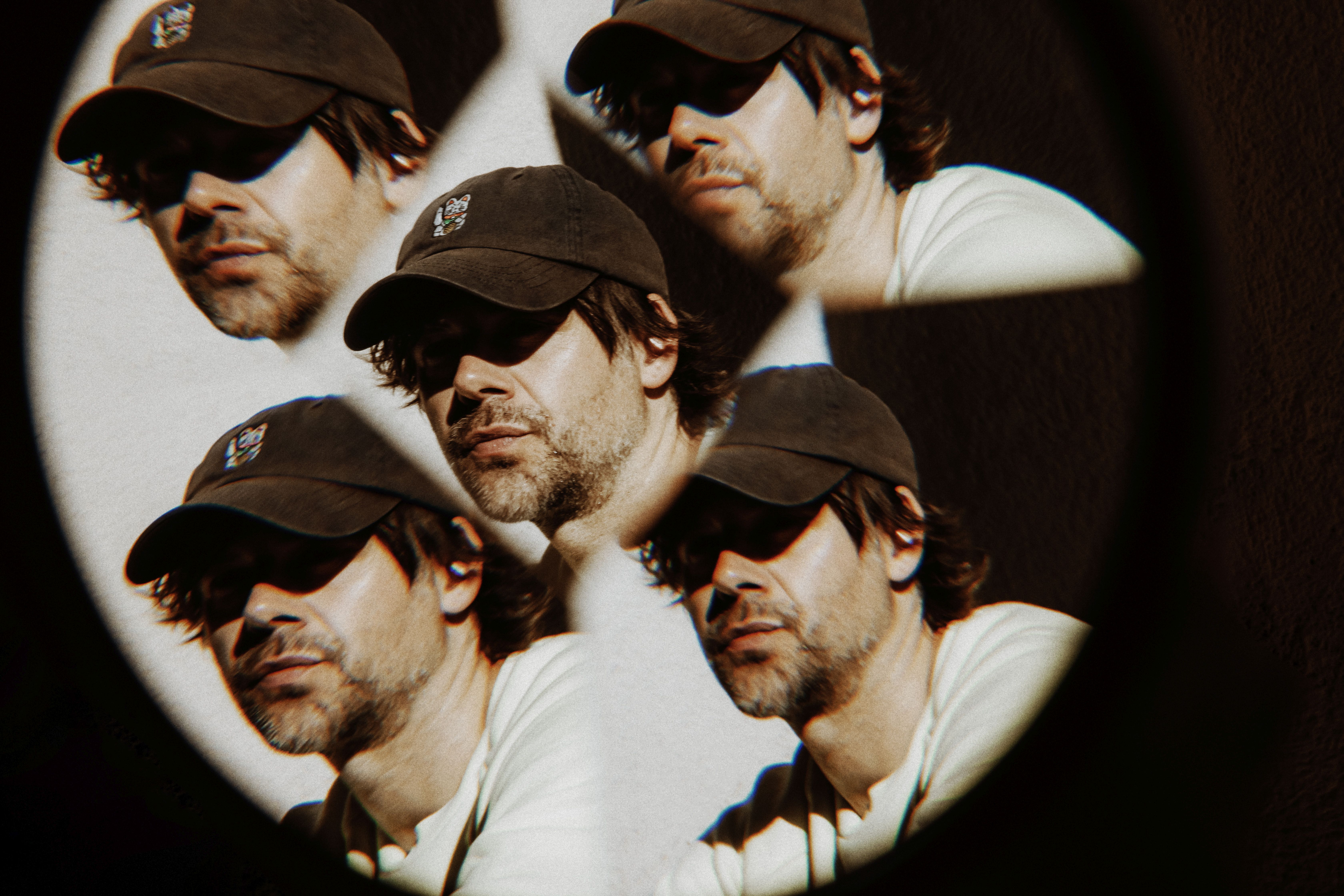 Tobias Christl Interview Image by Dovile Sermokas
“The idea of the “composer’s intentions” creates an exciting tension.”
Video
