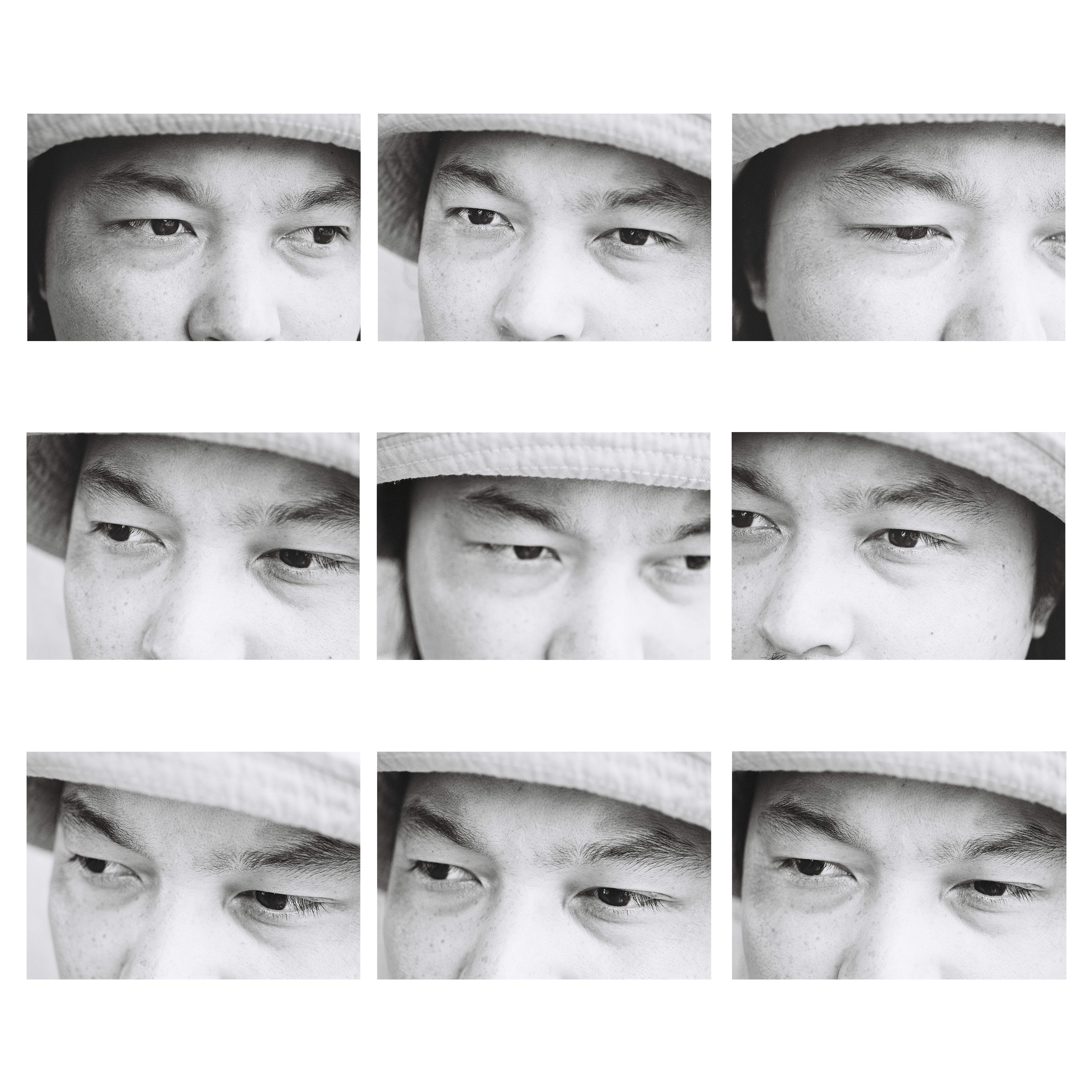
Published
Name: Tokio Ono
Nationality: Japanese
Occupation: Producer, composer, sound artist
Current Release: Tokio Ono's new album Peel is out via Accidental Meetings.
Recommendations on the topic of sound: Regarding the relationship between sound and the natural environment, I really enjoy Bernie Krause’s work. He presents these connections in such an engaging way, and his projects go beyond environmental expression to open up new possibilities for sound. I often find his approach very inspiring.
If you enjoyed this Tokio Ono interview and would like to know more about his music, visit him on Instagram, and bandcamp.
When I listen to music, I see shapes, objects and colours. What happens in your body when you're listening? Do you listen with your eyes open or closed?
When I listen to music, it’s not just something I hear—it feels like my whole body becomes involved. The bass resonates in my chest, almost like an extra heartbeat, while the higher tones move like birds flying overhead, tracing fleeting lines across the air.
Most of the time I keep my eyes open, because I enjoy how sound reshapes the space around me—how a room suddenly feels bigger, or closer, depending on the music.
But when I close my eyes, it turns into a different kind of experience. It often feels like there’s a band performing live inside my head. I can almost see them playing, each instrument taking its place. At the same time, I get this sense of massive speakers surrounding me—front, back, left, right, above, and below—filling the space in three dimensions. I love listening that way, because it becomes more than just sound; it turns into a kind of architecture inside my mind.
At the same time, I also love the raw power of monaural sound. Instead of spreading outward, it strikes like a current running straight through my spine—an electric charge that makes the whole body vibrate from the inside.
In the end, there are countless ways to experience music—it really changes depending on the situation and how you choose to listen.
How do listening with headphones and listening through a stereo system change your experience of sound and music?
I use speakers mainly to check how a track functions within the limitations of a room, or simply when I want to relax. The interesting thing is that external noise can sometimes enhance the experience, but at other times it gets in the way.
Headphones, on the other hand, are great because they let me carry music so easily while also shutting out the environment around me. They give me the freedom to choose music that fits the visual setting I’m in, which I think is a really beautiful quality. But at the same time, they also mean missing out on those chance encounters with unexpected sounds in the surrounding environment.
My favorite way to listen, though, is in the car, fully immersing myself in the music. The world outside is constantly shifting, yet the sound feels vacuum-packed inside the space, creating these cinematic moments. In the end, I think that’s the perfect situation for listening to the tracks I love most.
Tell me about some of the albums or artists that you love specifically for their sound, please.
It’s hard to pick just a few because I’m always diving into different genres, but for my new release Peel, I was really deep into dub, drawing on sounds from Jamaica, the UK, and New York across the years.
At the same time, I’ve been inspired by more exotic influences—Martin Denny and the music he made in Hawaii, as well as Indonesian and Okinawan music. These two traditions have a lot in common, especially in the scales they use, which makes them feel very approachable.
They have this sun-drenched quality, almost like you could get sunburned just by listening, and I feel a unique attitude in them that connects closely to reggae.
Do you experience strong emotional responses towards certain sounds? If so, what kind of sounds are these and do you have an explanation about the reasons for these responses?
I often find myself drawn to sounds that feel familiar enough to resonate with me, yet carry an unexpected twist.
It’s a very personal and somewhat obscure fascination—this space where familiarity and wonder meet can be completely captivating.
There can be sounds which feel highly irritating to us and then there are others we could gladly listen to for hours. Do you have examples for either one or both of these?
I tend to dislike sounds that are all about wonder just for the sake of surprise—maybe I’m way too sensitive!
On the other hand, I love the sound of water in all its forms—droplets, rain, or even water drumming. Even a single drop can contain so many layers of sound within it.
Are there everyday places, spaces, or devices which intrigue you by the way they sound? Which are these?
The sound of high heels in a train station, rain falling, birds singing, or a cat purring—there are so many wonderful sounds all around us in everyday life.
Have you ever been in spaces with extreme sonic characteristics, such as anechoic chambers or caves? What was the experience like?
I once visited a cave on Enoshima, a small island not far from Yokohama where I grew up.
It’s said to be a mystical cave that somehow connects all the way to Mount Fuji, and legend has it that a dragon with five heads guards the island. Definitely a very spiritual and unusual place.
What are among your favourite spaces to record and play your music?
The best spaces are always those where you can play acoustic sounds freely.
Here in Tokyo, where I live, people’s daily lives are so close by that it’s often hard to fully bring out the potential of an instrument.
Do music and sound feel “material” to you? Does working with sound feel like you're sculpting or shaping something?
When I’m listening, as I mentioned earlier, I often feel sound as a physical mass that hits the body and pierces right through the spine.
When I’m making music, it’s very abstract, more like playing with blocks in zero gravity—I can add, remove, float, or line them up in different ways. As I shape them, I’m aware of both the overall form and the balance of each piece up close, almost like telling a story through how they’re arranged.
How important is sound for our overall well-being and how far do you feel the "acoustic health" of a society or environment is reflective of its overall health?
In Japan, political campaign vehicles often drive through neighborhoods and train stations, giving speeches at high volume using poor-quality speakers that sometimes cause howling. That constant noise can make the environment stressful and lower people’s interest in politics. It really shows how much the sounds around us can shape society.
By being more mindful of the acoustic environment and reducing unnecessary noise, we might even catch the attention of people who usually stay indifferent, encouraging more engagement and supporting both social and individual well-being. Ironically, if the acoustic environment were improved, people would then really expect high-quality speeches!
At the same time, simply listening to music I love, relaxing, or creating is such a peaceful experience. Moments like these remind me of the value of slower, more attentive environments in our daily lives.
As the Thai legend JUU4E says: “Slow no enemy.”
Sound, song, and rhythm are all around us, from animal noises to the waves of the ocean. What, if any, are some of the most moving experiences you've had with these non-human-made sounds?
The purring of a cat, birds, water, and even tinnitus that responds to nature—all of these can be incredibly moving. There’s something truly psychedelic about natural sounds—they can feel both grounding and otherworldly at the same time.
In Japan, it’s long been said that tinnitus is a sign of a ghost drawing near, a reminder that such sounds can open a doorway to the spiritual world.
Many animals communicate through sound. Based either on experience or intuition, do you feel as though interspecies communication is possible and important? Is there a creative element to it, would you say?
I believe that sound waves carry all kinds of information for every living being, and I feel that we’re constantly sharing and exchanging that information. There’s definitely a creative element to it as well—sometimes the way sounds interact, respond, or overlap can feel almost like an improvised conversation or a collaborative composition across species.
Yet, the destructive sounds humans have created can sever this communication with nature, shatter the flow of information carried by sound, and even alter entire ecosystems. In this way, the noise of human society is gradually eroding our dialogue with the natural world—and with it, the delicate social worlds of other living beings, which is deeply sorrowful.
Perhaps we should pause and listen to the subtle whispers of the world around us, mindful of the inspirations slipping away from the fragile conversation between life and nature.
Tinnitus and developing hyperacusis are very real risks for anyone working with sound. Do you take precautions in this regard and if you're suffering from these or similar issues—how do you cope with them?
When I’m working on music, I often get so into it that I lose track of time and end up working through the night. On days like that, I usually notice tinnitus and feel the limits of my ears.
Honestly, for now, the only real “precaution” I take is just going to sleep afterwards!
We can surround ourselves with sound every second of the day. The great pianist Glenn Gould even considered this the ultimate delight. How do you see that yourself and what importance does silence hold?
Sound connects us to the world around us. Words, the hum of daily life, or someone’s laughter—they remind us that we are not alone.
Silence, on the other hand, just shows up and turns our attention inward. In that quiet, we can make sense of our thoughts and feelings, and face who we really are.
Between sound and silence, the shape of our lives starts to appear.
Seth S. Horowitz called hearing the “universal sense” and emphasised that it was more precise and faster than any of our other senses, including vision. How would our world be different if we paid less attention to looks and listened more instead?
I think it really comes down to an individual’s ability to discern and accurately interpret the information that sound carries.
Sound can be both elusive and vivid at the same time—shifting between something subtle and mysterious, and something strikingly clear.