Published
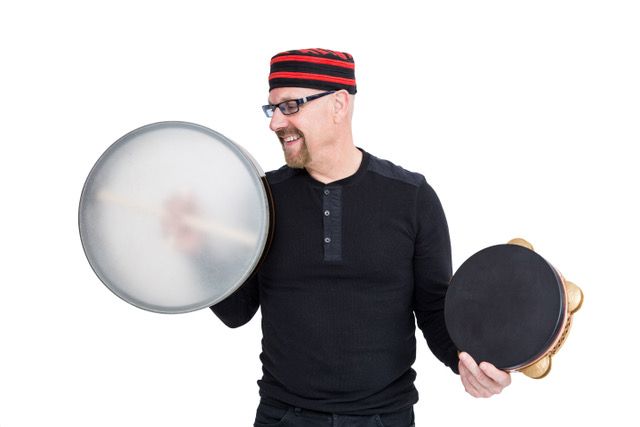
Name: Thomas Teasley
Occupation: Drummer, composer, cultural ambassador
Nationality: American
Recent release: Tom Teasley has two new releases out: Lunch Break, a mesmerising duo with trumpet player Dave Ballou. And a heartfelt tribute to the late vocalist Charles Williams on Wisdom.
Pure drum music recommendations: Any recordings by Zakir Hussain are a must. Max Roach's solo work is a vital contribution to the lexicon of solo percussion. I pay tribute to Max Roach on my solo, "For Max." Another solo from a recent recording is "Monkey Dance." An example of my solo percussion and multi-media art can be experienced in "Nine Muses."
Global Recommendation: Definitely check out the Mid-Atlantic Jazz Festival!
If you enjoyed this Thomas Teasley interview and would like to find out more about his music, visit his official homepage. He is also on Instagram, facebook, and bandcamp.
It seems that most aspiring artists are drawn to drums and percussion for one of two reasons: creating sound/noise and creating rhythm. What captivated you?
The energy of sound inspired me. When I tapped a snare drum in elementary school while walking past it, it was as though electricity poured through me.
Experiencing live music as a young person captivated me and continues to do so. I feel sorry for some young people today who have their faces buried in an iPhone all day at the expense of experiencing music, vitality, and life.
When I listen to music, I see shapes, objects and colours. Others experience emotions. Everything around drums, on the other hand, is based on touch, vibration, and movement. Does this mean that your own perception as a listener is also more connected to touch, vibration, and movement? What happens in your body when you're listening?
Well, when I am playing an instrument, I am, of course, listening. The various percussion instruments I play all have a different tactile connection.
For example, when playing darbuka, djembe, or frame drums, I experience a tactile sensation of my fingers or hand in contact with the instrument. I am constantly reconciling the questions: "How did it sound? How did it feel?"
How the connection between my fingers and ears reconciles is incredible. When I play with an implement, I experience vibrations through the stick or mallet. When I go deep into "the zone," I experience these same vibrations throughout my whole body!
An example is from the Wisdom recording with Charles Williams in our rendition of "African Proverbs."
What was your first drum set like and what are you using today? What, to you personally, are factors in terms of build and design that you appreciate in drums and percussion instruments?
My first drum was a block of wood, so I have come a long way.
I have an extensive collection of instruments from all over the world and have collected them through my travels as a cultural envoy for the US Department of State. I have a "drumset" that is a collection of world percussions such as timbales, djembe, darbuka, and various frame drums, gongs, and cymbals.
I have recently returned to my jazz roots by constructing a custom kit created by my collaborators, Black Swamp Percussion, which are various concert toms I have customized into a drum kit. I also perform on various electronics, hand pans, vibraphone, and more.
A fun workout on some of these instruments, coupled with castanets and woodblocks, can be seen here.
Late Rush-drummer Neil Peart said: "The equipment is not an influence. It doesn't affect the way I play. It's an expression of the way I play." What's your take on that?
I might have a minor quibble with Maestro Pearts's comment. The true inspiration for my music is in the ether, combined with the music I hear, the cultures I experience, and my life progression and growth.
However, working in tandem with instrument makers who are "in tune" with my aesthetic and direction is an invaluable part of my continuing development. I am lucky to collaborate with the Black Swamp Percussion, Cooperman Frame Drums, and Gon Bops Percussions as partners in sound creation.
The drums and percussive instruments are an integral part of many cultures, and traditions. Which of these do you draw from in your playing – and why?
It's a big world of drums out there! I have been fortunate to travel and collaborate with masters of many traditions. The Middle East, Africa, and India have had the most significant influence on me.
Of course, the best part of American cultural tradition is combining influences. If one thinks of American jazz as the confluence of African rhythmic sensibility and European harmony, my mission is to expand the gene pool. I frequently take an instrument and apply a drumming technique from a different culture.
“Jongo” is an example of taking a Budhist Temple gong and playing it as a frame drum. I am always looking for ways to create a pan-global approach to my percussive world.
What were some of the main challenges in your development as a drummer/percussionist? Which practices, exercises, or experiences were most helpful in reaching your goals?
Interesting question! One of my challenges is keeping so many different instruments/rhythms and techniques going simultaneously. I attempt to overcome this by finding the commonalities between instruments.
The traditional drumkit was my first inspiration for percussion. I then attended Peabody Conservatory in Baltimore and studied orchestral percussion. While gigging in New Orleans, I began to hear a vast world of rhythms filtered through the American Experience. That led me to study with master drummers from Africa, the Middle East, and India.
Since I was trained in Western classical music and had studied with Joe Morello, I had the resources to catalog how a hand moves on a drum and some common rhythm traits. That is an ongoing process that I am continuing to develop.
How would you describe the physical sensation of playing the drums? [Where do you feel the resonances/pulse/groove, what are emotional sensations, is there a sense of release or tension, etc …]
The physical and emotive connection between the player and the instrument diminishes when the music, groove, and sound happen.
The sense of release of tension is imperative to creating a flow of rhythm, groove, and continuous joy through sound. However, this relaxation response is easier said than done.
An example of my fingers connecting with my spirit is a darbuka solo in a seven-beat cycle, "Fire Dance."
What is the relationship between harmony, rhythm and melody? How do non-percussion instruments contribute to the overall rhythmic texture of a piece?
All music is part of a harmonious collective. However, all melodies have a rhythm. Harmonies move in a time frame, either measured or not. Since I play a variety of pitched percussion, I am very aware of how these elements are combined.
An example is my performance on African Balafon and Middle Eastern Doumbek on my composition
"Duo for Uno."
Another example of my performing both melodic and percussive functions at once from recording "Lunch Break" is "Gratitude."
Do you feel that honing your compositional / songwriting skills has an effect on your drumming skills?
I am still studying and honing my compositional abilities. Much of my work is improvisational, but the improvisation is based on a language I have been developing for decades.
An example of spontaneous composition with the great trumpet player Dave Ballou is "Rush Hour." You can view a live performance here.
I've long been intrigued by bands or ensembles where the drummer is the leader and/or main composer. In as far as it is possible to generalize, what do you think changes in terms of the music or performance in these situations?
That is very interesting because I often work as a solo percussionist, so I am frequently in the band! I am drawn to duo performances because of the close expressive interplay between the two performers. The close relationship with the other musician becomes almost a spiritual connection.
Two examples are from my recent recordings. "Prayer for the Ancestors" captures that connection with Dave perfectly.
I also love to work with spoken word. My partner, Charles Williams, collaborated for decades before his passing. A beautiful rendition of Langston Hughes's "I Dream a World.”
How are you making use of the timbral and textural potentials/possibilities of your drums and percussion instruments when making music?
Because I have decades of experience in sound design in the theater, I am interested in sound as an expression separate from the traditional elements of rhythm, melody, and harmony.
On the track "When the Wind Cires," you will hear the use of spring drums and wind to create an ambient sound that enhances the character of expression Dave and I are going for.
How has technology, such as drum machines and sequencers, impacted the way rhythm is created and perceived? Has it been a concrete influence on your own approach?
While I love to draw from a wide range of geography in my work, including Africa, the Middle East, India, and Asia, I am equally interested in a timeline of instruments, from ancient traditions like frame drums to electronic percussion and digital looping.
I created music for the US Department of State in Haiti that draws from the mentioned traditions. You can view a video of that performance here.
Physical strain is a particularly serious issue for many drummers. How does it manifest itself, how do you deal with it and in how far does it affect your creativity?
The drums are a physical instrument, and it is important to keep one's body in good condition through stretching, exercise, and diet.
I have had some injuries in the past. It does affect my creativity when I can not manage the movement I want. Taking breaks during practice and recording sessions has helped me.
Many recording engineers have remarked that the drums can be particularly hard to capture. What makes drums sound great on record and in a live setting?
The first thing is to ensure the drums and percussion one uses are in tune and good condition: no rattles or buzzes.
I use very few mics on my rig with wide stereo separation. This setup allows the drums to speak naturally and the listener to hear what I am playing. I like the stereo to be from the "player's perspective' that is, the sound behind the drums instead of in front of the drums.
My engineer, Jim Robeson, is a master of capturing a great drum sound on all my instruments. A great example of drum sound capture is the tune "Four or Six."
Notice the excellent capture of the drumset, shakers, and bells.
Drums and percussion are remarkably often used for physical therapy / healing. What, from your point of view, makes them particularly suitable tools for this?
Great question! As I continue to celebrate birthdays, my work with music, therapy, and community building is more important than ever.
My previous recording, The Breath, was dedicated to a meditative sound using a lot of the RAV VAST drum.
I am working with psychotherapists to create sound designs for guided meditation for returning soldiers and others in a stressful environment. Expect more from me in that area soon.