Published
Part 1
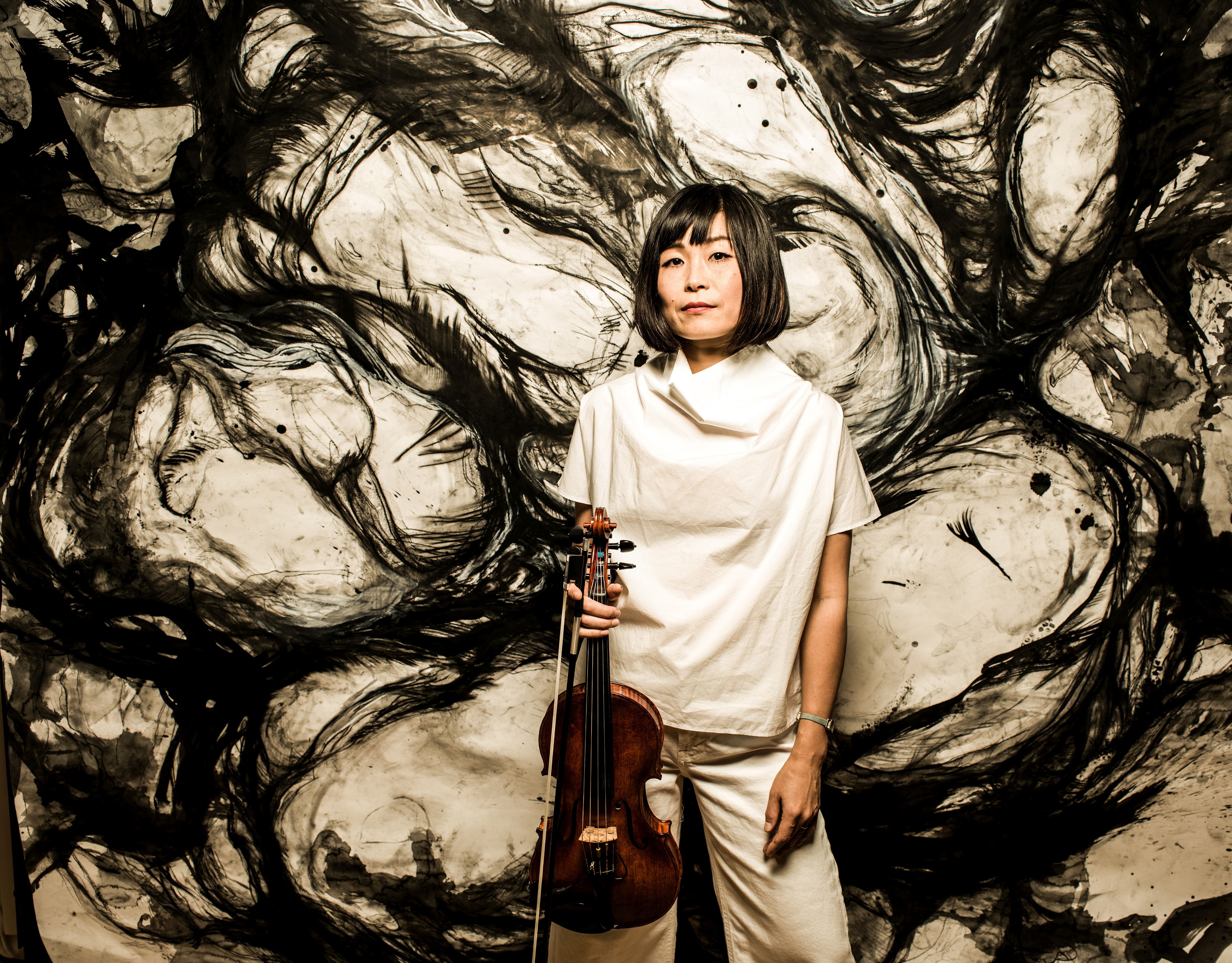
Name: Tomoko Omura
Nationality: Japanese
Occupation: Violinist, composer
Current release: Tomoko Omura's new album Run, Run, Run is out via Outside In.
Recommendation for Shizuoka City, Japan: My hometown is Shizuoka City is situated in the shadow of Mt. Fuji. On clear days, the view of the mountain is breathtaking. The region is renowned for its green tea and wasabi—both among the finest in Japan—and there are natural hot springs scattered throughout the area where you can relax and take in the scenery.
It's a peaceful place that offers a different pace from Tokyo or other major cities, with a deep connection to nature and traditional Japanese culture. If you're looking for a place to slow down and experience natural beauty, I highly recommend it.
Topic I am passionate about but rarely get to talk about: I'm passionate about barefoot shoes—something I don't often get to discuss! I started wearing them about five years ago, and now they're all I wear, even for performances. They make me feel grounded and ready for any movement; I could walk in them forever.
About ten years ago, I was playing violin in a swing band, and for performances I had to wear high heels while standing and playing for up to five hours straight. Over those years, I developed a serious foot problem, and around five years ago, the pain became so severe I thought I'd need surgery. That's when I began researching footwear and came to realize that typical modern shoes just weren't serving me anymore.
I switched to barefoot shoes, and it's been transformative—I'm pain-free, happy, and feel genuinely grounded, both literally and musically.
If you enjoyed this Tomoko Omura interview and would like to stay up to date with her music and upcoming live performances, visit her official homepage. She is also on Instagram, Soundcloud, bandcamp, and Facebook.
Where does the impulse to create something come from for you? What role do often-quoted sources of inspiration like dreams, other forms of art, personal relationships, politics etc play?
My inspiration can spring from almost anything I encounter in daily life. In the past, I've drawn musical material from a train's rhythm and the actual sounds it makes. I've transcribed a bird's song and built a composition around that phrase. I've created a suite based on my favorite Japanese folk tale.
I wrote a series of compositions exploring my experiences of early motherhood during those first two transformative years. I composed a melody set to my baby's heartbeat from an ultrasound. One song incorporates lines from a children's book about Japanese American internment camps.
And I created an entire album around an original fictional narrative depicting a nuclear apocalypse in New York City—a tribute marking the 80th anniversary of the Hiroshima and Nagasaki bombings.
The impulse to create, for me, comes from a deep need to process and transform what moves me—whether that's the poetry I find in everyday sounds, stories that demand to be told, or historical moments that continue to resonate in our present.
For you to get started, do there need to be concrete ideas – or what some have called a 'visualisation' of the finished work? What does the balance between planning and chance look like for you?
I rarely visualize the finished work in concrete terms, but I do establish the emotional landscape early on—what feeling the piece needs to embody. As I compose, I try to inhabit that emotion myself; it becomes my compass for continuing the work. I usually determine the instrumentation for each composition from the outset, which helps shape the sonic possibilities.
My process typically begins with melody, then moves to bass lines, and finally harmony. Much of my work with my jazz band evolves through performance—pieces get edited and rewritten after we've tried them out live a few times.
There's a dialogue between the initial vision and what the music reveals about itself when it meets the real world.
Is there a preparation phase for your process? Do you require your tools to be laid out in a particular way, for example, do you need to do 'research' or create 'early versions'?
It depends on the composition. Some pieces emerge naturally as I write, while others require more conceptual groundwork—I'll map out the framework and core ideas first, then find ways to weave all the elements together.
For the "Run, Run, Run" project specifically, I invested considerable time in research beforehand: studying the history of nuclear weapons, reading scientific literature about their effects, and listening to survivors' voices. I also needed to develop the narrative architecture—creating characters, constructing storylines, and building a musical structure that would support the album's overall arc.
All of this preparatory work happened before I began composing individual songs.
Do you have certain rituals to get you into the right mindset for creating? What role do certain foods or stimulants like coffee, lighting, scents, exercise or reading poetry play?
My morning walk has become a kind of ritual—it happens naturally when I drop my son off at school, but it's also become essential time for mental clarity before diving into composition work. In the afternoons, when I feel my brain needs a break from intensive creative thinking, I do high-intensity workouts.
Maintaining flexibility through yoga is also important to me. I used to practice hot yoga, but now I work through poses at home. This physical practice keeps me grounded and connected to my body, which is especially valuable during long hours with the violin or working on the computer.
For Run, Run, Run, what did you start with? If there were conceptual considerations, what were they?
I started with extensive research about nuclear weapons and their history—reading articles, watching films and documentaries related to the subject. Because I wanted to create an original fictional story about nuclear weapons, I needed to understand what these weapons are capable of, the historical incidents involving them, and survivors' testimonies.
I also had several meetings with Kathleen Sullivan from ICAN (International Campaign to Abolish Nuclear Weapons), who specializes in this field. Her work documenting and amplifying the voices of Hiroshima and Nagasaki survivors contributed to ICAN receiving the Nobel Peace Prize, and she provided invaluable insights for my project.
Initially, I was thinking of creating the story for very young children. Kathleen pointed out that if I wrote for small children, I would have to mask much of the truth because it's too violent. She suggested writing for slightly older children—teenagers—who can handle the full truth that this important subject demands.
So I changed direction and wrote for teens and adults. I'm so glad I took that approach
Tell me a bit about the way the new material developed and gradually took its final form, please.
I recently read a Japanese manga called Barefoot Gen, which tells the story of a boy who survives the Hiroshima bombing in 1945, based on the author's own experience.
It had a profound impact on me—I was in tears reading about Gen's experiences. He was six years old when the bomb dropped, roughly the same age as my son.
2025 marks the 80th anniversary of Hiroshima and Nagasaki, and I'd been hearing about how survivors' voices are diminishing. Meanwhile, the world has been in turmoil—Russia threatening Ukraine with nuclear weapons, the Israel-Palestine conflict continuing to escalate.
Around the same time, I watched Oppenheimer. It's a beautiful, high-budget film that was highly praised, and it tells the story of the nuclear weapons inventor. After watching it in the theater, something didn't settle with me, though I couldn't figure out what at first. When I came home and reflected on it, I realized why: the film didn't include a single moment of the actual disaster. In three hours, it showed no scenes of destruction and no Asian faces.
When I read about the actual disaster, I encountered horrifying images—blackened faces and bodies, piles of dead bodies barely recognizable as human. But the film showed none of this. It was, instead, rather beautiful. I thought that was a problem. Most people don't know what actually happens when a bomb is dropped. It's important that we remember.
I don't want to debate whether the nuclear bombings were necessary—we can't change what already happened. But we can change our future. An idea came to me: I would create an original fictional story about a nuclear bombing happening in New York City to show what would actually happen. I wanted to raise awareness about the danger of these weapons and what some world leaders are still investing in.
I didn't have the full story yet, but I proposed the project to Chamber Music America, an organization that funds and supports musicians. I was fortunate to receive funding, which enabled me to record the album and present two performances of the Run, Run, Run project—a multimedia work combining music, narration, and projected art.
Many writers have claimed that as soon as they enter into the process, certain aspects of the narrative are out of their hands. Do you like to keep strict control or is there a sense of following things where they lead you?
Yes, flexibility is essential to my creative process. I often start with a vision in my head, but I need to remain open to shifts, edits, rewrites, and re-planning as the work develops. It's very much part of the process.
For Run, Run, Run, the most significant shift came early on regarding the intended audience—I initially envisioned a children's picture book, but Kathleen Sullivan's insight led me to redirect the project toward teenagers and adults. That decision had cascading effects on every aspect of the work: the musical language I could use, the narrative complexity, the level of detail in describing the disaster, even the instrumentation and sonic palette.
Once I committed to that direction, other elements fell into place more organically. The story demanded certain musical moments—urgent, driving sections for the escape sequences, more contemplative passages for reflection on loss. I followed where those emotional needs led me, even when it meant departing from my initial structural plans.
Some songs emerged fully formed, while others required extensive reworking as I discovered what the narrative actually needed rather than what I'd originally imagined.