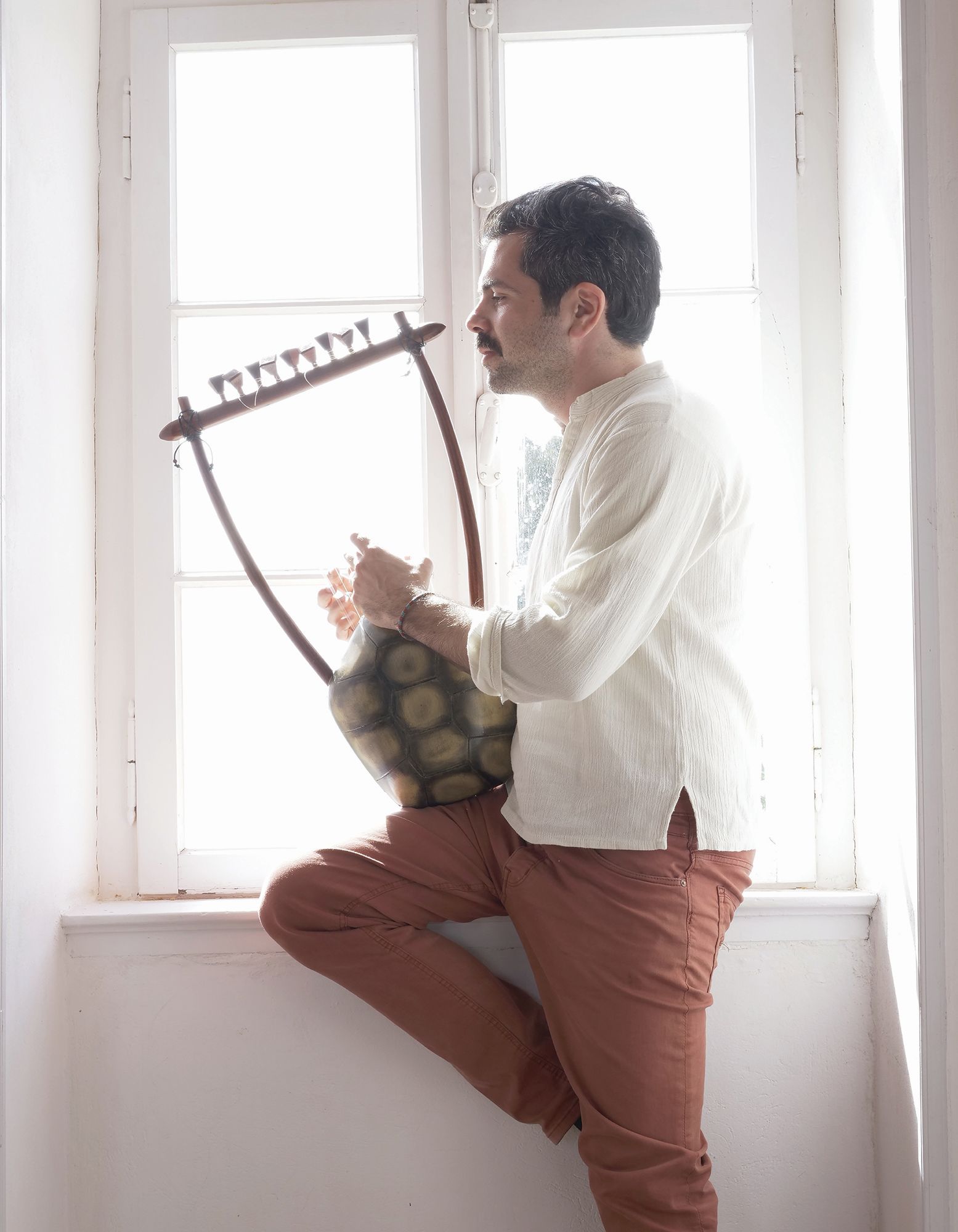
Published
Names: Thanasis Kleopas (ancient lyre, vocals), Theodoros Koumartzis (ancient lyre), Jordan Koumartzis (upright electric bass)
Interviewees: Thanasis Kleopas, Theodoros Koumartzis
Nationality: Greek
Recent release: Thanasis Kleopas, Theodoros Koumartzis and Jordan Koumartzis's album Sacred Harmony Healing Mother Nature) is out September 27th 2024 via Seikilo Ancient World Music.
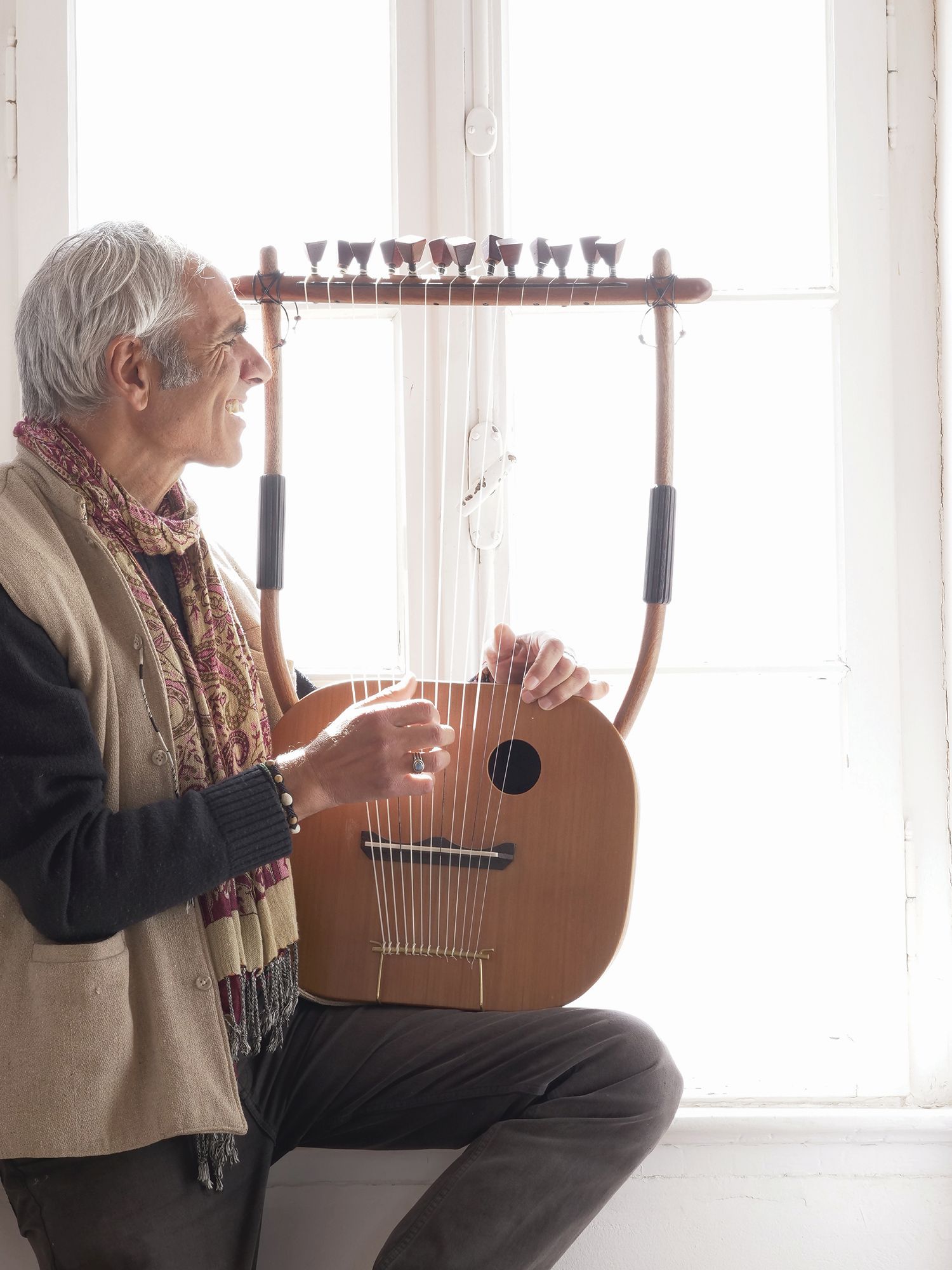
Tool of Creation: The Lyre
Type of Tool: Stringed musical instrument
Country of origin: Europe/Mesopotamia
Became available: c. 2700 BCE
If you enjoyed this interview with Thanasis Kleopas, Theodoros Koumartzis, and Jordan Koumartzis about the Lyre and would like to explore their music in more depth, visit their respective Instagram profiles: Theodoros Koumartzis; Thanasis Kleopas.
The Koumartzis brothers are also part of a family with a rich tradition of building their own lyres. Find out more on the luthieros website.
Some see instruments merely as tools towards creativity, others feel they go hand in hand. What's your take on that?
Thanasis Kleopas: Music is a tool for the expression of creativity. I consider creativity as our need to connect man with the divine and sacred side of the world.
In the light of picking your instrument, how would you describe your views on topics like originality and innovation vs perfection and timelessness in music? Are you interested in a “music of the future” or “continuing a tradition”?
Thanasis Kleopas: As a Greek musician with a rich tradition behind me and as a traveller of the world, I feel that I want to combine these two elements within myself. So my musical creations are based on tradition but have strong flavours of world music.
Theodoros Koumartzis: I believe that tradition is something we need to interact with. By respecting our ancestors and their musical heritage, we can create new music - just like this album is not only for today's listeners but also for the ones that will come in the future.
What was your first encounter with the lyre? What was it about it that drew you in?
Thanasis Kleopas: In my first contact with the lyre I felt the healing power of this instrument as it brings our mind and nervous system to a state of calm.
Theodoros Koumartzis: My first contact with the lyre was almost 12 years ago thank to the research that my family conducted in order to reconstruct this amazing instrument.
My feelings listening to her (the lyre) back in time, but also today, is full of emotions and a feeling of a collective memory that binds us together. This is not just because I was born in this place but mostly because the musical heritage of the lyre really extends back in time and space.
Just like any other instrument, the lyre has a rich history. What are some of the key points from this history for you personally?
Thanasis Kleopas: The first lyre in ancient history was built by Hermes but played by Apollo. So here, since Hermes is the God who brings information to the world from the gods and Apollo is the God of music, we see that music carries information and is therefore a universal language.
Theodoros Koumartzis: There are many key points in Antiquity that connect Mythology with historical facts that put her creation at the hands of god Hermes. The symbolism of the myths crosses the value of the Lyre especially in the 5th century bc, when we find music taught as a science and not only as an art.
Coming back to our time's reality, I was thrilled to watch and listen to the ancient lyre as a part of the soundtrack of movies, video games and in concerts all over the world.
What, to you, are some of the most interesting lyre recordings and -performances by other artists in terms of your personal development?
Thanasis Kleopas: I think the album El cielo en la Tierra by Luis Paniagua has influenced me a lot in my relationship with the lyre.
Theodoros Koumartzis: I definitely would select "Kothpiro" by Ayub Ogada, where we find another lyre coming from Africa, her sound though is totally close to the one coming from Ancient Greece.
I really enjoyed the albums by Lyre n Rhapsody and Aliki Markantonatou.
Finally, artists like Ali Farka Toura and Toumani Diabate and his Kora, are highlights in my personal references and taste of music.
Tell me about the process of learning to play the instrument and your own explorations with it.
Thanasis Kleopas: I started to play the lyre improvisationally, playing melodies that matched the mood of the moment. Thus, together with the musical knowledge I had acquired from my long involvement with the guitar, I was able to express myself through this instrument.
Theodoros Koumartzis: The sound of the ancient lyre is affected a lot by the skin soundboard. I find her sound very unique and I found out that in different recordings sessions and by a relative academic paper I released with AUTH (the University of Aristotle in Thessaloniki) that her sound behaviour is totally different from any contemporary musical instrument including the harp.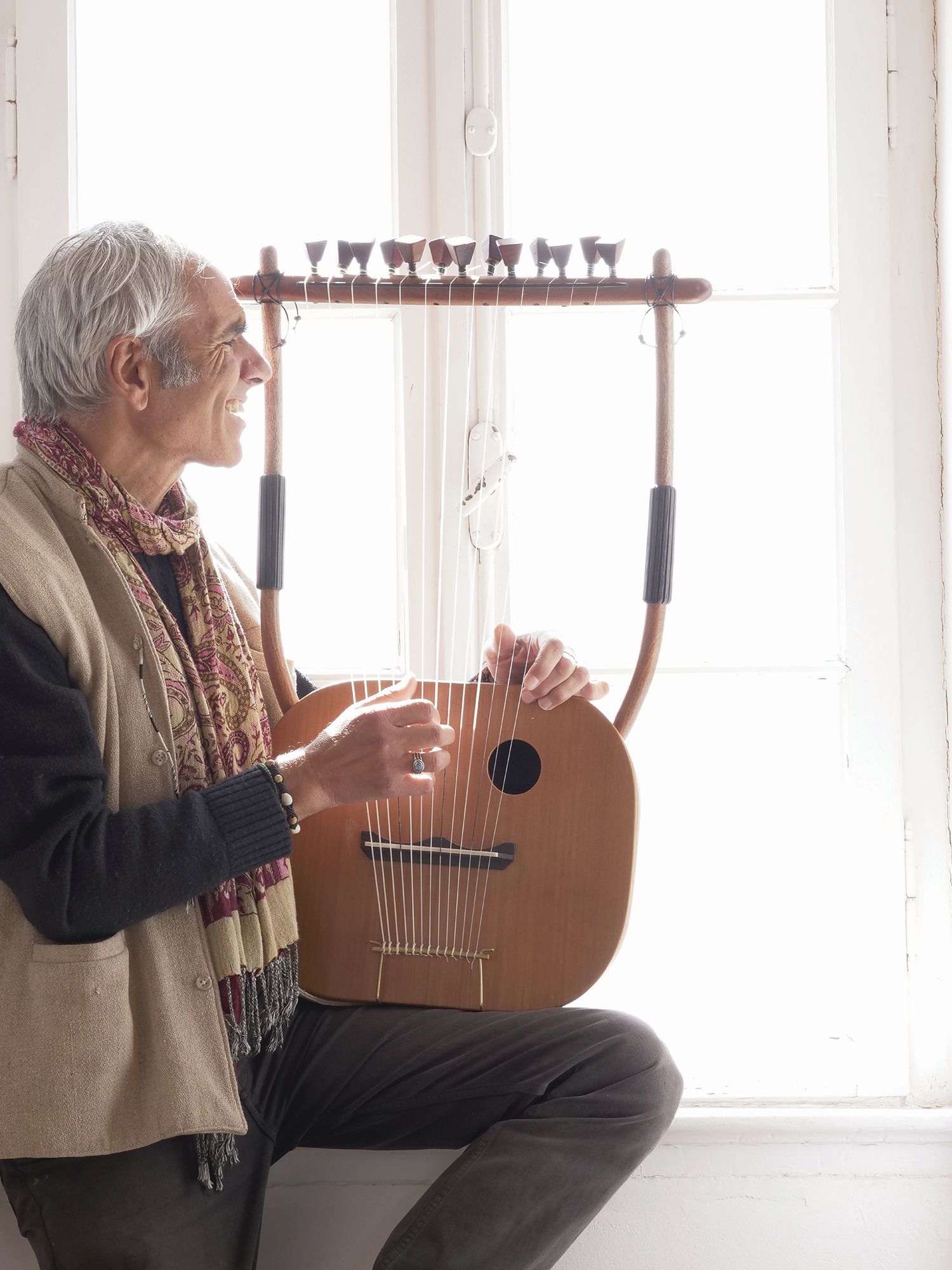
Thanasis Kleopas Lyre Interview Image (c) Seikilo Ancient World Music
What interests you about the lyre in terms of it contributing to your creative ideals? How do you see the relationship between your instrument and the music you make?
Thanasis Kleopas: The lyre is an instrument that leads you to simplicity and this gives the opportunity for the heart to come to the fore. So my music with the help of the lyre has a more heartfelt character.
Theodoros Koumartzis: Totally. New adjustment regarding details like the number of the strings, the material of the soundboad and the strings, the different tunings and the techniques of the harmonics and the plectrum do make the sound spectrum of this instrument really wide.
How would you describe your personal style of playing the lyre?
Thanasis Kleopas: I will describe my personal style of playing the lyre in three words: nostalgia, journey, light.
Theodoros Koumartzis: I come from a string instrument background including the charango, the classic guitar and the baglamas. The lyre was the first instrument that I start to study every day and after a few years of practise I start to develop my own techniques on her. Anyone can actually play a lyre without any music background since she is tuned in a scale and there are no wrong notes.
On the other hand, if you start to use your left hand just like you do with the right, a totally new world unfolds in front of us, making the learning process a beautiful and fruitful challenge.
What does playing your instrument feel like, what do you enjoy about it, what are your own physical limits and strengths?
Thanasis Kleopas and Theodoros Koumartzis: Playing the lyre, we enter a state of meditation as if bridging the visible with the invisible, experiencing inner silence.
Could you describe working with the lyre on the basis of one of your pieces, live performances or albums that's particularly dear to you, please?
Thanasis Kleopas: My favorite song of mine is “Ode to the Sun.”
I remember writing the lyrics before I bought and took up the lyre. One day after holding the lyre in my hands , I accidentally discovered these lyrics and immediately wrote the music … as if the lyrics wanted to be expressed through the lyre and not the guitar which I had been playing since I was a kid.
Theodoros Koumartzis: The whole first Pausis album has different compositions of mine. The “Awake” melody is really special since I composed it during a trip with my brother at the top of Olympus mountain a few years ago.
Since I don't sing and/or write lyrics, I would also choose “Spark,” another melody that I composed a few years ago for its versatility.
How, would you say, does the lyre interact with other instruments from ensembles/groups you're part of?
Thanasis Kleopas: Ideally the lyre goes well with wind instruments and from the strings, the cello, the violin and the Cretan lyre.
Theodoros Koumartzis: I really enjoy her combined with the Armenian Duduk of Sokrates Votskos (a friend and a musician we've been playing together for more than a year), the oud, the violin and frame drums.
Are there other lyre players whose work with their instrument you find inspiring? What do you appreciate about their take on it?
Thanasis Kleopas: I love the spirit of Luis Paniagua and appreciate the mastery of Nikos Xanthoulis.
Theodoros Koumartzis: I really enjoy the technique that Lina Palera has applied to this instrument.
I enjoy the tenderness of Thanasis Kleopas's performances and the beautiful sound of Marios Podaras's Pandura (an ancient ancestor of the lute).