Published
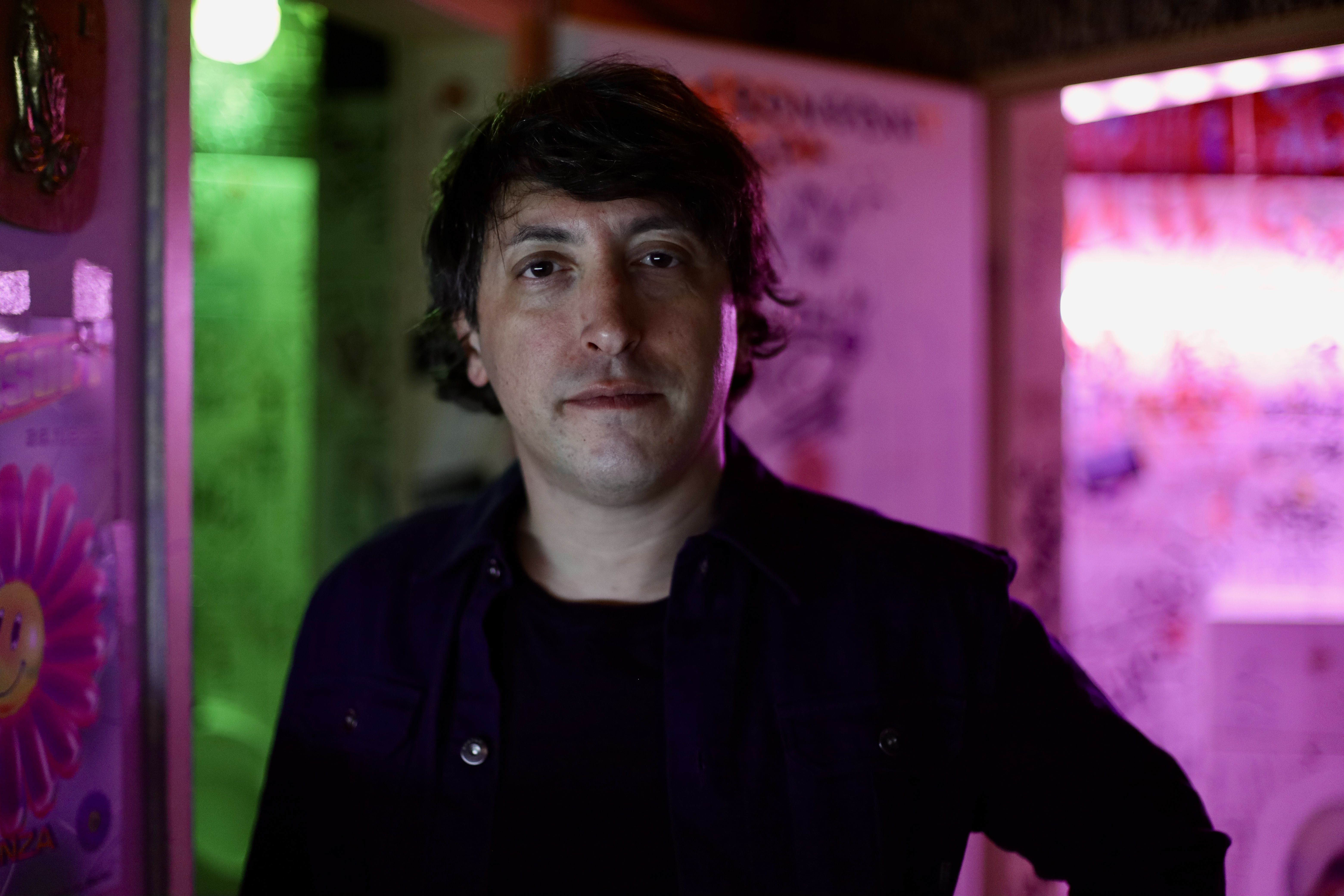
Name: Franz Scala
Nationality: Italian
Occupation: Producer, DJ, label founder at Slow Motion
Recent release: Franz Scala's new album Cafe Futuro is out October 15th 2025 via Slow Motion.
Tool of Creation: Oberheim Matrix 1000
Type of Tool: Analog Synthesizer
Designed by: Tom Oberheim
Country of origin: USA
Years produced: 1988–1994
If you enjoyed this interview with Franz Scala about the Oberheim Matrix 1000 and would like to stay up to date with his music, visit his official homepage. He is also on Facebook, and bandcamp.
What was your first encounter with the Oberheim Matrix 1000? What was it about it that drew you in?
My first encounter with the Matrix-1000 was through my partner Dimitri's studio in side project “Studio Luce.”
I remember scrolling through the presets and how impressed I was with them.
At that time I hadn't had many synths and compared to software, it just had this depth and texture that immediately pulled me in.
I like the fact that is a compact and small instrument but yet very powerful.
Just like any other instrument, the Oberheim Matrix 1000 has a rich history. What are some of the key points from this history for you personally?
For me, the Matrix-1000 represents that late ’80s and early 90s period when analog synths were being condensed into more affordable, accessible formats.
It bridged the gap between the big polys and something you could actually take into a modest studio.
What, to you, are some of the most interesting recordings and performances by other artists featuring the Oberheim Matrix 1000?
I’ve always loved hearing it in darker electronic and wave records, it has that moody, cinematic edge.
Also, early house producers got incredible pads and strings out of it.
What are some of the instrument’s stand-out features from your point of view? How would you describe its sonic potential?
The standout is definitely the modulation. Once you dive in through an editor, you realize how much movement and complexity it can generate. Sonically it covers a wide palette while still sounding unmistakably Oberheim.
I got myself a DIY controller produced from an Argentinian synth wizard.
Prior to using it for the first time, how did you acquaint yourself with the Oberheim Matrix 1000? Will you usually consult a manual before starting to work with a new device – and what was that like in this case?
With the Matrix-1000, I actually didn’t use the manual, I just dove straight into the presets, because there are so many. Later, when I wanted to push it further, I looked into editors.
I’m more of an intuitive learner, so I like to feel my way into a synth.
Tell me about the process of learning to play the instrument and your own explorations with it.
It’s less about “playing” in the traditional way and more about exploring sounds and layering. I have spent time just holding chords and listening to how the voices interacted.
Tell me a bit about the interface of the Oberheim Matrix 1000 – what does playing it feel like, what do you enjoy about it, compared to some of your other instruments?
The front panel is minimal just a small display and a couple of buttons. It forces you to listen instead.
Compared to synths with knobs, the Matrix-1000 makes me focus on performance and layering rather than programming.
What are specific challenges in terms of playing the Oberheim Matrix 1000?
The obvious challenge. You really need a controller or a computer editor if you want to go deep.
But let's not forget that limitation can be inspiring and can help you not to get lost in infinite tweaking.
What interests you about the Oberheim Matrix 1000 in terms of it contributing to your creative ideals? How do you see the relationship between your instrument and the music you make?
I love instruments that feel timeless, and the Matrix-1000 has that quality.
My ideal is to make music that bridges the 80s flavor and the modern dance together, and this synth embodies this in that it’s rooted in the past but still feels fresh today.
For Cafe Futuro, what did you start with? What role did the Oberheim Matrix 1000 play in it?
I normally always start with drums and bass line.
The Matrix came later for pads, leads and setting the atmospheres.
What other pieces of gear or software are currently important in your creative process?
Recently, the tools I most used with the Matrix are Crumar Bit99, E-mu Vintage Keys, Sequential Six Trak and Oberheim OB-6.
All great synth that shaped the album sound.
How did the material for Cafe Futuro take shape?
I'll start with sketches and short loops in Ableton’s session view. Once I feel I have enough elements, I move into arrangement view and test which layers work together.
The Matrix-1000 always sits really well in the mix, and I keep refining the music until the tracks connect and feel like a cohesive story.
When performing live or in the studio, how does the Oberheim Matrix 1000 interact with other instruments?
I usually sequence it via MIDI and layer it with other synths sounds I may have recorded before.
Its pads, leads and bass sounds have a great balance between warmth and precision.
What makes the Oberheim Matrix 1000 sound great on record and in a live setting? How did you approach that for your new release?
The Matrix-1000 gives the warmth that instantly fills a track, it layers beautifully with my digital gear and adds that analog feel that makes everything sounding bigger.
On the new album, I treated it almost like a voice, giving it space in the mix so that the synth can really shine.
Are there other Oberheim Matrix 1000 users whose work with their instrument you find inspiring? What do you appreciate about their take on it?
I’m inspired by artists who use it subtly, almost like an hidden ingredient. Depeche Mode or Pet Shop Boys have shown how it can add incredible depth.
I appreciate when people don’t just use it as a preset machine but really unlock its potential as a breathing analog instrument.