Published
Name: TRAINING
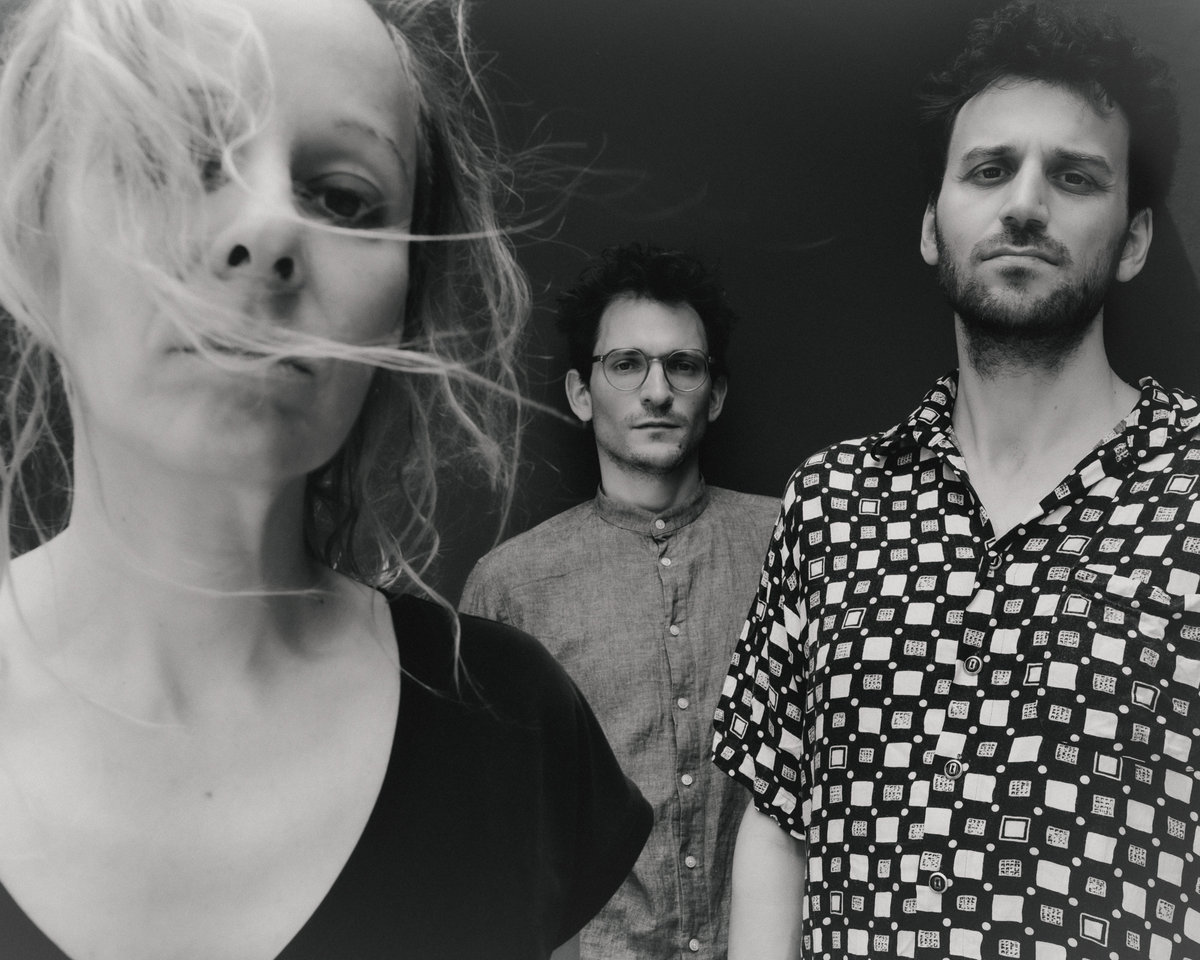
Members: Max Andrzejewski (drums), Johannes Schleiermacher (sax)
Nationality: German
Current Release: TRAINING team up with Ruth Goller of Vula Viel for for threads to knot, out October 18th 2024 via Squama.
Recommendations:
J: Estrada Orchestra: Zucker Tanzclub
M: Norwegian improv band Oker with their piece “Lichens“. This is such “well composed“ improvised music!
[Read our Vula Viel interview]
If you enjoyed this TRAINING interview and would like to know more about the band and their music, visit their official homepage.
For a deeper dive, we recommend our Companion Songs interview – Max's band with Marco Mlynek.
Do you think that some of your earliest musical experiences planted a seed for your interest in improvisation?
Max: Definitely. There was always a lot of music making in my family. Especially with my grandfather, uncle and father. They were playing church songs or Beatles songs and I was playing around that as a small child.
There was no judging, no pointing to mistakes. That gave me a good feeling. Making music was just about improvising and sharing a moment together.
When did you first consciously start getting interested in musical improvisation? Which artists, teachers, albums or performances involving prominent use of improvisation captured your imagination in the beginning?
Johannes: My father had a lots of free jazz records. At the age of maybe 12, I was already learning Saxophone, I picked out one of his Albert Ayler CDs, New York Eye and Ear Control. Even I could not really understand this language, it appeared to be magical to me.
He also took me to a Peter Brötzmann Concert. I was sitting in the first row and I really liked it but was falling asleep after some time.
At the age of 17 I started to play with German free jazz legend Gunter Hampel. This collaboration opened all doors and barriers to the terrain of improvisation and was a good balance to the academic style that I later encountered at university.
M: My father took me to a concert of the German groove/funk/jazz organ player Barbara Dennerlein when I was six. I fell asleep on a bench and I loved the albums afterwards. So something must have happened then.
After, in school, there was a teacher who was very important to me - he opened my ears for different albums and artists. Like Coltrane for example …
Tell me about your instrument and/or tools, please. What made you seek it out, what makes it “your” instrument, and what are some of the most important aspects of playing it?
J: I started to play the saxophone together with my father because he was a jazz fan. I really like the connection of the breath and the instrument.
M: I play the drums mostly. For me it was always the most direct way to make music - stick on drum or cymbal. So easy, but so powerful.
I also learned piano but it never had the same free feeling for me. Later I became quite sad or angry that I never really learned to piano or guitar properly - to be able to improvise with it - play beautiful chords or melodies.
And that’s why I started composing more and more - which I'm doing a lot the recent years - for different ensembles or groups or music theatre plays.
How would you describe your own relationship with your instrument – is it an extension of your self/body, a partner and companion, a creative catalyst, a challenge to be overcome, something else entirely?
J: I feel a very organic and direct connection to my innerlife. It can also be very exhausting and induce trance states.
M: Yeah, the trance states! That's an important motor for me. It’s so great to reach this stage through improvising - but it doesn’t always work.. :) So I guess my instrument is often a tool for reaching that state …
Derek Bailey defined improvising as the search for material which is endlessly transformable. What kind of materials have turned to be particularly transformable and stimulating for you?
J: Gestures, emotions, simple melodies, chaos.
M: Yes, and adding to what Johannes said: Layers. Layers of different materials / rhythms /texture that first seem unlogical but suddenly make sense.
Do you feel as though there are at least elements of composition and improvisation which are entirely unique to each? Based on your own work or maybe performances or recordings by other artists, do you feel that there are results which could only have happened through one of them?
M: Sometimes one definitely doesn’t know if something is written or improvised. But sometimes - especially in music that’s highly energetic - you can hear instantly that it CAN'T be written - it can only be felt.
When you're improvising, does it actually feel like you're inventing something on the spot – or are you inventively re-arranging patterns from preparations, practise or previous performances? What balance is there between forgetting and remembering in your work?
J: Both, rearranging and inventing new. But more rearranging. But the start for an idea is often not the material itself, but an emotion or state of mind – after that, I'll pick the material which fits it.
M: Yes, both! I think the longer you do it, the more you have a kind of style which is certainly some kind of materials that you use more often than others. And also if you play together for a long time, you know the other person well and you move together!
I like to often start with a simple idea, transform it to something else, or add another layer that fits the music that the others are playing, transform it to something completely different, go on and on …
Are you acting out parts of your personality in your improvisations which you couldn't or wouldn't through other musical approaches? If so, which are these? What, would you say, are the key ideas behind your approach to improvisation?
J: Yes, for example letting things go and playing until you are completely exhausted, which was also one of the basic ideas behind founding TRAINING.
But I can also achieve floating, light states more easily if they arise in the moment and are not reproduced in a certain way. But that doesn't mean that it wouldn't be possible. It's just easier for me in an improvisation.
M: For me too. This state of letting go which is reached sometimes, the state of high energy, a feeling of togetherness, a feeling of trance, can mostly be reached through improvisation for me.
In terms of your personal expression and the experience of performance, how does playing solo compare to group improvisations?
J: In a group performance, I am not solely responsible for the music to continue. In a solo performance, I am. This makes it almost impossible to hold back ideas.
In your best improvisations, do you feel a strong sense of personal presence or do you (or your ego) “disappear”?
J: Both. There is pure intuition, the music that simply comes from the gut.
That doesn't mean that I disappear myself, but rather that I act entirely from the subconscious. And then there is the head, which always wants to judge everything. I can't turn that off and I don't always want to. But I don't pay too much attention to it when I'm improvising.
M: It doesn’t always work to switch off the head. But that’s what I´m practicing through improvisation always. It would be so great to be able to always switch your head of when you play - that’s the state I want to reach when I´m old.. :)
Stewart Copeland said: “Listening is where the cool stuff comes from. And that listening thing, magically, turns all of your chops into gold.” What do you listen for?
J: Connecting Points.
M: Listening to connecting points is definitely the key.
But then the next step is to put yourself in relation to what you hear. Then many decisions have to be made: Do you leave your idea to completely to join in with the other idea, or is it stronger to let the layers happen at the same time, or morph slowly into the direction of the others?
There can be surprising moments during improvisations – from one of the performers not playing a single note to another shaking up a quiet section with an outburst of noise. Have you been part of similar situations and how did they impact the performance from your point of view?
M: This happens all the time! That’s the whole fun to it! To put yourself in relation to other sounds and to react intuitively to sudden changes and try to make the best music out of all this …
I have always been fascinated by the many facets of improvisation but sometimes found it hard to follow them as a listener. Do you have some recommendations for “how to listen” in this regard?
J: I don´t believe so much in the concept of the artist telling something what you have to understand as a listener. For me it´s more about creating spaces which can be filled with own thoughts, feelings, associations or whatever from the listener.
Even if you just concentrate on the sound, thoughts from your subconscious can come to the surface, just like in meditation. You can then decide whether you want to use the space to deal with these thoughts or whether you just want to let them go.
M: I think so too. It’s important to know as a listener, that you can’t do anything wrong. And that you can’t "not understand“ the music. If you feel something, you feel something, and if not, then not.
In a way, improvisations remind us of the transitory nature of life. When an improvisation ends, is it really gone, just like a cup of coffee? Or does it live on in some form?
J: It can be both. But even when it is completed, it still has an influence on what follows by making room for something new.