Published
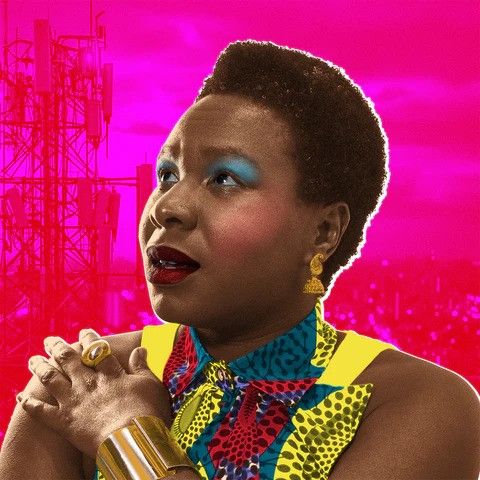
Name: Transmission Towers
Members: Eleanor Mante (voice), Mark Kyriacos Kyriacou (synthesizers, drum machines)
Interviewee: Eleanor Mante
Nationality: British
Current release: Transmission Towers's new album Crooked Transmissions is out via É Soul Cultura. Also available on vinyl is the first volume of remixes of select album tracks.
Recommendations: Lately, I’ve been practising Shodo, the Japanese art of calligraphy. It’s become a beautiful alternative to meditation for me, and it supports my language studies as well. I highly recommend *Shodo: The Practice of Mindfulness Through the Ancient Art of Japanese Calligraphy* by Rie Takeda. It’s a fantastic guide that blends mindfulness with the elegance of calligraphy, helping me stay grounded while learning.
Another great piece is *Strawberry and the Big Apple: Grace Jones in Stockport, 1980* by Dave Haslam. I was lucky enough to hear him read from it at a gig we played at La Violette Societa in Liverpool, and he gifted me a copy after our set. It’s an inspiring read. I came away with a deeper admiration for Grace Jones and learned much about Stockport as well as players on scene. Definitely worth checking out!
If you enjoyed this Transmission Towers interview and would like to find out more about her music, visit her on Instagram, and Facebook.
What was the first time you were consciously impressed by technology – in and outside of music?
As a child growing up in the UK, music was woven into the fabric of my everyday life. The moment that truly opened my eyes to the power of technology in music was when my dad introduced me to Scientist Meets the Space Invaders. The sounds felt otherworldly, alien like, and it was as though the entire soundscape lit up my mind. That was the first time I consciously understood what we now comfortably call electronic music.
What struck me most was how technology, through delay effects, sound manipulation, and echo, could transform music beyond the familiar genres of the time. It was an experience that reshaped my perception of music and eventually steered me toward electronic and experimental sounds as my personal favourites.
Beyond my own journey, I see technology as a tool that democratises creation. It gives access to those who may not have had the opportunity to learn classical instruments or receive formal training. With digital instruments and tech-based tools, artists from all backgrounds can explore sound in ways that were previously unattainable.
Technology doesn’t just make music, it opens up new spaces for creativity and levels the playing field for classical and non-classical artists alike. That, to me, is truly impressive.
When it comes to arranging, sound design, performing, composing, etc – what are currently concrete topics and aspects that interest you and where you want to improve or simply challenge yourself?
When it comes to performance, aspects of my artistic goals include sound, delivery, and message. I express a deeply personal aesthetic. I aim for our music to embody strength through vulnerability, unapologetic experimentation, and the seamless blending of cultural influences. This ethos shapes everything, from songwriting to how I present myself on stage.
The clothing and colours I choose are not just visual elements; they’re an extension of the creativity behind our music. Bold movements and dynamic vocal expressions allow me to communicate emotion, pushing the boundaries of how sound and physicality interact. I want our audience to feel the energy we’re transmitting through every note and gesture. Each of us brings something unique to the performance, but together, we create a cohesive, immersive experience.
Looking ahead, I’m excited to challenge myself by deepening this theme, building on what already resonates while evolving in ways that continue to surprise and engage both the audience and myself.
Do you keep up with recent developments in terms of gear and software? If not, why not? If so, what are you looking for?
Currently, no. My focus right now is on songwriting and performance. Mark handles production. I trust him to evolve that side of things, though I do share older pieces I’ve created. I like to hear his take of my old pieces but with a modern edge. When I eventually dive back into production, it’ll be like starting fresh.
I’ll need to immerse myself in the latest gear and software. I believe it’s important to have a clear vision of what I want to create before diving into the technical aspects. Otherwise, the sheer volume of options out there can be overwhelming. For me, it’s about working from a small, focused place and expanding outward.
Jean-Michel Jarre maintained that, despite the advances in virtual technology, we are still "analogue animals made out of blood and bones who need buttons and knobs to touch.” How far is this statement true or false for your own music?
I completely agree with Jarre's statement. As humans, our innate curiosity drives us to engage with the world through touch. There’s something irresistible about experimenting with the dials and buttons of a control desk. It’s not just play. It's how we learn. The tactile feedback is immediate, giving us the space to grow, experiment, and refine.
During my improv days, I relied heavily on the Roland SP555, which is a creative sampler with performance effects. It allowed me to manipulate my voice and weave samples into my performances in ways that few vocalists dared to explore. The level of control it gave me felt liberating, offering a tangible connection between my artistic vision and the sounds I produced.
That hands-on approach made all the difference.
What are examples of production tools/instruments that you bought for a specific purpose?
In my early performance days as an improvisational singer in a punk fusion band, I found myself in a scene dominated by instrumental indie and jazz-based bands. Vocalists were rare, and I needed something to carve out my own space.
Enter the Roland SP555, a creative sampler with performance effects that became my secret weapon. It wasn’t just about adding layers to my voice, but about creating an entirely new sonic dimension that set me apart.
That tool was my ticket to play, allowing me to push boundaries and stand out in a landscape where vocalists were few and far between.
Late producer SOPHIE said: “You have the possibility with electronic music to generate any texture, and any sound. So why would any musician want to limit themselves?” What's your take on that?
I completely agree with SOPHIE's perspective. It's like giving a painter access to an entirely new palette of colours or handing an artist that key tool they need to break through their creative limits. Electronic music offers a kind of freedom that allows you to reach beyond the confines of your own experience and identity.
There's an indescribable influence that electronic sound has on me. It’s pushed me to explore textures and ideas I never thought possible, both in creation and in performance. The possibilities feel limitless, and there is a real beauty in that.
From the earliest sketches to the finished piece, tell me about the production process for your current release, please.
The process behind our current release was all about connection despite the distance. We were creating in our own spaces, me in my flat and Mark in his, collaborating without ever being in the same room.
That’s how the concept of Transmission Towers came to life. We were literally sending sound waves back and forth, exchanging ideas, and pushing each other to innovate more with each track. Mark would send me instrumental ideas, and I’d take them into my kitchen, where I have a wall covered in lyric ideas and notes from my language studies. I’d listen, have a little dance around, and let the music stir something in me.
At times, the words would just rush out. I’d record those vocal ideas and send them back to Mark, and he’d work his magic. It’s a process of pure flow, fueled by creativity and trust in each other’s instincts.
To some, the advent of AI and 'intelligent' composing tools offers potential for machines to contribute to the creative process. What are your hopes, fears, expectations and possible concrete plans in this regard?
I often have melodies in my head, but translating them into software can be a challenge. That's where I see the potential of AI and intelligent composing tools to help bridge that gap. I’m excited by the idea of working with these tools to streamline my process, allowing me to capture and develop ideas more efficiently.
My hope is that AI can help me not only translate melodies but also deepen my understanding of composition and arrangement. I believe it could strengthen my songwriting and make collaborations even more immersive, unlocking creative possibilities that I might not have discovered otherwise.
Have you used AI or generative music tools for your own productions? If so, in which way and what did they add?
I've started experimenting with AI to help compose lyrics in foreign languages. When I have an idea for a song in a language I'm not fluent in, I’ll contribute as much as I can from my own studies, then use AI to refine the sentence structure and ensure accuracy.
For example, I’ve been toying with the idea of writing a verse in Japanese, and I’ve already used AI to construct a verse in Spanish. I had most of the structure in place but needed help finding the right words to complete the phrasing. AI provided alternative suggestions that not only made sense but also enhanced the original message I wanted to convey.
At first, I was sceptical, but I’ve been impressed by the output. AI isn’t a shortcut it’s a tool that responds to the quality of your input. It won’t do the work for you, but it can help you refine and elevate your ideas, moving you closer to the finished product if you’re willing to put the effort in.