Published
Name: TREEN
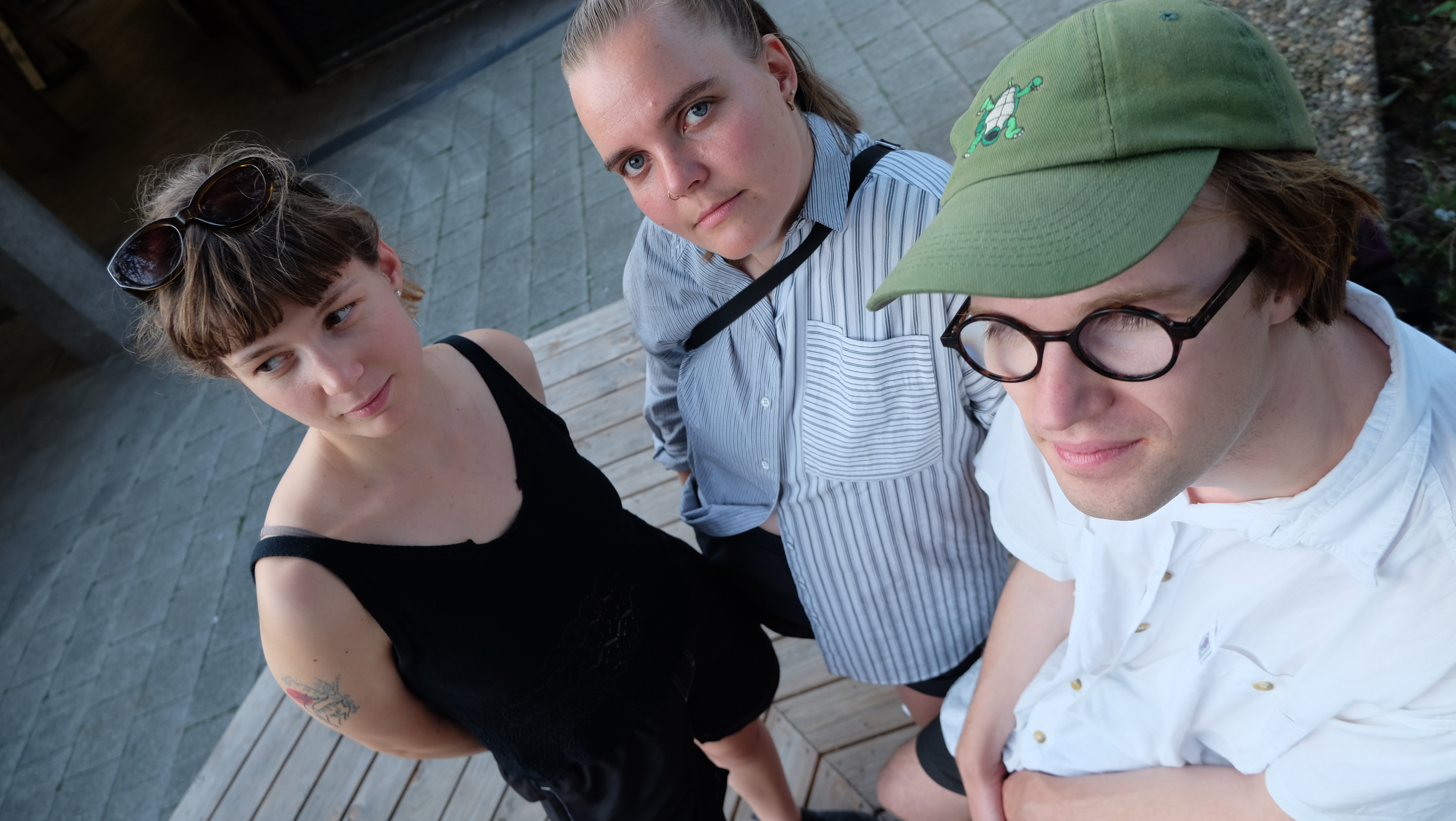
Members: Amalie Dahl (saxophone, objects), Gintė Preisaitė (piano, objects), Jan Philipp (drums, percussion)
Nationality: Danish, Oslo-based (Amalie Dahl), Lithuanian-Danish (Gintė Preisaitė), German (Jan Philipp)
Current Release: TREEN's new album Kaikō is out via Sauajazz.
Hometown Recommendations: Jan: A-Musik in Cologne; Ginte: Retrito Smarsas and Studium P in Vilnius
Topic I am passionate about but rarely get to talk about: Jan: Cooking selfmade pasta and recording music. Although I guess people who know me would say I talk a lot about it, he.
If you enjoyed this TREEN interview and would like to know more about the band and their music, visit the members' individual Instagram accounts: Amalie Dahl; Gintė Preisaitė; Jan Philipp.
When did you first consciously start getting interested in musical improvisation? What was your first improvisation on stage or in the studio and what was the experience like?
Jan: For me, making music was always associated with improvisation, so it's hard to say that at some point it became a conscious decision and wasn't before.
I was lucky to have had drum lessons very early on at what, looking back now, was a very progressive music school in Frankfurt, where pretty much all the teachers played more improvised music or were jazz musicians. So the lessons were naturally very intuitive and improvisational.
Through that environment, I got to know a few friends with whom I played and made a lot of music, and we all simultaneously began to consciously engage more with free/spiritual jazz, discovering Coltrane, Pharoah Sanders, Alice Coltrane, and so on, and tried to make music like that ourselves … and we even played a few gigs. That was around the age of 15 or 16.
In hindsight, I'm really glad I discovered improvised music through that path and not via big band/school orchestra or something similar, which might be more common."
Tell me about your instrument and/or tools, please. What made you seek it out, what makes it “your” instrument, and what are some of the most important aspects of playing it?
Amalie: I've been playing the saxophone since I was 7 years old, so it’s been with me for so long. To a certain degree it feels like an extension of my body or voice/musicallity. As I remember it, I instantly fell in love with it the first time I tried it.
Gintė: I was always interested in that other world the grand-piano was hiding in its body. We see only 1/4th of it when sitting in front of the keys. When I was studying classical music, a composer wrote a piece for the strings inside the piano which I had to dampen with my fingers and create various harmonies with them. That was the first encounter for me playing it in concert publicly.
But of course later on I listened to John Cage pieces where the piano was filled with screws and I started to delve more into free improvisation while living in Vilnius where I allowed myself to completely explore various materials and various ways of them interacting with the strings.
I also understood that some of them can deeply damage the instrument (like screws and in general pulling strings and putting things in between). But it was really fascinating to find out how all of this changes the sound - how wood / plastic / gum / metal react to it and create different kinds of distortions. Magnets are my favorite - I can’t get enough of this round full and vibrating bell sound and gamelan-like soundscape when you're using many of them.
A couple of years ago I found out how much I enjoy creating various intuitive polyrythms as well - so drumming, drummers, and folk music are a big inspiration for the preparations. Combinations after preparing the piano- sound basically inspires the rhythm to me and I can really immerse myself into repetitive meditation.
I must also mention that electronics are a big part of my practice - processing sound, delving into particles of it. That universe inspires my aesthetic choices in acoustic piano playing too.
I can also mention Maya Magdas' performances, and friends like Matt Choboter are inspiring, since these composers take so much time and detail in re-searching their instruments.
[Read our Magda Mayas interview]
How would you describe your own relationship with your instrument – is it an extension of your self/body, a partner and companion, a creative catalyst, a challenge to be overcome, something else entirely?
Gintė: I would say all of the above. It depends on the mode I am in. And what kind of energy I came to play with that day. All of the above can be coherent as well - as long as it is playful.
But, in the end, I think it is a transistor of the energy.
Do you feel as though there are at least elements of composition and improvisation which are entirely unique to each? Based on your own work or maybe performances or recordings by other artists, do you feel that there are results which could only have happened through one of them?
Amalie: I work a lot in a world where composition and improvisation meet. For me, these aspects are, most of the time, two different things. Each can stand alone, but they can also work really well together, and I use one to develop the other.
I really love to combine them, to push the boarders of each, to develop both my compositional and improvisational language.
When you're improvising, does it actually feel like you're inventing something on the spot – or are you inventively re-arranging patterns from preparations, practise or previous performances? What balance is there between forgetting and remembering in your work?
Gintė: I would say it depends on the project. In this particular project Treen I feel we all brought our vocabularies in a first rehearsal and a specific sound emerged from it which was quite unique and we all felt it instantly- we kept on developing it since then.
That’s why it is so special playing in this trio. I feel we are always coming back to a similar pool of choices. Every time it is slightly developed, but some core meaning stays which we all agree on intuitively. There are some modes we just connect to deeply - all three of us - and it works for the music and we don’t have to be too conscious or logical or verbal about it. We just have an inner feeling most of the time where the music is going.
What I like about this trio is that the trust is beautifully growing over time - it is a feeling of nurturing one big organism which is somewhat like a creature, slowly and gently morphing from space to space and we all put some water and nutrients into it.
We don’t even rehearse at the moment – a consequence of the circumstances we are in now, living in separate places. But it seems like the time during which we don’t play together is somehow very healthy for that creature to keep on growing.
Artists from all corner of the musical spectrum, not just “free jazz” have emphasised the importance of freedom in their creativity. What defines freedom for your improvisations?
Amalie: I’ve been thinking a lot about freedom in music, because I thought that it was the “goal.” But freedom can be many things, and I think it is very individual. It’s hard to define.
I think I actually started to feel freer when I stopped worrying so much about feeling free, and whether others felt free. I worried most about it in the projects where I composed the music, I worry whether the others feel good, feel seen, feel like they have room to express themselves.
Maybe that’s what’s it about? To feel well, safe and comfortable, and have room to express yourself.
Taking your recent projects, releases, and performances as examples, what, would you say, are the key ideas behind your approach to improvisation?
Jan: I believe that from the very beginning, there was a strong sense of trust within this band regarding each other's way of playing, which I find very special. On top of that, there's a kind of unspoken agreement among us about the band's sound. At least that's how I perceive it — there are quite clear roles and sound aesthetics that shape how the music works.
Because of the deep trust, there's no need to talk much about these individual elements. That creates a sense of ease, which for me is one of the most beautiful feelings in making music: when music is allowed to emerge through intuition and trust in impulses.
In your best improvisations, do you feel a strong sense of personal presence or do you (or your ego) “disappear”?
Jan: I do feel that the individual and distinct characteristics of the three of us are clearly audible.
At the same time, I often have the feeling when playing with this band that the music plays itself — that I don’t have to actively and consciously 'intervene' in my own playing or 'steer' the music in any particular direction.
What are some of your favourite collaborators and how do they enrich your improvisations?
Amalie: I love playing with Treen, because playing with Gintė and Jan is very different than with a lot of my other bands.
It’s a difference which allows me to explore different sounds compared to some other projects (and so is it with each band). It’s like talking to different people and getting different inputs.
Stewart Copeland said: “Listening is where the cool stuff comes from. And that listening thing, magically, turns all of your chops into gold.” What do you listen for?
Gintė: Listening is so important! And it is the best thing to do. Practising listening in everyday life was always my goal and activity. I try to be in tune in all situations with it. Listening teaches you patience, nuance, focus, surprise.
I believe we are careful listeners in this band, I feel we listen with our whole body and we give space to hear each other - it is really one of the most valuable skills and it is always in development.
As a listener, do you also have a preference for improvised music? If so, what is it about this music that you appreciate as part of the audience?
Amalie: For me it’s important to be touched. And it’s a bit hard to say exactly what music touches me.
It also depends on myself, what mood I am in. If I’m stressed it can be hard to be present, and I need to be present to actually listen.
But a few times the music touches you regardless. I think it’s when the musicians are really present, and have something to tell.