Published
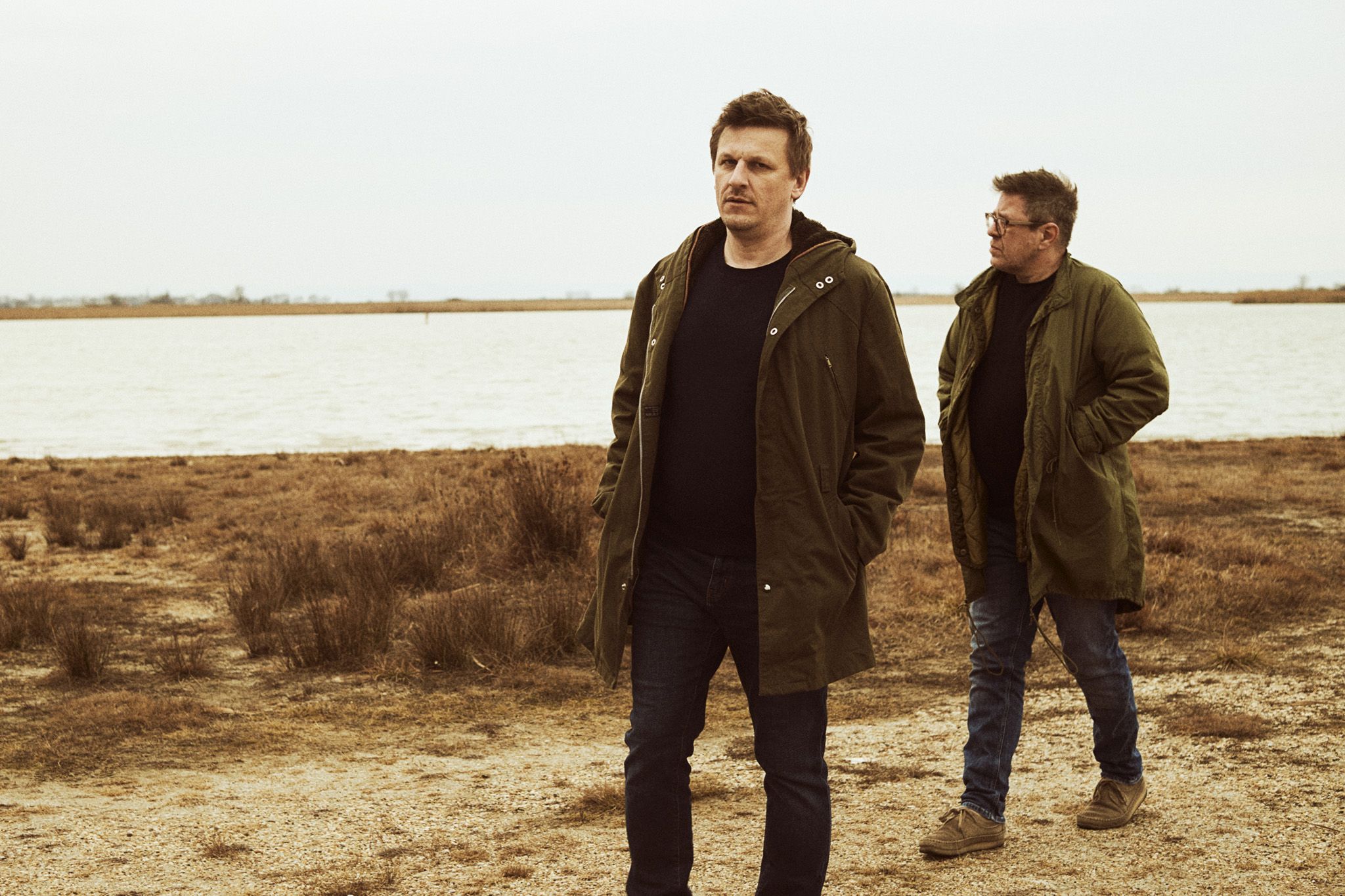
Name: Urbs & Cutex
Members: Paul Nawrata aka Urbs, David Schuller aka Cutex
Nationality: Austrian
Current Release: Urbs & Cutex's new album On Our Way is out via Beat Art Department / Compost.
Shoutouts:
Cutex: I like watching DJ Koco and Mr. Thing on Instagram. One label I'm currently into is Death Is Not The End.
Urbs: I think the international jazz scene as covered by Gilles Peterson amongst others is carrying on the torch of taking hip hop into the future. Those musicians all have hip hop and modern soul in their DNA and they have the musical skills to move the genre into unknown territories.
What were some of the musical experiences which planted a seed for your interest in hip hop?
Cutex: Watching Grandmaster Flash’s "The Message“ video for the first time on Austrian television.
Hearing LL Cool J’s album Radio for the first time.
Urbs: In my late teens I mainly listened to rock, be it English indie or American punk and noise rock - I loved all that, and the musicians I loved were all dreamers, thinkers, weirdos, softies, losers, jokers and fucked-up drunkards who get punched in the face. HipHop up until then was all tough posing.
Then at the beginning of the 1990s I heard the Stereo MCs and the Native Tongues and they spoke to me and a lot of other rock fans, because they had a similar attitude to those rock and pop groups, they showed a certain amount of vulnerability and they even seemed to have fun!
So that was the start of my affinity to hip hop.
Eventually I fell for the posers too, because they just made great, novel music.
What does the term hip hop mean and stand for today, would you say?
Urbs: Hip hop nowadays is everywhere - it has influenced every art form and every aspect of life and society.
Regarding the music, the hip hop I like is still rooted in Black music, especially funk, but a lot of the popular stuff seems to rather be rooted in 1990s euro dance. But hip hop has become extremely diverse, there's something in it for everyone and you could say the original concept is rather watered down, and I say that without judgement.
So no matter how many subgenres of hip hop are being generated, it's all the more important to find your own style that reflects your personality and to ignore what hip hop is supposed to be and stand for and sound like.
There are far too many people following certain rules and rolemodels and that's the safest way to stagnation.
Cutex: My main interest in hop hop has always been the musical component. As far as I am concerned I must say this once so creative genre has been stagnating for many years.
Hip hop has always been about a lot more than just music. For you personally, is hip hop a way of life – and if so, in which way?
Cutex: The concept behind hip-hop has always been creating art out of nothing, or doing the opposite of what everybody expects you to do. I love it!
Urbs: We were white middle class kids living in one of the richest countries in the world. It would have been ridiculous to act as though we weren't, even if sometimes in my younger years I fell into that trap. We were and are still all about the music.
We were living hip hop insofar as we were constantly hunting for vinyl, practising our mixing and scratching, but certainly not more. Over here in Europe, the ones who lived on the edge were the writers who risked their livelihood for the culture. But if hip hop is all about defiance we're still following its moral guidelines.
If people only have the attention span for two minutes of music, our songs rather get longer than shorter, the average song on the album being about 5 minutes long, like "I'm On My Way". At the end of the day I don't care if people question whether we're hip hop at all.
Where do most of your inspirations to create come from – rather from internal impulses or external ones? Which current social / political / ecological or other developments make you feel like you need to respond as an artist?
Cutex: Since we're not rappers or lyricists, we can only react with instrumentals.
Even though times seem dark, I wouldn’t necessarily make dark music. I believe that music should comfort you, or rather uplift you.
Urbs: I would say it's external impulses that trigger internal ones. A lot of us musicians feel a constant distrust in humanity and we are probably less surprised about certain developments in the world - we knew it all along. At the same time we know better than most the value of beauty.
Our music is informed by the way we feel, irrespective of the musical style and the impulse that sparks creation. I think behind all the superficial aggression in black metal, for example, there's a deep melancholy and dreaminess and search for deeper meaning.
In Urbs & Cutex we are working with samples, which are obviously external impulses, but we take them out of context and twist them around to express our feelings, whether we intend to or not.
Hip hop has always had an interesting relationship between honouring its roots and pushing the music forward. What does the balance between these two poles look like in your music?
Urbs: As I said, we've always wanted to find our own personal style and to push ourselves to move forward within the genre of our own. We don't really see ourselves as part of anything, so I'm afraid we cannot really contribute to the advancement of hip hop culture, only find new ways and challenges for ourselves.
Obviously our music is rooted in the sound of 1990s east coast hip hop, but we try to give it a personal twist. I don't think songs like "Make It Real" could come from the US.
So it's only natural we wont contribute to the advancement of hip hop which is still essentially American music.
What role do electronic tools and instruments, including AI, play for your creative process?
Urbs: All our instruments are electronic, so even if we are no tech geeks and gear nerds, we couldn't do without technology.
I never thought I would say that, but AI has been a great tool and a great creative impulse on this record, because it opens completely new ways for sampling. We still used AI within the frame of our usual working method, as we're still only figuring out what can be done with it, or better: what it can do.
The impact is going to be immense, in every aspect of life and it will be the greatest friend and the worst enemy of mankind, because essentially AI will be an almost omnipotent enhancer of the mind and some minds are good and some are evil.
How do you see the role of sampling in hip hop today?
Urbs: Considering the answer above it will probably die out because it won't be necessary anymore - at least in its traditional form.
Cutex: I feel that at the moment sampling is still quite essential to create solid beats. De La Soul’s first two albums for example still sound fresh, compared to a lot of the noise that’s out today.
Tell me a bit about the sounds & creative directions, artists & communities, as well as the colleagues & creative hotspots of your current hometown, please. How do they influence your music?
Urbs: The great thing about Vienna is that it's a real music city. You couldn't fling a cat without hitting a musician, whether they're classically trained, which a lot of them are, or electronic experimentalists or young kids starting rock bands - you name it!
We are self taught and if we are looking for a little virtuosity here and there we can call upon an infinite number of musicians who'll be glad to help out, like the very talented Elena Schäfer, who contributed vocals on "Bird Of Paradise" …
… or the great Stefan Fallmann who played bass on "Bubbles" and some other songs.
Cutex: Vienna always seems to have slower pace. There’s also the cliché of the “Wiener Gemütlichkeit” (Vienna snugness). That definitely has an impact on the music coming out of this city.
There has always been a close connection between hip hop and jazz. What role does improvisation play in your current creative process?
Urbs: We leave improvisation to the few featured musicians. When it comes to ourselves, improvisation is only happening when we're reacting to mistakes, not in a virtuosic way.
Cutex: 1994 to me was one of the greatest years in hip hop history. They used a lot of jazz samples then and that sound still informs our style - a good example being "Recognize".
It can sometimes seem as though, in hip hop, production is the main force of progress. Do you feel like there is still space for genuinely new ideas for lyrics and vocals as well? If so, what could these look like?
Urbs: We are using vocals only occasionally, so I'm not sure we're qualified to answer. For me personally rap has always been vocal percussion, lyrical content for me is secondary.
But I do have the feeling the needs - or should I say the egomaniacal impulses of the MCs - have hampered musical progression as the MCs are the stars who will pick the beats that match their need for comfort and for the spotlight.
Having said all that, T.R.A.C. is brilliant on our first ever rap song "Wherever You Are", so there you go.
Cutex: In my opinion, Hip-hop music doesn't necessarily work well when it's trying to be too futuristic. Many records from the 1980s and 1990s still sound fresh and innovative compared to the stuff that’s out today.
Perhaps the concept of the hip-hop band should be brought back, in the style of Stetsasonic.
How, would you say are your live performances and your recording projects connected at the moment? How do they mutually influence and feed off each other?
Cutex: DJing and producing as a process have a lot of similarities between them anyway, in that these activities are linked.
Urbs: I personally prefer working in the studio to DJing, as I like to work out details meticulously and my DJ skills probably do not match my sense of perfectionism. I can still rock a party, mind you.
From Star Wars via The Hitchhiker's Guide to the Galaxy to the Fifth Element, there have always been amusing sci fi ideas about how music could look like at some point. For a not too distant future, where do you personally see it going?
Cutex: More autotune!