Published
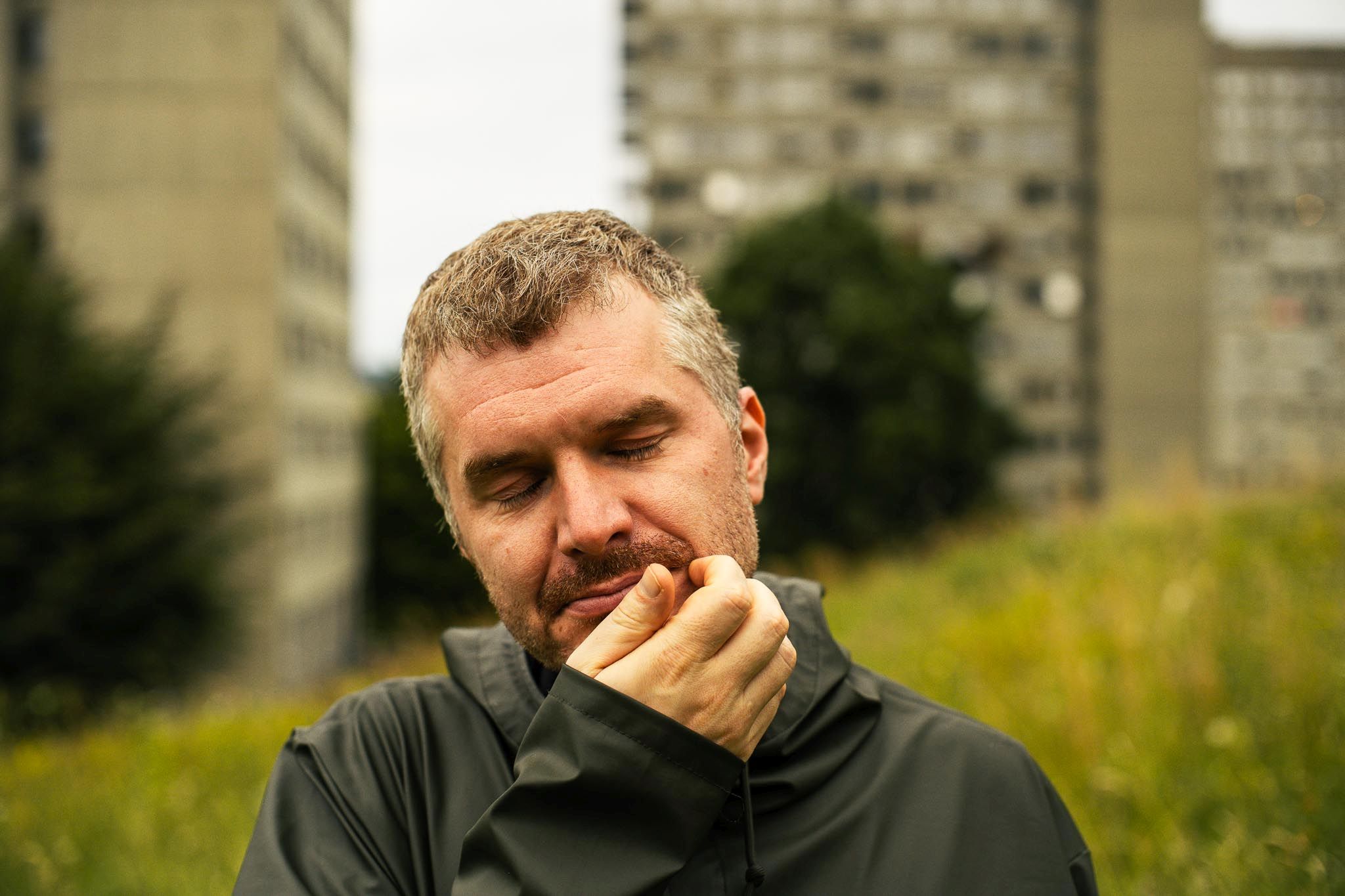
Name: Roland Vollenweider aka us & sparkles
Nationality: Swiss
Occupation: Producer, composer, sound artist
Recent release: us & sparkles's new album When The Birds Kick In, produced with Simon Boss and featuring Chineyem Okolo and Lia Vogel, is out via damn rich records.
If you enjoyed this us & sparkles interview and would like to stay up to date with his music, visit him on Instagram, Facebook, and Soundcloud.
When I listen to music, I see shapes, objects and colours. What happens in your body when you're listening? Do you listen with your eyes open or closed?
I prefer to listen to music with my eyes open. There’s a certain discomfort I feel with closed eyes, perhaps it’s about maintaining control over my surroundings.
The physical experience I have while listening to music varies significantly depending on the genre. I think having access to different genres is like having access to different body states. For instance, techno immerses me in concentration, while bands like Oasis and Stone Roses give me a sense of uprightness and poise.
I’ve encountered profound bodily experiences through music, but it’s challenging to articulate them with mere words. It’s a complex and undefined realm that goes beyond description.
How do listening with headphones and listening through a stereo system change your experience of sound and music?
I seldom listen to music with headphones due to a mild case of tinnitus. I had to stop with that habit, because I prefer to listen quite loud. Listening at lower levels simply doesn’t provide the same immersive experience for me.
I also avoid using headphones while on the train, because it would be too much. My noise-cancelling headphones are reserved for seeking peace in heave traffic rather than for music. Additionally, I don’t use headphones for mixing or mastering. It’s just not my thing.
And I prefer stereo, I’m probably too unbalanced by myself for more than two speakers.
Tell me about some of the albums or artists that you love specifically for their sound, please.
I have a deep appreciation for nearly everything created by the Berliner techno artist Shed: he truly stands out as my primary source for high-quality techno music.
Another artist I admire is DJ Koze, particularly for how he plays with frequencies in the mid-low levels: I guess his music made me focus on the mids when it comes to design base.
I also like some experimental stuff like ametsub or susumu yokota, because I love the playfulness of those sounds.
But there’s been a lot: Portishead, Bob Marley, Curtis Mayfield, Beatles, Frank Ocean, Lee Scratch Perry, Calibre just to name a few.
Do you experience strong emotional responses towards certain sounds? If so, what kind of sounds are these and do you have an explanation about the reasons for these responses?
My passion for analog synthesizers runs deep, but I also have a profound appreciation for the clarity of digital sounds. It was these clean tones that initially drew me into the world of synthesis, and I still find immense joy in the nostalgic resonance of something as simple as a D7X house chord. This nostalgia extends to my use of cheap sounding plugins, which help evoke those cherished memories.
Each synthesizer and piece of gear I own holds a special place in my heart, shaped by the unique sonic experiences they offer. I often liken these instruments to a diverse palette of flavors and ingredients; each one brings its own character to the mix. For instance, if you were to compare the pure saw waves from a Prophet, Moog, Arp, and Buchla, you’d notice subtle yet distinct differences in their vibes.
[Read our feature on the Prophet 6]
[Read our feature on the ARP 2500]
[Read our feature on the Moog Modular]
Ultimately, the choice of which sound to use is driven by emotion—it's about selecting the right flavor for the moment.
There can be sounds which feel highly irritating to us and then there are others we could gladly listen to for hours. Do you have examples for either one or both of these?
While I'm not particularly fond of bitcrush effects or the whole EDM-limiter-Skrillex experience, I can understand how that might resonate with a younger audience.
One experience that truly captivates me for "hours with the same sound" is when I finally got my hands on a real TR-808 in my studio. The allure of its analog sound is simply unmatched, especially when compared to a sampled version. I genuinely believe that analog sounds have a unique ability to hold your attention longer before they start to feel repetitive.
In addition to the TR-808, I've been diving deep into my modular system, which is packed with Make Noise modules. This setup allows me to create loops that can play endlessly. Sometimes, when I'm busy with housework, I let the modular synth run in the background, creating a soothing ambient atmosphere.
When things start to feel a bit stale, all I have to do is tweak a few parameters, and just like that, I’m off on another sonic stimulation for another ten minutes.
Are there everyday places, spaces, or devices which intrigue you by the way they sound? Which are these?
I find it unsettling when I walk into a room and my own voice feels overwhelming due to the room's acoustics. It's a personal quirk of mine, and I understand that not everyone shares this sentiment.
On the flip side, I have a deep appreciation for churches. They possess a unique, controlled warmth and spaciousness that is truly captivating.
However, it's worth noting that the acoustic environment in daily life can often be less than ideal. Yet, I believe it's natural to overlook such details if you don’t waste your time on it.
What are among your favourite spaces to record and play your music?
I have a strong preference for recording in France. I own a charming house there that I share with a few friends, and it's where I recorded most of my upcoming album. Nestled in the heart of the countryside, this quaint retreat was previously owned by an ornithologist who had a deep appreciation for the biodiversity surrounding the property. The garden is alive with a variety of birds, creating an endless and mesmerizing psychedelic soundscape that truly enhances the creative process.
This unique environment inspired the title of my forthcoming album, When The Birds Kick In, which captures the essence of the mind-expanding experiences I've had while working there.
Do music and sound feel “material” to you? Does working with sound feel like you're sculpting or shaping something?
The experience can vary greatly depending on what I’m engaged in. I have a distance to the music in a working situation like mixing or mastering, because I can’t influence it directly, because the music has its own life. I don’t have direct access to it, I’m more like an accountant, and I find it to be quite abstract.
This contrasts sharply with the experience of playing a synthesizer, and it becomes even more pronounced when I pick up a guitar or bass.
How important is sound for our overall well-being and in how far do you feel the "acoustic health" of a society or environment is reflective of its overall health?
I believe this is a topic that doesn't receive the attention it truly deserves. For me, listening on a quality system and in a conducive environment is crucial. A proper listening situation is often underrated, yet it plays a significant role in the overall experience.
However, there are many topics that warrant attention, and I'm not entirely sure if this is one of the most important ones. The emphasis placed on this subject often correlates with a person's wealth, suggesting that it might sit near the top of Maslow's hierarchy of needs. 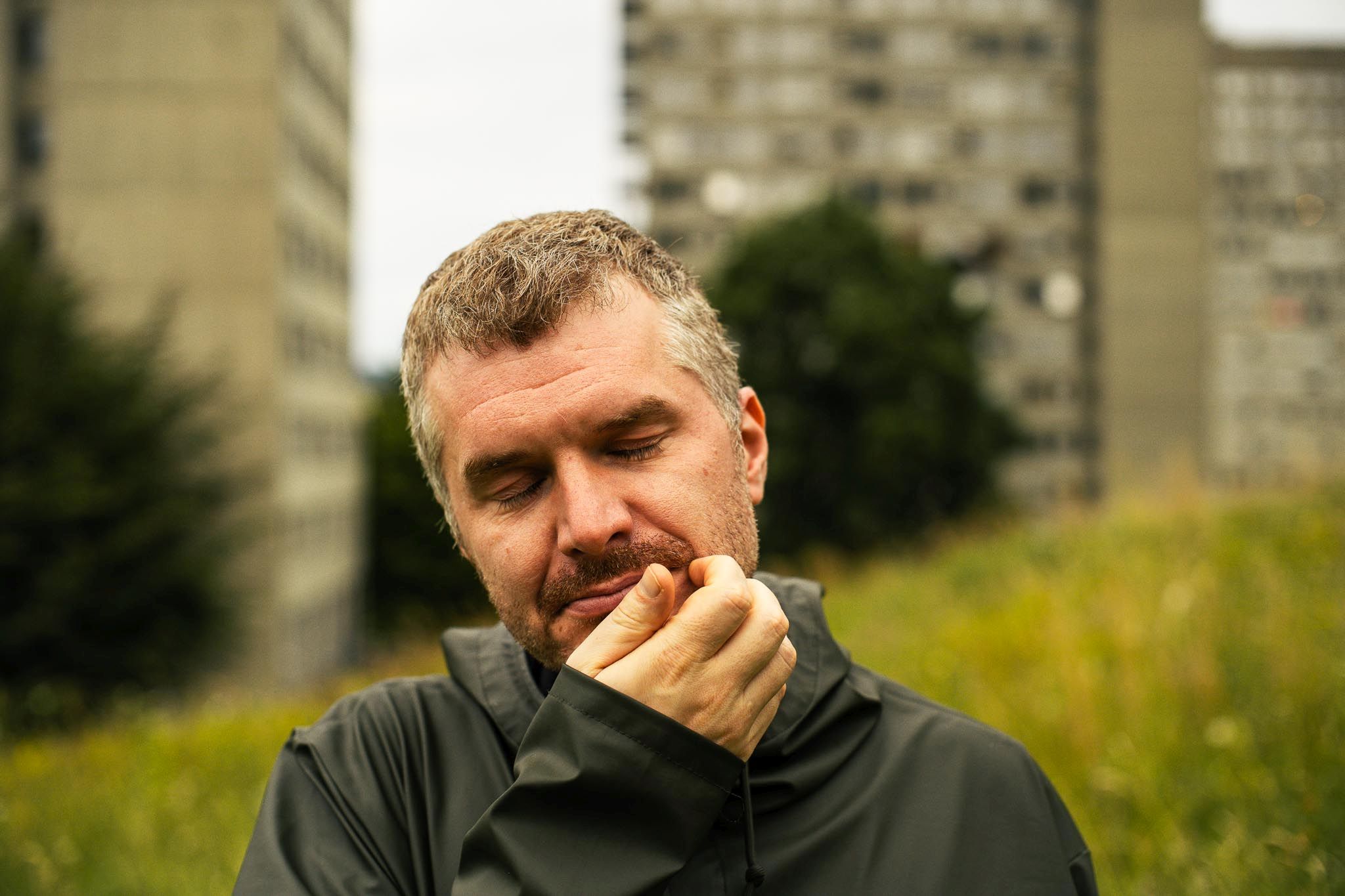
us & sparkles Interview Image (c) the artist
Sound, song, and rhythm are all around us, from animal noises to the waves of the ocean. What, if any, are some of the most moving experiences you've had with these non-human-made sounds?
I have an appreciation for birds. If you take a moment to listen closely, you'll realize that their presence is felt almost everywhere. The continuous chorus they create forms a vibrant soundscape that I would certainly characterize as the very essence of life itself.
This symphony of nature is not only omnipresent but also rich in diversity, showcasing the beauty and variety of avian life.
Many animals communicate through sound. Based either on experience or intuition, do you feel as though interspecies communication is possible and important? Is there a creative element to it, would you say?
Effective communication is indeed possible, but I question whether animals comprehend us in the same way we understand one another.
While it is feasible to convey meaning through signs, I reject the notion that they possess an equivalent level of symbolic understanding, as suggested by Saussure’s concept of language. The paradoxical narratives featuring talking animals in Kafka's work highlight this very issue. I believe there is an intrinsic aspect of human nature that struggles to coexist with something fundamentally different.
My perspective on this topic has been significantly shaped by the French intellectual movements of the 1960s and influential thinkers such as Jacques Lacan, Jacques Derrida, and contemporary philosophers like Donna Haraway. It seems rather anthropocentric to assume that animals belong to the same linguistic framework as humans. They exist in a realm distinct from ours, and that difference is perfectly valid.
While we can communicate with animals in our own way, we must recognize and respect the boundaries that separate our understanding from theirs.
Tinnitus and developing hyperacusis are very real risks for anyone working with sound. Do you take precautions in this regard and if you're suffering from these or similar issues – how do you cope with them?
Yes – I don’t listen to headphones at all. So I can’t listen to music all the time.
That helped me a lot, but was quite hard in the beginning. But meanwhile I don’t miss it too much.
We can surround us with sound every second of the day. The great pianist Glenn Gould even considered this the ultimate delight. How do you see that yourself and what importance does silence hold?
Silence plays a crucial role in maintaining my energy levels. There are moments when I truly need that quietude. It is often in these serene spaces that melodies and insights can reach us.
As a psychotherapist with a psychoanalytic background, I have developed a unique and personal relationship with the concept of absence. Embracing silence allows for reflection and introspection, fostering a deeper understanding of ourselves.
Seth S. Horowitz called hearing the “universal sense” and emphasised that it was more precise and faster than any of our other senses, including vision. How would our world be different if we paid less attention to looks and listened more instead?
It’s certainly possible to do both and this is what I would recommend.