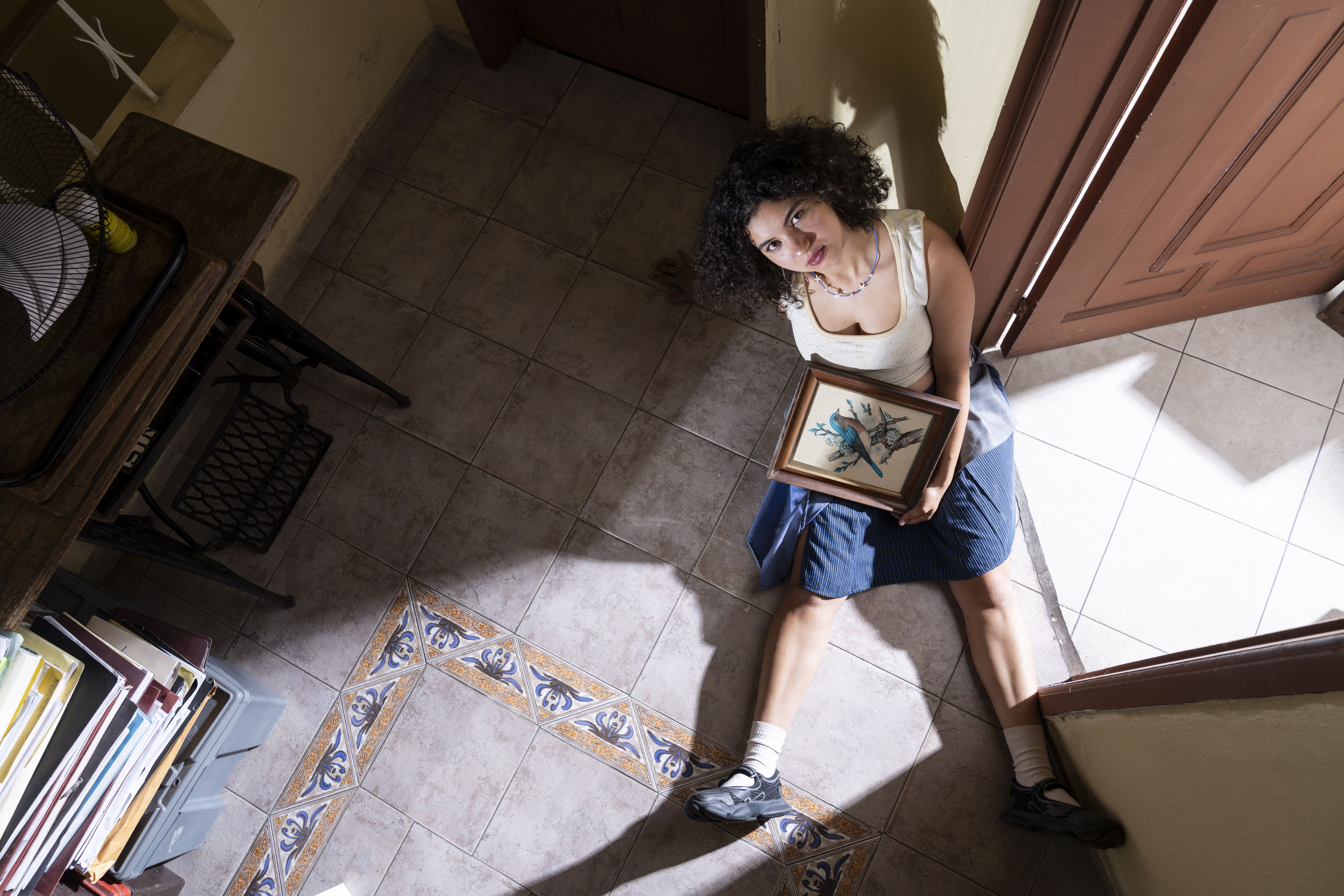
Published
Name: Valeria Miró
Occupation: Singer, songwriter
Nationality: Mexican
Current release: Valeria Miró's new single “Another Day” is out via Oolong Sounds.
Global Recommendations: I am from Mexico City and I live in London. Both cities are great for museums. No matter how niche your interest is, there’s always an exhibition or an entire museum dedicated to it. In Mexico City one of my favourites is Casa Estudio Luis Barragán if you’re into architecture or design. In London I love the Design Museum and it has a great little cafe on the top floor. Also, shoutout Panadería Rosetta for best pastries in Mexico City.
Topic I am passionate about but rarely get to talk about: I picked up knitting as a hobby a couple of years ago and it’s slowly but surely taken over my life but that’s a story for another day (pun absolutely intended).
If you enjoyed this Valeria Miró interview and would like to stay up to date with her music, visit her on Instagram, and Facebook.
When it comes to experiencing strong emotions as a listener, which albums, performances, and artists come to mind?
Billie Holiday is the first to come to mind; her voice alone can express the whole spectrum of human emotion. I am also forever inspired by Silvana Estrada and Laura Itandehui’s work.
Moving away from Mexico to the other side of the world can at times feel very isolating but listening to their voices always feels like coming home.
The boygenius trio are also some of my musical heroes (Phoebe Bridgers, Lucy Dacus and Julien Baker). Their music paints such vivid emotional murals and I time and again find myself coming back to their work.
There can be many different kinds of emotions in art – soft, harsh, healing, aggressive, uplifting and many more. Which do you tend to feel drawn to most?
I like when a song takes you on a journey. As a songwriter, there’s nothing I like more than finishing a song and feeling like I’ve grown or changed through writing it.
As a listener, I think for example of “Moon Song” by Phoebe Bridgers and how, by the end of the song, she seems to have grown as a person by telling this story in such an honest way.
In as far as it plays a role for the music you like listening to or making, what role do words and the voice of a vocalist play for the transmission of emotions?
For me, lyrics are the building blocks of the story, they set the listener in the middle of the narrative, giving them some context and images to relate to their own lives.
But only the vocal performance can guide the listener through the emotional truth the song is trying to portray.
When it comes to experiencing emotions as a creator, how would you describe the physical sensation of experiencing them? [Where do you feel them, do you have a visual sensation/representation, is there a sense of release or a build-up of tension etc …]
I can feel it mostly in my stomach, both good and bad emotions.
But when I have something to create that I’ve been ignoring, it seems to show up as a headache or as restless energy through my body, like a caffeine spike.
When it comes to composing / songwriting, are you finding that spontaneity and just a few takes tend to capture emotions best? Or does honing a piece bring you closer to that goal?
I think spontaneity plays such an important role in the creative process, it’s how you keep things interesting and fresh.
But I’m a big believer in sitting down with your ideas a few days later to question them, play around with them, and edit until it feels less like a passing thought and more like an honest reflection of how I’m feeling.
How much of the emotions of your own music, would you say, are already part of the composition, how much is the result of the recording process?
The emotional journey or a song is always top of mind for me. I carry that through the process, and every step of the way, no matter how technical it may seem, is informed by the emotion behind the song.
So every time I sit down to work on a song is like a journal entry, building that emotion piece by piece.
For your current single “Another Day,” what kind of emotions were you looking to get across?
I wrote “Another Day” after a very confusing friendship breakup. There was someone who was very present in my life who suddenly left without a word.
I was just so confused, I felt like I had no closure and this song was my way of getting that closure, even if I might never get answers.
What role do factors like volume, effects like distortion, amplification, and production in general for in terms of creating the emotions, energies or impressions you want?
Production decisions play such a huge role!
Microphone choice is a big one for me. I think the mic you choose and how you place it ends up telling so much of the story whether you’re aware of it at the moment or not.
Billie Eilish is a prime example of someone who built their identity as a raw, honest, intimate storyteller and so much of her sound comes down to how close she is to the mic. As a listener, you can’t help but feel drawn to her when it feels like she’s singing right into your ear.
In terms of emotions, what changes when you're performing live on stage, with an audience present, compared to the recording stage?
Often, when I’m performing on stage, so much time has passed from when I first wrote a song that the situation or my perspective on it has changed.
But it’s funny how history doesn’t repeat but it rhymes. I find myself relating new scenarios to old feelings all the time.
How does the presence of the audience and your interaction with it change the emotional impact of the music and how would you describe the creative interaction with listeners during a gig?
It’s a very vulnerable thing to do. I try to choose someone in the audience I want to tell the story to, and feel the lyrics as if I was drinking coffee with them and telling them all about my breakup or my quarter-life crisis or whatever the song is about.
It feels so strange at first to tell such intimate things to a stranger, but sometimes by the end of the song, they don’t feel like strangers anymore. I love those moments.
Or sometimes they do still feel like strangers and I feel like I just overshared at the women’s bathroom on a night out. It happens.
Would you say that you prefer to stay in control to be able to shape the emotions or do you surrender to them and allow the music to take over? Who, ultimately has control during a live performance?
I’m not sure emotions are something anyone can have complete control over.
I think as an artist, you’re more of a tour guide of your own human experience. All you can do is offer snapshots of your life and hope that the experiences and emotions they brought up resonate with someone else.
The emotions that music is able to generate can be extremely powerful. How, do you think, can artists make use of this power to bring about change in the world?
In a world and political climate that seems to drive people to feel isolated, any efforts to connect with others feels very important.