Published
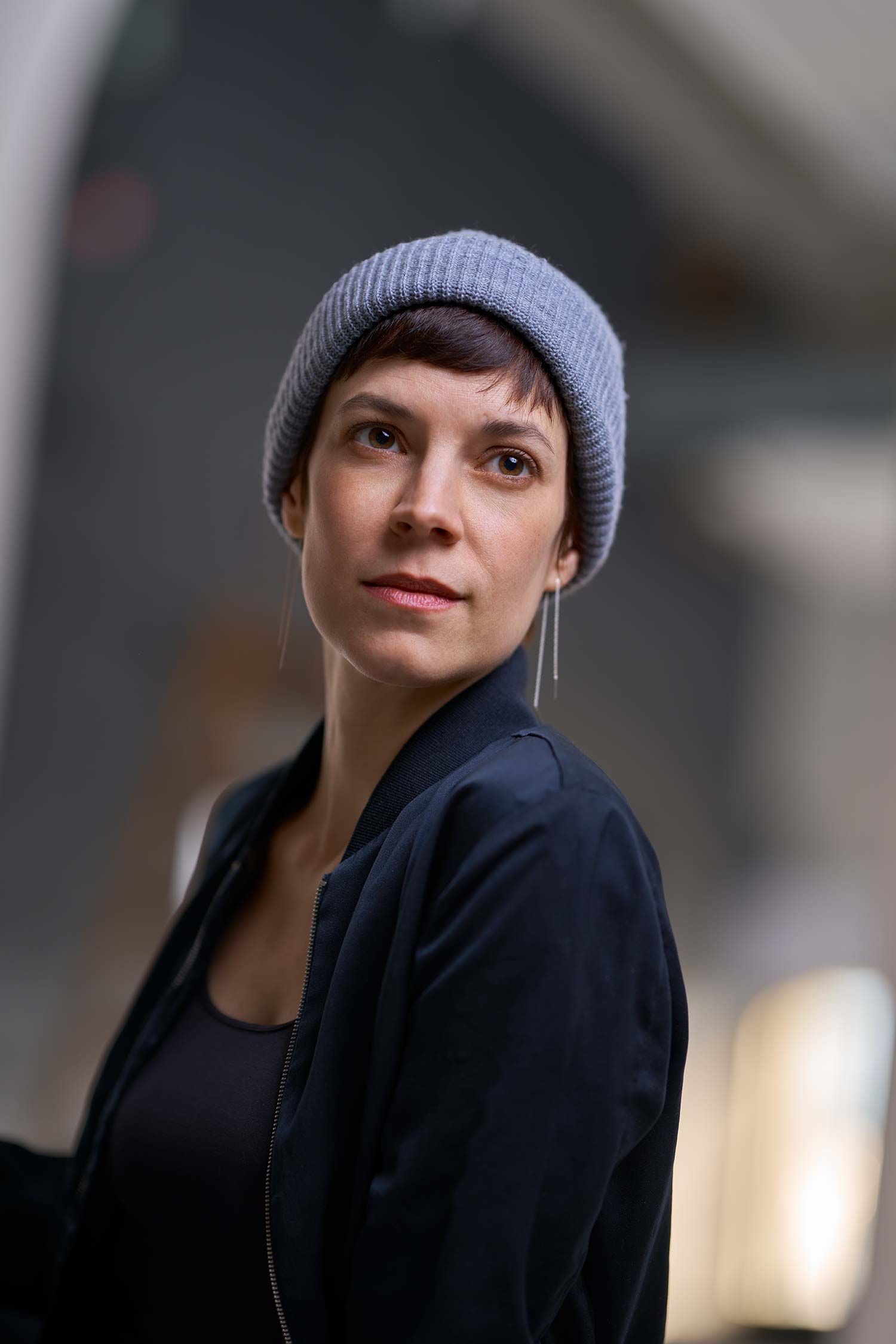
Name: Verena Zeiner
Nationality: Austrian
Occupation: Pianist, composer, improviser
Current release: Verena Zeiner's new album Radical Care is out May 23rd 2025 via Unit. Pre-save singles "To the other side", the title track "Radical care" as well as the full album.
Recommendations for Vienna, Austria: Vienna is a lovely city to stroll around. I would recommend to skip the touristic places and follow curiosity instead. To take the small alleys and discover beautiful hidden treasures.
If you enjoyed this Verena Zeiner interview and would like to know more about her music, visit her official homepage. She is also on Instagram, and Facebook.
What were some of the musical experiences which planted a seed for your interest in jazz?
Although I grew up in a rural area in Austria with not much around me and come from a non-musician family, my father had a small record collection and some of it was jazz. I remember that the music always caught my attention when he played a record.
Then I started having classical piano lessons as a child. Later, as a teenager, I got an additional teacher who showed me the blues scale in the first lesson. I think that was the beginning.
What does the term jazz mean today, would you say?
I’ve had a lot of conversations about it with other musicians. There seem to be many different perspectives. I keep reflecting it, also because, with my own music, I often move in between musical worlds, in liminal zones.
For example, the music on my new album Radical Care combines elements of contemporary chamber music for strings with improvised music.
For me, in the broadest sense, the term jazz describes an attitude or an approach to create music. Music, that is strongly shaped by the element of improvisation and by the person who is playing it.
As of today, what kind of materials, ideas, and technologies are particularly stimulating for you?
It continually changes. It depends on what I’m trying to create. What are the instruments I’m playing with or writing for? Who are the musicians? What is the occasion? What am I currently exploring in music? Etc.
I think it’s highly important to trust my curiosity in the process of creating something. Usually there is a reason why something catches my attention. Even if I can’t explain it rationally in the first moment, I’ve learned that it’s wise to listen closely to what makes me curious, without judgement.
But there’s one thing, that never fails to stimulate me. It’s movement. I am regularly collaborating with dancers and I have a lot of experience in bodywork myself. I have my personal movement routines that feel like the best way to prepare myself for creative work.
My brain works differently when I move my body. My curiosity, my senses, my intuition - however you want to call it – all get awakened in another way.
Where do most of your inspirations to create come from – rather from internal impulses or external ones? Which current social / political / ecological or other developments make you feel like you need to respond as an artist?
I can’t really differentiate between internal and external inspirations. They are connected. The world around me affects me, does something to me and often, making music is my way of working through it or of taking a stand.
I am aware that I am in a very privileged position. In my view having privileges means having responsibility to contribute because we are all connected and interdependent. While I was composing the music for my latest album I was dealing with a lot of big questions: How can we face a world that is in multiple crises? How can we lead a meaningful life in the midst of countless unanswered questions? How can we orient ourselves when familiar structures dissolve?
I came across the concept of care as an attitude to meet the challenges of the times. When I use the word care I refer to the following definition:
“Care is our individual and common ability to provide the political, social, material and emotional conditions that allow the vast majority of people and living creatures on this planet to thrive - along with the planet itself.” (The Care Collective: The Care Manifesto. The Politics of Interdependence. Verso 2020).
Actively dealing with these topics in a musical way, has helped me a lot to feel better even if they are heavy topics. It equips me with the possibility to take concrete actions. I know I can’t solve the problems of the world with my music, but maybe I can give some comfort or inspire other people to find their own way of active engagement.
Music has become a lot more global, and incorporating elements from other parts of the world or the musical spectrum is commonplace. Do you still think there are city scenes with a distinct, unique sound? How does your local scene influence your work?
I think every place radiates something unique.
Places have their own history, cultural heritage, mix of people etc. All of it not only creates a certain atmosphere but also influences the development of a sound. Besides Vienna, my current home town, I have also lived in Brussels and New York. I’m travelling a lot and I observe this again and again.
But it is certainly true that there are more common factors in the music these days, simply because we have easier access to things that happen even far away.
I find that the local scene in Vienna has been in a process of change in the last years. A lot of inspiring musicians moved to here. It shapes a scene. In a good way! It gets more vibrant, more lively, more diverse. It will be interesting to see where the journey takes us.
What role do electronic tools and instruments play for your creative process?
I love playing the acoustic piano. I love how it feels and how it sounds. The instrument offers endless possibilities for exploration. Also in composing processes I spend a lot of time with the acoustic instrument.
However, on my solo albums I’ve used electro-acoustic settings to expand the sound palette of the piano. And right now I’m at the beginning of a new chapter with electronics. What I can say so far is, that it really inspires me to take new directions.
Thanks to technological advances, collaboration has become a lot easier. What have been some of the most fruitful collaborations for you recently and what approaches to and modes of collaboration currently seem best to you?
Even if collaborating remotely became an option, and sometimes is for me as well, I still prefer being in the same place with the musicians I work with.
When we are in the same room we can connect differently. In my music there’s a lot of space for improvisation and being connected is important, to create together.
A continually inspiring and very important collaboration for me is the duo with drummer Ziv Ravitz. We released the duo album The Sweetness of Finitude in 2021 and he’s also on the new album Radical Care.
Jazz has always had an interesting relationship between honouring its roots and exploring the unknown. What does the balance between these two poles look like in your music?
I always get a lot of inspiration from looking and listening into the history of jazz and I find it essential to know, honor and respect the roots of it.
For a long time I was very careful with my own explorations. I was almost a bit afraid to go my own ways, for different reasons. Luckily the urge to look for my personal musical language was stronger and at one point I finally allowed myself to go into new territories, even if I couldn’t label the music that came out of it so easily. But it gave me much more freedom and pleasure.
So, I try to stay on this path: being aware of the past but taking the liberty to find my personal expression.
How much potential for something “new” is there still in jazz? What could this “new” look like?
There’s always potential for something new. Change and development happen all the time and they bring newness with them.
I don’t know if there’s a general “new“ that should happen. I don’t even know if it’s important to strive for that. I think it’s something that can develop naturally when we stay curious and open to change.
I also think that newness, or innovation, is something very subjective. Things that feel new to me are maybe old for someone else, but that doesn't make my perception of it any less valuable or valid.
I think the start of something new is gradual and often only identifiable in retrospect.
For many artists, life-changing musical experiences take place live. How do you see that yourself?
That’s the way it is for me, too.
Playing live, with an audience in the room, is very energizing. It influences the music a lot because there’s a direct dialogue going on. Not verbal, but the exchange happens on another level.
How, would you say are your live performances and your recording projects connected at the moment? How do they mutually influence and feed off each other?
They feed off each other because recording sessions sometimes allow more time and space for experimentation or it's simply necessary to try things differently. This, in turn, influences the live performance of the music.
And sometimes the frame for a live performance is in a certain way and things need to be adapted to this situation. It’s an ongoing process.
Improvisation is obviously an essential element of jazz, but I would assume that just like composition, it is transforming. How do you feel has the role of improvisation changed in jazz?
Good question. Improvisation allows the players to express themselves, to tell their personal story in their own language. That’s why it’s there!
I think the disadvantage of having access to so much music, of having the possibility to listen to so many players all the time, might be, that it is harder to find one's individual voice. There is a lot of potential for distraction.
What, would you say, are the key ideas behind your approach to improvisation?
For me improvisation is real-time-composition. Being able to compose instantly, in compressed time, means that I constantly need to practice the skills that I need for that. It’s a craft.
The more time I spend with it and feed it, the more flexibility I get for the actual playing situations. Not just in terms of techniques but also when it comes to musical ideas or sound.
Are there approaches, artists, festivals, labels, spaces or anyone/-thing else out there who you feel deserve a shout out for taking jazz into the future?
I think the general changes in the world require cultural institutions to adapt. Or - to put it more positively - they have the opportunity to actively shape the change.
I always enjoy seeing diversity in the line-ups of festivals and labels. They play such an important role and have responsibility in making artists visible to a wider audience. I think it is important to depict many narratives on the stages of festivals.
The Montreux Festival intends to preserve its archive of recordings for future generations. Do you personally feels it's important that everything should remain available forever - or is there something to be said for letting beautiful moments pass and linger in the memories of those that experienced them?
There’s something very special when performances happen at a certain time and space, only witnessed by the people who are present right at this moment, be it musicians or audience.
But I totally understand the desire to preserve as much as possible. The Montreux Festival in particular is a festival steeped in history. Many milestones were set there that are worth archiving.