Published
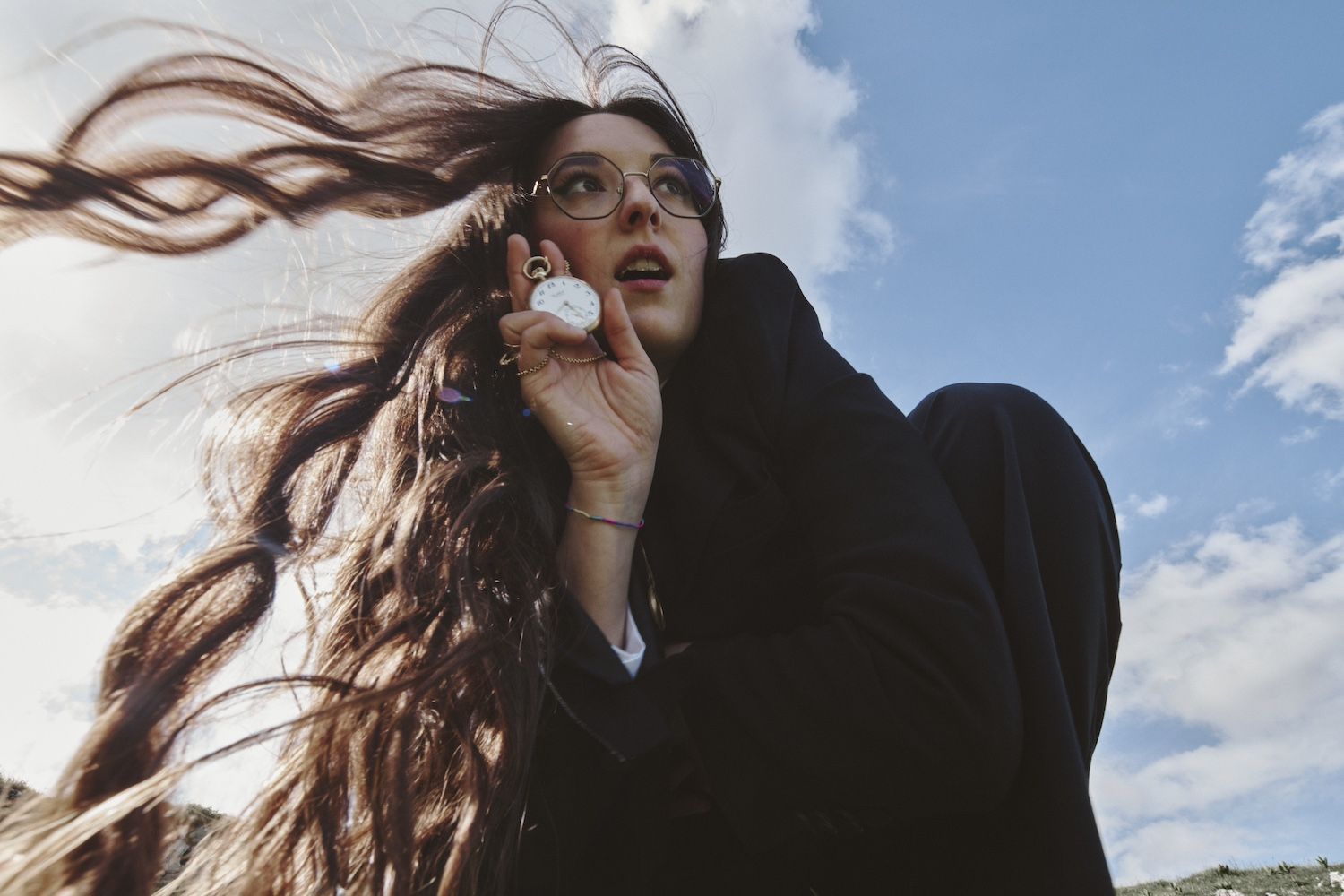
Name: Veronica Fusaro
Nationality: Swiss-Italian
Occupation: Singer, songwriter
Current release: Veronica Fusaro's new album Looking for Connection is out via deepdive. Stream the album here, and buy a physical copy here.
Recommendations for Bern, Switzerland: Go have a swim in the Aare in Summer. It’s really cool and lots of fun (you gotta be a good swimmer to do this).
If you enjoyed this Veronica Fusaro interview and would like to stay up to date with her music and live dates, visit her official homepage. She is also on Instagram, tiktok, and Facebook.
When did you first consciously start getting interested in singing? What was your first performance as a singer on stage or in the studio and what was the experience like?
I’ve been singing for as long as I can remember, but I think I consciously got interested in it during my teenage years, when I realized that music could express things I couldn’t quite put into words. That’s when it stopped being just something I enjoyed and became something I craved to do.
My first real performance was at a small school band festival. I was nervous but tried to play it cool — and actually had a great time. Looking back at the videos now is hilarious, because I didn’t move an inch on stage.
I definitely got more comfortable over time.
If you're also playing other instruments, how does the expressive potential of these compare to your own voice?
The great thing about guitar and piano is being able to play harmonies, to shape chords. It is more than just a lead line, because you can wrap that melody in a kind of bed. Sometimes it feels soft and comfortable, and sometimes it is meant to feel tense or uneasy.
I think every sound has its own character and its own story to tell. That is what I love about making music: finding the sounds that can express emotions when words are not enough.
But of course, the voice is the most unique instrument, the most personal one. Because, well, it’s inside of us.
Singing is an integral part of all cultures, and traditions. Which of these do you draw from – and why?
I grew up listening to Italian rock, Vasco Rossi to be specific. His music taught me that songs don’t need to be perfect, they just need to be real and full of life.
I also love the whole Motown era, the soul, the R&B, the blues, the jazz — everything that was shaped by African American music culture. There is so much truth, groove, and emotion in that music.
It is timeless, and it continues to inspire how I write and perform today.
What were some of the main challenges in your development as a singer/vocalist? Which practices, exercises, or teachers were most helpful in reaching your goals – were there also “harmful” ones?
One of the main challenges was just learning how much my voice can take. It took me a while to understand how to use it in a healthy way, especially when touring or recording for long hours.
Over time I learned to listen to my body and find what works for me. Warming up properly, resting when I need to, and not pushing too hard. It sounds simple, but it makes all the difference.
What are the things you hear in a voice when listening to a vocalist? What moves you in the voices of other singers?
Honesty. And Uniqueness. A voice that makes me stop whatever I’m doing and go „oh, this feels … special“.
How would you describe the physical sensation of singing? [Where do you feel the voice, do you have a visual sensation/representation, is there a sense of release or tension etc …]
Ha, I don’t really think about that while I sing. I feel the music in my whole body, but not the voice as something separate. It’s more like everything becomes one.
When it feels right, it’s not analytical at all. It’s instinctive. I’m just in it, feeling the music move through me rather than thinking about where it sits physically.
We have a speaking voice and a singing voice. Do these feel like they are natural extensions of each other, ends on a spectrum or different in kind?
I definitely feel different when I talk. My speaking voice and singing voice come from the same place, but they don’t feel like the same thing.
When I sing, something shifts. Singing feels more open, more emotional. It allows me to express things I would never just say. Talking is communication, but singing is connection.
How do you see the relationship between harmony, rhythm and melody? Do you feel that honing your sense of rhythm and groove has an effect on your singing skills?
To me, the perfect song happens when harmony, rhythm, and melody all marry and support each other.
I definitely think that having a good sense of rhythm and groove makes a huge difference in how you sing. It gives the words movement and life.
Even a soft, emotional song still has a pulse, and when you feel that rhythm inside you, the singing naturally connects more deeply. You gotta feel the music!
As a singer, it is possible to whisper at the audience, scream at the audience, reveal deep secrets or confront them with uncomfortable truths. Tell me about the sense of freedom that singing allows you to express yourself and how you perceive and build the relation with the audience.
Funny little job I have, huh. I don’t really overthink it. All I know is that I truly love doing it.
Singing allows me to express things I could never explain otherwise. And when the audience connects with that, when I see that they feel it too, that is the moment everything makes sense.
It becomes this quiet exchange of energy that reminds me why I do what I do.
When you're writing song lyrics, do you sense or see a connection between your voice and the text? Does it need to feel and sound “good” or “right” to sing certain words? What's your perspective in this regard of singing someone else's songs versus your own?
Yes, I believe that words, or a story itself, already carry a melody. When I write, I try to listen to that rhythm, to the natural flow of how the words want to be sung. If it feels good in my mouth and resonates emotionally, then I know it is right.
When I sing my own songs, it feels like breathing. When I sing someone else’s, I need to find a way to connect to their story so it can become mine for a moment.
Either way, it always comes back to honesty.
Strain is a particularly serious issue for many vocalists. How do you take care of your voice? Are the recipes or techniques to get a damaged voice back in shape?
I try to keep it simple. I drink a lot of water, rest when I need to, and listen to my body. The voice is part of you, so if you are tired or stressed, it shows immediately.
Taking care of myself mentally is just as important as taking care of my voice physically. Sleep, hydration, silence, and calm usually do the trick.
How has technology, such as autotune or effect processing, impacted singing? Has it been a concrete influence on your own approach?
Sometimes you have a take that feels incredible, but there is that one note that is just slightly off and makes you go crazy. In that case, being able to correct it is amazing.
But it is all about knowing when that little note is actually a problem and when to let it be. Sometimes those imperfections are what make a performance feel human and real.
Motherese may have been the origin of music, and singing is possibly the earliest form of musical expression, and culture in general. How connected is the human voice to your own sense of wellbeing, your creativity, and society as a whole?
I think the human voice connects us as people. Literally as well as metaphorically. We have that ability to be able to communicate our feelings and sometimes that’s a blessing and a curse as they say.
On a personal level, my voice is a big part of my wellbeing. I hate when I feel sick and cannot sing. It almost makes me feel even sicker.