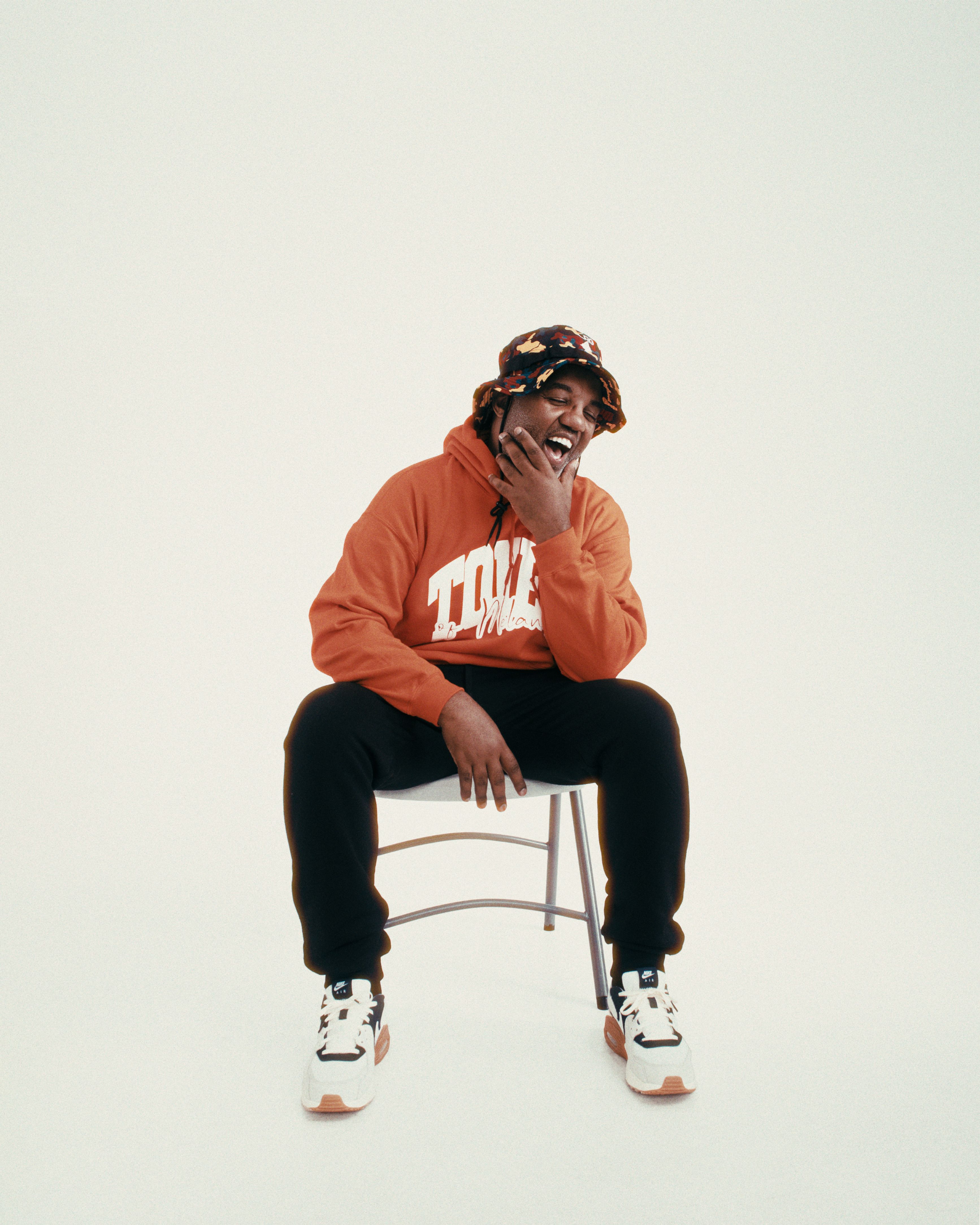
Published
Name: Waithaka
Nationality: Kenyan, US-based
Occupation: Musician, producer, composer
Current release: Waithaka's new album Soul’d Duets is out now.
If you enjoyed this Waithaka interview and would like to know more about his music, visit him on Instagram, twitter, and Facebook.
For an interview with one of his collaborators, read our Chris Barr interview.
Where does the impulse to create something come from for you? What role do often-quoted sources of inspiration like dreams, other forms of art, personal relationships, politics etc play?
The impulse comes from all the influences you have mentioned, especially other art forms and personal relationships.
But the biggest impulse for me is the mood I’m in. That will dictate the direction the music will go and the vibe it will possess.
For you to get started, do there need to be concrete ideas – or what some have called a 'visualisation' of the finished work? What does the balance between planning and chance look like for you?
It can with any of the examples. If I’m working with an artist in a studio session it can be a conversation, demo or chord and melody ideas.
A chance recording for me looks more like a conversation that turns into a song. It wasn’t planned but it ends up on a record.
A planned recording would be more of a settled idea, be it the music, melody or lyrics and then we build around that.
Is there a preparation phase for your process? Do you require your tools to be laid out in a particular way, for example, do you need to do 'research' or create 'early versions'?
If I haven’t worked with an artist before I do try to sample their released or unreleased material so I can gauge where to start.
But for myself I like to work from an empty template to build a sound that we can find a balance in.
What do you start with? And, to quote a question by the great Bruce Duffie: When you come up with a musical idea, have you created the idea or have you discovered the idea?
I usually start with chords and melody since I’m a keyboardist and piano player. I’ve also worked from drums & percussions first and I’m learning the bass to add to my initial approach with my compositions.
Ideas for me can either be created or discovered. For instance, when I’m learning a popular song I may take the chord changes and rearrange them to come up with new material.
When do the lyrics enter the picture? Where do they come from? Do lyrics need to grow together with the music or can they emerge from a place of their own?
For me lyrics enter the picture when working with songwriters. I have written full songs on my end but I do like to have the songwriters give their own perspective on my music.
For the studio sessions I’m in, I do contribute to the lyrics where needed.
Many writers have claimed that as soon as they enter into the process, certain aspects of the narrative are out of their hands. Do you like to keep strict control or is there a sense of following things where they lead you?
I do like to keep a strict control of the song goal but very flexible with the approach.
I’ve had sessions where we know what the subject matter is, recorded the first idea and then started all over again implementing a new approach but with the same final goal.
Often, while writing, new ideas and alternative roads will open themselves up, pulling and pushing the creator in a different direction. Does this happen to you, too, and how do you deal with it? What do you do with these ideas?
Yes it does happen but not often because when I approach an artist I’m trying to work with, I have an idea of the direction I’m going with. The moments where there’s a push and pull between creators, I try to find the balance between both ideas and approach.
I don’t discard ideas. I revisit them years later with more appreciation and knowledge.
There are many descriptions of the creative state. How would you describe it for you personally? Is there an element of spirituality to what you do?
It's 100% spiritual for me. I struggle with making music that doesn’t resonate with me, especially trendy stuff. If I don’t like what I’m hearing, it will be hard for me to complete the idea.
I love what I do so much that there’s no separation between me and my music. It’s a perfect representation of my personality.
When you're in the studio to record a piece, how important is the actual performance and the moment of performing the song still in an age where so much can be “done and fixed in post?”
The performance is everything for me, I don’t like perfect takes. I'd rather have ones that bear the emotion being conveyed.
The music shouldn’t be mechanical, which is why I incorporate a lot of live playing in my music. The little nuances that human beings possess makes the music carry a soul of its own.
Once a piece is finished, how important is it for you to let it lie and evaluate it later on? How much improvement and refinement do you personally allow until you're satisfied with a piece? What does this process look like in practice?
It’s probably the most important stage in the whole process. Most of my decisions on the song are made here. I sit with the songs for at least a month and then do revisions or move forward to the mixing and mastering stage.
What's your take on the role and importance of production, including mixing and mastering for you personally? In terms of what they contribute to a song, what is the balance between the composition and the arrangement (performance)?
I say those three are the major roles in creating a memorable piece of music.
It’s also important not to skip the process. If you capture a good recording, you won’t struggle having to do a lot of cleaning up in the mix. Also I take this opportunity to have a second and third trusted ear in the quality control chain for my work.
Mixing and mastering is such an integral part of my creation process and one that really determines how well the quality of the music will be received. I don’t handle my own mixes. I usually let my engineers handle them because at this point I may have ear fatigue and will miss a lot of mistakes or ideas that need to be brought to the forefront.
After finishing a piece or album and releasing something into the world, there can be a sense of emptiness. Can you relate to this – and how do you return to the state of creativity after experiencing it?
Yes there is and I’m currently experiencing it after the release of my fourth album Soul’d Duets. For the last three years it was personal as I was working on it, making changes and moving through the different stages of production.
I’ve tried to find the balance by working on other artists' projects to keep my creativity at a high level. Also I do try to listen to new music that’s been released because it can’t influence me at this stage with my creative process.
Music is a language, but like any language, it can lead to misunderstandings. In which way has your own work – or perhaps the work of artists you like or admire - been misunderstood? How do you deal with this?
I’m very picky with my work so I haven’t had a moment where my work was misunderstood.
The closest was when we did a rendition of a traditional song and it was taken by the audience to be we copied an older artist who had done his own rendition years ago. Once I explained what the difference was, it cleared up a lot and more renditions of the same song were done.
Creativity can reach many different corners of our lives. Do you personally feel as though writing a piece of music is inherently different from something like making a great cup of coffee? What do you express through music that you couldn't or wouldn't in more 'mundane' tasks?
No I don’t. What separates people is the passion and attention to detail put behind the two creative processes.
I love to grill and the same amount of passion I put into my music is very much translated to the barbecuing process. I want a consistent outcome and that’s achieved by not skipping any steps in my process.