Published
Name: WANU
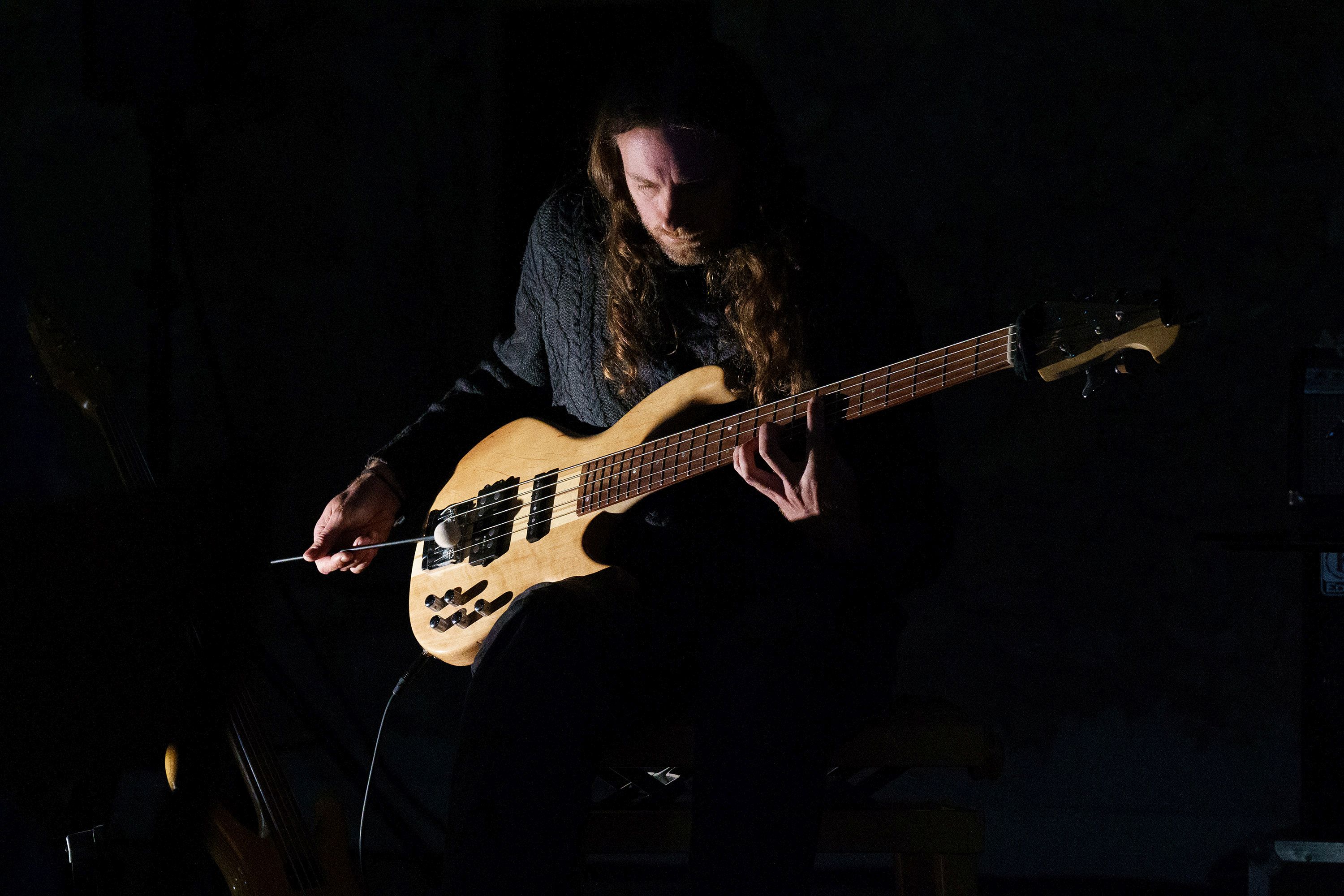
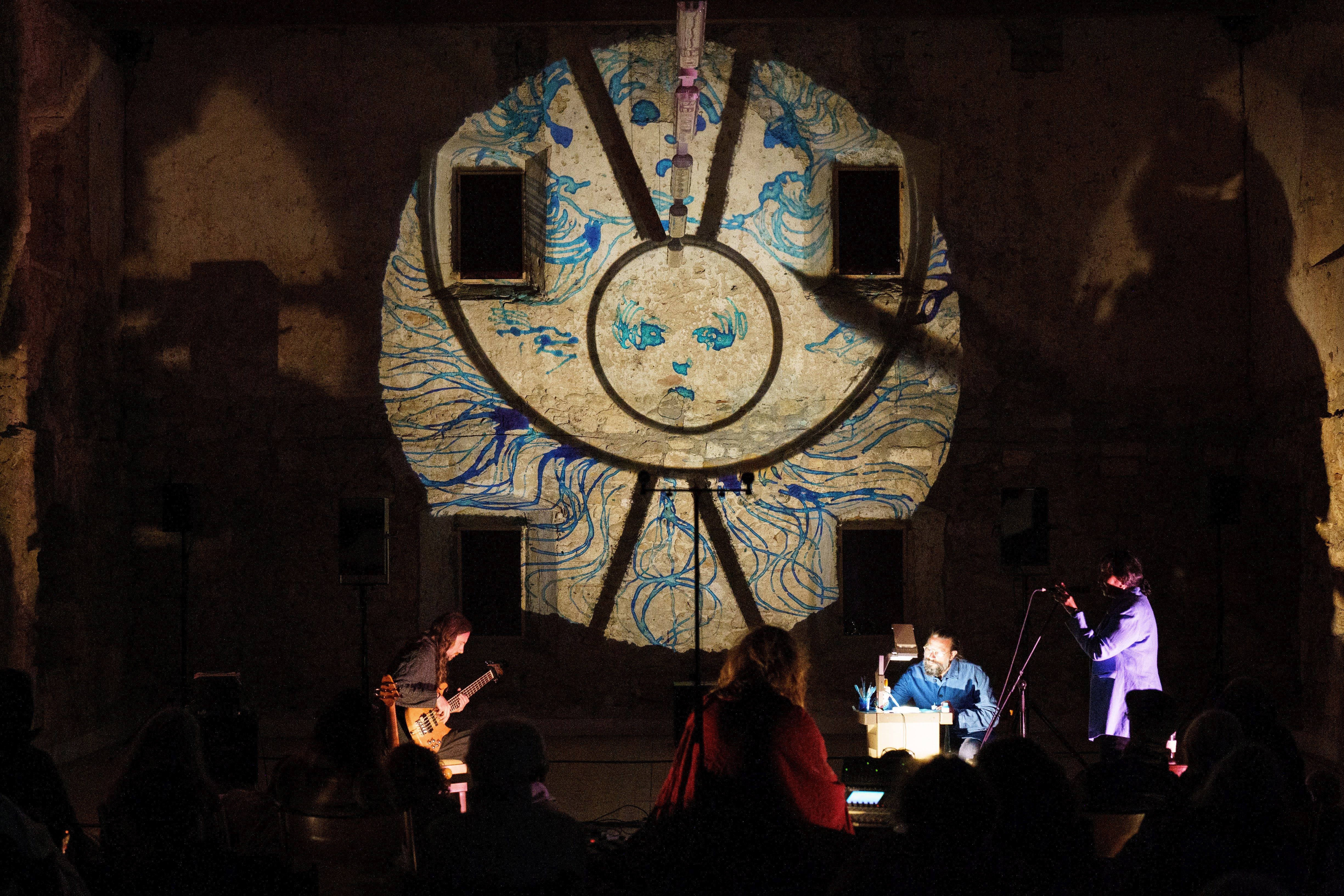
Members: Sébastien Pittet (electric bass guitars, effects), Sébastien Guenot (drawings, effects), Mathias Durand (multidiffusion, effects), Saadet Türköz (vocals)
Interviewee: Sébastien Pittet
Nationality: Swiss
Current release: WANU's new album Magma is out via No Sun.
If you enjoyed this WANU interview and would like to know more about the band and their music, visit their official homepage. They are also on Facebook.
What were some of the musical experiences which planted a seed for your interest in jazz?
Coming from a rock background, I discovered jazz during my musical studies at the Haute Ecole de Jazz de Lausanne.
Billy Cobham's Spectrum, Herbie Hancock's Head Hunters and the first album of Jaco Pastorius were the master pieces that opened the way for me!
How do jazz and jazz culture factor into your artistic processes and the music resulting from them?
Improvisation is clearly part of my artistic universe, as it's the best way to express emotions and connect with other people.
In my compositions, the harmonic colors are very much influenced by modal jazz, with folk and classical influences as well.
What does the term jazz mean today, would you say?
The same meaning as for the term “rock”. It is above all a strong social, political and cultural movement, before being a style of music in itself, even if it was sometimes used for commercial or propaganda purposes contrary to its values.
Jazz was born out of the pain of black history in America, and remains today a term that embodies the principles of equality, tolerance and social justice.
Jazz was about a lot more than just music in the 60s and 70s, from politics to fashion. For you personally, is jazz still a way of life – and if so, in which way?
Although, as I said in my previous answer, jazz conveys a rather pacifist message, it is not as strongly politicized today as it was in its twentieth-century history. It's also a style that has become much more accessible and can be found in very different contexts.
However, if we talk about lifestyle, I think we can make a link with open-mindedness, artistic curiosity and the need to break free from codes and conventions to create links between the public and artists from all horizons.
Many people perceive jazz as a genre with high barriers of entrance, both for listeners and musicians. What have your own experiences been in this regard?
Yes, that's true, and it may seem paradoxical in the light of what I've just said. But I think that, as with metal for example, all it takes is a minimum of curiosity and openness to break through this barrier and discover all the richness there is to be found.
In my experience, it's people who are closed-minded or devoid of any interest in what they don't know who perceive these barriers. Then there are those who simply don't like a certain kind of jazz, and that's a matter of taste that can't be discussed, in my opinion...
Derek Bailey defined improvising as the search for material which is endlessly transformable. As of 2024, what kind of materials are particularly stimulating for you?
Like my next album Magma, which was inspired by live drawing with water and ink, I like to immerse myself in the sounds and movements found in nature. The four elements water - earth - fire - air are in constant transformation, emanating from an unpredictable and always unique dynamic.
It's a concept I like to transpose into my compositions, which can take on both abstract, indescribable aspects and more concrete, down-to-earth ones.
What, would you say, are the key ideas behind your approach to improvisation?
Above all, keep a child's mind, because it's unformatted by convention and habit. They explore new ways of creating and inventing, using his imagination as a game. Sometimes, our expertise in a field can make us forget what our initial approach to art was.
I had a case once where a young student started rubbing the strings of his bass on a microphone stand as a joke, and out came sounds I'd never heard before. This example left a lasting impression on me and reminded me that this approach is essential to improvisation.
How would you describe your relationship with your instrument – is it an extension of your self/body, a partner and companion, a creative catalyst, a challenge to be overcome, something else entirely?
My relationship with the instrument has changed since 2015 when I developed focal dystonia, a neuro-sensory dysfunction whose symptoms manifest themselves in the loss of control of certain yet basic movements.
Prior to this, all my instrumental work was mainly focused on electric bass and playing performance. The onset of this pathology forced me to stop playing for several months. Then I gradually took up other instruments such as guitar, piano and double bass in order to re-educate my movements and discover other approaches to music.
Since then, my interest in composing, improvising and working with sound has grown, and I see my instrument, whatever it may be, as a means of creation and pure expression, with technique solely at the service of what I wish to express.
This experience was a great challenge to my activity as a musician, and ultimately an opportunity to evolve in my musical and instrumental approach.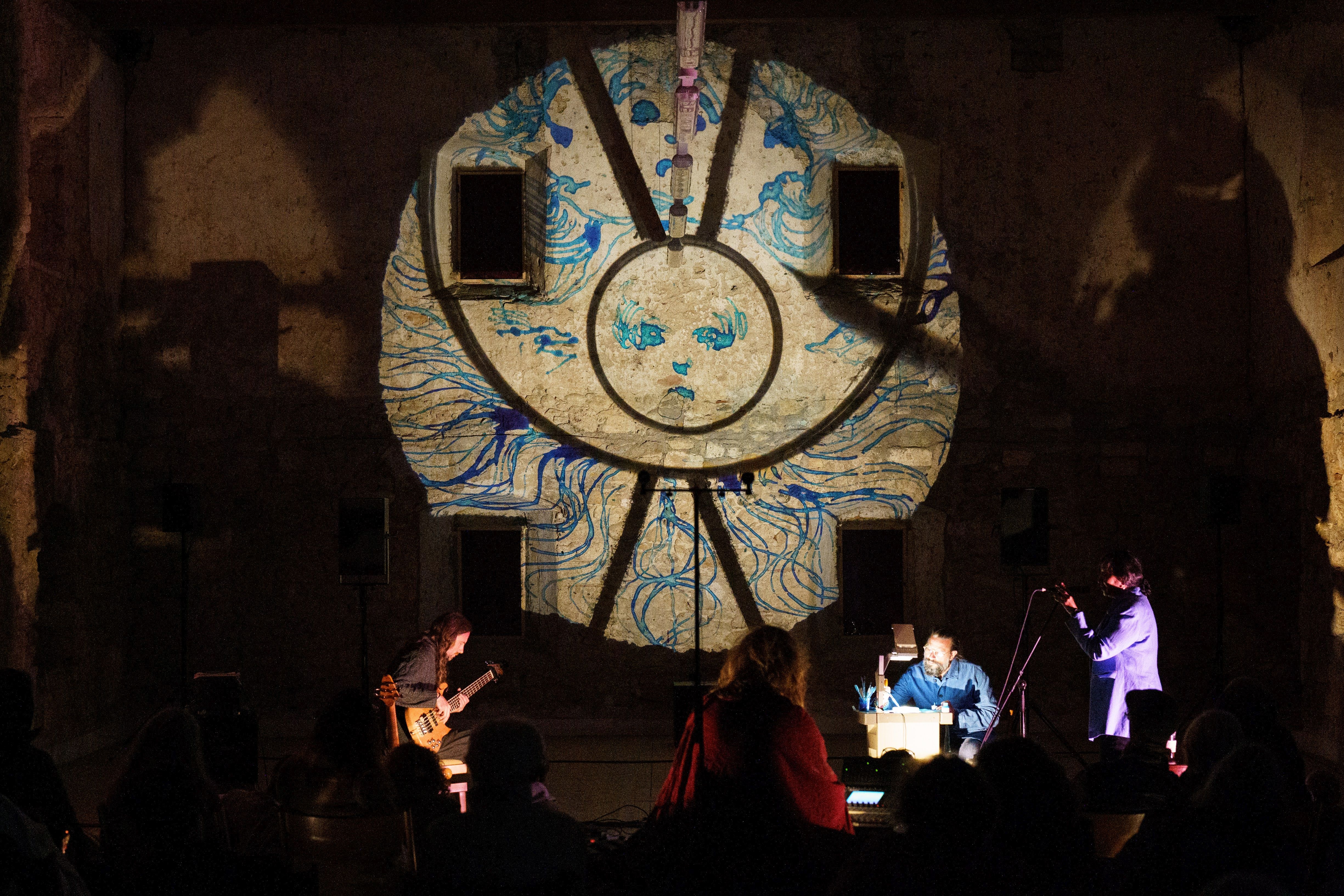
Wanu Live Image bya Phillipe Montes
Jazz has always had an interesting relationship between honouring its roots and exploring the unknown. What does the balance between these two poles look like in your music?
For me, since the history of jazz is closely linked to the history of African-Americans and the tragedy of slavery and segregation, I would say that the notion of freedom is the link in between.
What are currently direction in jazz or jazz-adjacent communities which you personally find interesting?
I've always been interested in the tendency of jazz to integrate different styles and cultures into its universe. I've listened to a lot of ethno jazz, such as Trilok Gurtu and Egberto Gismonti, and to jazz rock, even metal, with the work of John Zorn and Ben Monder.
[Read our Trilok Gurtu interview]
But what attracts me most is the intimate, minimalist and polyrhythmic jazz that can be found, for example, on ECM or in improvised music ensembles. Pianist Nik Bärtsch's work is a case in point.
In this approach, I like the links with certain currents of contemporary classical music mixed with more groovy rhythms. I think it's a beautiful artistic combination of jazz and classical culture.
[Read our Nik Bärtsch interview]
[Read our Nik Bärtsch's RONIN interview]
How, would you say are your live performances and your recording projects connected at the moment? How do they mutually influence and feed off each other?
In the case of my next album Magma, it's a live recording of a unique improvisation that will never be played in the same way again, and I think that in this world of improvisation, any performance can be considered valid for an album.
As far as the more written repertoires are concerned, I always leave myself a margin of freedom of interpretation, depending on my mood and what I want to express.
There are various models to support jazz artists, from financial help to mentorships/masterclasses. Which of these feel like the best way forward to you?
I think all forms of support are welcome, and I don't see any one way being more appropriate than another.
However, the state and private institutions that fund culture must be able to consider jazz and other alternative music as a serious and recognized field, in the same way as classical music.
Are there approaches, artists, festivals, labels, spaces or anyone/-thing else out there who you feel deserve a shout out for taking jazz into the future?
I believe that as long as an artist believes strongly in his or her project, whatever the style, he or she continues to give life to jazz.
Whether it's keeping Be Bop and Swing alive or creating totally new genres, artists continue to nurture and evolve jazz through time.
The Montreux Festival intends to preserve its archive of recordings for future generations. Do you personally feels it's important that everything should remain available forever - or is there something to be said for letting beautiful moments pass and linger in the memories of those that experienced them?
I've always had a deep attachment to history in general, and I think it's important to remember it. Not just in music, but everywhere. Indeed, history helps us remember our mistakes and our successes, prevents obscurantism and gives us choices for our future.
In jazz, it's also a way of remembering certain links with difficult periods in the history of the 20th century, and above all a wealth of infinite knowledge that can inspire us and stimulate our creativity.