Published
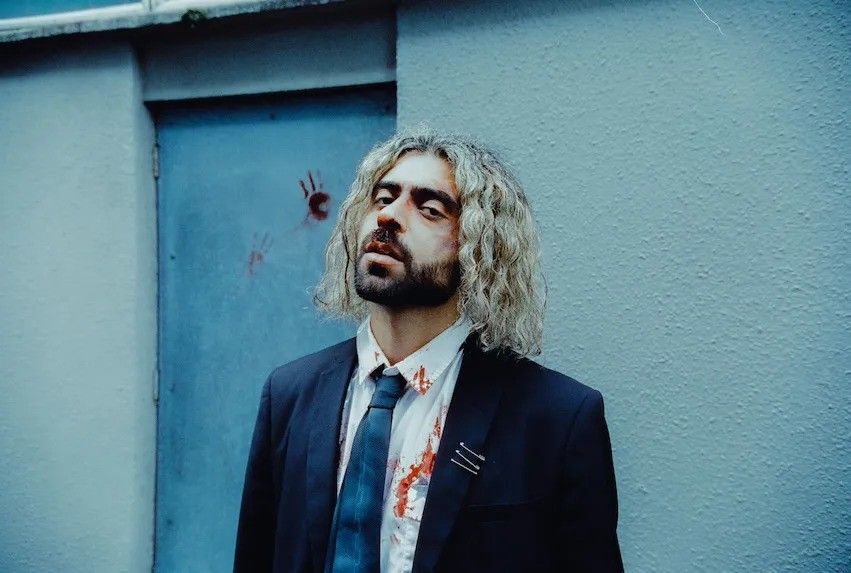
Name: Zaidoon Nasir aka WHO SHOT SCOTT
Nationality: Iraqi born, New Zealand bred
Occupation: Producer, songwriter, vocalist
Current release: WHO SHOT SCOTT's new EP BRAIN (SIDE B) is out now.
If you enjoyed this WHO SHOT SCOTT interview and would like to know more about his music, visit him on Instagram, Facebook, and Soundcloud.
What were some of the musical experiences which planted a seed for your interest in hip hop?
There are a couple that definitely come to mind.
One big one was when I was at my friend’s house, and ‘Get Rich or Die Tryin’ by 50 Cent was playing. I remember hearing all those songs, all those beats, and just being mind-blown. That definitely sparked an interest.
Another one for me was ‘Beautiful’ by Snoop Dogg and Pharrell. I remember seeing that music video on TV when I was really young and thinking, “Wow, this is such a crazy beat.” It always seems to come back to the beats for me.
What does the term hip hop mean and stand for today, would you say?
I’m not sure I’m the right person to answer this, but you know, hip-hop is so much more than just music. It’s a culture, and it’s always been that. When you look around today, you see streetwear, even high fashion, taking influence from the grassroots level of hip-hop. It’s basically everywhere now, it’s fully mainstream.
It’s also bled into all genres of music. Most pop music today is influenced by hip-hop in some way, and hip-hop itself has split into so many subgenres that I can’t even keep up. It feels like new ones are being invented every day.
Hip hop has always been about a lot more than just music. For you personally, is hip hop a way of life – and if so, in which way?
I wouldn’t go as far as to say it’s a way of life for me, but it was definitely formative in terms of my understanding of music, culture, and fashion. A lot of the things I loved as a teenager were directly influenced by hip-hop culture.
So while it’s not necessarily a way of life for me, and I feel like I’m influenced by way more than just hip-hop, I can’t deny that it had a very early impact on me.
What, would you say, are the key ideas behind your approach to creativity?
Full intuition. Trusting gut feelings, trusting those primitive instincts, being kind to myself, and creating space for unfiltered creativity to come through. That process takes different shapes depending on where I’m at in life.
Lately, it’s been a lot of meditation and surrounding myself with art that challenges me. I treat it like my diet - you are what you consume. So I make sure to engage with things that push me, which naturally extends into my creativity, leading me to explore new creative territories.
When I think of that Björk song “Hunter”, I relate to it a lot.
Where do most of your inspirations to create come from – rather from internal impulses or external ones? Which current social / political / ecological or other developments make you feel like you need to respond as an artist?
Again, all of my inspirations come from internal, intuitive responses to the world around me, unfiltered and as accurately depicted as possible, not just in the songwriting but also in the production.
I wouldn’t call myself a political musician. I don’t really have an agenda or something to preach, I’m not here to lead. I’m more of an observer.
Lately, what’s come up a lot in my music is the capitalist nature of the industry and how cold and heartless it can be. That’s been a recurring theme in my most recent work in songs like ‘THE DATA’.
Hip hop has always had an interesting relationship between honouring its roots and pushing the music forward. What does the balance between these two poles look like in your music?
I don’t know that I’ve ever thought about it that way, but I do see my creative process as something that always wants to move forward. I never want to be stagnant, and I definitely never want to go backward - there has to be forward momentum. That’s really important to me. So I guess I do lean more toward pushing music forward.
But at the same time, because I’m such an intuitive creator, I naturally channel the things that were around me as I was growing up. If there are echoes of the past in my music, they happen effortlessly and naturally.
What role do electronic tools and instruments, including AI, play for your creative process?
I’m a music producer, so I use a lot of hardware and tools to bring my music together. But I still lean more toward synthesizers and working outside the box rather than staying entirely in the laptop. I feel like there’s a level of human-ness that comes through when I’m actually performing the instrumental parts of my music.
As for AI, I haven’t really used it in my music yet or found a way for it to fit into my process. I think AI is exciting for the future, but because my music comes from such an intuitive, primitive place within me, there’s no room for anything external to alter that direction. It has to be completely pure and honest.
What are currently developments and directions in hip hop or hip-hop-adjacent communities which you personally find interesting?
One thing I find really interesting is how cyclical culture is. A lot of the fashion that was around when I was a kid is coming back into style, and the same goes for music.
Certain sounds are making a resurgence, like the Korg Triton, for example. It was such a staple in early 2000s production, with producers like Timbaland, Dr. Dre, and Pharrell using it heavily. Now there’s even a VST plugin for it, and so many people are making beats inspired by that era, partly because of nostalgia.
I actually even bought a Triton myself to indulge in that craving.
How do you see the role of sampling in hip hop today?
I think sampling is just as relevant as ever, if not more. It’s so accessible now. Back in the day, people had to go to record stores, dig through crates, or hunt for CDs and tapes. It was a real process finding music to sample.
Now, everything is right at our fingertips. There’s so much music around us, and it’s easier than ever to rip something and sample it. Because of that, I think sampling is alive and well and will continue to be for a very long time.
There has always been a close connection between hip hop and jazz. What role does improvisation play in your current creative process?
I definitely rely a lot on improvisation because my whole process is intuitive. A lot of it is about creating an environment where improvisation is encouraged and accepted without judgment within my own creative space.
Later on, I sift through those improvisational performances and decide which ones make the cut, so to speak, and end up becoming fully fleshed out songs.
But yeah, at the start of the process, it’s all about improv, going with feeling, and trusting my gut without overthinking, which I really love, and need.
It can sometimes seem as though, in hip hop, production is the main force of progress. Do you feel like there is still space for genuinely new ideas for lyrics and vocals as well? If so, what could these look like?
Yeah, for sure. I feel like hip-hop has always been a space for new ideas, vocally, lyrically, and production-wise.
In terms of what it looks like, I can’t tell you exactly what it will be, but I can show you with the new music I’ll be releasing, because that’s exactly what I’m trying to do.
For many artists, life-changing musical experiences take place live. How do you see that yourself?
Again, I’m not sure how directly I relate to this, but I do love performing live. That said, I would say that my life-changing musical experiences absolutely take place in the vacuum of my own creative process.
Whether I’m by myself in the studio, sitting at the piano finding chords, teaching myself new ways to interact with music, or playing bass guitar, the most formative and exciting experiences have definitely happened when I’ve been alone, engaging with music and art.
How, would you say are your live performances and your recording projects connected at the moment? How do they mutually influence and feed off each other?
The recording projects always come first, that’s my main focus. Later on, I’ll figure out how to translate it into a live environment. It just so happens that a lot of the songs I naturally gravitate toward seem to work well in a live setting, but they aren’t mutually dependent on each other.
It’s always about the recording first, and then the artistic process of creating the music.
Are there approaches, artists, festivals, labels, spaces or anyone/-thing else out there who you feel deserve a shout out for taking hip hop into the future?
Yeah, I mean, in the past decade, I’d say Death Grips, Dean Blunt … there are so many artists pushing boundaries right now.
If you take it even further back, you can look at The Neptunes and what they were doing, trying to create a future sound. Timbaland, obviously, too.
Back then, that was pretty revolutionary, especially because it was done in a mainstream way. There are way too many names to mention them all.
From Star Wars via The Hitchhiker's Guide to the Galaxy to the Fifth Element, there have always been amusing sci fi ideas about how music could look like at some point. For a not too distant future, where do you personally see it going?
It’s an interesting thought.
I feel like AI is the easiest answer, and it’s obviously going to change the way we make music. There’s already software out there that lets you hum something into a microphone, and it can turn it into any instrument you want. So, essentially, it’s going to lower the point of entry for people who don’t necessarily have musical skills but have great ideas.
It’s definitely going to make everything more accessible and expose us to a lot more art from people who, 50 years ago, might not have even had the chance to make music in the first place. It’s an exciting prospect.