Published
Name: Wild Anima
Nationality: French
Occupation: Sound Artist
Current Release: Wild Anima's new album Phytosynthesis is out via USM. Buy a physical copy on bandcamp. Stream here.
If you enjoyed this interview with Wild Anima and would like to find out more about her work and music, visit her official homepage. She is also on Instagram, Facebook, and Soundcloud.
To dive deeper, we recommend our expansive 15 Questions Wild Anima interview, as well as our conversation with her about “Mantras, Healing and the Heart as an Oscillator.”
On the topic of her new album Photosynthesis, we conducted an earlier interview with her on the beauty of rain and the sound of a society.
There exists, as has been pointed out, a fascinating “attraction of humans to plants, and other non-human organisms.” What causes this attraction, do you think? And what caused it for you personally?
I think plants have this amazing power to bring us into the present moment. Their presence is often an invitation to pause, or have some kind of a healing effect. It is a connector to the feeling of being in nature. I’ve heard many people say that plants are great company for them and taking care of them has a very therapeutic effect.
The attraction to the botanical world or organisms from the natural world in general I think comes from the very simple fact that they are living organisms. And whether we realise it or not this reminds us that we are ourselves indeed alive, living beings. This attraction is something very simple and maybe also very complex. There is a fascination for the physical quality of a plant, the beauty, the scent or the soothing effect of its presence.
At the same time there is something that we cannot even name maybe. Something so cleverly designed about them and the way they are that is a real magnet for people to want to interact with a plant. I would call this “plant intelligence” as the late Stephen Buhner has written and talked about extensively.
I think the real attraction in plants and non-human organisms like fungi for instance is the different form of intelligence there is behind them.
For me personally it happened a little bit unexpectedly. I think I’ve always been vividly attracted to the wilderness in general but my true connection to plants and trees has awakened or deepened in the past 6 or 7 years. It was like an inner realisation that the Earth is a super organism through reading Buhner’s studies of course like for example The Secret Teachings of Plants. He talks about the Gaian theory which was a major heart opener for me. I slowly started being deeply attracted to plants and being associated with them by others as well.
Although I have been surprised at how other’s projections of me and my connection to plants have developed. I didn’t really think of myself as a “plant person” per se but as I was sharing my research on the heart as a sixth sense and its intrinsic connection to the Earth I met people confessing they had started to collect plants in their homes or developing their interest in them more and more because of me.
I have been surrounded by close ones in my family, friends and companions who have been very fascinated or even obsessed with botany and plants in general, it has always been part of my life. But I was not into learning about plants or getting into plants at first at all. I have barely done any gardening in my life either, maybe because I haven’t truly had the opportunity to grow a garden for myself yet.
I believe liking plants is up to ourselves to define, for a long time I didn’t want to learn the names of plants in the wilderness or names of trees because I didn’t want to confine nature in these boxes. “This is that latin name and this one is that latin name”, I found that this was hindering my direct connection to plants.
I later of course shifted into a different relationship to plants, it became a new relationship. I started feeling them, almost hearing them. I had an amazing experience in Finland with the amazing birch woodlands you have there. I felt like trees were like humans of the future. Having transcended all hardships to become these incredible majestic creatures almost like superheroes.
This gave birth to a project that I am still developing today called Supernatural where the plants and their music have taken a central role in. I sometimes feel like I am almost like a missionary to the message of plants (laughing).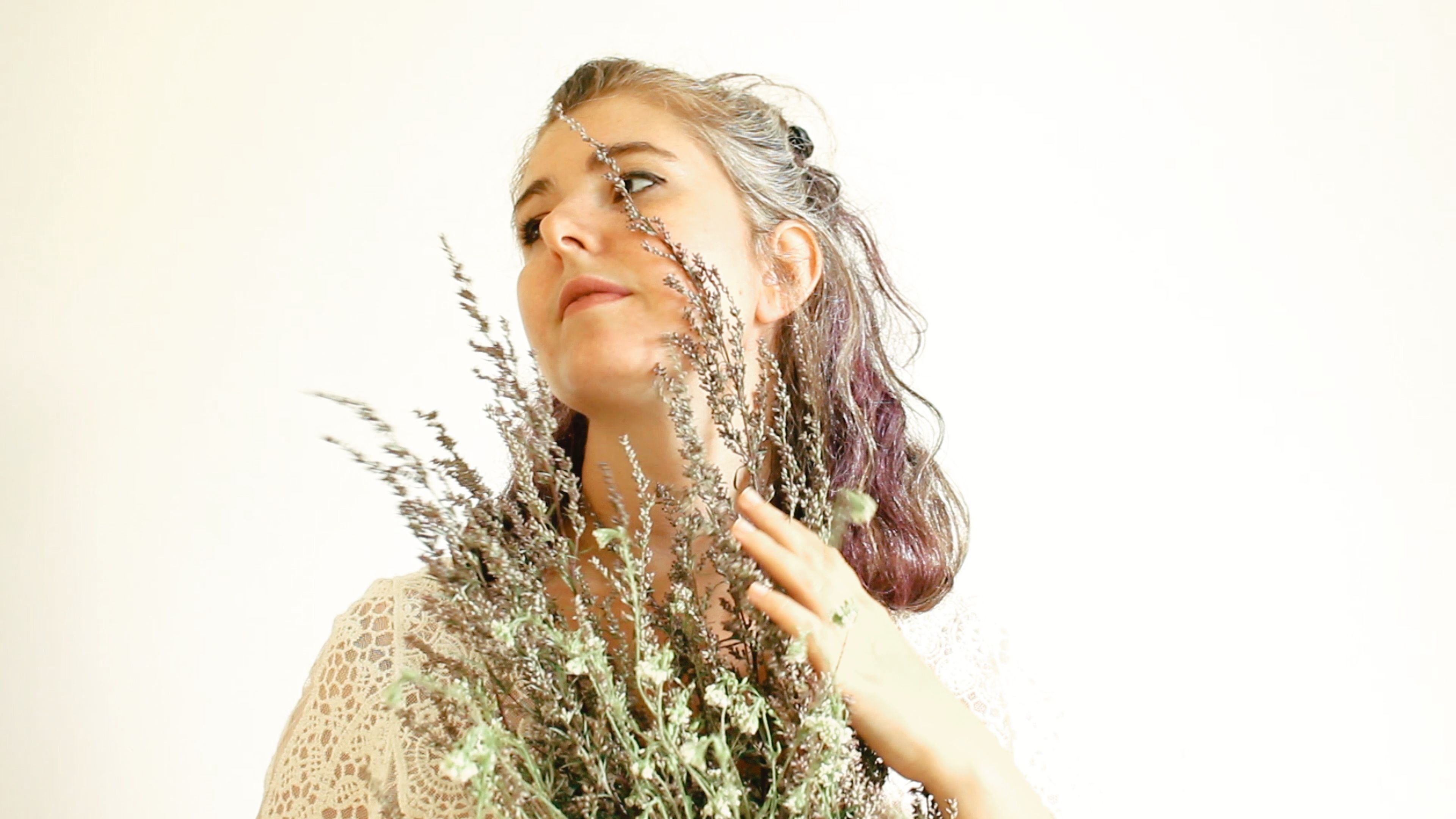
Wild Anima Interview Image (c) the artist
The press release says that Phytosynthesis is “a sensory exploration of the interconnectedness between humans and nature.” How would you describe this interconnectedness? And how do you experience it?
I think this is a topic that has taken a major role in society in general for the past 5 to 10 years. It has become very obvious for many people, in art, in business or in politics that we are part of the ecosystem. We must recognize our impact on the wellbeing of the environment and take responsibility accordingly.
If I can raise another perspective on this topic of interconnectedness I would maybe like to shine a light on the topic of emotions - or emotional intelligence more precisely. I would go as far as actually talking about intelligence in general, all forms of intelligence that surround us in our world. I think this might be a very important key to fully shift the future for us all on this planet.
Somehow, to me, there is still a very big lack of recognition or even appreciation of the various forms of intelligence that populate our physical world. I would describe the connection between humans and nature in its wholeness as a constant communication process. Whether we realise this or not we are communicating to understand our roommate the Earth or Nature on a daily basis, take checking the weather for example.
This is a direct way to check in “hey nature what’s up today, how is the mood?”. It is maybe done on auto-pilot and the fact that we are connecting with nature at a moment like this is completely buried in unconscious robot mode.
I really resonate with Charles Eisenstein’s idea that we should move from seeing the Earth as our mother who is endlessly giving without limits to seeing the Earth as our partner and shift into a dynamic of reciprocity, gratitude and mutual nurturing. It has to go both ways.
[Read more about the idea of the earth as a beautiful body in our Ditty interview]
I just conducted an interview with David Velez, for whom cooking, listening to and making music with plants are closely connected. How is that for yourself? Do you talk to plants and, if so, what do you draw from it? Do you experience it as a “dialogue” in some form?
I love that, I think there is a form of awareness practice in what you mentioned about David Velez. I think for me it's a process, a work in progress even.
I grew up in a very urban environment in the 90s and early 2000s. I had amazing glimpses of being in pure wilderness on rare occasions during holidays. But most of the way I grew up wasn’t pushing me to connect with plants in that way or even being aware of the food I ate. I would say I grew up as a classic suburban kid from a metropolitan city, roller skating and eating at McDonalds every weekend. It has taken a real shift and self awareness to enhance my connection to nature and plants. I’m still trying to cultivate a sense of depth with this today.
I am curious to explore this closeness between cooking, listening and making music with plants, I love that.
I have just recently started talking to plants, I have heard people mentioning to me that they indeed talk to their plants and the benefits they see happen on them looking better than before or the other way, the benefits this does to themselves talking to their plants.
I have moved to a busy town in the South of France where there's a serious lack of green spaces and the last time someone mentioned talking to their plants I felt inspired to do so as well. As I began doing this, checking them and greeting them daily I have seen how this has been an amazing way to help me connect to myself and to my creativity as a whole. As soon as I started I saw lovely opportunities open up and as if I received some kind of a push from a loving hand who has my back.
I have though been connecting with plants on a deeper level through the heart sense. Our heart organ sends and emits an electromagnetic field that if we learn to understand it is a tool to communicate with plants. This is something I’ve learnt from Buhner’s research and realised it is actually an ancient practice we find in many indigenous cultures.
There is a dialogue for sure, countless shamanic cultures have a specific way of communication with plant spirit, some of the most famous being Ayahuasca or Cacao. 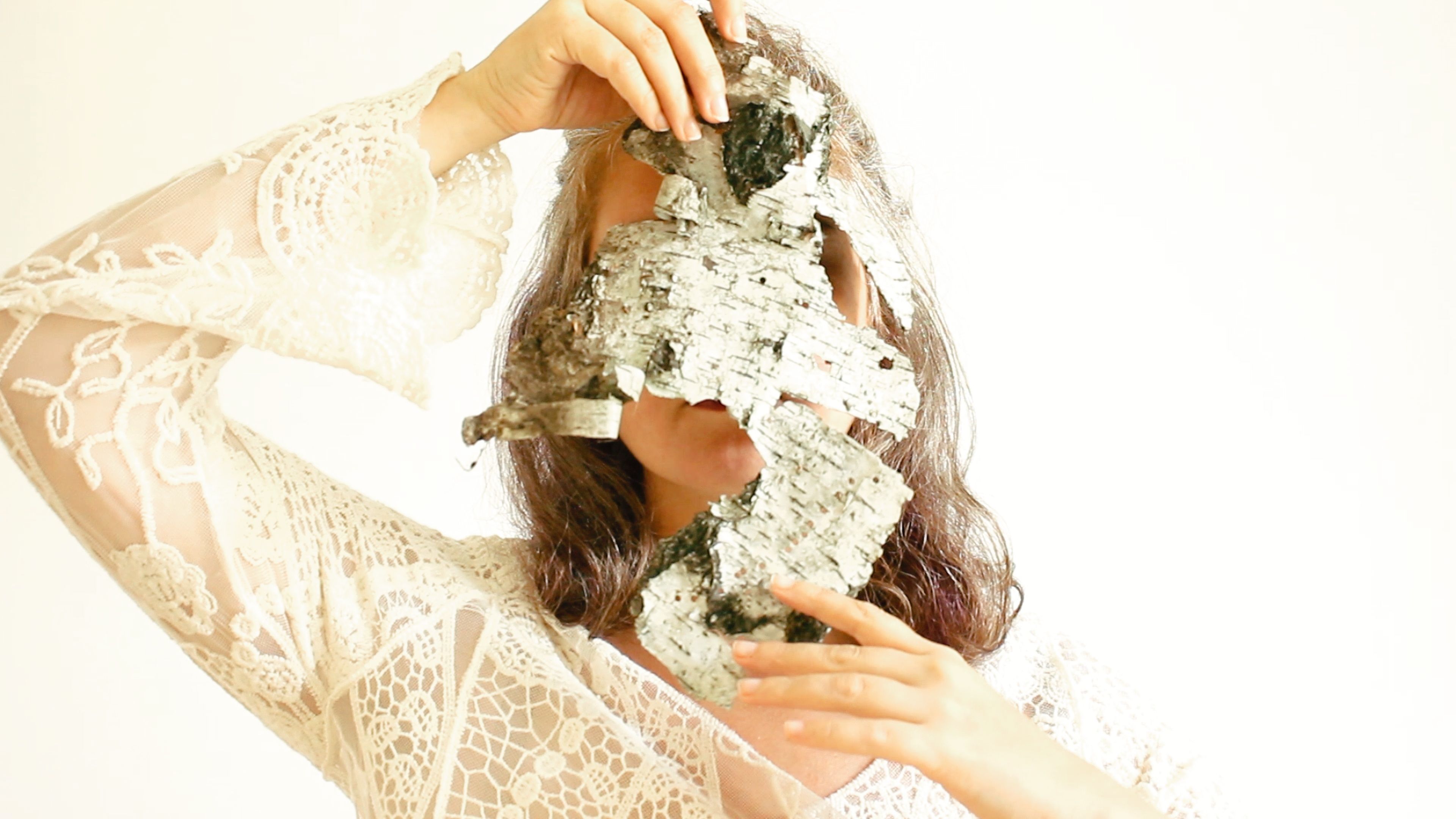
Wild Anima Interview Image (c) the artist
Without even using a word like communication, do you think that a deeper relationship between plants and humans is imaginable? If I would like to engage in it, what could be the first steps for me to take in that direction?
Yes I think by opening ourselves to the beauty of the living we feel a deeper connection to plants, receive their medicine and understand how we can apply their way of being to ourselves.
I believe we can learn to use our heart organ as another nervous system to understand and transmit and receive information from plants like it has been done for millenia by indigenous tribes. The heart sense, the heart’s intelligence is to me one of the greatest tools we can develop for the future.
The HeartMath Institute has done a lot of research on the real impact this has on human wellbeing and on the environment as a whole. I always like to quote Howard Martin’s speech about this:
"It's true, there is a global effect depending on what humanity is feeling emotionally. We have a hypothesis that strong collective emotional attention has a measurable impact on the Earth’s geomagnetic field."
"Mass human emotion interacts with these fields. Study has already been done that these fields affect us, if they're affecting us our belief is we're affecting them."
I think to sum things up my approach is fostering this idea of realising we are like plants, and plants are like us, our hair for example needs care and nurturing in a very similar way that plants do. And it applies to our internal landscape as well. We can learn to become alchemists using light to grow and transform all the wounded parts in ourselves into a beautiful garden. I like to think of this like an inner photosynthesis, as a superpower (laughs).
David Velez also told me he was really happy about a review of one of his pieces which recognised that the work represented “a methodology for becoming more attuned to plant life, of growing closer to our environment and its/our communal well-being.” Do you personally have similar goals for your own music? Do you feel like Phytosynthesis is the beginning of a new strain in your own music which may lead to more, similar compositions in the future?
Yes absolutely, I think this has always been part of my drive for making music, fostering a deeper connection to nature in and outside of us. The plant music somehow enhances this drive and appears like a natural continuation of that.
I feel like Phytosynthesis is opening a new way of sharing music as a whole, yes. I definitely feel like having plants as co creators is a new development on what I create.