Published
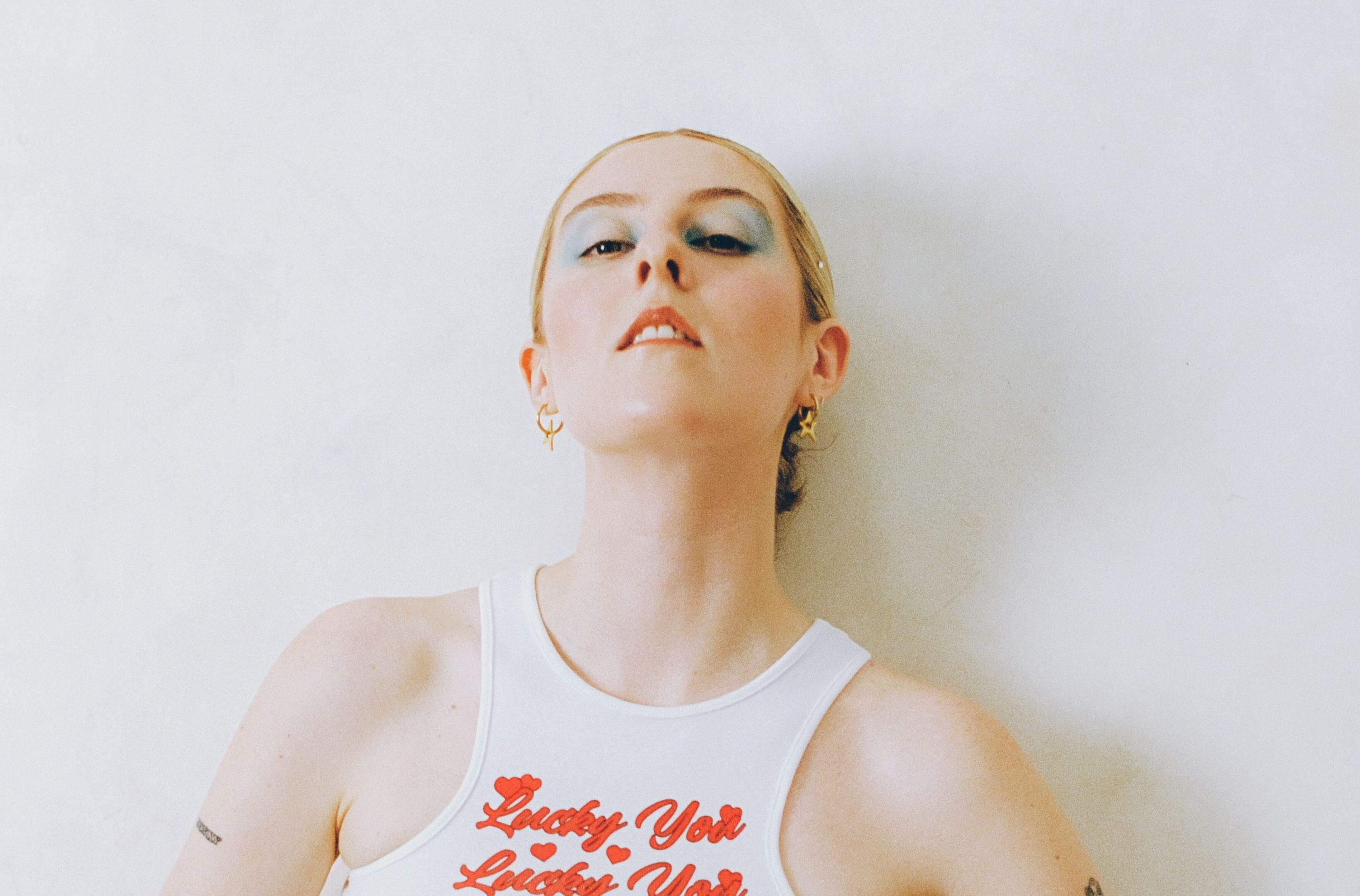
Name: Ella Walker aka WILDES
Nationality: British
Occupation: Producer, singer, songwriterm instrumentalist
Current Release: WILDES's new album All We Do Is Feel is out now.
Recommendation for London, UK: I'm the daughter of an architect, and was always taught to 'look up' when I was out in London. Above shop fronts and modern facades there is so much beauty and design, so I'd encourage anyone visiting north, south, east or west London to walk around with their eyes trained upwards to see the history that is so often missed. Also, find the nearest old church yard to you you and bring a book or a coffee - they are often an oasis in a huge city, tucked away, with much peace to be found there. Some of my favourites are Abney Park Cemetery, St Vedast's, St Dunstan-in-the-East and Christ Church Greyfriars.
If you enjoyed this WILDES interview and would like to find out more about her music, visit her official homepage. She is also on Instagram, Facebook, and tiktok.
Do you think that some of your earliest musical experiences planted a seed for your interest in writing lyrics or poetry? How and when did you start writing?
I grew up being played a lot of 60/70s soul music, jazz, and classical songwriting, and I definitely feel those genres impacted the writing subjects I've been drawn to most. I tend to focus on human connection, heartbreak and love, and all of the boundless ways these things can make us feel. It's a source of endless fascination to me, and I am still mostly drawn to emotive, pained vocalists and writers because of that connection.
One of my earliest memories is listening to Mama Cass' 'Dream A Little Dream of Me' on car journeys, learning every word and slowly becoming quite obsessed with it around 6/7 years old.
That classical songwriting influence is definitely apparent in 'Kiss Your Bruises', the 9th track on my album.
I really only started writing songs properly at 16/17, after trying (and failing) at 14, I felt I had a bit more to say as a late teenager. I'd taught myself the guitar and wrote very simple folk songs, but it really lit a fire in me and I haven't stopped writing since then.
Entering new worlds and escapism through music and literature have always exerted a very strong pull on me. What do you think you are drawn to most when it comes to writing?
I'm similarly drawn to the escapism of writing, though for me it's a way to reconnect and process my emotions and life experiences. It's a purely therapeutic tool first and foremost, and a means for me to express things I may be unsure of speaking aloud in normal conversation.
I'm drawn to a lot of analysis of my feelings, of other people's actions and motivations, and trying to gain an understanding of why we act the way we do. Writing brings me perspective and allows me to shape difficult and sometimes ugly emotions in to something more beautiful.
What were some of the artists and albums which inspired you early on purely on the strength of their lyrics? What moves you in the lyrics of other artists?
As a teenager I existed almost exclusively on a diet of Laura Marling, Bob Dylan and Joni Mitchell, writers who are beautifully poetic but also challenging in their words.
I really aspired to be as eloquent and effortless as they were, though I love Laura Marling's writing for it's stark honesty and vulnerability, and Bob and Joni's more for it's mystery, imagery and abstract nature.
Nowadays I look for brutal honesty and confession more than anything else in songwriting, and am inspired by writers like Carole King, Feist and Aretha Franklin.
My new album 'All We Do Is Feel' is particularly candid, blunt and lyrically raw. The final track 'Sweet Time' is a direct address to the person that the album is about, and is one of my most vulnerable songs.
Have there been song lyrics which actually made you change (aspects of) your life? If so, what do you think, leant them that power?
'Try Your Wings' by Blossom Dearie and Dion McGregor is definitely a song that contains many lyrics that pushed me to open up at a time in my life where I was quite closed off.
Seeking love and intimacy with friends, family and romantic partners requires vulnerability, which is scary when you have been so hurt, but it's the risk you take.
I think it was a combination of hearing it at the 'right' time, the starkness of the lyrics themselves and the way Blossom delivers them with such lightness and ease that made me want to open up and change my approach to life.
The relationship between words and music has always intrigued me. How do you see it? In how far can music take you to places with your writing you would possibly not have visited without it?
There is something special about finding the right combination of music and lyrics that forces you as a writer to explore that little bit further.
When I find an excellent chord sequence, harmony or structure, I don't want to throw any old lyric at it - finding the perfect fit is important to honour the beauty of that creation.
For me that means looking deeper, phrasing a sentence differently, and often finding surprising new meanings on the way to the end goal of marrying the music and lyrics together.
What are areas/themes/topics that you keep returning to in your lyrics?
Anything to do with human relationships, light and dark, metaphors in the natural world and how I relate to the world around me.
A big theme on my new album is harnessing and mastering difficult emotions that pulled me off track, and using them to return to myself.
Track 5, 'All I Get', takes this idea and explores how you can turn a mindset of loss and lack in to one that is more fulfilled and grateful with what you are left with ... stressing the importance of focusing on what remains rather than the loss.
On the basis of a piece off 'All We Do Is Feel, tell me about how the lyrics grew into their final form and what points of consideration were.
'All We Do Is Feel' is probably my most confessional release so far, and the lyrics really poured out of me.
There weren't too many adjustments to the first drafts of the lyrics as I tend to workshop them a lot as I go, preferring to get the best possible version down as I'm writing the melody. For me, words and melody are influential on each other, so I don't like to adjust them too much once the melody is set.
The biggest point of consideration for me is honesty and clarity of emotion in what I'm saying but of course I like to play with rhyme, alliteration and double meaning too.
Do you tend to start writing with what will be the first line of the finished lyrics? The chorus? At a random point? What are the words that set the process in motion?
I'm more of a linear writer, and see the song as a dynamic structure, so it's a natural place for me to start at the beginning and build from there, especially if I'm not sure what the song is about yet.
It's normally first verse, pre-chorus, chorus etc, though I will often write sections that could be interchangeable from chorus to bridge, so some re-shuffling is done if I think the structure needs a change, or a big dynamic contrast.
I write until I feel I've nailed the crux of the song, and then I'll start to refine.
I'd love to know how you think the meaning or effect of an individual song is enhanced, clarified or possibly contradicted by the EPs, or albums it is part of. Does the song, for example, need to be consistent with the larger whole?
I don't think it does need to be consistent. We create the rules with which we play, and sometimes consistency feels important to the project, but other times it's breaking out of that pattern that is important.
Personally, I want to achieve variety and a journey of some kind on every EP/album I release, so often I need to break up the lull of the track listing with something that is more attention grabbing, or intentionally jolts the listener and surprises them.
When you're writing song lyrics, do you sense or see a connection between your voice and the text? Does it need to feel and sound “good” or “right” to sing certain words? What's your perspective in this regard of singing someone else's songs versus your own?
Certainly, and I think about this a lot in terms of my accent when singing.
Growing up in London in the 2000s, everyone was influenced by American music and sung in an accent that made them feel insecure about their own phrasing and English accent. I now intentionally write in a way that allows me to enjoy the feeling and sound of singing words in my own London accent, rather than shoehorning americanisms in to my writing and vocal performance.
When singing someone else's song this can be tricky! But I think it's important to sing those songs as if they were your own, take ownership of them and allow your native accent to shine through - that is part of what makes you who you are.
I'm really glad to see a huge uptake in artists singing in their own accents.
I would love to know a little about the feedback you've received from listeners or critics about what they thought some of your songs are about – have there been “misunderstandings” or did you perhaps even gain new “insights?”
I've definitely had a few misunderstandings of my songs - often people attaching a lot of love, romance or a special person to a song that I wrote about a very difficult and traumatising situation!
Everyone has such a unique perspective on music and lyrics, bringing their own meaning to it and hearing what they want to in the song, which isn't a bad thing at all. If anything, it's quite remarkable to me that listeners can cherish a song for years that I find it hard to listen to now.
There is beauty in the misunderstanding.
Creativity can reach many different corners of our lives. Do you feel as though writing song lyrics or poetry is inherently different from something like making a great cup of coffee? What do you express through music that you couldn't or wouldn't in more mundane tasks?
It's an act of expression and nurture to make a great coffee, which writing a song also is. But with music I think you can be far more specific in the expression.
For me, there are many more different routes to take whilst creating music or writing lyrics that lead to perspective, understanding and satisfaction on a deeper level than a more mundane task would.
I do think it's important to find beauty and expression in those mundane tasks - romanticise your life!