Published
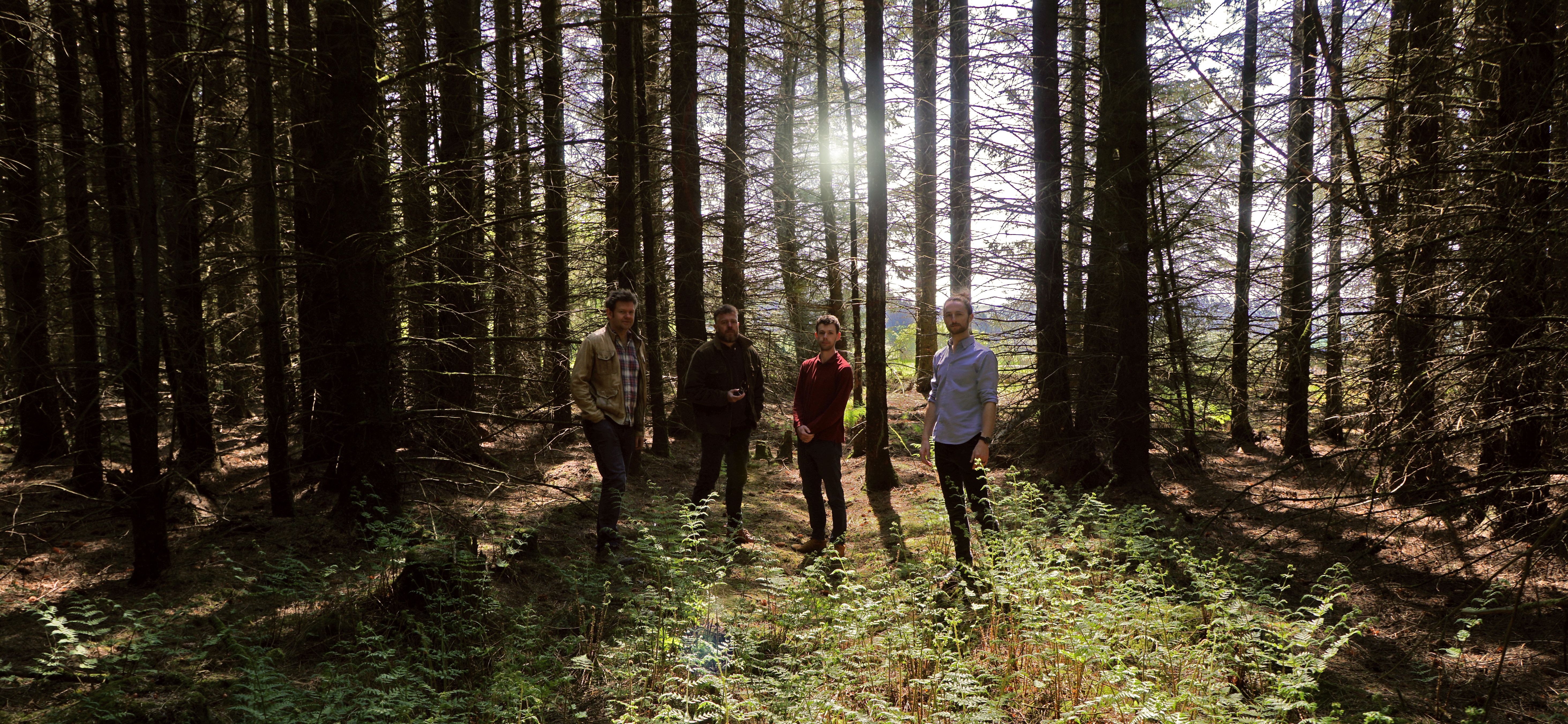
Name: Will Barnes Quartet
Members: James Batten (drums), Aidan Thorne (bass), Jack Gonsalez (piano), Will Barnes (guitar)
Interviewee: Will Barnes
Nationality: Welsh
Current release: The Will Barnes Quartet's new album Outside the Light is out November 7th 2025 via Cambrian.
Recommendations for Powys, Wales: In honour of our latest single “Annwn,” go visit the falls at Pistyll Rhaeadr near Llanrhaeadr-ym-Mochnant in Powys.
Topics I am passionate about but rarely get to talk about: Come to our album launch after-party on 7th November and I’ll tell you all about them!
If you enjoyed this Will Barnes Quartet interview and would like to stay up to date with the band and their music, visit their official homepage. They are also on Instagram, and bandcamp.
When it comes to experiencing strong emotions as a listener, which albums, performances, and artists come to mind?
John Martyn, “Go Down Easy” – always a tearjerker for me.
John (IMO) was a master of capturing emotion in his voice, and he uses dynamics to full effect with both his voice and guitar. He was a virtuoso guitar player and chose to use that skill to convey the emotion behind his music.
Sepultura, Arise – this is one album that really gets me pumped, gets the adrenaline going. I had to take it out of my car to avoid speeding!
I listen to a lot of different types of metal, but thrash is usually a go-to genre when I need a lift in energy.
Oscar Peterson Trio, Night Train – gets me in a relaxed, evening kind of mood. I like cooking to that one. The mastery of that trio makes the listening effortless.
There’s a lot of straight forward blues arrangements in this set, but these guys take it to another level, and if you actually “listen” to the recordings, the playing is out of this world.
There can be many different kinds of emotions in art – soft, harsh, healing, aggressive, uplifting and many more. Which do you tend to feel drawn to most?
I don’t have a particular leaning to one emotion or another. My writing reflects my mood state at the time, so depending on various factors, I might end up with a set of up-tempo, high-energy pieces, or perhaps some more introspective, low-key stuff …
I usually try and select a balanced set to record. I like my albums to be a journey and take the listener to a few different places emotionally. The new LP has some of my slowest (“Longest Day”) and fastest (“Never Done”) stuff.
I have had a hard time explaining that listening to death metal calms me down. When you listen to a song or composition, does it tend to fill you with the same emotions – or are there “paradoxical” effects?
DM does the same thing to me, especially the more tech stuff. I’m a massive Nile fan, I find their stuff really blocks the noise out.
I also like the rhythmic complexity of bands like Meshuggah and Animals As Leaders. I find bebop has the same effect. I guess they are both quite frenetic styles, with ambiguous key centres and complex rhythmic patterns.
The harder it is to understand what’s going on, the more relaxing I find it. I guess it’s like the Ritalin effect … haha!
In as far as it plays a role for the music you like listening to or making, what role do words and the voice of a vocalist play for the transmission of emotions?
I’m not a big “words” kind of guy. I’m sorry to any of my songwriter friends, but words always come second to me.
However, a poor lyric can really ruin it for me. I appreciate talented word smiths.
When it comes to experiencing emotions as a creator, how would you describe the physical sensation of experiencing them? [Where do you feel them, do you have a visual sensation/representation, is there a sense of release or a build-up of tension etc …]
I feel it deep in my stomach. It can be exhausting at times. I love when a passage of music makes all my hairs stand on end, and my body pings with electricity. It’s addictive.
I’m always trying to find music that does that, and when I do, I’ll rinse it until there’s nothing left in it. I’m not a good self-moderator when it comes to music …
When it comes to composing / songwriting, are you finding that spontaneity and just a few takes tend to capture emotions best? Or does honing a piece bring you closer to that goal?
There is a time and a place for both. Sometimes the first take is where the magic is. For other pieces, they need to be carefully sculpted, I judge each piece on it’s own merit.
It’s usually pretty clear which direction a piece needs to go in, I just try and steer the ship downstream.
How much of the emotions of your own music, would you say, are already part of the composition, how much is the result of the recording process?
The compositions lay down the blueprints. I feel like as a composer, I am kind of like an architect and my band are the craftsmen who bring the pieces to life.
Both are of equal importance, and one would not work without the other.
For Outside the Light, what kind of emotions were you looking to get across?
There were a lot of contenders for this album, more than usual. I demoed all the pieces then I tried to select a set that was balanced and created and arc.
But for the most part, the pieces I wrote were more downbeat and introspective on this one. I had to make a conscious effort to write a couple of more up-tempo pieces.
Jack (piano) contributed a composition to this album (“Lleuad Fedi”), which was also quite reflective and low key. I guess we must have collectively been in a chill space.
How do you capture the emotions you want to get across in the studio?
I love producing. I’ve spent a lot of time producing other bands and artists over the years, so I try and bring a little bit of that experience into the studio when I work with my band.
I like to make sure the guys really understand where my head was at when I wrote each piece. We chat things through, and I even give the guys a synopsis of the pieces to try and help get them into the right headspace for each track.
We all feel the same set of emotions, so it’s just a case of everyone getting on the same page. A little empathy goes a long way.
What role do factors like volume, effects like distortion, amplification, and production in general for in terms of creating the emotions, energies or impressions you want?
Effects don’t have much of a role at all for this group. The players bring dynamics, articulation, tone, which breath life into the compositions.
The only stuff I do in the mix is touch up the dynamic range, just a little, with some subtle compression and fader rides. I use EQ sparingly, mainly just to tame any unwanted frequencies.
Then I add a touch of reverb. I’ll often spend some time designing a nice reverb blend that sounds natural but adds some extra vibe.
In terms of emotions, what changes when you’re performing live on stage, with an audience present, compared to the recording stage?
Everything. Haha! The vibe of a room/audience can drastically alter the mood on stage.
We try and create a vibe in the spaces we play, by setting the sound a certain way and lighting the performance space in a way that will (hopefully) help ease the audience into proceedings and on a level with us.
Sometimes it goes in a completely different direction, and there’s nothing you can do about it. You just have to be ready to deliver to that room and create a positive experience whatever the mood.
What kind of feedback have you received from listeners or concert audiences in terms of the experience that your music and/or performances have had on them?
We try to connect with the audience on an emotional level. Our shows are all about that connection. Most of the time it comes across as a shared experience.
Occasionally we might hit a room that’s ready to rock out, and we need to deliver a high energy show that wows the audience, other times the audience might be up for going on more of a journey with us. Either way, you’ve got to be ready.
Would you say that you prefer to stay in control to be able to shape the emotions or do you surrender to them and allow the music to take over? Who, ultimately has control during a live performance?
We try to steer the ship, but ultimately you have to sail with the wind.
You can’t force a square through a round hole.
The emotions that music is able to generate can be extremely powerful. How, do you think, can artists make use of this power to bring about change in the world?
Music could be the ultimate tool to change the world for the better.
If only the right people were listening to the right music …