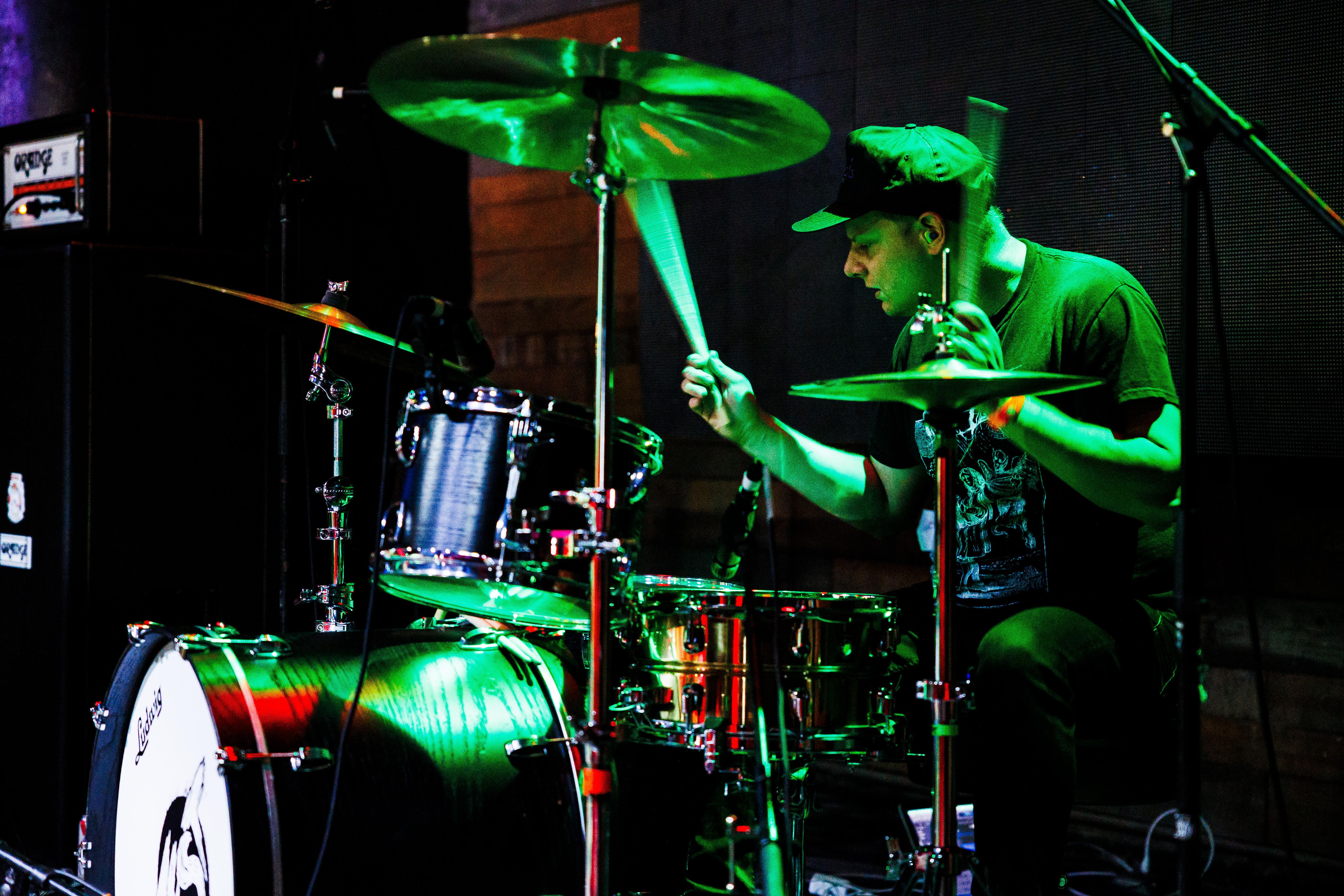
Published
Name: William Covert
Occupation: Drummer, percussionist, producer, composer, performer
Nationality: American
Current release: William Covert's new album Dream Vessel, featuring Jack McKevitt, and Nate Schenck, is out via Coup Sur Coup.
Pure Drum Recording Recommendations: Drums Unlimited by Max Roach is in my opinion one of the greatest drum recordings ever made and the solo drum compositions on it are just incredibly and have been a long-time influence for me and my solo material.
Recommendations for Chicago, USA:
Music Store – Chicago Music Exchange
Museum – Art Institute
Classic Chicago Neighborhood Dive Bar – Rainbo Club
Music Venue – Empty Bottle
Chicago Pizza – Any place that does ‘tavern style’
If you enjoyed this William Covert interview and would like to keep up to date with his music, visit him on Instagram, Facebook, and bandcamp.
It seems as though most aspiring artists are drawn to the drums and percussion for one of two reasons: Creating sound/noise and creating rhythm. What captivated you?
I was drawn to the volume of drums, and as a kid loud drums and loud music easily got my attention.
There’s a feeling in the moment when loud music washes over you that I’m still drawn to today and it’s a very cathartic experience.
When I listen to music, I see shapes, objects and colours. Others experience emotions. Everything around drums, on the other hand, is based on touch, vibration, and movement. Does this mean that your own perception as a listener is also more connected to touch, vibration, and movement? What happens in your body when you're listening?
I would say my perception as a listener is based on feel. What moves me with drums and music is the feel of it and how it makes me feel.
I would say really great drummers or musicians in general have a flow to their playing that I would describe as rhythmic fluidity and when you can feel that fluidity coming through the music, that’s when it really grabs me.
In that sense you could say that feeling of fluidity is connected to movement and touch.
What was your first drum set like and what are you using today? What, to you personally, are factors in terms of build and design that you appreciate in drums and percussion instruments?
I was lucky with my first drum set because my dad got me a used vintage 1960s Ludwig drum set that sounded amazing with blue oyster pearl wrap that made it look like the classic Ringo Starr Ludwig set he played with the Beatles. I still have that drum set and still play it today. The drum set is almost 60 years old and still sounds great and has held up really well.
Having a professional sounding drum set out of the gate also just really motivated me when I was learning to play drums because everything I played when I sat down at the set, even if my timing was still in process of getting where it needed to be, always sounded really good. Those drums were/are just really fun to play.
I have three drum sets currently I switch between, depending on the project. I still have that 60s Ludwig drum set that I learned how to play drums on, I also have a custom acrylic drum set I had made by SJC Drums which is a really versatile drum set and has been my main live show drums for years.
And I have a 1970s Slingerland drum set that I bought off the original owner who had the drums custom ordered. The rack tom is huge and like 15 x 10, and the Slingerland set is John Bonham sizes and is what I use for heavier, louder music whereas my Ludwig drums are great for jazzier, more chill stuff.
I’m probably biased because my first drum set was a vintage build set, but in terms of build and design I prefer the warmth of a 3 ply or 5 ply shell made out of mahogany, maple, or poplar which is what most vintage drum builds are.
There’s just a certain sound with maple and mahogany that brings a certain kind of warmth in sound of the drums that I’ve always been drawn to.
Late Rush-drummer Neil Peart said: “The equipment is not an influence. It doesn't affect the way I play. It's an expression of the way I play.” What's your take on that?
I’m not going to disagree with anything Neil Peart says about drums. To add that quote, one that has already stayed with me in regards to equipment is from Bill Bruford - of King Crimson, Yes, Earthworks, UK, etc. - who said, “You’ll never play the same drum set twice.”
What Bruford was referring to is every time you tune a drum, no matter how close they are in pitch, it’s not going to be exact as the last time they were tuned and a well-rounded drummer should be able to sit down at any drum set and make it sound good and make it work for the gig.
The drums and percussive instruments are an integral part of many cultures, and traditions. Which of these do you draw from in your playing – and why?
I think I’ve always tried to pull from as many different drum influences as possible. Early on in my career I got pretty bored with the typical four to the floor drumming of contemporary western pop music. So I have always been interested in the more complex and dynamic drumming found in non-western cultures and traditions.
This includes polyrhythms found commonly in West African music or the dense rhythmic complexity of traditional Indian music or the intersection of western and non-western rhythms found in the ‘primitivism’ of Stravinsky’s work that was trying to bring non-western rhythms to the forefront of a changing European classical music at the turn of the last century.
I also am really interested in drums as an American instrument with a deep tradition in American culture. The drum set was designed and built in America, and specifically there’s so much drum history in Chicago.
Major drum makers like Ludwig, Slingerland, Leedy, and Camco have all been based in Chicago in the 20th century and especially with the rock n roll boom and Ring Starr playing Ludwig drums, Chicago became the epicentre of drum building for the world for quite a long period of time. I’m trying to pull on that history as well in my playing and the drums I use.
Jazz and specifically free jazz is a totally American idea and musical concept and I feel inspired in my playing to be to draw on that American tradition of free-form so-called ‘free jazz’ drumming.
What were some of the main challenges in your development as a drummer / percussionist? Which practices, exercises, or experiences were most helpful in reaching your goals?
Location was probably my biggest challenge as a young developing drummer.
I grew up in smalltown rural Michigan and there just weren’t many people around to play music with. I had the drive to play drums and wanted to play in bands and do shows and everything that comes with it, but the challenge was in the lack of venues to play, and available musicians in my age range to play in bands with.
I will say I learned way more about drums and the musicality of drumming playing in groups and collaborating with other musicians more than I did in school. I was originally a music major and it’s a lot of classroom work, but that doesn’t necessarily translate to playing on stage in front of people and having something happen - like your monitor goes out mid-set and what do you do know.
So playing with other people and especially in live context is where I would say my drum education really blossomed.
Do you feel that honing your compositional / songwriting skills has an effect on your drumming skills?
Absolutely! The more you compose and write music and can get in the headspace of the instruments involved in a piece, the more well-rounded musician it makes you and just adds other perspectives that you can go to when adding drums to a song.
Thinking more broadly, I would say it has made me focus more on writing my drum parts to have meaning in the context of a song and not just play a drum part because the song needs drums.
I've long been intrigued by bands or ensembles where the drummer is the leader and/or main composer. In as far as it is possible to generalise, what do you think changes in terms of the music or performance in these situations?
Honestly, I don’t know if there’s much of a difference, maybe just the occasional drum solo or solo drum composition lol.
Generally, a band leader should be writing and playing to their strengths and should put together a band of musicians who he or she understands what they bring to the music and also play to their strengths in the context of the group.
I created my solo band the William Covert Trio with the musicians in it in mind. I wanted to make music that would allow them to add their own voices to it while still being in the context of the musical ideas I brought to the group.
How are you making use of the timbral and textural potentials/possibilities of your drums and percussion instruments when making music?
I like to add drums last when making music and have the drums and percussion elements be reactionary to what’s happening melodically with the other instruments involved.
I’m trying to make the drums as musical as possibility for what is necessary for the song.
How has technology, such as drum machines and sequencers, impacted the way rhythm is created and perceived? Has it been a concrete influence on your own approach?
The acoustic drum set itself is a technological invention and though many don’t think of it this way it is a machine. The drum set allowed groups to have one guy playing all the drums instead what would have previously been a whole drum line section playing the drums individually.
Technology has always been pushing music and drumming forward. I think sequencers, drum machines, electronic drums, etc. are all just additional tools that add more colors to a palette. Similar to the Neil Peart quote about drums just being a tool, I view technology also as just a tool and with that said you shouldn’t let your tools become like a crutch or something you’re leaning on in lieu of writing and playing parts.
I use sequencers, electronic drums, etc. but I’m also still playing writing and playing all the drum parts. At a live show, there is still live music being played and not just a bunch of backing tracks on a laptop that diminishes the live aspect.
Physical strain is a particularly serious issue for many drummers. How does it manifest itself, how do you deal with it and in how far does it affect your creativity?
There’s so much more information out there today about proper drum posture, and ergonomics of drumming that can really help alleviate some of the physical strain issues.
I also think you need to practice how you play. So even if I’m practicing by myself or with a band, where maybe in band I could do just 60%, 70%, or 80% of the energy needed for a live show, I’m still giving 110% when rehearsing and practicing.
I treat drumming like athletic training in that respect and always try to keep my chops up as best I can. With gigging all year round, there is no off season.
Many recording engineers have remarked that the drums can be particularly hard to capture. What makes drums sound great on record and in a live setting?
I’d say at the end of the day it’s the drummer that makes the drums sound great.
Sitting behind a drum set and playing is similar to being in the driver's seat of car, each one has a different feel to it.
You have to kind of get the feel for the kit from behind the driver's seat to bring the music out of the drums.
Drums and percussion are remarkably often used for physical therapy / healing. What, from your point of view, makes them particularly suitable tools for this?
I think drums harken to something that is very primal and deeply ingrained in the human condition.
Repetition of sound and vibration in a calm and safe space has the power to do incredible things for the human mind, body, and spirit.