Published
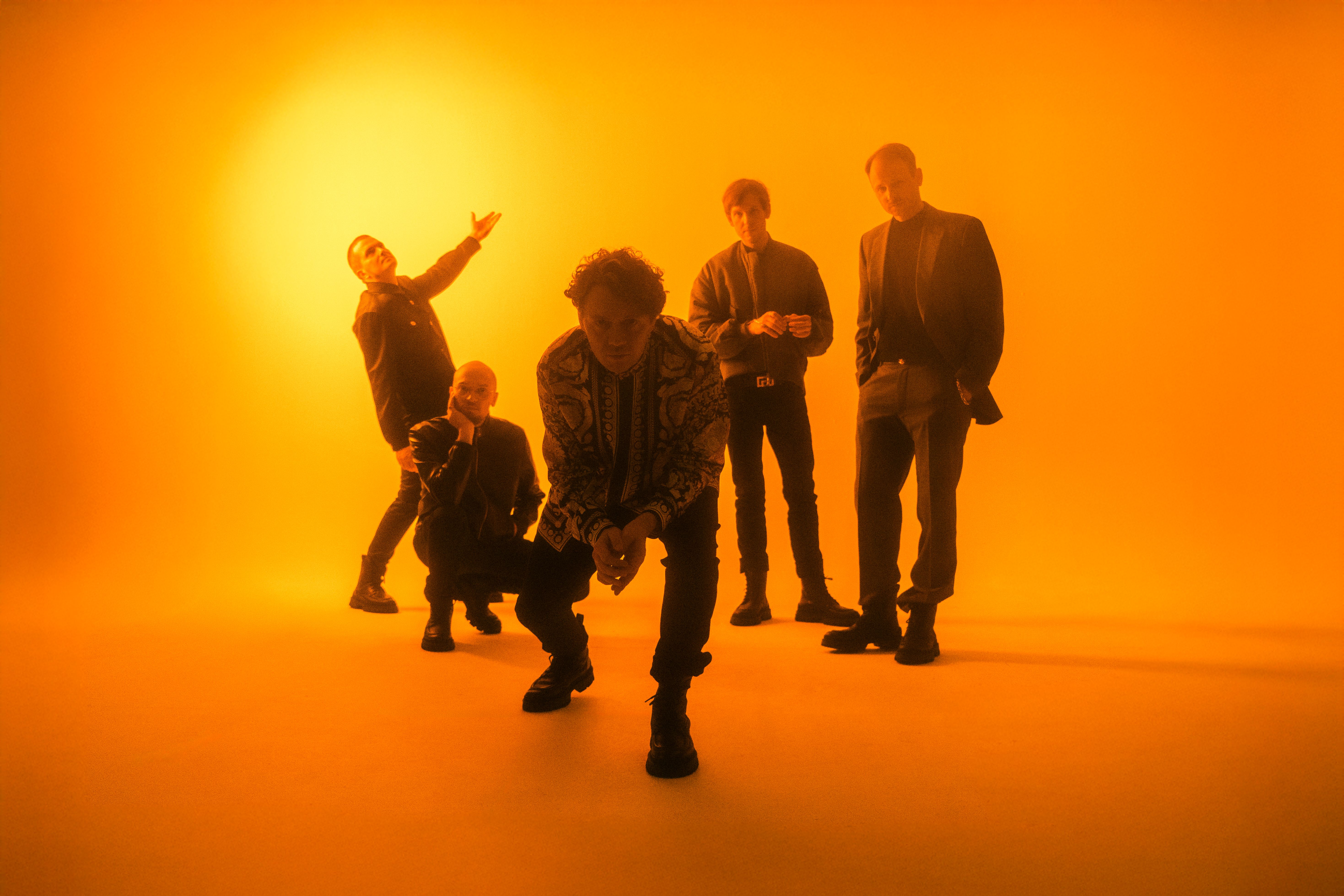
Name: Woods of Birnam
Members: Christian Friedel (vocals, piano), Onno Dreier (vocals, keyboard),
Christian Grochau (drums), Philipp Makolies (guitar), Uwe Pasora (bass)
Interviewee: Onno Dreier
Nationality: German
Current release: Woods of Birnam's new album Solaris is out via Royal Tree.
Recommendations for Dresden, Germany: Dresdner Heide.
Things I am passionate about but rarely get to talk about: Lucid dream(s). It’s not only the title of one of our new Solaris tracks, but also a fascinating topic I could talk about for hours. A lucid dream is a dream in which you’re aware that you’re dreaming while still asleep, often allowing you to influence the dream’s narrative. You should look into it.
If you enjoyed this Woods of Birnam interview and would like to stay up to date with the band and their music, visit their official homepage. They are also on Instagram, tiktok, and Facebook.
Where does the impulse to create something come from for you? What role do often-quoted sources of inspiration like dreams, other forms of art, personal relationships, politics etc play?
Most of the time, when a new project or idea approaches us, we begin with an open conversation about the framework conditions and the musical scope, followed by a more in-depth exchange about sound and aesthetics based on the project’s theme.
Sometimes it’s hard to pinpoint the actual source of musical inspiration because it often stems from a subconscious place. Dreams, politics and our emotional responses to all kinds of things are embedded in that space and therefore play an important role.
Even though it’s possible, you don’t necessarily need an obvious source of inspiration. It’s more about how you – and your body – react to what you create.
For you to get started, do there need to be concrete ideas – or what some have called a 'visualisation' of the finished work? What does the balance between planning and chance look like for you?
A tiny impulse – a sound, a pace or a harmony – can already be enough to start something new. We try to stay as open as possible for as long as possible.
There is no real right or wrong; the most important part is simply to begin and to trust the process.
Is there a preparation phase for your process? Do you require your tools to be laid out in a particular way, for example, do you need to do 'research' or create 'early versions'?
It can help to have your favourite synths or sound libraries set up before you start, since the sound you’re playing with might inspire your composition and influence your writing.
But sometimes it’s also perfectly fine to just hum a melody into your phone when an idea appears.
Do you have certain rituals to get you into the right mindset for creating? What role do certain foods or stimulants like coffee, lighting, scents, exercise or reading poetry play?
Occasionally you find yourself tired, half-starved and without having seen daylight for hours – and suddenly you come up with a great idea. On other days, even in a supposedly perfect environment for creativity, you struggle to write a single useful note.
We do use coffee.
For Solaris, what did you start with? If there were conceptual considerations, what were they?
When we first began working on our current album Solaris, each band member created and recorded demos and drafts individually, using their own techniques and instruments. We then collected and shared all the material to see what resonated and what was worth developing further.
This was actually a new approach for us, since we’re usually together in the studio during most of the early writing process.
Tell me a bit about the way the new material developed and gradually took its final form, please.
After sharing the music with each other, we were inspired by our individual ideas and continued to develop them collectively.
Once we had discussed and selected the demos we liked most, we came together to record them properly in our studio.
There are many descriptions of the creative state. How would you describe it for you personally? Is there an element of spirituality to what you do?
I believe it’s important not to be too distracted and to have a sense of joy or curiosity when creating.
This brings you and your thoughts into the present moment, allows you to resonate with your surroundings and with yourself, and can feel similar to the idea of a spiritual experience.
Music and the accompanying artwork are often closely related. Can you talk about this a little bit for your current project and the relationship that images and sounds have for you in general?
What could be better than combining the universe, spaceships and strange planets as an overarching theme with atmospheric, experimental indie-pop?
Our drummer Christian did a fantastic job designing the artwork for Solaris, which accompanies the music and makes it more tangible for listeners. Almost all of our music is connected to images in some way.
Since our lead singer Christian also works as an actor and director, we’ve had the opportunity to write a lot of music for plays and films, where different art forms benefit from each other the most.
With our album How to Hear a Painting, we were able to explore and examine this relationship very consciously.
After finishing a piece or album and releasing something into the world, there can be a sense of emptiness. Can you relate to this – and how do you return to the state of creativity after experiencing it?
I think releasing new music can also feel like a relief, because it often takes a long time to write, record and produce an album. After the release, there is finally time and space for new projects. Solaris is our seventh album – and there will definitely be more.
But I am familiar with that feeling of emptiness after being on tour. Maybe it’s because of the intensity of the experience, spending almost every second with your tour family or with strangers in unfamiliar places. It can take a while to switch into another mode once you’re back home.
Trying to return to creativity too quickly can mean skipping the process of digesting everything that happened - and that reflection is essential for nourishing creativity in the long run.
Creativity can reach many different corners of our lives. Do you personally feel as though writing a piece of music is inherently different from something like making a great cup of coffee? What do you express through music that you couldn't or wouldn't in more 'mundane' tasks?
I think creativity can appear in many forms. Writing music isn’t generally more creative than making a great cup of coffee — they just speak different languages.
For me, music is the one I connect with most deeply. It’s how I express and understand myself. Others might feel that way about coffee and share that experience when they make or drink it.
Many people can have a really strong and also physical reaction towards music, so it might feel more intense and touching than drinking coffee for most of us. But I wouldn't say that more intense equals more creative.
In the end, creativity is about perspective. We chose music, and I’m grateful that so many people share this language of being moved by sound.