Published
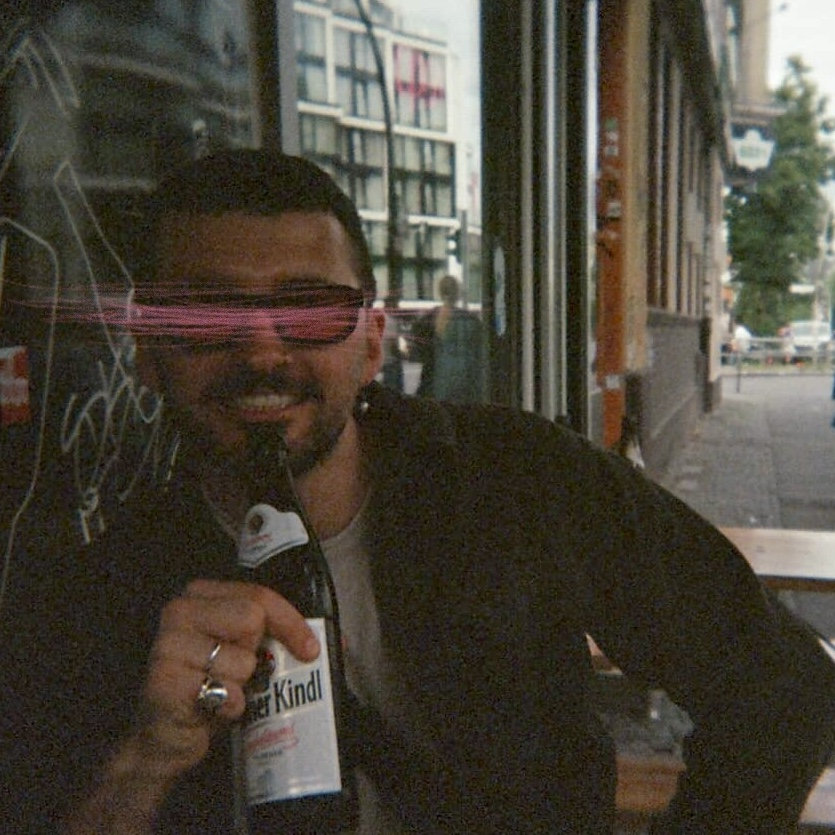
Name: Zak Degenhardt aka Wretla
Nationality: Australian-born, Berlin-based
Occupation: Producer, DJ
Current release: Wretla's Im Wald EP is out via all my thoughts.
Recommendations for Berlin, Germany: ‘Feel Good by Omar’ in Neukölln. Best wrap you will have in town and the bloke is a legend. I’ve had multiple instances of friends claiming it’s the best falafel they’ve ever had and I tend to agree, and I don’t even really like falafel!
If you enjoyed this Wretla interview and would like to stay up to date with his music, visit him on bandcamp, and Soundcloud. You can also support his work on patreon.
The path to becoming a producer is a process - but from many interviews, I am under the impression that there are nonetheless one or a few defining moments. If this was the case for you – what were they and why were they so incisive?
I am very lucky to be able to turn hardship into art.
I lost my father in my early 20s and, coupled with some neurodivergency, made for a particularly isolating experience becoming an adult. These factors alone are enough to make you feel like you’re on an island, but I was fortunate to have found an outlet in music to connect with others.
Meeting my wife was the next defining moment as she taught me to love myself a little more. If it weren’t for her love and encouragement, I don’t think I’d have the ability I have now to create.
In a funny way (and maybe this is just an age thing), I am grateful for the pain as well as the love I’ve experienced as it has grounded me and made me a better person.
In how far, would you say, was your evolution as an artist connected to the evolution of your music set-up and studio? Were there shared stepping stones?
I buy my instruments and software for the sole reason of imparting a unique flavour in sound or forcing me into a workflow that I’m not familiar with. I’m constantly changing my workflow because I get bored so easily.
I’ve played around with trackers, Elektron gear, MPC’s, budget plastic synths, OTB/ITB mixing, DAWless, Hybrid, you name it. I’ve taken a lot of lessons from these different schools of thought. For example, using an old MPC leaves you stretching the most out of your samples and with the clunky workflow and limited processing, you can’t just stack more and more samples and effects to make it sound better.
I remind myself of this when my tracks are getting overly complicated and make the effort to strip them back.
There are artists who can realise their ideas best with a traditional – or modified – piano interface, others with a keyboard and a mouse, yet others by turning knobs or touching screens. What's your preferred and most intuitive/natural way of making music and why?
In the creative phase, I need to be as hands on as possible, be that with keyboards, sequencers, controllers etc. My hands move faster than my brain and I don’t trust the analytical side of my brain when I’m in that phase of making a track.
I’m striving for the rough and ‘inaccurate’ weirdness in this stage and looking at grids and drawing automation is a fast way to ruin the creative flow.
When it comes to the end phase of editing, that’s all out the window. When I’m in this phase, a keyboard and mouse, a few cups of coffee, a big screen in front of me and winter's last light is all I need to get in the flow.
Tell me about the space of your current studio/workplace and how you've set it up to optimise creativity.
I don’t really have a studio space at the moment, but my best time is spent on the couch with my laptop and some YouTube quietly radicalising me in the background. I just like to be comfortable for the majority of the process.
Sometimes it’s nice to sit at a table with some gear but I’m very particular. If it feels like too much of a workspace, it can begin to feel a lot like work.
From the earliest sketches to the finished piece, tell me about the production process for your Im Wald EP, please.
I started ‘Im Wald’ mid 2024. It was my first year living overseas and the anxiety was like nothing else. I was having recurring dreams of being stuck in a forest without any help or knowing where to go. The dreams were recurring and had this very ‘forest-wet doused in oil’ unease about them.
I didn’t realise at the time, but I was making a lot of music that emulated this dream-like unease. Once I put 2 and 2 together, I realised I had the beginnings of a concept EP. I decided to make a fantasy/sci-fi concept based on these dreams and my journey.
I wanted to create an EP that was in its own world and something that took inspiration from the pulse of nature and fate. I felt very out of control of my life and the more I struggled, the more things slipped away from me. I had been pondering the idea of whether we have any free will or if we are just hot bags of organic math swirling around other bags of organic math. I wanted to employ this concept in the EP and I found Bitwig allowed me to do this best.
Bitwig allowed me to easily program this sort of organic pulse and to play with this idea of fate by gently randomising several parameters of my tracks so that every render of these tracks came out slightly different. I grew to like the idea of being out of control of what I was making, as if the machines I was playing with were dancing on their own accord in an ecosystem I have created.
Who said artists have a god complex??
Late producer SOPHIE said: “You have the possibility with electronic music to generate any texture, and any sound. So why would any musician want to limit themselves?” What's your take on that?
I didn’t appreciate this quote when I was younger, but now I am extremely inspired by the possibilities of technology and how they will change music.
Having said that, I think you need limitations before you drown in an endless sea of possibilities. You need to learn how to draw blood from a synth before you can begin to appreciate infinite possibilities.
For example, the thought of LFOs used to confuse me to tears but now I need 100 of them available to me on every parameter at all times.
Tell me about your aesthetic preferences for picking effects like reverb, delay, compression, chorus etc … - what was the role of these effects in the production of your current release?
I’m not too crazy about specific plugins or whatever, it’s more about quick function than anything. I like less knobs and less options with a decent sound, preferably with some analog crunch or that 90s digital crystallising vibe (Alesis MIDIverbs for example). I just need ceilings to the sound and those emulations often react interestingly when you crush them.
I ultimately want a basis simplicity before anything. I don’t need to stereoise the filter of the decay of the pre-delay of the mid-band of the reverb, ya know? If I have a compressor that has two knobs, does 80% of what I want to the signal and starts to bleed distortion after a certain point, I’ll be using that over something that wants me to decide between 15 different tube types.
I used a lot of UAD plugins on this EP, not because I think they sound better or worse than anything, but just because my subscription renewed without me knowing. They sound good and the interfaces look nice.
Aesthetics help keep me interested, too, and that will go a long way towards getting me finishing a song and that’s ultimately my main priority.
The current production process allows for fast and infinite variations. Can you tell me about how you deal with this potential for the infinite and what ultimately decides on how many iterations to create and which version to release?
I don’t get too caught up in the possibilities for a track and I think this goes back to the fate aspect I mentioned earlier. If it’s sounding good, it’s good, if it’s causing me headaches, it’s not worth it and it’s better to move on or just resample.
I try to get the bulk of the track done ASAP before I start chasing ghosts. The first version usually ends up the best for me, so I’m in a constant battle with myself to not unscramble the egg, so to speak …
Tell me about the role collaboration played in your recent productions – and how you see the potential for machines as collaborators compared to humans.
It feels dystopian to say, but I don’t really collaborate with people. I’m an introvert and making art is an incredibly intimate personal experience for me. Machines have always been the collaborators.
Lately, using this ‘organic dancing machine’ concept has led to this hypnotic techno/ambient sound which I’m very excited to pursue. I’m not particularly fond of techno, but I am fond of the experimental concepts and sound design within it. I find club music lately, especially house music, quite conservative in their constant harking back to the old sounds.
Techno-based machine music feels fresh and exciting to me now. I’d like to create something where I’m more of a composer of machines than necessarily ‘playing’ the machines, trading the baton for a macro knob.
Production, as opposed to live performance, can be a lonely process and feedback from listeners isn't always tangible. What is it about it that gives you satisfaction?
I think it’s the catharsis I feel after digging real deep.
I try to keep the potential thoughts of the listener at the bottom of my priority list. If I’m constantly keeping them in mind, it’s not my art anymore and I’m just shooting in the dark and simply making a product for my ‘brand’ which has only ever led to frustration. Besides, I don’t really understand people anyway and have stopped trying to accommodate them. This has led to healthy creative breakthroughs.
Having a million thoughts rolling through me at all times can make it hard to know how I’m feeling, but what I love about making music is that I can finish up a track and hear what’s going on. It’s relieving. I often cry or smile after listening back to my music merely from the relief of hearing my state of mind and to know something has been taken off my chest.
That’s the only light I need to follow when I’m creating and anyone relating to that is a bonus.
AI is already capable of making something most people would recognise as music. I am curious, though, and will keep this question somewhat broad on purpose: What do you think that means?
AI art is solely about the finished product, but without a backstory, there is no substance or purpose for it. I think it asks a few questions: is art solely the end product or is it the process? And does that process matter? If there is no struggle in the creation process, what are you overcoming?
If people are made aware of something being AI, they are more likely to switch off. We are currently behind in policy around the world to mandate identification of AI. I believe that, much in the same way you have nutrient information on your food, governments will take a stand to mandate users stating the use of AI.
Consuming and creating art is a universally cathartic process, but it’s been cannibalised by capitalism where the culture sees it only for its fiscal or metric value (streams, downloads etc). AI art is machine-made cultural appropriation, taking elements from all over the world, stealing from everyone and speaking for no one. As AI is becoming the majority of content online, the algorithms are descending into a state of intellectual incest, breeding with their own slop (model collapse) and hallucinating themselves into popular culture.
With that said, I obviously see the value of AI and don’t see it going away. I hope music journalism rises again to put forward the story of artists, to contextualise sounds and scenes and to illustrate the process of how artists have made their creations to help combat this dehumanisation we are seeing across all creative fields.
I see ‘behind the scenes’ content making it to the forefront for artists as a sort of seal of approval too. Whether any of this matters to the consumer is something only time will tell.