Published
Name: XIXA
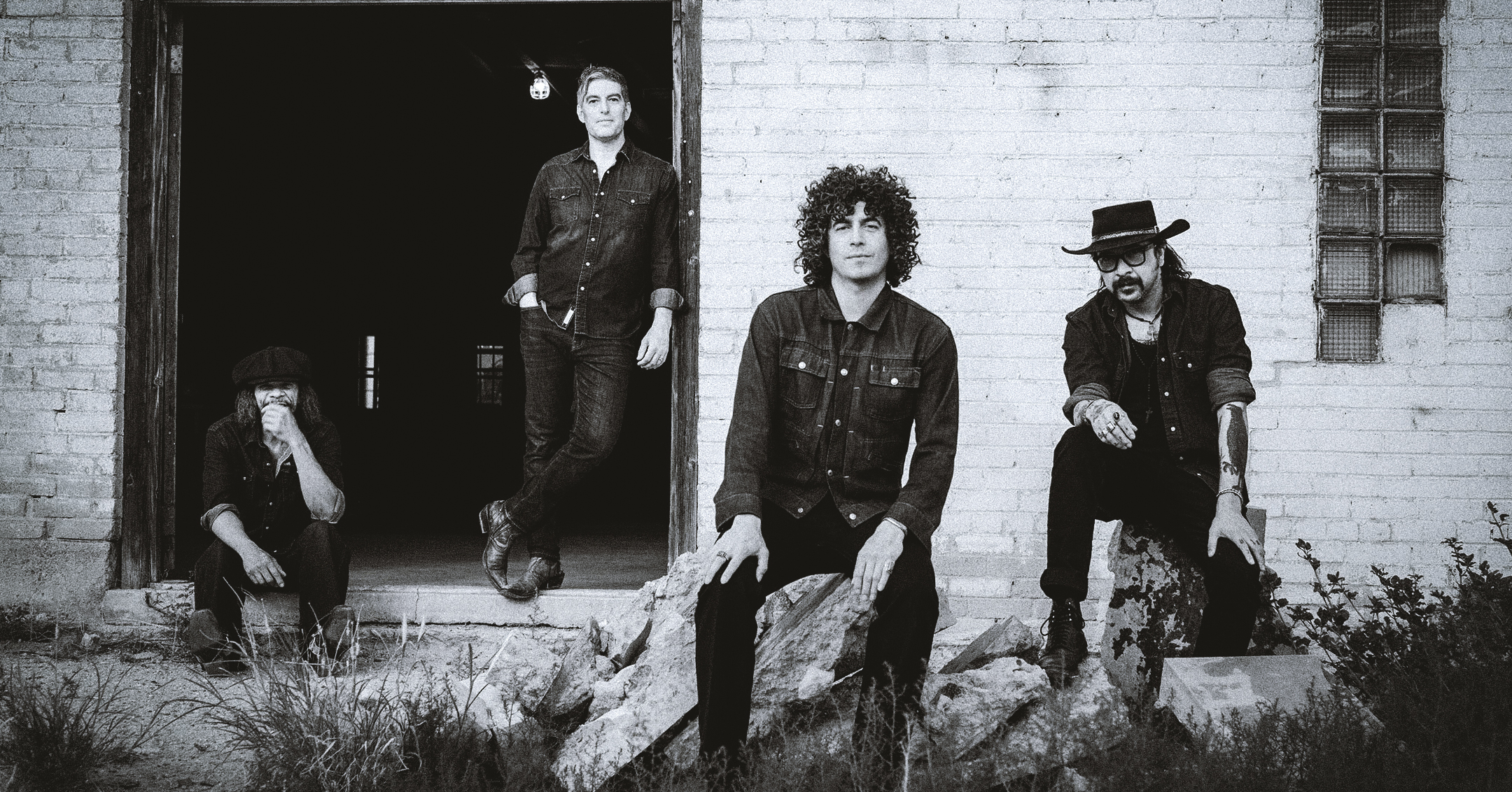
Members: Brian Lopez, Gabriel Sullivan, Jason Urman, Winston Watson, Efren Cruz Chavez, Christophe Corbel
Interviewee: Brian Lopez
Nationality: American
Current release: XIXA's new album XOLO is out March 21st 2025 via Jullian. Pre-save the album for streaming here. Pre-order your vinyl LP here.
Global Recommendation: Right now, the Louis Carlos Bernal exhibit at the University of Arizona Center for Creative Photography.
Topic I am passionate about but rarely get to talk about: Why don’t we use more diminished chords in popular music? You know, instead of the tension that comes with a dominant 7 chord, we could use a diminished chord every now and then. Anyways, I like to throw a diminished 7 chord in a song just to see if anyone catches it. It's a different type of tension.
Also, what happened to key changes? And powerful bridges? Is everything moving towards a rhythmically motivated listening audience? That would make me sad if, in the near future, people wouldn't recognize a middle 8 or diminished chord, or a key change. All these tried and true writing tools we used for centuries, when technology did not dictate our output.
Ok great, now I've aged myself … But to be fair, I was always old. Also, can we get rid of reggaeton and cumbia for 3-4 years? It's all starting to sound AI generated. Rant over.
Also, basketball is life.
If you enjoyed this XIXA interview and would like to stay up to date with the band and their music, visit their official website. They are also on Instagram, and Facebook.
Where does the impulse to create something come from for you? What role do often-quoted sources of inspiration like dreams, other forms of art, personal relationships, politics etc play?
Dreams play a gigantic role in the creative process. Tapping into the subconscious and extracting intellectual property like a cat burglar in the dark of night.
But those pathways have limited access. And in their absence, a good solid deadline also does the trick.
For you to get started, do there need to be concrete ideas – or what some have called a 'visualisation' of the finished work? What does the balance between planning and chance look like for you?
No. It's almost better just to start working. And gather enough sample material to eventually make an honest assessment of work. Then you can start to conceptualize the next steps in a more strategic manner.
But for me, the initial ‘pen to paper’ with no particular goal is most imperative.
Do you have certain rituals to get you into the right mindset for creating? What role do certain foods or stimulants like coffee, lighting, scents, exercise or reading poetry play?
It used to be late night demo sessions on weed edibles and mezcal. But now it's mostly just sober late night sessions.
Either way, the creativity is spared for the late hours of the day when the rest of the world is sleeping. Oh, soft lighting is essential.
For your latest release, what did you start with? If there were conceptual considerations, what were they?
Tons of demos. About 30 or so. No lyrics. Then you whittle it down to the most cohesive 12 songs, or whatever you deem an album’s worth.
From there, we decided to make the album conceptual, literally. Yes, we took an old theatrical production called ‘El Xolo’ we witnessed in Nantes, France in 2011, and we used this very broad story of a little girl and her dog, and expanded on it.
We created a world around this giant marionette production we had witnessed over 13 years ago.
What makes lyrics good in your opinion? What are your own ambitions and challenges in this regard?
Personally, I think melody is always the most important. And I know I may be in the minority there, but that's always how I've felt.
That said, when a songwriter can match a great melody with profound lyrics and/or poetry you can go wrong.
If a lyricist only focuses on the words, with no attention to aesthetics, I personally find that uninteresting. Go listen to a podcast.
Many writers have claimed that as soon as they enter into the process, certain aspects of the narrative are out of their hands. Do you like to keep strict control or is there a sense of following things where they lead you?
With ‘XOLO’ we made the conscious decision to write a concept album, so by that logic we could only write (or in this case, create) the narrative of the story. The music was basically done. And we now found ourselves having to paint within the lines.
It was a challenge. And not one I care to do again any time soon. But it extracts a certain something out of you. Perhaps not dissimilar to writers who exclusively write for other artists. It's almost like playing a character.
Otherwise, yes, I tend to agree with your original claim.
There are many descriptions of the creative state. How would you describe it for you personally? Is there an element of spirituality to what you do?
Yes and no. At the end of the day you can't always count on inspiration knocking at your door. And sometimes the weed and mezcal can be a crutch. So what you're left with are meditation, process, and consistency.
You have 2 out of 3 of those things, and you’re always going to be productive.
Once a piece is finished, how important is it for you to let it lie and evaluate it later on? How much improvement and refinement do you personally allow until you're satisfied with a piece?
I’m hyper critical of anything and everything I have done. I’d rather not listen to it again.
In terms of what they contribute to a song, what is the balance between the composition and the arrangement (including production, mixing and mastering)?
If the song is bullshit, then the recording is going to be bullshit. It doesn't matter how expensive your board is or what mics you use or how many cool preamps you have, if you can’t write a song, then you’re in trouble.
By contrast, if you have a great song, then it opens up many more possibilities for musical arrangement, production, mixing, etc.
If you’re a great songwriter, then your song will come across in just about any context.
After finishing a piece or album and releasing something into the world, there can be a sense of emptiness. Can you relate to this – and how do you return to the state of creativity after experiencing it?
It flows in cycles. You can even experience these tidal waves of emptiness and abundance while you’re in the middle of the writing process.
Again, I always go back to meditation, process, and consistency. That’s how you not only get back, but never really leave the creative sphere.
Easier said than done, of course.