Published
Name: Yaron Herman
Nationality: French-Israeli
Occupation: Pianist, composer improviser
Current release: Yaron Herman's new single "Hymn" is out via Naïve. It it taken from his full-length Radio Paradise, slated for release in April 2025.
Recommendation for his current hometown of Paris: If you’re a fan of French cuisine and products, I would suggest visiting the Aligre market. It’s a beautiful market in the center of Paris, with tons of amazing stands, great wine, cheese, and some hidden gems inside the indoor market, such as a tiny coffee spot called Early Bird, where lots of artists and local connoisseurs hang out.
Things I rarely get to talk about: I’m still very passionate about basketball, but I also have a very geeky obsession with chess and the history of religions. As an atheist, I can only say God knows why :)
If you enjoyed this Yaron Herman interview and would like to know more about his music, visit his official homepage. He is also on Instagram, and Facebook.
For the thoughts of one of his collaborators, read our Gerald Cleaver interview.
When did you first consciously start getting interested in musical improvisation? What was your first improvisation on stage or in the studio, and what was the experience like?
I started playing the piano at the age of 16.
My teacher had a major impact on my life. Before I met him, I wasn’t familiar with jazz or improvisation. I was more into sports, especially basketball. I wanted to be a professional basketball player, but an injury at the age of 15 that prevented that plan – otherwise, I’d probably be more inclined to answer about improvisation on the basketball court than in music.
In any case, there are many common traits between the two, so I managed to transpose those from basketball to music.
Honestly, my first musical experience on stage was pretty horrible. I was very nervous, as I had been playing the piano for barely a year. My teacher thought I should get used to playing in front of people, even at that early stage. I learned the hard way that improvisation isn’t something you can just improvise.
Tell me about your instrument, the piano. What made you seek it out, what makes it “your” instrument, and what are some of the most important aspects of playing it?
The piano is magical. I just love the way it sounds and feels. Connecting to an instrument is very intuitive and deeply personal. I was immediately drawn to the sensation of the weighted keys, the resonance, and the scope of the harmonies the piano could produce.
An instrument is a link between an idea, abstract, and unmanifested in the improviser's mind, and its manifestation as sound – a musical idea. One could argue that when improvisation is in the ‘zone’ (or the flow, if you will), the pianist and the instrument become one, as an extension of one another, making the distinction delicate. To the point that there’s no more musician and instrument, just music.
When that happens, and once you experience that feeling, your only goal becomes to try and relive it.
How would you describe your own relationship with your instrument? Is it an extension of your self/body, a partner and companion, a creative catalyst, a challenge to be overcome, or something else entirely?
The piano is all of the above and more. It’s like a teacher, a mirror. It reflects back the good, the bad, and everything in between. And it doesn’t lie.
Every piano has a spirit, something different about it – its own character. It’s not just an inanimate object made of wood and metal that makes sound; it’s a “place” you go to, in order to look deeper and learn. It can be an “instrument” of introspection and growth through sound. On a practical level, going to the piano is like saying, “I invite my mind and body to play, to explore.”
The secret most artists know is that improvement on the piano, or any other instrument or discipline, has very little to do with ‘talent’ and a lot to do with perseverance and loving the process more than the result. The more you love the quest, the “exploration,” the ‘playing,’ and the less you’re preoccupied with ‘results,’ the better and faster they will come.
Derek Bailey defined improvising as the search for material which is endlessly transformable. What kind of materials have turned out to be particularly transformable and stimulating for you?
It can be anything from a broken air conditioner on a plane that has a weird and interesting rhythmic pattern to a beautiful sentence in a novel that evokes a feeling or the colour of harmony. Everything can be a source of inspiration.
I try to be very mindful and observe the world around me. Making analogies can be very interesting too. For example, the contours of a mountain, the peaks, can be music. What if you drew the mountain tops on a page, and then transposed the up/down shapes and lines as directions, and pitches for the music to follow?
The only limits to improvisation are the ones in our own imagination. And that’s why I find it of the utmost importance to nourish, cultivate, and practice our capacity to actively imagine more, imagine better.
Do you feel that there are at least elements of composition and improvisation that are entirely unique to each? Based on your own work or maybe performances or recordings by other artists, do you feel that there are results which could only have happened through one of them?
Composition is slowed-down and edited improvisation; improvisation is real-time composition. Real-time means that it’s all happening at the moment. No time to edit out, start over, delete, or rewind.
By its nature, improvisation is unpredictable, risky, and impermanent. Compositions try to capture and slow down improvised ideas for eternity. But since no two moments are identical, improvisation offers a unique experience and opportunity every time you play to capture something that will never happen again the same way.
It’s a beautiful thing, really.
When you're improvising, does it actually feel like you're inventing something on the spot, or are you inventively rearranging patterns from preparations, practice, or previous performances? What balance is there between forgetting and remembering in your work?
No one can speak a language they’ve never learned. To be able to improvise, one needs to not only know a great deal about the fundamentals, the works of the great composers and improvisers of the past and present, a lot of theory, and mastery of the instrument, but also ask simple yet profound questions like: “What do I have to say?” “What needs to be played?” “Why?” “What’s the meaning of it all to me?”
In order to forget something, you first need to remember it. Once you remember why you’re doing it, and you have all these tools to do it, you can forget all the rest, let go, and just play.
Artists from all corners of the musical spectrum, not just “free jazz,” have emphasized the importance of freedom in their creativity. What defines freedom for your improvisations?
Freedom is about having a choice – a choice to make your own rules, your own games. Every game has rules, order, and specificities. Where there’s no order, there’s chaos (even chaos has its patterns).
The more possibilities you have, the bigger the choice you have, right? My daily work consists of expanding my toolbox so I can move from any given idea to any other given idea. To be able to connect musical sentences, not be limited by my technique, my mind, or my imagination, and to be ready to not only deal with inevitable surprises but to provoke them.
To be free also means being able to hear and play what the moment dictates, regardless of what others expect from you or from your own expectations. Letting the music take you on a journey, being surprised by what happens while being totally immersed in it – that’s freedom.
Taking your recent projects, releases, and performances as examples, what would you say are the key ideas behind your approach to improvisation?
Every situation is different – whether it’s solo piano, trio, or, as on Radio Paradise, working with 4-5 musicians. But the approach is similar: to always be truthful to the music and to what I’m hearing. Every record is another step in a quest to go deeper, better, and further toward an ideal that I’ll probably never attain. That’s the beauty of it.
The beauty of mysteries is that they’re not always meant to be solved; otherwise, they aren’t mysteries anymore. Nietzsche says life isn’t a problem meant to be solved but to be lived. It’s kind of the same idea.
In your best improvisations, do you feel a strong sense of personal presence, or do you (or your ego) “disappear”?
A wise man once said, “For music to appear, one has to disappear.” I believe that I somehow have to be 100% present – not to myself, but for the music. I’m just there to open a door and hope that I’ll be able to receive whatever is trying to come out.
It’s not always a comfortable place to be. It’s a fragile and risky place to put oneself. One of my improvisation heroes, Keith Jarrett, used to say, “You can choose to be secure like a stone or insecure but able to flow.”
What are some of your favorite collaborators and how do they enrich your improvisations?
There are too many to mention. I learn from every musician I’ve played with, and from many I haven’t played with, too.
The more people are involved in the creative process, the more constraints there are. Those constraints can be challenging, but they are mostly stimulating.
Other people’s perspectives and experiences open new ways of thinking and hearing the music. It’s always important to be open to new ideas.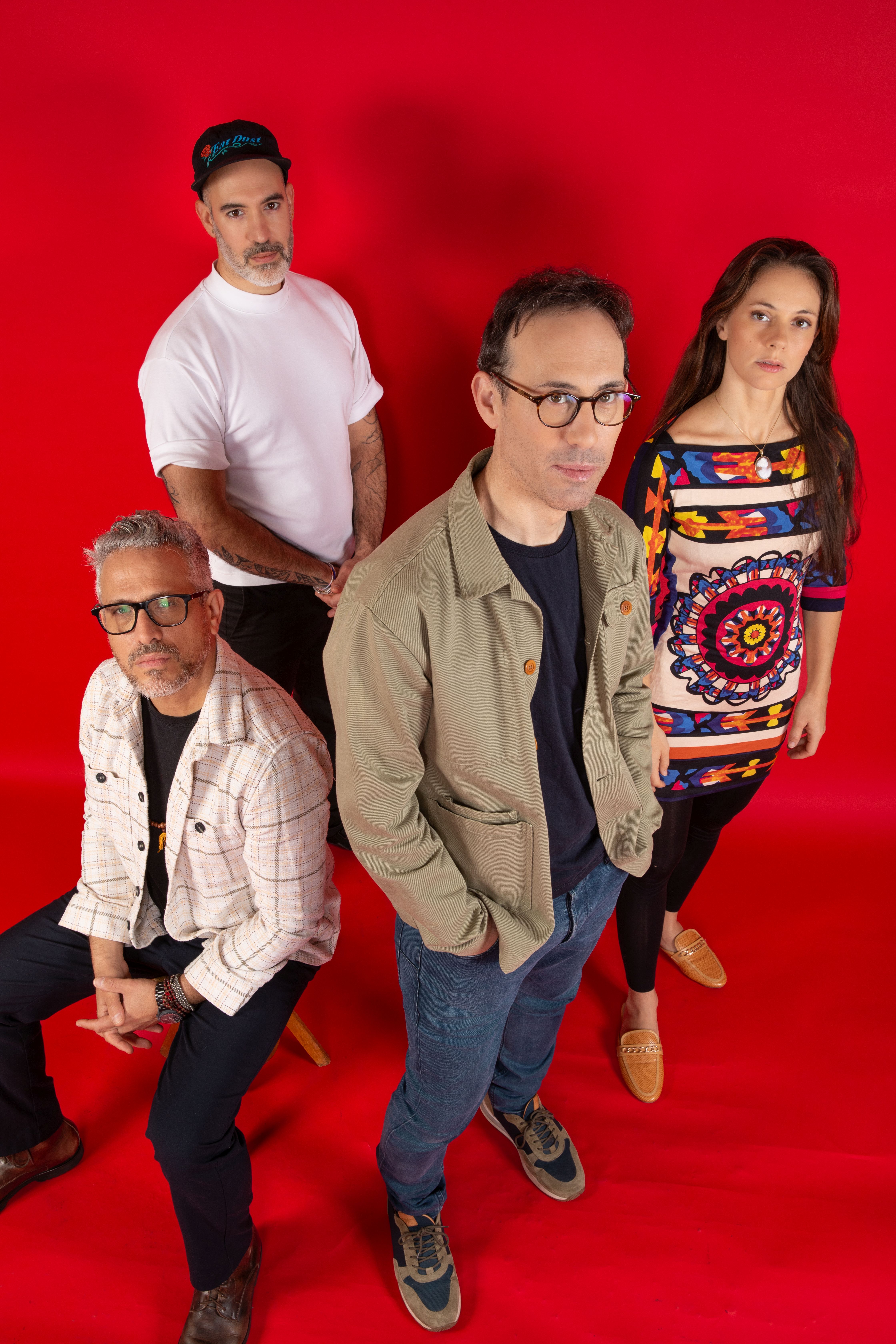
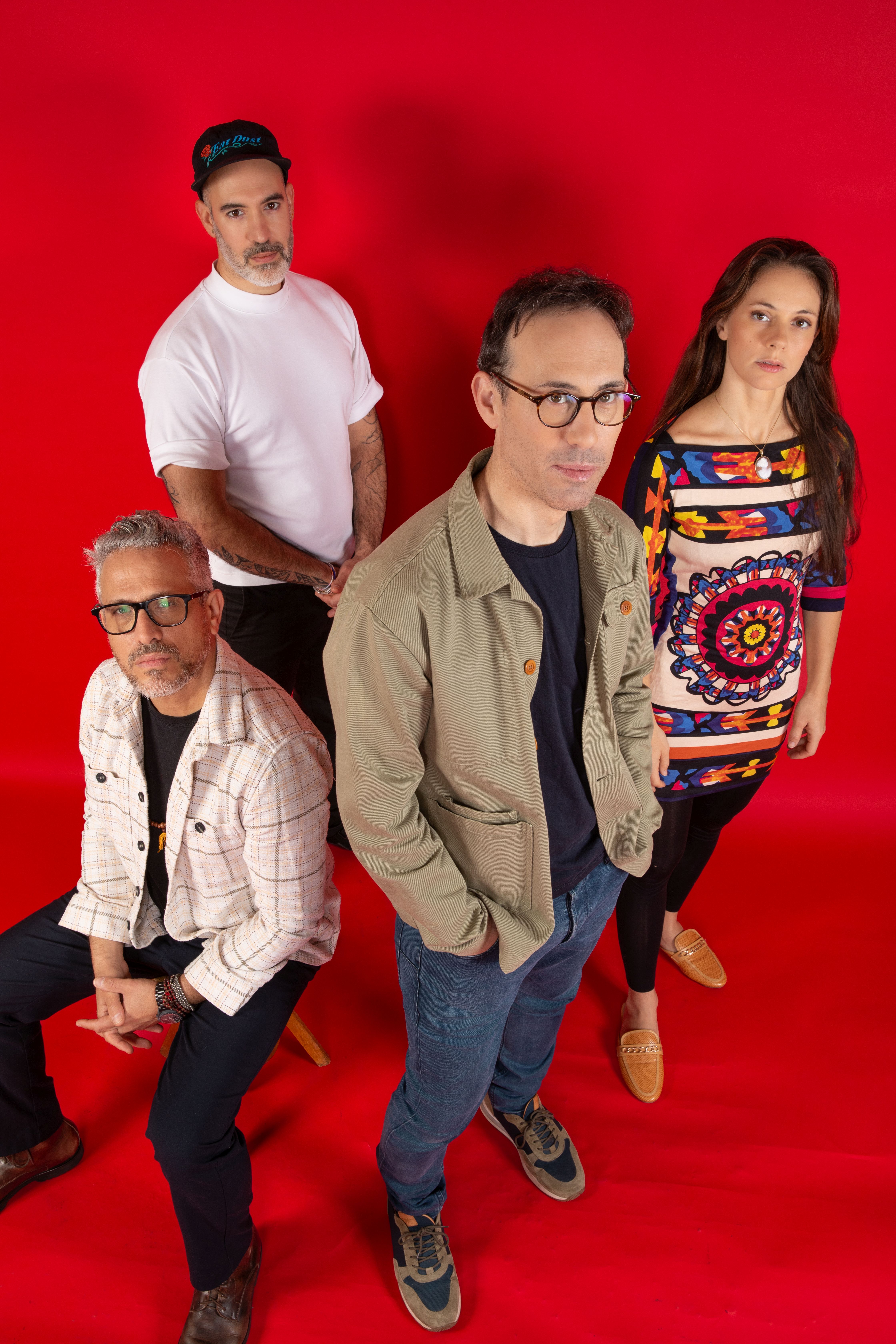
Yaron Herman and the Radio Paradise band. Photo by Hamza Djenat.
In a live situation, decisions between creatives often work without words. From your experience and current projects, what does this process feel like and how does it work?
This band has something really unique in that all the members have strong personalities and distinct sounds. I think their intensity and depth of vision come across in the sound and energy of the record.
The composing process was a real journey in which I spent a lot of time working on the songs with drummer Ziv Ravitz. Some songs went back and forth over months, being worked and reworked right until we finally played them in the studio with the others.
I put a lot of time into creating compositions that are very precise yet allow the greatest amount of freedom—to improvise within the form or, if the flow takes us there, to totally spin off into the wild :) Basically, creating scenarios that are stepping stones for group exploration.
Stewart Copeland said: “Listening is where the cool stuff comes from. And that listening thing, magically, turns all of your chops into gold.” What do you listen for?
We’re getting into the metaphysical here.
Here’s another quote I love: when asked why he was “the greatest pianist ever” by a journalist, Vladimir Horowitz replied, “Because I hear the endings of notes.” There’s so much to listen for in the silence before and after a note. There’s infinite potential in that space, where anything can happen. If you really listen, the silence isn’t empty – it’s full.
There’s a great difference in the way your sound projects and vibrates depending on the intensity and focus of your listening. Anyone can play the same note, with the same intensity, the same intonation, at the same time as Miles Davis. But it won’t have the same “wow” effect, and you wouldn’t be moved the same way. Why is that?
I’m not sure, but I suspect that the mystical aspect of music isn’t in the note itself but in the deep, fertile silence that comes before and after it.
As a listener, do you also have a preference for improvised music? If so, what is it about this music that you appreciate as part of the audience?
I listen to all kinds of music, depending on the mood of the moment or if I’m doing “research and development” :) It can range from rap to classical music to indie to jazz. No genre limits.
When I attend a concert, improvised or not, I wish to be surprised. Not just to hear what I’ve already heard or what I can hear on a record at home. You know what I mean? I want to be challenged, mesmerized by something, fascinated, and emotionally moved. I want to leave the concert having experienced at least one short instant where the music made me forget about everything else.
In today’s world, it’s as rare as it’s precious.
In a way, we improvise all the time. In what way is your creative work feeding back and possibly supporting other areas of your life?
Investigating musical improvisation was an invitation to explore creativity as a whole.
I realized that creativity wasn’t some rare substance that some people had and others didn’t, but rather a mindset and a set of tools I could practice and develop with time and perseverance. The concepts I used in music could be useful in problem-solving, pattern recognition, and could be applied to any issue, including those related to my physical and mental well-being.
I published a book about it (only in French and Japanese versions for now), with the goal of sharing my passion for creativity with musicians and non-musicians alike—taking creativity off its pedestal and placing it back where it belongs: in the center of our lives, to reconnect with the playfulness and infinite joy it brings.