Published
Name: YELKA
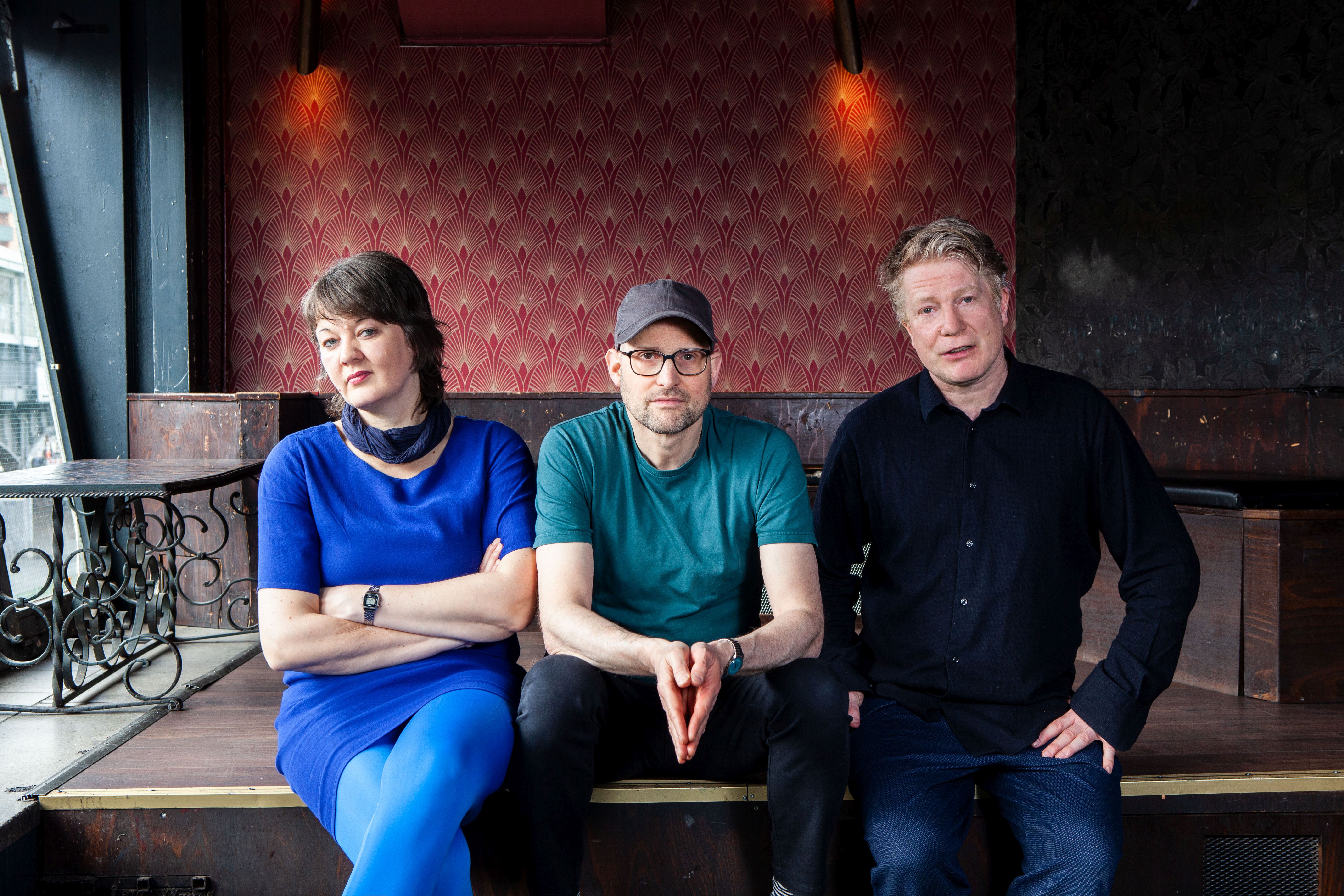
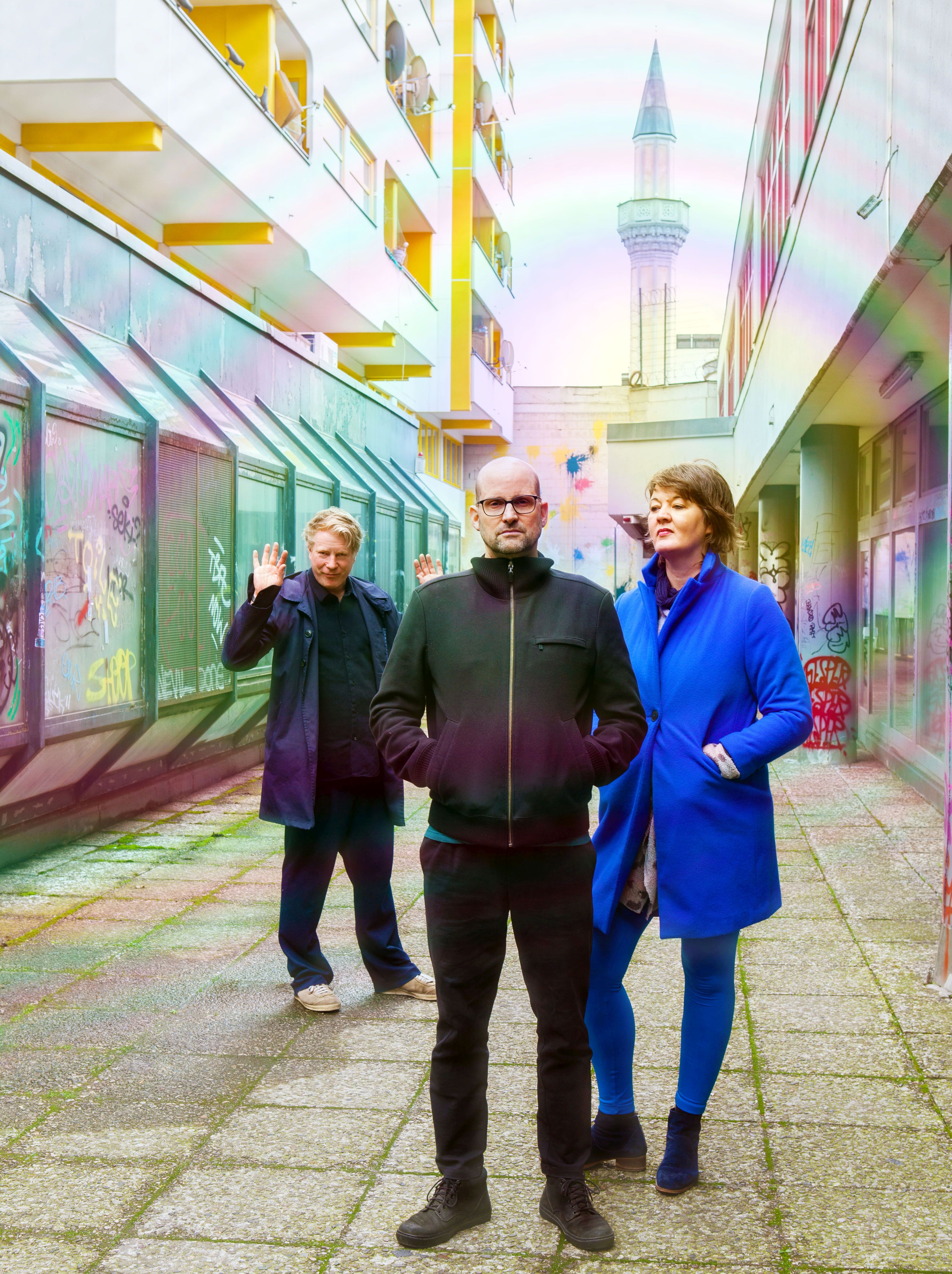
Members: Yelka Wehmeier (bass, vocals, piano, moog), Daniel Meteo (guitar, moog, organ, backing vocals, lyra), Christian Obermaier (drums, percussion, piano, backing vocals, whistling)
Interviewee: We answered these questions as a band (YELKA) so sometimes there might be an “I“ sometimes a “we“- answer..
Nationality: German
Occupation: Producer, composer, multi-instrumentalist
Current release: YELKA's For is out via Karaoke Kalk on June 28th 2024. The band will perform live in Berlin July 17th 2024 with Mieke Miami.
Kraut-related recommendations: Still House Plants; Gnod
And of course our new YELKA album FOR - which starts with a more refreshing attitude (Smile) and ends with a boat trip through Amerika - but is always linked to the area Kraut: we worked with layers, a lot of improvs, guitar / bass / drums repetitive moments and clearly open harmonic mood: For example, "wir wissen" or "is this enough" are definitely typical YELKA songs that people call Post-Kraut.
[Read our Mieke Miami interview]
If you enjoyed this YELKA interview and would like to stay up to date with the band and their music, visit their official homepage. They are also on Instagram.
How would you describe your personal relationship with Krautrock? When and how did it start?
Our personal relationship with Krautrock is diverse, solid, deep and also unconditional. We see it more like an area (rather than an era) that we like to visit again and again and that does not treat us badly if we don’t show up for a while.
For me (Yelka) personally it started with listening to the song “Ruckzuck“ (early Kraftwerk).
It made me understand the spirit it came from (Germany trying to find a new sound) and also how this sound led (in)to Techno eventually.
In his Krautrock Sampler, Julian Cope limits the actual Krautrock phase to only a few years. Are you interested in the history of Kraut – and if so, what are defining moments for you? Where do you draw the bracket for the first, classic period?
Sure we are interested in how everything started, how unconnected it actually was and still seemed to come from similar needs and sources. And of course how i.e. Conny Plank helped giving birth to many interesting albums: “Craziness is holy!”
Kraut drew inspiration from a lot of influences. Which of these would you say were most prominent?
Stockhausen and his Studio experiments at that time (for Can), new tape cutting techniques, German E-Musik at that time, the German “Romantic“ era, free jazz, Velvet Underground, etc.
What was it about Krautrock that particularly attracted you as a listener?
The monotonous, repetitive beat; no changes; long intense pieces (the discipline in the „chaos“)
Tell me about the albums and artists that stand our for you?
CAN: Future Days, Delay 1968
Manuel Göttsching: E2 E4
NEU!
[Read our Manuel Göttsching interview]
[Read our Michael Rother of Neu! interview]
[Read our feature on Manuel Göttsching's E2-E4]
Some believe the well for discovering hidden Kraut gems has dried up. Do you still stumble upon amazing music from the magic Kraut era that you'd never heard (of) before? If so, feel free to share them.
We think, the artist at that time really knew what they were doing and are not such big fans of “new released old (hidden) material“.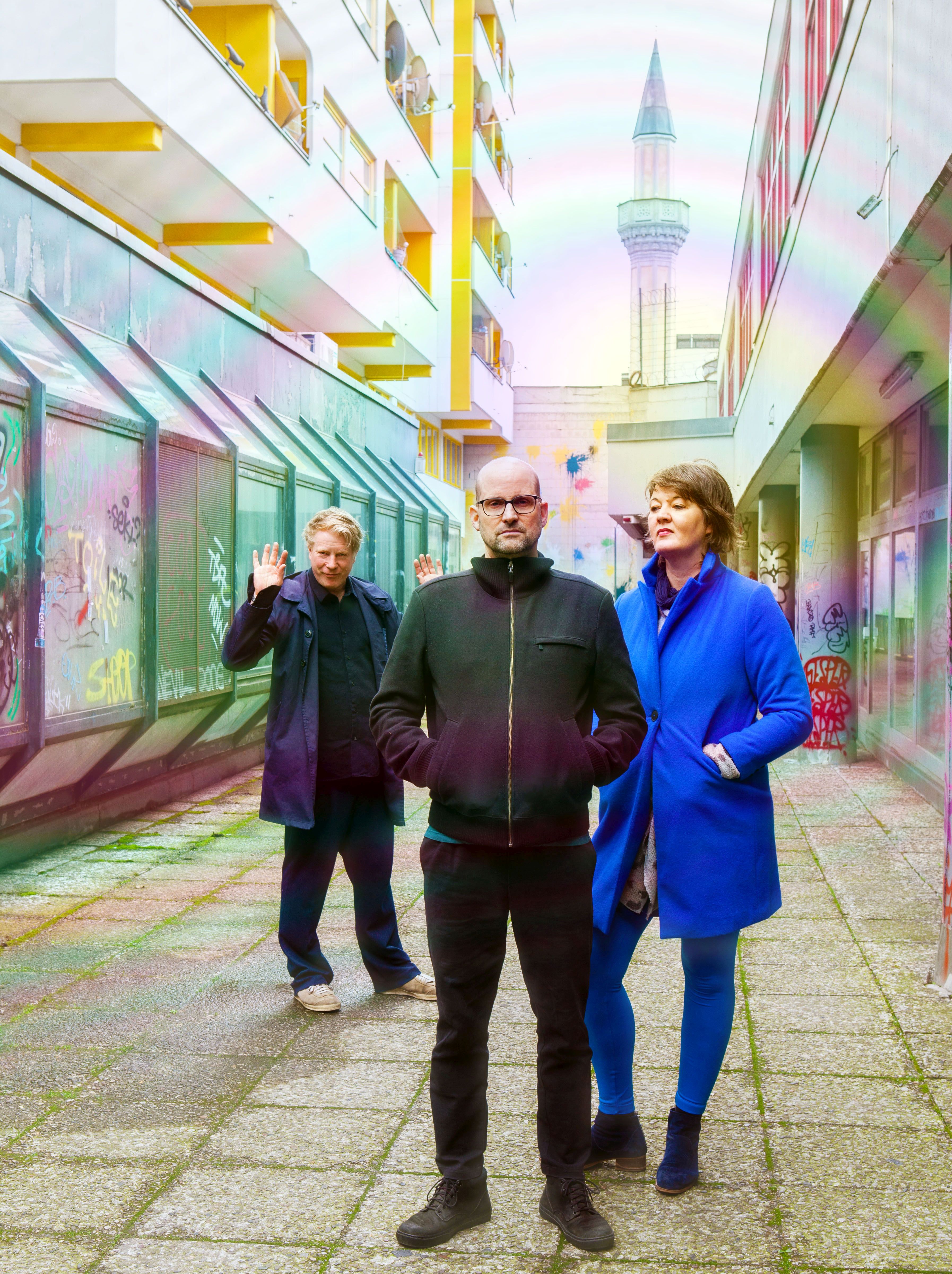
YELKA Interview Image by Mara von Kummer
What, to you, are the main elements that make something “Kraut?” What are the practises of the musicians from the 70s that inspire your own practise today?
As we said before: For us its not a time, more a place where we move as a band musically, where not everything is totally arranged, where layers can be done over layers, where we are free to improvise and where we are also able to shift harmonics slowly but surely.
When did you start making use of Kraut elements in your music?
From the first day.
Could you describe your creative process on the basis of one of your own Kraut-leaning pieces, live performances or albums that's particularly dear to you, please?
If you listen to our song “Weltende“ on the third album Krieg & Ferien you can accompany a musical journey of 12 minutes following the pulse of Kraut(Funk).
Also on this record you find the song “Tausendmal Du“, that was a big Hit in the 80s. We do a krauty cover version.
I got into Kraut via Tangerine Dream and early Ash Ra and to me, the motoric beat was never quite as important. Today, it seems as though it's the most important defining element. Are you interested in it? Are you making use if it? What makes it special to you?
We come from the Beefheart Angle of Kraut so for us the beat is more important than Synthesizers.
It would seem that to some, the prominent inclusion of synthesizers is somewhat of an exclusion criterion for Krautrock. Interestingly, today, they are a signature element. What role do they play for your own view of Kraut and your own music?
We are a classic “Drums, Guitar, Bass- Trio“ and sometime use Synthesizers for recordings as an additional element.
A lot of the Kraut spirit came to life through musicians living in communities, playing and recording together every single day. From your perspective, how does this change the results? Have you ever tried working and creating in such a constellation?
We can somehow relate to “living together“ in the sense we have the “cosmic“ mission to produce and put out 10 records in 3 years.
It's an intense, dense musical journey where we got and get to know each other musically and personally very well.
Did you ever visit one of the birthplaces of the genre – Berlin, Düsseldorf, Munich – or any spaces related to the history of Kraut?
We all live in Berlin. Daniel (the guitar player) has been to the Stockhausen Studio 1 in Cologne.
Do you own any paraphernalia from the era?
No.