Published
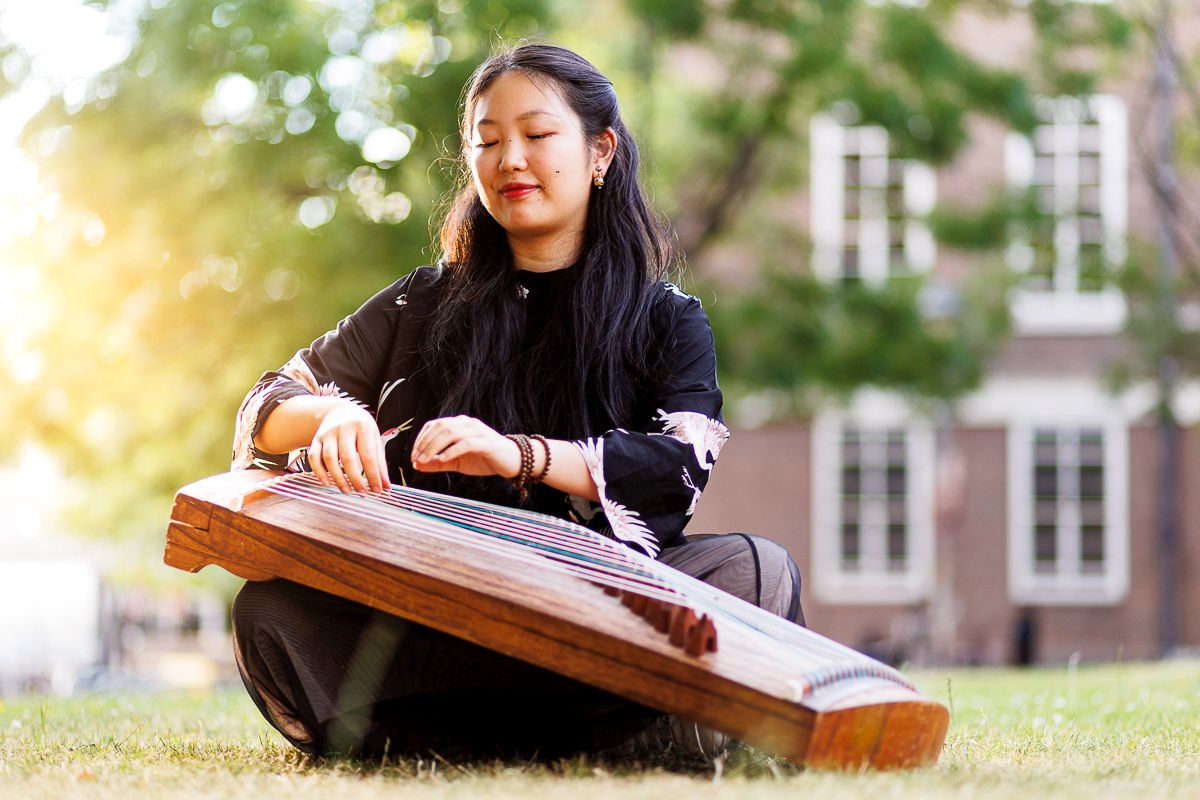
Name: Yijia Tu
Nationality: Chinese
Occupation: Singer, songwriter, composer
Current release: Yijia's new album TU is out now.
Things I am passionate about but rarely get to talk about: I’m fascinated by lucid dreams and our concept of reality in dreams until we are aware we are in a dream, it’s like the Matrix. I used to practice this religiously and can ‘control’ my dreams or at least be aware that I am dreaming as I’m dreaming. I also hear (/compose) the most beautiful melodies in my dreams, often I try to wake myself up and record the melody into my phone, but often I am still dreaming and I wake up with nothing on my phone!
If you enjoyed this Yijia interview and would like to know more about her music, visit her official homepage. She is also on Instagram, Soundcloud, Facebook, and tiktok.
Do you think that some of your earliest musical experiences planted a seed for your interest in writing lyrics or poetry? How and when did you start writing?
My grandfather and mother were both poets, so that definitely planted a seed for my creative interest from a young age.
I started songwriting when I was around 12. For me, it was like writing a diary and a therapeutic outlet as an emotional teenager. Little did I know this fun hobby was going to change my life forever.
Entering new worlds and escapism through music and literature have always exerted a very strong pull on me. What do you think you are drawn to most when it comes to writing?
I daydream a lot since I was a child, and music helps transport me to the dream-like world.
When I write, I’m also escaping to my daydream world. For me, it’s a place of beauty and emotions.
What were some of the artists and albums which inspired you early on purely on the strength of their lyrics? What moves you in the lyrics of other artists?
I’m a fan of Stornoway, which I had the honour of touring with, and was featured on their single ‘It’s Not Up To You’.
One of the songs called ‘Bigger Picture’ always makes me cry when I listen to it, especially when I’m going through a tough time, as it reminds us there’s always a bigger picture to what we’re seeing.
“You may have seen the first star flickering in the park one summer evening, no less faintly than the dream your heart was wishing on. But if you haven't seen the places you have come from, then you haven't seen how far you have come.”
I like profound lyrics that beautifully depict not only allowing you to contemplate life, but also offer enlightening life wisdom when you need it.
Have there been song lyrics which actually made you change (aspects of) your life? If so, what do you think lent them that power?
There’s this line from Lana Del Rey’s album before she was famous. In “Pawn Shop Blues:”
‘In the name of higher consciousness, I let the best man I knew go. It’s nice to love and be loved, but it’s better to know what God knows.”
I always think about this when I move on from relationships, and it motivates me that there’s more to this one person you are clinging to, and that everything happens for the best reason.
It is sometimes said that “music begins where words end.” What do you make of that?
I agree with this idea. Music transcends language—it can convey what words often cannot.
When my grandmother developed Alzheimer’s, we could no longer communicate through words. She wouldn’t remember me or herself, but whenever I sang her favourite songs to her, she would remember the melody and her eyes would light up, and she would sing along to it with me.
And I’ve sung songs in Chinese to many people who don’t understand the language, yet felt deeply touched by the emotions and music. It’s really beautiful how music brings us together throughout different cultural and linguistic backgrounds.
I have always considered many forms of music to be a form of poetry as well. Where do you personally see similarities? What can music express which may be out of reach for poetry?
Both music and poetry connect to the deepest parts of our soul, communicating emotions or concepts that are hard to describe in everyday speech. However, music for me can convey emotions and express emotions that words cannot convey.
Also, sometimes as a composer, the words in the lyrics can limit the way you write out the melodies. Especially in Mandarin, which is a tonal language, a lot of the time the melodic structure needs to follow the pattern of the tones of lyrics, otherwise the words won’t make sense. I find that both creatively inspiring and limiting at times.
Also, with instrumental music, there is so much room for interpretation of emotions, whereas with words, the meaning and definition are usually set, and there’s less room for imagination and interpretation than in music.
The relationship between words and music has always intrigued me. How do you see it? In how far can music take you to places with your writing you would possibly not have visited without it?
I love listening to and being inspired by music from different historical times and places. So for me, music can take me back to medieval England, ancient China or nomadic Mongolian grassland within seconds.
“Willow Flowers” is a song in which I reimagine what the ancient Tang Dynasty sounded like, based on an ancient poem by Su Shi.
Just reading this poem really sparked a lot of emotions for me, but after composing the melody, I can resonate and be present in the sonic landscape.
What are areas/themes/topics that you keep returning to in your lyrics?
I often return to themes of identity, memory, and belonging. These topics are explored in my album TU, where I reimagine traditional songs from my heritage while also writing new material that speaks to my own journey of reconnecting with my roots.
The idea of home, both physical and spiritual, is also a recurring theme—especially in songs like “Yi The Sun,” which explores returning to a home that is nearly lost over time,
Tell me about how the lyrics of “Yi The Sun”grew into their final form and what points of consideration were.
The lyrics grew directly from a field recording of the Yi ethnic group’s music.
Initially, the lyrics are in the traditional Yi language about the sun rising. So I felt inspired to add English lyrics about finding hope and coming back home after a post-apocalyptic space journey.
The fusion of futuristic trance elements with the ancient Yi music added an urgency to the song that shaped the final lyrics, especially the lines “Hey, hello, is anyone home? I’ve been gone for too long,” which convey both loneliness and the yearning to reconnect.
Do you tend to start writing with what will be the first line of the finished lyrics? The chorus? At a random point? What are the words that set the process in motion?
I usually start with melody, and if any lyrics come into my mind, I then add them on top of the melody later. And it can start at any part of the song.
It’s a really abstract and free-flowing process when I compose, and I enjoy the freedom of not having a set formula or knowing what’s going to happen next.
I’d love to know how you think the meaning or effect of an individual song is enhanced, clarified, or possibly contradicted by the EPs or albums it is part of. Does the song, for example, need to be consistent with the larger whole?
I think of an album as a film, and singles are like scenes from different scenes of the film. Yes, singles can stand alone, but the album documents a journey instead of a stop in the journey.
I think the meaning of each song is often enriched by the context of the album or EP it belongs to. Each track contributes to a holistic exploration of these themes, and each one builds upon the other.
When you’re writing song lyrics, do you sense or see a connection between your voice and the text? Does it need to feel and sound “good” or “right” to sing certain words? What’s your perspective in this regard of singing someone else’s songs versus your own?
Instead of sounding good or bad, it’s more like whether it feels natural to me or not. Sometimes when I’m writing, I’ll start mumbling and my brain doesn’t know what I’m about to sing, but what I end up singing might be a great line, so I then expand on it and build the rest of the song upon it.
I think there’s definitely a correlation, as I tend to like to sing a particular way and like to use some particular rhymes or words, which wouldn’t be the case singing someone else’s songs.
I would love to know a little about the feedback you’ve received from listeners or critics about what they thought some of your songs are about – have there been “misunderstandings” or did you perhaps even gain new “insights?”
I think a lot of mainstream critics may view my music as being too ‘ethnic’, and a lot of traditional music lovers criticise my music as not being traditional enough! You can’t please anyone, so there’s no point trying.
So I just call myself and my music an identity crisis, so I don’t have to conform to one description of identity.
Creativity can reach many different corners of our lives. Do you feel as though writing song lyrics or poetry is inherently different from something like making a great cup of coffee? What do you express through music that you couldn’t or wouldn’t in more ‘mundane’ tasks?
Music allows me to express the profound emotions and experiences that might feel out of place in daily tasks. Through music, I can convey a deeper, almost spiritual connection to my heritage and personal journey in ways that nothing else in life can convey. It’s like a form of therapy for me to express complex emotions I cannot comprehend, and like a journal of how I am feeling at the time.
I like making coffee as well, but once you drink it, it’s gone, whereas once you’ve written a song, it’s like capturing a moment and emotion in time that you can always look back and access.