Published
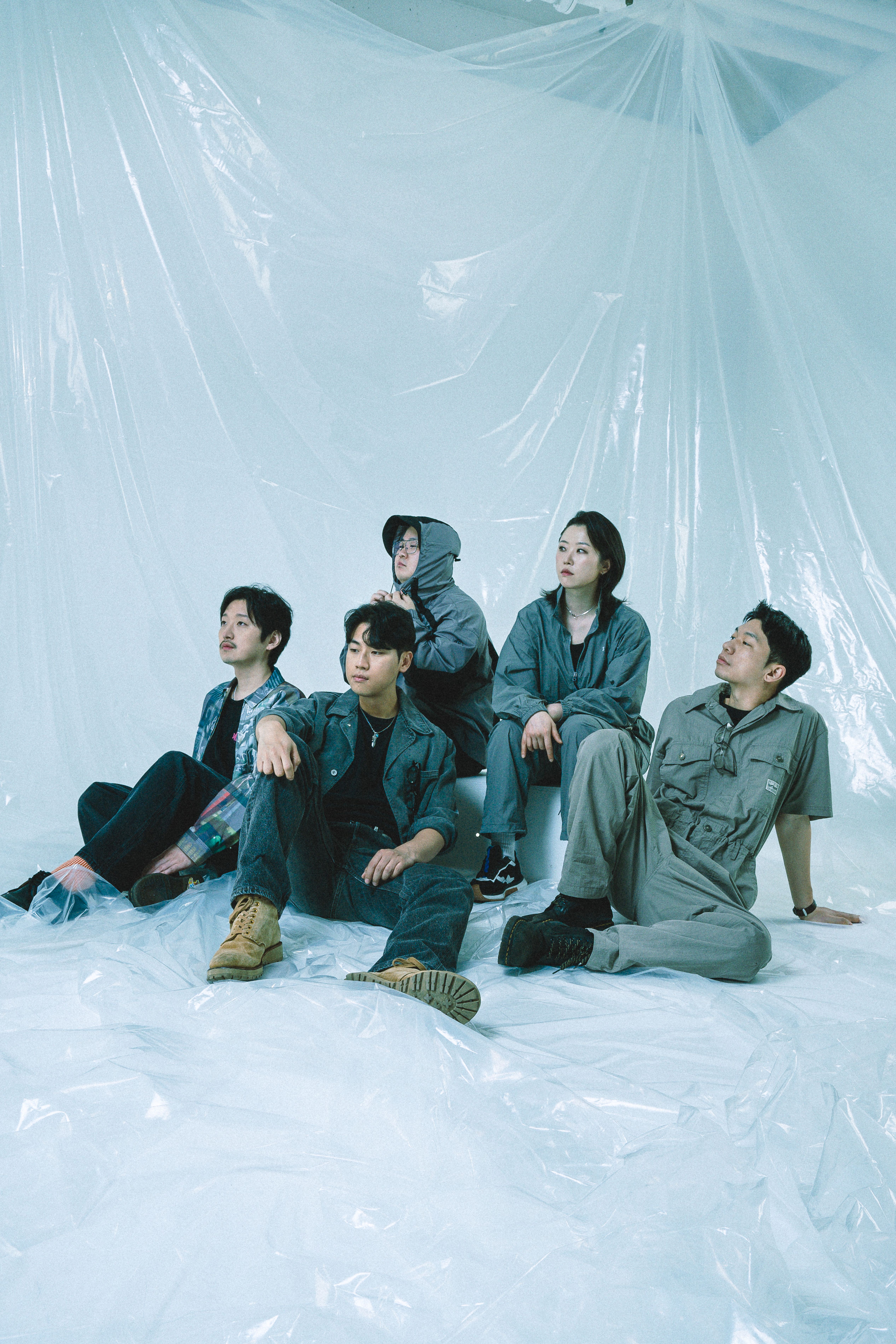
Name: yonglee & the DOLTANG
Members: Yonglee (piano), Yechan Jo (guitar), Youngwoo Lee (synth, electronics), Hwansu Kang (bass), Dayeon Seok (drums)
Interviewee: Yonglee
Nationality: South Korean
Recent release: yonglee & the DOLTANG's new album Invisible Worker is out via unit.
Current event: yonglee & the DOLTANG are currently on an extended tour through Europe. On June 19th 2025, they will perform at Ronnie Scott's in London. For more information and tickets, head over to the club's official website.
Recommendation for Seoul, South Korea: The food here is amazing. There are plenty of places I can recommend. E-mail me or message me.
If you enjoyed this yonglee & the DOLTANG interview and would like to stay up to date with the band and their music, visit them on Instagram.
What were some of the musical experiences which planted a seed for your interest in jazz?
Community. My interest in jazz grew through the many different groups I enjoyed playing with and spending time around. What fascinated me was how the music could sound completely different depending on who I was playing with.
That sense of constant rediscovery through communication with other musicians was deeply inspiring, and it also led me to discover a wide range of recordings along the way.
What does the term jazz mean today, would you say?
Diversity and improvisation. From its birth, jazz has been a merger of diverse cultures and the spirit of its times. Today it is both a celebration of the history of human creativity and a space for sharing and collective experience.
Jazz, to me, should evolve in dialogue with the cultural legacy and distinct spirit of each place as we look this music as a global music.
As of today, what kind of materials, ideas, and technologies are particularly stimulating for you?
Rhythms and electronic sounds. I like music that keeps pushing the borderlines of this music.
I'm particularly fascinated by the process of layering contrasting rhythmic elements to create new textures of groove. While working on DOLTANG’s Invisible Worker, I began incorporating MIDI into my composition process, which allowed me to experiment more freely—building and manipulating complex rhythmic layers in ways that weren't possible before.
Where do most of your inspirations to create come from – rather from internal impulses or external ones? Which current social / political / ecological or other developments make you feel like you need to respond as an artist?
It’s hard to tell them apart. I think internal impulses are mostly a reflection of my surroundings and how I interact with them. So I think the two are quite connected.
The recent political developments in South Korea left a deep impression on me. Witnessing the fractures within our society stirred a sense of sorrow, and a belief that I can find ways to respond and raise my voice.
Tell me a bit about the sounds & creative directions, artists & communities, as well as the colleagues & creative hotspots of your current hometown, please. How do they influence your music?
I’m currently based in Seoul, a city that’s constantly in motion—contradictory, fragmented, but endlessly inspiring. There’s a rich tension here between tradition and hyper-modernity, and I feel that duality in the music scene too.
You can find anything from underground experimental noise collectives in basement venues, to gugak (Korean Tradition Music) musicians collaborating with jazz and electronic artists.
For the scene I am most actively involved in, the pandemic brought a lot of musicians back home from all over the world, and more contemporary and experimental elements started being more accessible in the scene. We shared some music and concepts and luckily we had venues and festivals to present these works such as Club Evans, Jarasum Jazz Festival, SS:umic.
What role do electronic tools and instruments play for your creative process?
They help to open up a huge landscape of potential ideas.
The sounds of electronic tools and instrument can help me expand the spectrum of emotions and moods that could be aroused from music. They also help me enable synthesis and the integration of ideas in a smoother way.
Thanks to technological advances, collaboration has become a lot easier. What have been some of the most fruitful collaborations for you recently and what approaches to and modes of collaboration currently seem best to you?
I can’t say which approach seems best at the moment because technology is evolving in real time. It’s opening so many doors, and the possibilities continue to multiply.
Let me share a recent collaboration that was made possible through technology. There’s a song called “Dopamine Rush” on my band’s latest album Invisible Worker.
While I was composing it, I had a sudden inspiration and quickly recorded some short-form ideas on my phone. I sent them to our synth player, Youngwoo, who sampled those ideas, added analog synth layers, and sent the track back to me and I kept writing the song on top of the sounds he generated.
We were able to exchange creative input remotely and simultaneously, thanks to technology. It was one of the most satisfying moments in my entire composing process.
Jazz has always had an interesting relationship between honouring its roots and exploring the unknown. What does the balance between these two poles look like in your music?
When we come together as a group to develop our improvisational ideas, we draw heavily from jazz giants like Miles Davis, Wayne Shorter, Ornette Coleman, and many others.
While we can’t know exactly what they were thinking in their minds, I try to interpret what I hear in my own way, and we strive to express those influences in a way that’s unique to our band.
I believe there isn’t much space left for something entirely new in jazz, so I tend to begin my exploration of the unknown from what is already well known. The new is that magical moment when you connect things that already exist, but seem completely unrelated, and the result is so killing.
For many artists, life-changing musical experiences take place live. How do you see that yourself?
I think I’ve always learned the most from while I was performing live, sharing my music with audiences.
Ímprovisation is obviously an essential element of jazz, but I would assume that just like composition, it is transforming. How do you feel has the role of improvisation changed in jazz?
I still believe that improvisation is the most essential element in jazz.
Personally, I find it most beautiful when improvisation feels like an extension of the composition itself, serving as a guide through the piece or expanding on the emotional landscape laid out by the composer.
What, would you say, are the key ideas behind your approach to improvisation?
Trusting and communicating with myself and who I’m sharing the stage with.
Constantly looking for what is missing and how to make the flow of ideas sound stronger.