

Name: Yuhan Su
Nationality: Taiwanese, New-York based
Occupation: Vibraphonist, composer, improviser
Current release: Yuhan Su's new album OVER the MOONs is out via Endectomorph. Alongside Yuhan Su on vibraphone, it features Alex LoRe (alto saxophone, flute), Anna Webber (tenor saxophone, flute), Matt Mitchell (piano), Yingda Chen (guitar), Marty Kenney (acoustic bass. electric bass), James Paul Nadien (drums), and Shinya Lin (electronics).
Shoutouts: I wanna give a shout out to the label which released my album OVER the MOONs. Endectomorph Music was founded by my good friend, the extraordinary saxophonist Kevin Sun. There are lots of brilliant artists to discover on the label that in my opinion represents a very current creative improvised scene from our generation in Brooklyn and NY.
And to my beloved venue The Jazz Gallery. I was fortunate to be chosen as the commission residency artist in 2025 and it was an unforgettable experience to write so much new music in one year. Big thanks to the artist director Rio Sakairi for believing in me and The Jazz Gallery for supporting creative music for over 30 years.
Recommendations for Taiwan: I will recommend the night markets if you get to travel there. I grew up in Taiwan and that’s the my no.1 nostalgic scenery and smells for home.
Things I am passionate about but rarely get to talk about: My new hobby - Boxing classes. I found a lot of similarity with playing vibraphone - the combination pattern, the use of weight and confrontation.
[Read our Kevin Sun interview]
If you enjoyed this Yuhan Su interview and would like to stay up to date with her music, visit her official homepage. She is also on Instagram, and bandcamp.
What were some of the musical experiences which planted a seed for your interest in jazz?
I came from the background of studying classical music, majoring in percussion.
During my college years in Taiwan, I discovered the record Bags Meets Wes! by Milt Jackson and Wes Montgomery while I was eager to learn something different outside of my world.
Vibraphonist Gary Burton and pianist Chick Corea came to Taiwan for their 35 years anniversary duo tour in 2007. I was stunned by the fluency and freedom they shared in improvisation.
I realized this is something I really want to do for the rest of my life.
What does the term jazz mean today, would you say?
I think it’s a universe for improvised music influenced by the footprints in jazz history and meanwhile mixed with global culture, new trends, individual creativity and personality.
As of today, what kind of materials, ideas, and technologies are particularly stimulating for you?
I’m always stimulated by things slightly out of balance and out of the ordinary. I like to play around gravity in music. I often use different rhythmic or melodic shapes to create a new norm and explore the possibility of layers and intensity.
In my new release album, Shinya Lin used his self-developed sensor technology with Max/MSP which enables real-time gesture control to add another layer to the music. We chose different fragments including noise, samples from our track, and human voice to improvise together with the written materials.
It was a brand new exciting experience for me.
Where do most of your inspirations to create come from – rather from internal impulses or external ones? Which current social / political / ecological or other developments make you feel like you need to respond as an artist?
Most of my inspirations came from my life experiences and lots of them are somewhat related to my immigrant status.
My new album’s idea came from my Double-Consciousness experiences that exists like two Moons inside of my brain after living in the US for over 15 years.
In the same way that each moon draws its own tides and shines in its own time, I felt I constantly perceive things in different languages and through the framework of multiple cultures.
Tell me a bit about the sounds & creative directions, artists & communities, as well as the colleagues & creative hotspots of your current hometown, please. How do they influence your music?
For the past 12 years, I have lived in New York. There is always so much happening here. Musicians play all kinds of music on an extremely high level and intensity.
I could go to a dive-bar in Brooklyn to play a full set of free improvisation music with people I’ve never met, lead my band next day at Smalls Jazz Club, then perform with a delicately-composed big band at Roulette, and a post-rock/jazz fusion band at the end of week.
This kind of variety and the crazy amount of incredible artistic minds constantly inspire me. That’s what I love the most about things here and I always try to output this energy to my music.
What role do electronic tools and instruments play for your creative process?
I’ve used MalletKat (a MIDI percussion mallets controller) to create sounds.
In these past few years I've also stared using a pick-up system for my vibraphone and connect it to effect pedals. This opens the door to possibilities to add more character to the acoustic vibraphone sounds.
For example, you can find some heavy distortion and fuzz in my song “Roaring Hours”.
Jazz has always had an interesting relationship between honouring its roots and exploring the unknown. What does the balance between these two poles look like in your music?
This relationship is exactly what I value the most in my music. We all have our own way to understand and interpret the roots of jazz and I think that has a lot to do with when and how jazz came to our life.
For me, to embrace the vocabulary, melodies, forms, grooves, freedom of expression and transform them through my personal voice is the way I show my respect to this art form.
How much potential for something “new” is there still in jazz? What could this “new” look like?
I believe jazz always evolves with the times. So it will always be something new and relevant.
Also the newness might reflect differently in every culture.
For many artists, life-changing musical experiences take place live. How do you see that yourself?
They do live forever in my body and music.
Last Summer I had one of these experiences when I was fortunately recorded for drummer Nasheet Waits’s project along with Warren Smith, Eric McPherson and Abraham Burton.
We spent quite an amount of time rehearsing and jamming one of Warren Smith’s compositions, “Mr. Seven,” which appeared on Max Roach’s M’boom album. There are several lines running in their own directions like a train including the bone of a clave rhythm, and horizontally become a such strong groove.
At first I struggled to understand all these elements which seem to be very simple. After I spent lots of time to completely dive into every possibility of the rhythm and jamming with these legends, I think the way I feel about grooves has drastically changed. I realize you have to trust that your body will know how to bounce to it without even thinking about it.
I sincerely cherish this experience so much.
How, would you say are your live performances and your recording projects connected at the moment? How do they mutually influence and feed off each other?
Playing live performance is definitely the best way to develop the compositions for recording projects with the band. There is this sublime energy level, chemistry and flow that you naturally build with your bandmates through the shows and tours, and I think the audience is involved with the process too.
The music becomes more human I think.
What, would you say, are the key ideas behind your approach to improvisation?
My key idea is motivic development. I first learned this when I studied classical composition in high school to write a Rondo and analyze Bach’s invention and fugue.
Later on when I studied at Berklee, I took trombonist Hal Crook’s improvisation technique classes and he taught so much about this concept, too.
I think all these connections between classical music and jazz are how I build my own language for improvisation.

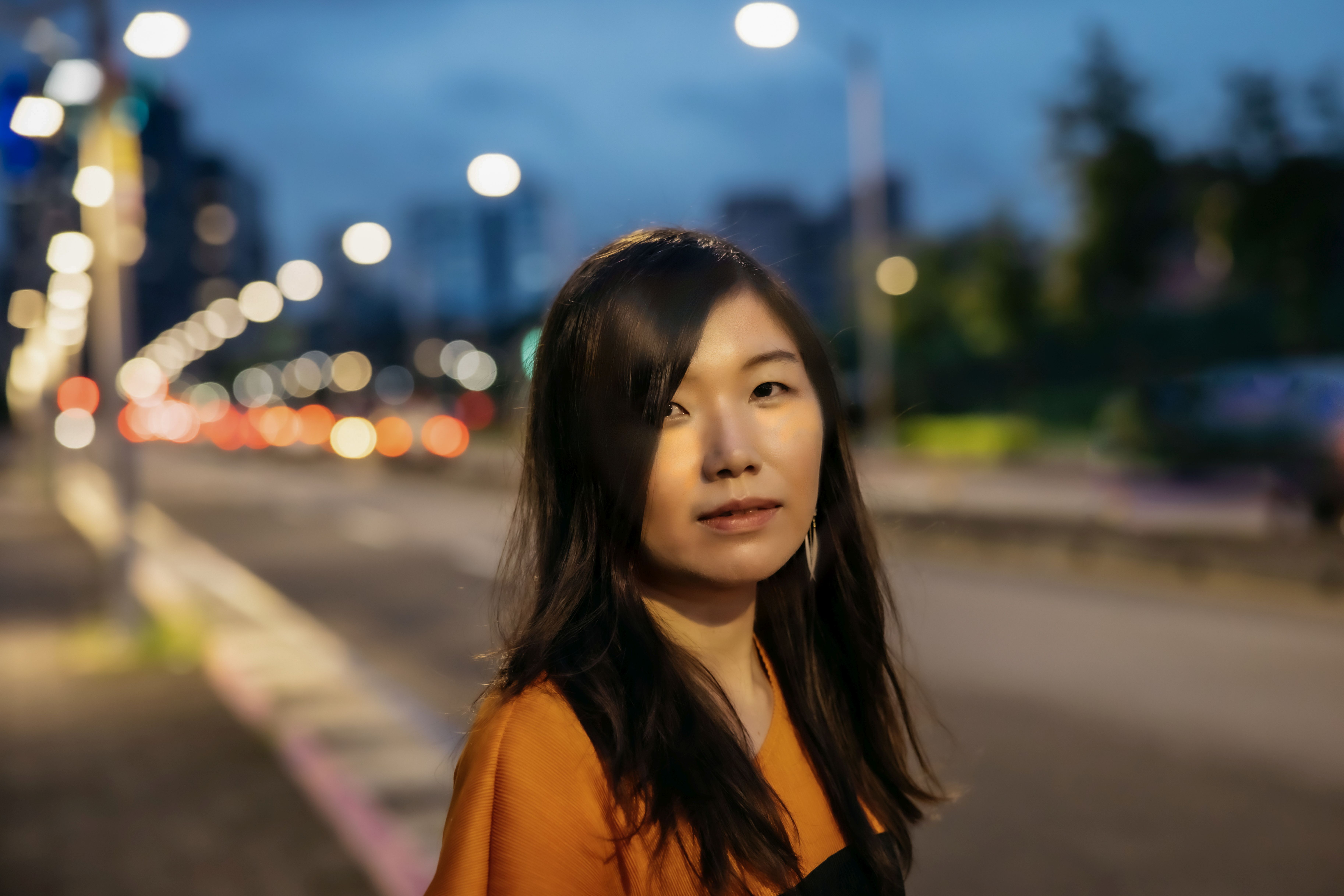 Yuhan Su Interview Image by Sean Wang
“I believe jazz always evolves with the times. It will always be something new and relevant.“
Video
