Published
Part 1
Name: Yumi Jacqueline Ito
Nationality: Swiss-Japanese-Polish
Occupation: Singer, songwriter
Current release: Yumi Ito 's new album Lonely Island is out September 19th 2025 via Enya yellowbird.
Recommendations for Basel, Switzerland: I recommend swimming in the Rhine! In summer the river is so beautiful—it almost feels like living by the sea. The view from the water looking back at the shore is amazing.
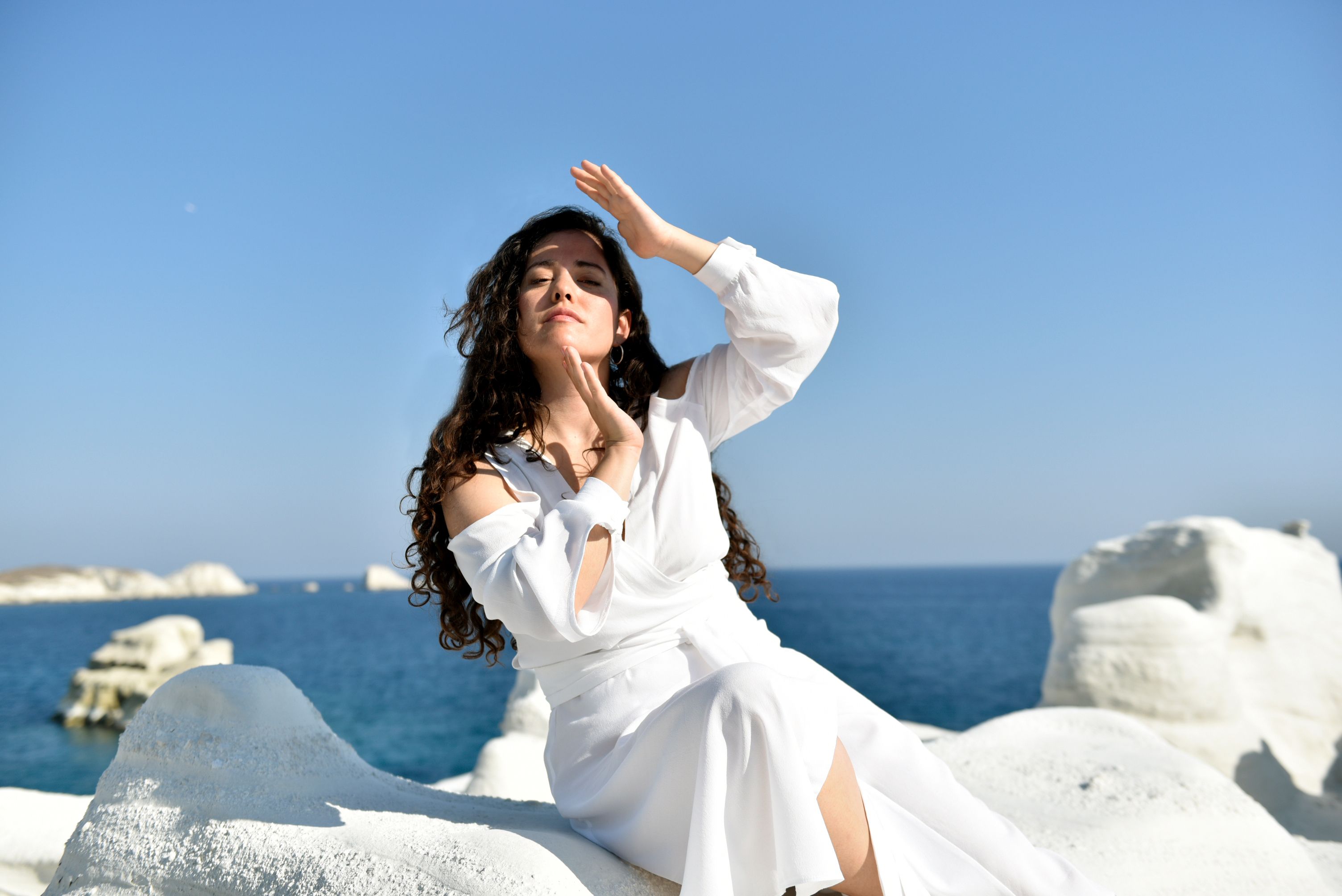
Things that I am passionate about but rarely get to talk about: Many things—like traveling. But one passion I rarely talk about is design, especially interior design. I love being surrounded by beautiful art and objects, and I’m fascinated by organic forms. I can spend hours scrolling Pinterest and creating mood boards for my albums. This visual inspiration always makes its way into my music and the album artworks I create with my graphic designer, Maria Jarzyna, who’s been one of my muses for over six years now. Together, we build a new visual world for each album that still feels like a natural continuation of what came before.
For me, music is not only something for the ears but also for the eyes. Architecture, typography, and design inspire me a lot. I also think of music visually—I like to create balance in my compositions and improvisations, organizing phrases almost like building a design. In the same way, I admire the balance of a beautifully designed Vitra chair.
I also love collaborating with designers—like Paulina Janiuk for my stage outfits, or Pei from Crush Jewel, a jewelry brand in Barcelona. We’re even working on some special merch together.
Sometimes I forget I’m a musician because I get so absorbed in the visual design world! If I weren’t making music, I’d probably be a designer or visual artist. As a child, drawing was my biggest hobby. Now, I feel like I draw with my voice instead of with a pencil.
If you enjoyed this Yumi Ito interview and would like to stay up to date with her music, visit her official homepage. She is also on Instagram, Facebook, bandcamp, tiktok, and Soundcloud.
When did you first consciously start getting interested in singing? What was your first performance as a singer on stage or in the studio and what was the experience like?
I’ve been singing since I was little, but I really got into it around the age of 8–10 when I discovered pop music.
My first performance on stage was with the school choir at a Christmas concert, where I sang a classical solo. I remember being jealous of another singer who got to sing a gospel song, haha! But at the same time, I was extremely nervous.
My first studio experience was around 2012, when I recorded some demos. I’ll never forget the feedback from the sound engineer who told me I had a big dynamic range! I guess that came from my classical training. Back then, I didn’t yet know how to “compress” my sound, but even today I love playing with dynamics—now I just do it more consciously.
If you're also playing other instruments, how does the expressive potential of these compare to your own voice?
I play the piano, and what I love about it is the ability to play chords—several notes at once—and to accompany yourself while improvising. That’s very different from the voice.
Still, I’ve always tried to imitate the piano or other instruments like saxophones and trumpets when I improvise with my voice.
Singing is an integral part of all cultures and traditions. Which of these do you draw from – and why?
For me, singing and music always felt natural because I grew up in a family of musicians. My mum is a classical opera singer and my dad is a concert pianist. So in a way, I was already on stage while still in my mother’s womb!
I started piano lessons when I was three, but secretly, I would spend hours singing alone when nobody could hear me. I was very self-conscious around others, though that changed later thanks to theatre acting lessons, which helped me feel comfortable on stage. For example, I didn’t like singing at Christmas with my family, but I loved singing loudly in front of strangers.
Later I learned that both sides of my family had many talented singers, but because of the economic situation, they weren’t able to study music or pursue it professionally. I wish I could have heard the voices of my ancestors. It feels like singing was a tradition passed down, and I’m grateful I was able to study music, develop my own style, and become a professional musician.
What were some of the main challenges in your development as a singer/vocalist? Which practices, exercises, or teachers were most helpful in reaching your goals – were there also “harmful” ones?
I was lucky to learn great technique early on from my mum, who is a classically trained opera singer and now a wonderful teacher. From the age of 13, I studied with her. She always said she just wanted me to have a solid technique, whatever I decided to do later. That was the best gift she could give me.
Of course, as I grew older I wanted to develop my own style and experiment with chest voice and belting, since I had only studied classical voice until I was about 20.
All my teachers were helpful in different ways—it was valuable to see different perspectives on singing. At first, I spent years working on technique with different teachers, but later I focused more on improvisation. I studied with greats like Bob Stoloff and Bobby McFerrin, and I also learned from instrumentalists such as Mark Turner and my piano teacher Chris Wiesendanger, who helped me hear and understand harmonic tensions.
As a kid, I listened a lot to Ella Fitzgerald, Louis Armstrong, Stan Getz, and Oscar Peterson—those recordings shaped how I improvise.
Later I was very inspired by Gretchen Parlato, with whom I had the chance to study in New York. Her approach—more lyric, rhythm, and story based—was new to me and so inspiring.
For years, I thought I had to create a big, powerful sound, but discovering her music made me realize that you don’t have to sing loudly to be powerful.
What are the things you hear in a voice when listening to a vocalist? What moves you in the voices of other singers?
Uniqueness and honesty. Storytelling and timbre.
I love special timbres, like those of Björk, Billie Holiday, Ella Fitzgerald, or Johnny Cash.
How would you describe the physical sensation of singing?
I feel a very strong connection between my voice and my body. When I was younger, I felt the voice more in my head, later in my chest, and in recent years I’ve worked a lot with my lower back muscles and the lower body, which makes me feel more rooted.
Now I finally understand what my mum meant when she told me as a teenager to “breathe into the lower back.” Back then my back didn’t move at all, but now I can feel it expand and contract when I breathe and sing—it’s fascinating.
When I improvise, I think more in terms of energy and projection. I often use my hands, probably because of my piano background, and people have told me it looks like I’m playing an instrument while I sing. Imagining myself as another instrument is very inspiring.
But most of the time I simply follow the emotion, and I don’t think about technique at all when I’m on stage.
We have a speaking voice and a singing voice. Do these feel like they are natural extensions of each other, ends on a spectrum or different in kind?
For me, they’re natural extensions of each other. But my singing voice feels much more powerful—it allows me to express things beyond words.
It’s still important to take care of the speaking voice. I’ve met singers who damaged their vocal cords partly due to bad speaking habits. Personally, I notice that my speaking voice improves after chest-voice exercises and warmups. If I take care of it, it never gets tired from talking. But if I’m exhausted or haven’t slept, I avoid talking too much so I don’t overuse my vocal cords.
One of the most dangerous situations for singers is after a concert, when you end up shouting in a loud bar. I’ve strained my voice more from that than from singing! So I avoid those situations as much as possible.
Performing concerts feels like running a marathon—it’s physical. I need to be mindful of what I eat, drink lots of water, avoid alcohol and dairy, care for my body, and get enough sleep.
How do you see the relationship between harmony, rhythm and melody?
For me, rhythm comes first. Even a single note can sound amazing if it’s played with great rhythm—like in One Note Samba. But a beautiful melody can sound flat if the rhythm is weak.
I’m very inspired by drums and percussion, and I learned a lot from singing Hermeto Pascoal themes and exploring Brazilian music. Rhythm and voice feel like the beginning of music itself.