Published
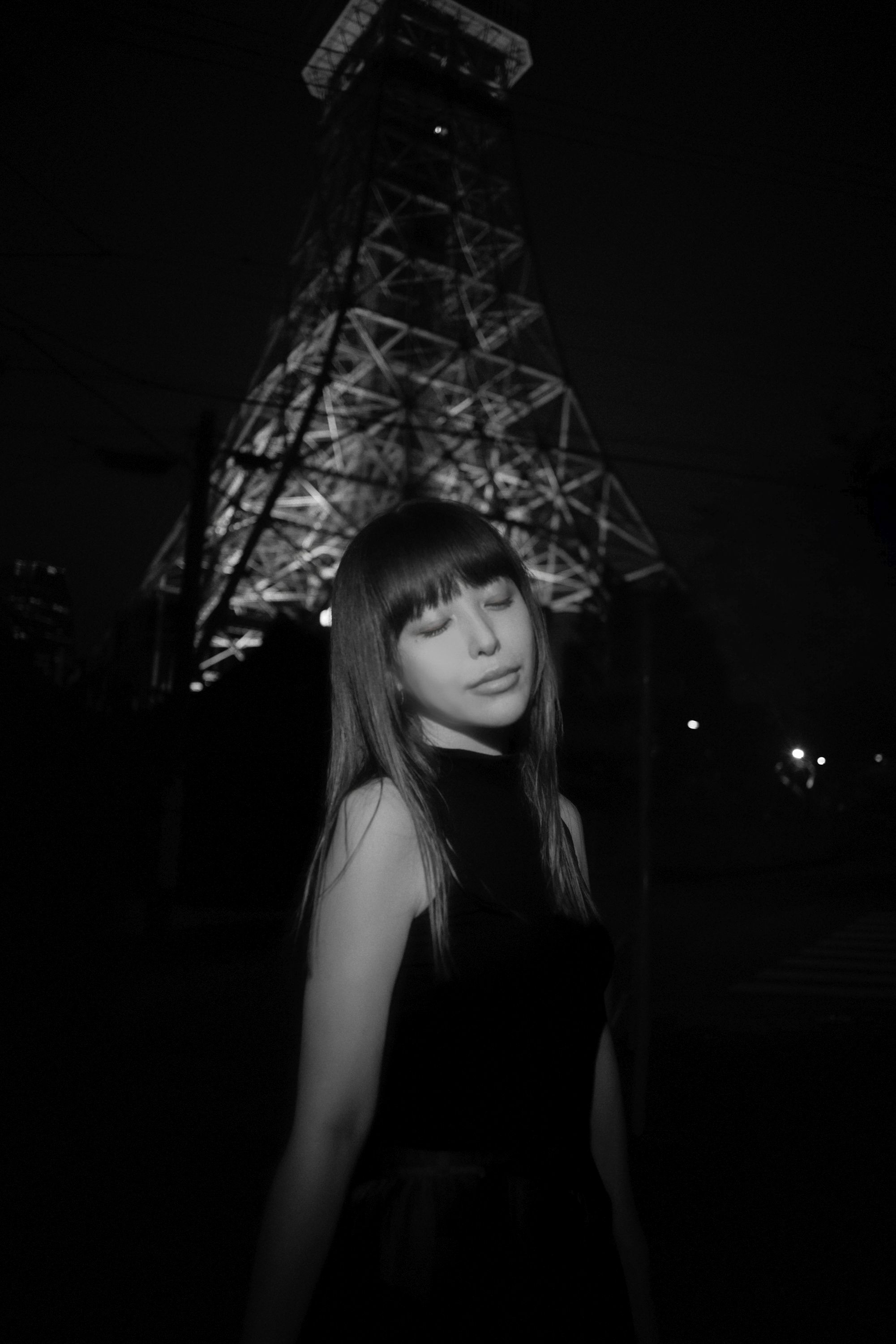
Name: Yuu Udagawa
Occupation: Producer, DJ, songwriter
Nationality: Japanese
Current release: Yuu Udagawa's new Urban Physicality EP is out via Razor-N-Tape.
Recommendations for Tokyo, Japan: I love Yoyogi Park and Meiji Shrine in the early morning. Even though they are in the heart of the city, there’s a sense of stillness — a quiet energy that feels cleansing, as if the heart itself is slowly being refreshed.
Topic I am passionate about but rarely get to talk about: I’m deeply passionate about the role of sound in space. Beyond the kind of music I release or what is considered background music, there’s another dimension of sound — something that exists between music and silence. No matter how perfectly a space is designed, it’s the sound that ultimately colors its atmosphere. Even if invisible, sound has the power to move emotions and express the heart.
My approach to sound in space is strongly influenced by Japanese aesthetics and Aristotle’s concept of the golden mean — a balance between extremes. While the importance of light is widely recognized, sound and scent are often treated as secondary. Yet they should be part of the concept from the very beginning, not something added after the space is built. It’s difficult to express this fully in words — it’s something that must be felt.
If you enjoyed this Yuu Udagawa interview and would like to stay up to date with her music, visit her official homepage. She is also on Instagram, Facebook, Soundcloud, and bandcamp.
For a deeper dive, read our earlier Yuu Udagawa interview.
When it comes to experiencing strong emotions as as a listener, which albums, performances, and artists come to mind?
When I experience strong emotions as a listener, I’m often drawn to artists with unique energy — those whose performances express an individual sense of balance and depth. Francesco Tristano, James Blake, Jon Dixon, Sade, and Minilogue come to mind.
Francesco Tristano’s Piano 2.0 performance remains unforgettable. It was a classical concert infused with electronic elements, awakening in me a spectrum of emotions — purity, beauty, release from inner conflict, and deep serenity.
The concert ended with a standing ovation from the entire audience.
[Read our Francesco Tristano interview]
James Blake’s live shows are also remarkable — the interplay between sound, light, and emotional dynamics creates an experience that can only be felt in person. HVOB’s performances carry an intense yet quiet melancholy that lingers long after.
I’ve attended Minilogue’s sets many times. Even without words or vocals, their music moved the audience — myself included — to tears, as if emotion itself had taken shape in the air.
[Read our Minilogue's Sebastian Mullaert interview]
Watching Jon Dixon perform online is uplifting. I love Sade’s voice and stage presence, and I like listen to Rhye’s androgynous vocals alone late at night — it’s a calm, intimate experience. Khruangbin’s live shows bring a sense of timelessness, as though everything slows down and breathes together.
Years ago, I met Damo Suzuki from CAN, who once told me, “Music is energy.” I truly believe that. Every artist carries their own kind of energy, and through sound, we receive many forms of strong emotion.
There can be many different kinds of emotions in art – soft, harsh, healing, aggressive, uplifting and many more. Which do you tend to feel drawn to most?
I’m drawn to emotions that exist within contrasts. Sadness wrapped in warmth, energy pulsing within silence.
I love sounds that hold duality — where gentleness lives inside intensity, and calm resides within tension.
I have had a hard time explaining that listening to death metal calms me down. When you listen to a song or composition, does it tend to fill you with the same emotions – or are there “paradoxical” effects?
There are often paradoxical effects. Human emotions are constantly shifting, and sometimes they coexist in complex layers. Music doesn’t always express emotions directly — it can also play with distance and contrast between feeling and mood.
Since music is a form of energetic matter created by the artist, listeners resonate sincerely with the emotions hidden beneath the surface of the sound.
I often find silence within intense rhythms, and hope within melancholic melodies.
In as far as it plays a role for the music you like listening to or making, what role do words and the voice of a vocalist play for the transmission of emotions?
I listen to the voice as texture. The temperature, breath, and nuance of a voice can convey emotion on their own. In my tracks, I often treat the human voice as one of the synthesizers — a sound that speaks through its texture.
I like to leave space for the listener to feel something personal. Words can be powerful, of course, but sometimes they deliver emotion too directly, while sound allows room for interpretation.
When it comes to experiencing emotions as as a creator, how would you describe the physical sensation of experiencing them? [Where do you feel them, do you have a visual sensation/representation, is there a sense of release or a build-up of tension etc …]
It always begins with intuition. As I create, my emotions move toward a state of “nothingness.”
I feel a warmth gathering in the center of my chest — like amber or golden light. When the sounds begin to align in a meaningful way, that warmth expands and gently releases outward.
When it comes to composing / songwriting, are you finding that spontaneity and just a few takes tend to capture emotions best? Or does honing a piece bring you closer to that goal?
Both play important roles, but the emotions that surface in the very first take — the unconscious ones — are the purest.
The later process of refining is like polishing that essence, bringing clarity to what was already there.
How much of the emotions of your own music, would you say, are already part of the composition, how much is the result of the recording process?
For me, composition and recording happen together — I record through repetition, letting go of control intentionally. That unpredictability is emotion itself.
When I adjust EQ or compression, I often feel the contour of the sound shaping the emotion of the piece. A mix or mastering can completely transform how the feeling is perceived.
When I release music through a label, I entrust the final mastering to the engineer they select. Their touch adds the label’s own color — or emotion — to the final sound. I find that process fascinating: it becomes a collaboration of emotional textures between myself, the label, and the mastering engineer.
For the Urban Physicality EP, what kind of emotions were you looking to get across?
Urban Physicality explores the balance between groove and introspection. Blending elements of house, jazz, and Nu-Disco, it was inspired by the ways people move and connect within the chaos of the city — and by how sound has the power to transform ordinary moments into something living.
The process began with improvised recordings in my home studio. By leaving raw textures and subtle imperfections untouched, then layering them over time, I aimed to create a pulse that feels human and present.
This project was born during a time of reconnection — with myself, and with the global music community. The process felt both introspective and healing. I moved toward the future, yet gently drifted backward in time, gathering the forgotten fragments of passion and tenderness.
Through this work, I realized that music is built on love and sincerity. Without respect, even the most beautiful sound loses its meaning in an instant. Urban Physicality paints layers of time and emotion — where past and future, movement and stillness, all merge into one continuous flow.
In terms of emotions, what changes when you're performing live on stage, with an audience present, compared to the recording stage?
It becomes a completely different experience.
Recording comes from an inner space — an introspective emotion that unfolds in solitude. But during a live performance, the emotions breathe together with the audience. We share the same air, and that connection transforms the feeling into something mutual, constantly shifting and alive.
How does the presence of the audience and your interaction with it change the emotional impact of the music and how would you describe the creative interaction with listeners during a gig?
I always feel the audience’s energy. Their presence subtly changes the rhythm’s flow and invites spontaneous transformation.
It becomes a cycle — emotion moves from me to them, and then returns, reshaped by their energy. That circulation is what makes each live moment unique.
What kind of feedback have you received from listeners or concert audiences in terms of the experience that your music and/or performances have had on them?
I often receive messages from listeners around the world, which still surprises me — knowing the music has reached so many different ears.
The word I hear most often is “Thank you!,” sometimes followed by “I was moved.” But in truth, I’m the one who feels thankful. It feels like an exchange of richness — a shared flow of gratitude between myself and the listeners.
Others say things like, “It seems kinda rare,” which makes me happy — it means they’re feeling something beyond easy description.
When artists I’ve collaborated with say “Let’s do something again,” and new projects actually begin from that, it gives me a deep sense of trust and respect between musicians. And when an artist I’ve long admired reaches out with, “I heard your music — would you like to collaborate?”, it feels like life’s unexpected gift.
Would you say that you prefer to stay in control to be able to shape the emotions or do you surrender to them and allow the music to take over? Who, ultimately has control during a live performance?
In the past, I wanted to dissolve completely into the music — to surrender myself entirely. But recently, I’ve found value in holding a small distance, in leaving space around emotion.
The form that emerges is never perfect. Its resonance comes from imperfection — from the harmony that appears within distortion. There’s a beauty in the unstable balance where the world and I overlap, vibrating differently yet moving in the same rhythm.
This delicate tension — between body and spirit, order and freedom — is the core of my music. The balance never fully settles, nor does it fully merge.
During live performances, neither I nor the music leads. It feels more like melting into light within the distortion.
The emotions that music is able to generate can be extremely powerful. How, do you think, can artists make use of this power to bring about change in the world?
Music creates empathy beyond language. When emotions move, people naturally feel the urge to act. I believe artists can use that power to encourage creative and positive actions — to guide people toward the opposite side of violence, hostility, and division.
At the same time, I’ve also witnessed the reality of how music’s power can be exploited. We live in a world where exposure, algorithms, and platform profit often take precedence over creativity and sincerity. Connections through music are not always pure or positive.
Even so, I feel truly fortunate to have met honest labels and to have built trust with sincere artists who value integrity. That means a great deal to me.
Being an artist is not a profession — it’s a way of life. Sadly, even when faced with exploitation, artists continue to create sincerely, because they can’t help but do so. And perhaps that act — the quiet exchange of richness between genuine artists and sincere listeners — is, in itself, a silent form of resistance.