Published
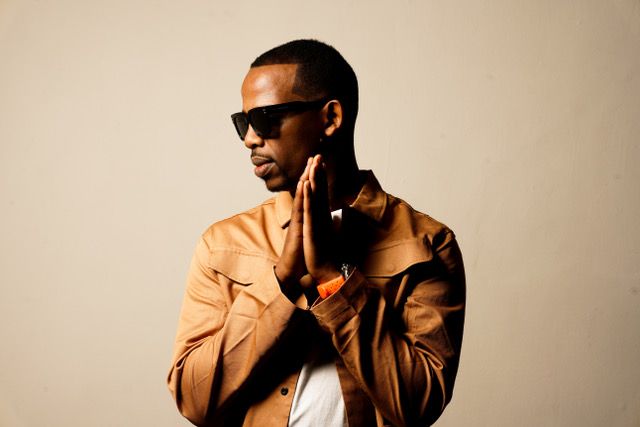
Name: Zakes Bantwini
Nationality: South African
Occupation: Producer, DJ, singer, songwriter, multi-instrumentalist
Current release: Zakes Bantwini recently teamed up with Bob Sinclair and Gary Pine for "Love Generation Reimagined," out via Yellow Production. His most recent single, "Mas'ngathandana" on Mayonie is a collaboration with Kususa.
If you enjoyed this Zakes Bantwini interview and would like to stay up to date with his music, visit him on Instagram.
For the thoughts of one of his collaborators, read our Karyendasoul interview.
Do you think that some of your earliest musical experiences planted a seed for your interest in your voice and singing? How and when did you start singing?
Growing up, my mother managed a gospel group, so they would often come to our house to rehears. I grew up with music, we would sing at home a lot. So I was singing from a young age. Watching television and seeing the lifestyle of musicians was the first thing I fell in love with and then the music, that is how it started.
I told my mom I wanted to be a professional musician and she told me to go to school and study music, and I now have a qualification in music. Ultimately my mom planted the seed and created the environment for me to sing.
If you're also playing other instruments, how does the expressive potential of these compare to your own voice?
I never looked at myself as a vocalist. It was only later in life that I really discovered that my voice was something people would like. I always saw myself as a producer because that was what I started off doing.
I know how to play the piano, I studied it in school and then I learnt to play bass as well, and only then did I start doing vocals. I am really comfortable in all aspects but I play piano more often than anything else. I didn’t even own a bass guitar at this point in my life.
Being able to do vocals as well as play instruments comes in handy when I am producing. In terms of expression though, the voice is the best instrument out there.
Singing is an integral part of all cultures, and traditions. Which of these do you draw from – and why?
I draw a lot of my singing from my own culture which is Zulu. In the Zulu culture we sing no matter what, we sing when we go to war, we sing in every moment of our lives, weddings, funerals, whether we are mourning or celebrating, we sing.
In addition, one of my biggest musical inspirations is Fela Kuti, a Nigerian musician. I really enjoy his style of writing and his musical approach.
What were some of the main challenges in your development as a singer/vocalist? Which practices, exercises, or experiences were most helpful in reaching your goals – were there also “harmful” ones?
It is hard for me to speak about vocal challenges because I never saw myself as a vocalist and I still don’t see myself as an incredible vocalist.
I think people just fell in love with my voice, but I think I am an incredible producer and what people who don’t know about me is that most of the songs that they hear my voice on, I produce them myself. So programming music is my passion. Vocals just found me and people just loved my voice so I was like okay I am probably going to need to sing more.
My voice really developed because I studied music, theory of instrument and vocals is the same, so the approach on any musical instrument is more or less the same. I kind of just applied everything I studied from piano to bass to my vocals.
Technically and musically I am very aware because of my academic background.
How do you see the relationship between harmony, rhythm and melody? Do you feel that honing your sense of rhythm and groove has an effect on your singing skills?
Rhythm, melody and harmony are really the essence of what your musicality needs to take you to. These are the skills that you need to hone to build an amazing song, otherwise you can end up with just a melody line.
To keep things interesting you need harmonies, counter melodies, counter rhythms, some tension notes and to just push the envelope, and in order to push the envelope, you need your musical knowledge and musical experiences to help you - you want to be sure that what you are doing is still musically correct.
What are the things you hear in a voice when listening to a vocalist? What moves you in the voices of other singers?
I think authenticity is what moves me in the voice of other singers.
Because I am a tenor/ tenor baritone I listen for other tones and authenticity when I listen to other singers.
How would you describe the physical sensation of singing? [Where do you feel the voice, do you have a visual sensation/representation, is there a sense of release or tension etc …]
Because I am a tenor/ tenor baritone and my speaking voice is basically my singing voice, I don’t really experience any crazy sensations. It is a very natural experience for me.
What kind of musical settings and situations do you think are ideal for your own voice?
My approach is always to go to my EQ. I always kill my BD’S on my lower frequency, this is because as I said I am a tenor baritone and a lot of the music that I sing on have a kick and a base, they have a lot of lows. So I try not to compete with the lows.
I will always kill my low ends, brighten my voice, put some compressors, enhance it, some reverbs, maybe a little bit of a delay, one over two, at a 3% release or output.
What other recommendations do you have for recording vocals?
Pure vocal recordings are the best. It makes the quality of a live performance so much better. When someone is over engineered in the studio and there are all of these plugins, a live performance can be very difficult to pull off because they sound completely different. Once you use minimal plugins in the studio performing live is a much easier task - your pure voice is an amazing voice.
I personally use three approaches when it comes to pure vocals: EQ, compressor and reverb. I think a good example of this would be one of my earlier records – “Clap your hands” by Zakes Bantwini featuring Xolani Sithole.
We have a speaking voice and a singing voice. Do these feel like they are natural extensions of each other, ends on a spectrum or different in kind?
Definitely natural extensions of each other. My singing voice and my speaking voice are the same, I sing with my every day voice, there is really no difference. When I speak you can definitely tell that this is the guy who sings that song because I have the same tone when I speak as when I sing.
You can hear this very distinctly in “Asanda” – Kususa, Argento Dust & Myself.
From whispers to screams, from different colours to dynamics, what are the potentials and limits of your voice? How much of your vocal performance can and do you want to control?
When I write a song, especially when I write songs for myself, I write songs for my voice, I choose the right notes, the right syllables to extract the notes that I am trying to hit.
I write very clear melodies and because I am writing for my own voice I know what key I should be at and what kind of notes I have to sing. So when I sing other people’s music, it will be more challenging because they weren’t writing the song for me.
There will probably be high notes that I may not be able to reach. In that particular instance if I really, really like the song, I will change the key to where I am comfortable.
When you're writing song lyrics, do you sense or see a connection between your voice and the text? Does it need to feel and sound “good” or “right” to sing certain words? What's your perspective in this regard of singing someone else's songs versus your own?
I think this happens to a lot of vocalists who do not understand their voices. You need to know which keys you are comfortable with and avoid keys that you are not comfortable with and inform people where you are comfortable.
If necessary you can try to supplement higher notes with an octave lower or a fourth or fifth, whatever note may work. You can take an original note of a song and treat it as a harmony instead of going higher, use a harmonic approach, which will give you a similar dynamic.
Strain is a particularly serious issue for many vocalists. How do you take care of your voice? Are the recipes or techniques to get a damaged voice back in shape?
Some vocalists sing with their throats, they don’t warm up their voices, some of them drink or eat things that they shouldn’t. I know a vocalist who can not have any dairy because it affects her vocals, it will limit her vocal range. She can only sing from alto down when she has had dairy and when she hasn’t she can go up to soprano.
So each vocalist needs to understand their voice texture and how to take care of it. It differs from person to person.
How has technology, such as autotune or effect processing, impacted singing? Has it been a concrete influence on your own approach?
I think it depends on how you look at autotune itself. Some people use it to enhance their voices, some people use autotune to try and sing. They will sing the completely wrong notes and go to autotune to try and correct it, and then when they have to sing live, they're unable to do that.
But then there are also other vocalists who will use autotune just to perfect a note. The voice is a wave, so when you sing a note it may sound correct to the natural ear but when you process it, the technology might say it needs to be slightly blended for it to sound perfect, it needs to be tuned into a particular wave.
So it really depends on the spectrum that you are looking at it from. It can be viewed both negatively and positively - autotune has produced some positive results and it has produced some negative results.
I personally like to limit my use of it so that my live performances are not greatly affected.
For recording engineers, the human voice remains a tricky element to capture. What, from your perspective, makes voices sound great on record and in a live setting?
I feel like because I engineer my own voice this is less of a struggle for me. I know my settings in the studio, so when I perform live I am able to use the same settings that I would use in studio.
I think people - aspiring producers and artists - need to really invest in understanding the industry and what they do. It gives you an advantage in being able to make adjustments where necessary.
I know a lot of artists that may hear their own voices and know that it is not sounding the way that they want it to but they struggle to point out what is wrong. So they look to the live engineer wanting them to fix it and they may also not know how. The communication is lost in the lack of understanding. When you have an understanding and know your own voice settings in the studio you are able to tell the engineer exactly what you need.
I also encourage people to invest in travelling with their own engineer and also inviting that engineer into the studio when you are recording. This will allow them to engineer your live performances with better understanding.
Motherese may have been the origin of music, and singing is possibly the earliest form of musical expression, and culture in general. How connected is the human voice to your own sense of wellbeing, your creativity, and society as a whole?
The best instrument in the world is the voice. I love instruments - as I said, I play piano and bass. But the voice is the best instrument you can ever have. There is nothing that can beat the voice as an instrument, you can feel the pain, you can hear someone’s cry or joy when they sing.
My best example of this would be my song “Mama Thula” with Skye Wanda & Thakzin (featuring Suffocate SA).
I wrote this for my late mother. Emotion is so well expressed through the voices in this song.