Published
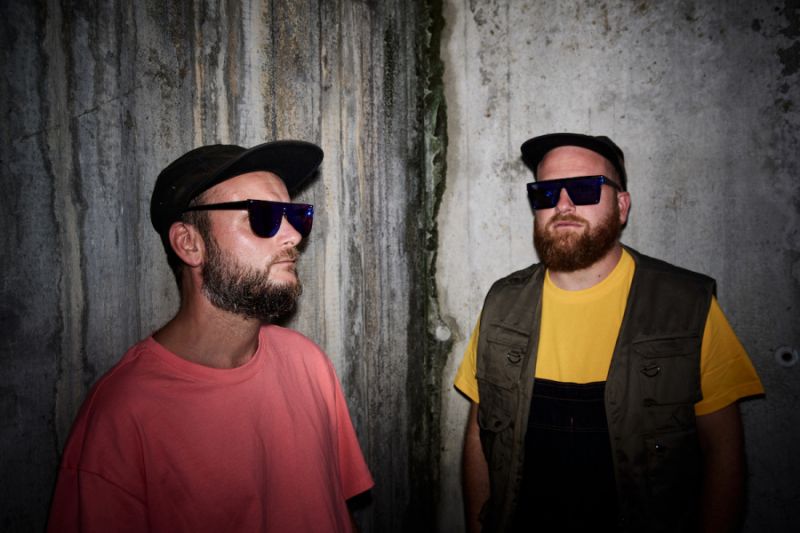
Name: Zement
Members: Christian Büdel, Philipp Hager
Nationality: German
Occupation: Multi-instrumentalists, composers, performers
Current release: Zement's new full-length album Passagen is slated for release via Crazysane February 14th 2025.
Krautrock Recommendations: Classics: Neu! - Neu! // Can - Tago Mago
Current: Datashock - Geltungsbereich Universum // Moin - You never end
Global Recommendation: We recommend checking out "Z-Bau", a cultural center in Nuremberg, where we often played and a lot of bands and artists we love played.
Or "Desi", another culture-center which does incredible work for the city and people who live here.
Another venue to mention is "Soft Spot" in the "Künstlerhaus", run by the lovely people of "Musikverein", who host experimental music concerts from various genres, club-nights and events, that really reflect the innovative spirit we try to embody in our own music. Those are the people we share our spirits with.
If you enjoyed these thoughts by Zement and would like to find out more about their unique take on krautrock, visit their official homepage. They are also on Instagram, Facebook, and Bandcamp.
For a deeper dive, read our earlier Zement interview.
How would you describe your personal relationship with Krautrock? When and how did it start?
Our relationship with Krautrock is deeply rooted in both a personal and cultural connection. We've always been inspired by the spirit of experimentation that defines Krautrock. We came from a Punk background, played in punk bands before and this DIY spirit, which Krautrock also stands for, is still an important influence for us.
It started for us as we discovered the genre's raw energy and its disregard for traditional structures (through listening to bands like Sonic Youth or others, which were inspired by 70s Krautrock bands), which resonated with our own creative approach.
Over time, we've delved deeper into the genre’s history, and it’s shaped how we understand music – not just as sound, but as a mindset.
Tell me about one or two of your favourite Krautrock records please.
We are huge fans of Can’s Tago Mago and Neu!’s self-titled album.
Can’s music, with its incredible rhythmic explorations and hypnotic grooves, feels timeless to us. Tago Mago in particular is a masterclass in unpredictability and freedom, which is something we try to channel in our own music.
As for Neu!, their minimalist approach and the motorik beat have influenced how we think about driving rhythm and repetitive structures, and how they can become meditative.
[Read our Michael Rother of Neu! Interview]
[Read our Michael Rother of Neu! Interview about improvisation]
Krautrock always seemed like a phenomenon connected to a very specific era in German history. What about this music and its time do you connect with?
Krautrock was born out of a time of rebellion, societal change, and a desire to break free from tradition, which we connect with deeply. For us, it represents a rejection and reflection of the past and an embracing of the unknown.
Just like the political and social climate of the time, Krautrock music was a search for something new, and that search continues to inspire us today. It’s a form of music that is less about following rules and more about exploring possibilities, which aligns with our own view of art.
Many of the original Kraut musicians loved blues, rock, and psychedelia; they were intrigued by electronics and improvisation; they rebelled against virtuosity, classical education and the superficiality of Schlager on German radio. How much of that do you recognise in your own creative preferences and interests?
We definitely recognize a lot of this in our own music. Like the pioneers of Krautrock, we reject the standard conventions of mainstream pop and rock, and we’re more focused on the mood and atmosphere of a piece rather than technical proficiency.
The raw, unpolished quality of Krautrock is something we strive for, along with the exploration of new sounds through electronics and improvisation. It's about capturing the moment and allowing the music to breathe, without being constrained by traditional rules. It creates a special type of mood we love.
The same as the whole avant-garde free- and spiritual jazz thing, we try to incorporate in our music more and more in the last couple of years, because it's so inspiring music and spirit-wise.
Both in the music and the way it was made, Krautrock was about imagining different worlds. What is the experience of listening to this music like for you and what kinds of worlds is it taking you to? What is your preferred way of listening to it?
For us, Krautrock is like a portal to another dimension. It takes us to places where time and space bend, where the music feels like it’s coming from somewhere else, yet resonates deeply within us. It’s a form of escapism, but also of grounding – like a spiritual journey.
We like to listen to Krautrock in a focused, immersive way, often in solitude or in a space where we can get lost in the sound, with headphones on or in the dark. The experience becomes a kind of trance.
Again the same with Free-Jazz. It's funny because there are a lot of personnel overlaps between those European free experimental scenes in the 60s and the later Krautrock scene and bands in the beginning of the 70s. Like Jaki Liebezeit from Can or Manni Neumeier from Guru Guru were Jazz drummers in first place for example, before they founded these groundbreaking so-called Krautrock bands.
We try to bring together what belongs together again now in our own way one could say.
A lot of the Kraut spirit came to life through musicians living in communities, playing and recording together every single day. Have you ever tried working and creating in such a constellation? Is it possible to emulate this process from a home studio?
We’ve always believed in the power of collective energy, but the reality of modern life makes it difficult to emulate those communal environments the way they did in the ‘70s.
On the other hand Christian and I have known each other since we were children, we lived nearby for a long time and we feel like brothers, it's family. So this community thing is still important for us. We do try to keep that spirit alive in our own practice, collaborating intensely and spending a lot of time together in the studio and outside. We also try to create a wider community with all the people involved in our art and music. Friendship, collaborating, inspiring and supporting each other is important for us personally and our music.
While a home studio can’t completely replicate the atmosphere of those communal spaces, the spirit of collaboration and openness is something we strive to maintain in our own creative process.
What, to you, are the main elements that make something “Kraut?” What are the practices of the musicians from the 70s that inspire your own practice today?
To us, the essence of Krautrock lies in its spirit of experimentation, the rejection of the mainstream, and the freedom to explore music in unorthodox ways. The use of repetition, hypnotic rhythms, and electronic manipulation are also key aspects that we incorporate into our own sound.
Like the musicians from the ‘70s, we value improvisation, raw energy, and a willingness to break away from convention. Their fearless approach to creativity is a huge influence on how we make music today. We try to keep the spirit alive, but within our own, unique and modern ways.
Tell me about one or two of your own early Kraut pieces that you're still proud of (or satisfied with) – and why you're content with them.
One piece we're particularly proud of is "Sand". It's 9 years old now, it's from our first studio record and we still play it live.
It still evolves from evening to evening. It embodies the kind of circular, repetitive motion that defines Krautrock, while still allowing space for moments of unpredictability and tension.
We’re also happy with “C3A”, where we really pushed the boundaries of our sound, combining live instruments with synthesizers in a way that felt fresh to us at the time.
Both tracks represent moments where we felt truly connected to the spirit of Krautrock, and we're satisfied with how they capture that feeling. We also still love the videos from Marko Martini for "Sand" and Sabrina Zeltner for "C3A".
What instruments or equipment are you using to create your music? Are there any vintage instruments that you find essential to get your sound right?
We use a mix of both modern and vintage gear (or at least modern gear that sound vintage) to create our music. Synthesizers, vintage amps and the analog mixing process in the studio of Lolo Blümler (an analog nerd dream!) are the key to getting that analog warmth, and we love experimenting with them to create textures and sounds that feel organic and unique.
We also used electronic bass and vocals heavily on the new record, combined with drum machines, synths and different guitars. The blend of old and new technology is important to us, as it allows us to bridge the gap between the past and present.
Could you describe your creative process on the basis of your most recent Kraut-leaning release?
For our most recent release, we tried to combine everything which makes our sound unique, combined with new elements like my voice and a lot of bass-lines. We always want to create something new, we don't want to repeat ourselves.
We set up in the studio with minimal preparation and allowed the music to flow organically. It’s a process of exploration, where we’re not sure where the music will take us, but we trust the journey. We use electronic loops and live instrumentation in sync with each other, often feeding one through the other, allowing the machines to influence the human elements, and vice versa. The result is something spontaneous but structured by the constant rhythm and atmospheric layering that we’ve come to love from Krautrock.
In the end we brought everything together and fínished the songs.
Tell me a bit about the role that improvisation and inventive arrangement techniques (like cut-up) play for your work?
Improvisation is central to our creative process. We often start with a basic idea, but the real magic happens when we allow the music to evolve in the moment. We also love to experiment with *cut-up techniques* – taking segments of recordings and rearranging them to create new textures and surprises. We used that a lot on the new record.
Using the studio as an instrument, trial and error, to find a good way that fits the song. It’s a way of making the process of creation more dynamic and unpredictable. This approach mirrors the spontaneity that we associate with Krautrock, where the unexpected can often lead to the most exciting results.
I got into Kraut via Tangerine Dream and early Ash Ra and to me, the motoric beat was never quite as important. Today, it seems as though it's the defining element. Are you interested in it? Are you making use of it? What makes it special to you?
We absolutely make use of the motorik beat in our music, even though now less than in the beginning of this Zement journey. In the beginning a lot of people used to say we are redefining Klaus Dinger's Motorik-Beat. But this beat, this ongoing pulse is still an important part in our music.
It’s a defining element of Krautrock, and there’s something hypnotic and compelling about the steady, unyielding rhythm it provides. It’s both a foundation and a guide – a pulse that drives the music forward while still allowing for improvisation and freedom on top.
For us, it creates a sense of tension and release, making the music feel both grounded and transcendent at the same time.
Did you ever visit one of the birthplaces of the genre – Berlin, Düsseldorf, Munich – or any spaces related to the history of Kraut? Do you own any paraphernalia from the era?
We’ve visited Berlin and Düsseldorf and also played concerts there. Both cities have a certain energy that still resonates with the spirit of Krautrock.
While we don’t own any original paraphernalia from the era, we’ve definitely been inspired by the spaces and atmospheres where these legendary artists worked. There’s a rawness to the places that housed these pioneers that still influences our approach to music.
Are there approaches, artists, festivals, labels, spaces or anyone/-thing else out there who you feel deserve a shout out for exploring interesting directions for Krautrock?
We’ve been really inspired by some modern artists who are pushing Krautrock into new territory, such as "Kraftwerk’s influence on techno" in the past and the work and current albums of contemporary bands like Moin, Oneida, Water Damage, [Ahmed] or even Blood Incantation.
Labels like "Bureau B", "Tonzonen" or our label "Crazysane Records" are continuing to release innovative music in the Krautrock tradition in Germany and festivals like "Krach am Bach", "Freak Valley", "Sonic Whip" or "Le Guess Who" and "Roadburn" elebrate the legacy while keeping it alive and evolving.
I also have to mention my friends from the labels/groups "Verydeeprecords" and "Das andere Internet", who keep the experimental spirit in a city like Nuremberg burning.
[Read the thoughts of Verydeeprecords' Philipp Roth in our Red On interview]
[Read our Red On interview about his creative process]
There are also people and collectives like "Noize Circus", "Zycedelic" or "Fuzz over Nürnberg" and their related people, who do things that keep this Krautrock spirit alive.
Several of the original Kraut pioneers recently passed away or withdrawn from making new music. If some of your personal favourite artists were affected as well – can you share a little what their music meant and means to you?
The passing of figures like Holger Czukay and Manuel Göttsching is a loss, but their music will always live on and continue to inspire.
[Read our Manuel Göttsching interview]
For us, they represent the fearless pursuit of new sonic worlds, and their work is a reminder that music doesn’t have to be conventional to be profound. The sense of liberation and exploration that they embodied in their music is something we hold dear, and it fuels our desire to continue creating.