

Names: Ziggy Zeitgeist, Lewis Moody
Nationalities: Australian (Ziggy), British (Lewis)
Current event: EX GENERATION are one of the acts appearing at the XJAZZ! 2025 festival in Berlin. For tickets, go here.
Current release: The new Zeitgeist Freedom Energy Exchange album INSPIRE // RADICALISE, featuring Ziggy on drums and percussion and Lewis on Moog bass and keyboards, is out now.
If you enjoyed this Ziggy Zeitgeist and Lewis Moody interview and would like to stay up to date with both artists and their music, visit their respective Instagram profiles: Ziggy Zeitgeist; Lewis Moody
The XJAZZ! Festival is just around the corner. Tell me just a little bit about your performance at the Festival, please.
Lewis: In 2023, after a lot of groundwork, we took some crew to Napoli in southern Italy and collaborated with an all-star team of local funk/jazz musicians to make a collaborative record inspired by the sounds of Italo funk and disco, and informed by our shared influences from London and Berlin, where we live today.
The result was EX GENERATION's debut, The Napoli Exchange.
In May, we are very lucky to be bringing this crew of Napolitani over to Berlin for the performance – an occurrence that is very rare.
How, would you say are your live performances and your recording projects connected at the moment? How do they mutually influence and feed off each other?
Lewis: The live presentation of The Napoli Exchange is directly and exclusively linked to the record at the moment.
It doesn't happen very often and only coincides with the availability of the team that was involved with the making of the record. A rare sight!
In as far as you have any experience or insights, what's your view of the Berlin jazz scene?
Ziggy: Honestly, it's a really hard thing to define for me.
Because there's a pretty deep straight-ahead scene, like cats that studied at these heavy schools in New York or Berklee and all that ... but for me, that scene is a bit more conservative. There's also a deep scene of far-out free improv and experimental music that is deeply rooted in punk or anarchist ethos.
I guess between those two extremes there's a newer, emerging scene – very diverse culturally but collectively aligned through soul and groove! I guess that's the scene that we are involved in and what a lot of the XJAZZ! programming seems to be about.
That's something interesting for me – like musicians from Brazil, or Africa, or Turkey, or whatever, bringing their own styles/cultures and just grooving, you know what I mean? That's when it hits me.
Tell me a bit about the sounds & creative directions, artists & communities, as well as the colleagues & creative hotspots of your current hometown, please. How do they influence your music?
Lewis: Living in London today feels a bit like an unending stream of musical influences and innovation.
Informed by the incredibly unique culture clash that comes about from a city with such rich diversity, London's music scene is constantly evolving and developing. I'm amazed at how it manages to persevere and thrive in the face of such high operating costs and hostile business conditions.
New venues like Carpet Shop in Peckham and Number 90 in Hackney Wick, and established communities like Jazz Re:freshed and Bricklane Jazz Festival, are fighting the good fight for the local scene.
What does the term jazz mean today, would you say?
Lewis: A mentor once said to me, "Jazz is any music that is based in improvisation," and as far as I'm concerned, we're always improvising, so ... you can do the math.
Where do most of your inspirations to create come from – rather from internal impulses or external ones? Which current social / political / ecological or other developments make you feel like you need to respond as an artist?
Lewis: With respect to this project, The Napoli Exchange, we were really inspired to try and capture the feeling of a place.
Napoli is an ancient city, built upon ruins on ruins on ruins. It lives under the ever-present danger of an ancient volcano erupting and has faced the highest economic highs and the lowest economic lows. It was flattened in WW2 and was once the most powerful city in Europe. The city and its people have faced endless discrimination from the north of Italy, and yet have been behind some of Italy's most iconic artistic exports.
All of this has created an unbelievably vibrant city with the strongest sense of self and cultural identity. We were honoured that our friends out there were willing to share even a modicum of this with us in the making of The Napoli Exchange.
Thanks to technological advances, collaboration has become a lot easier. What's your view on collaboration and its ongoing role for the music you make?
Lewis: It's easier than ever to send sessions over the internet, but nothing will ever compare to eight people coming together in a hundred-year-old recording studio in the centro storico of Napoli to make an album.
Just listen and tell me I'm not right.
What do you generally look for in a collaborator and what made you want to collaborate with the musicians you're playing with for your XJAZZ performance?
Lewis: We're so lucky to have these three very talented instrumentalists from Napoli coming to join us at XJAZZ!: Alessio Pignorio on guitar, Paolo Petrella on bass, and Paolo 'Bata' Bianconcini on percussion. They unmistakably carry the sound of the Mediterranean with them everywhere they go.
Also joining us will be Margot Mool from SE London. Of Italian/English heritage, they bring with them the sound of the melting pot that is the SE London scene.
In terms of the results, the process, and the satisfaction, how do making music in the same room together versus filesharing compare to you, real concerts vs live streams?
Lewis: There is no comparison to the natural and organic nature of real-time collaboration in person.
Even when it comes to the recording process, the art of creating and recording something as a group, as opposed to one by one, is chalk and cheese as far as I'm concerned. There's a magic that comes from the unexpected and spontaneous imperfections and surprises that can only come about from getting people together in a room.
What role do electronic tools and instruments play for your creative process?
Lewis: Being a keyboard player first, electronics play a huge role in my artistry, but they need to be organic and analog in their nature.
VCOs into VCFs controlled by Envelope Generators – the audience can feel the vitality of the current passing through the instrument. Laptops can't compare, sorry.
Improvisation is obviously an essential element of jazz, but I would assume that just like composition, it is transforming. How do you feel has the role of improvisation changed in jazz?
Lewis: Improvisation has always been core to the existence of jazz and all music, and will continue to be as long as humans are expressing themselves through rhythm and pitch.
What, would you say, are the key ideas behind your approach to improvisation?
Lewis: The never-ending search for that pure flow state.
When you get to the end of the show and you're not sure how you got there or what happened in between.
Swedish pianist and composer Mathias Landæus told me: “Every person in the audience has an effect on the music. The more improvised the music is, the bigger is the potential of each person to effect the sound in the room.” What do you make of that?
Lewis: The energy exchange that occurs between the audience and the stage is core to everything we do at EXREC.
It's baked into the mission statement of the collective and will always inspire us.
In a way, live performance remind us of the transitory nature of life. When an improvisation ends, is it really gone, just like a cup of coffee? Or does it live on in some form?
Ziggy: I don't really know. I would say just let it go! That's the magical thing about it. Sure, you can record it and capture that moment on tape, but there's definitely something magic and beautiful about the transience of it.
That's the lesson we learn from music: it allows us to just be here, right now, present.

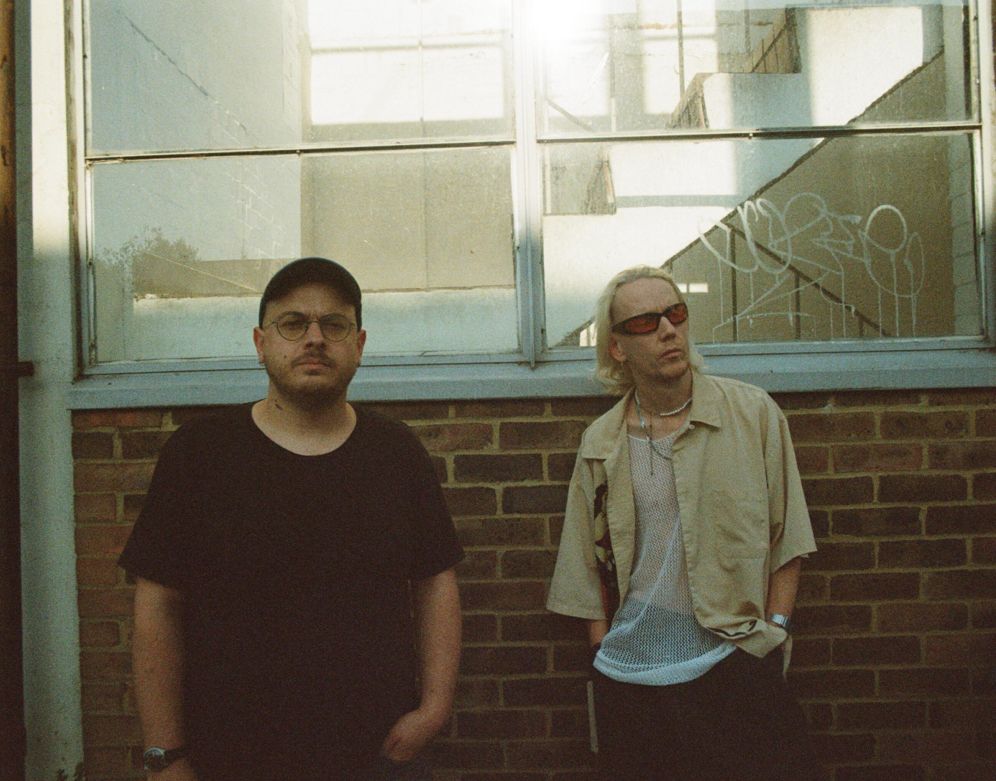 Ziggy Zeitgeist and Lewis Moody of EX GENERATION Interview Image (c) the artists
Lewis Moody: "There's a magic that comes from the unexpected and spontaneous imperfections and surprises that can only come about from getting people together in a room."
Video
