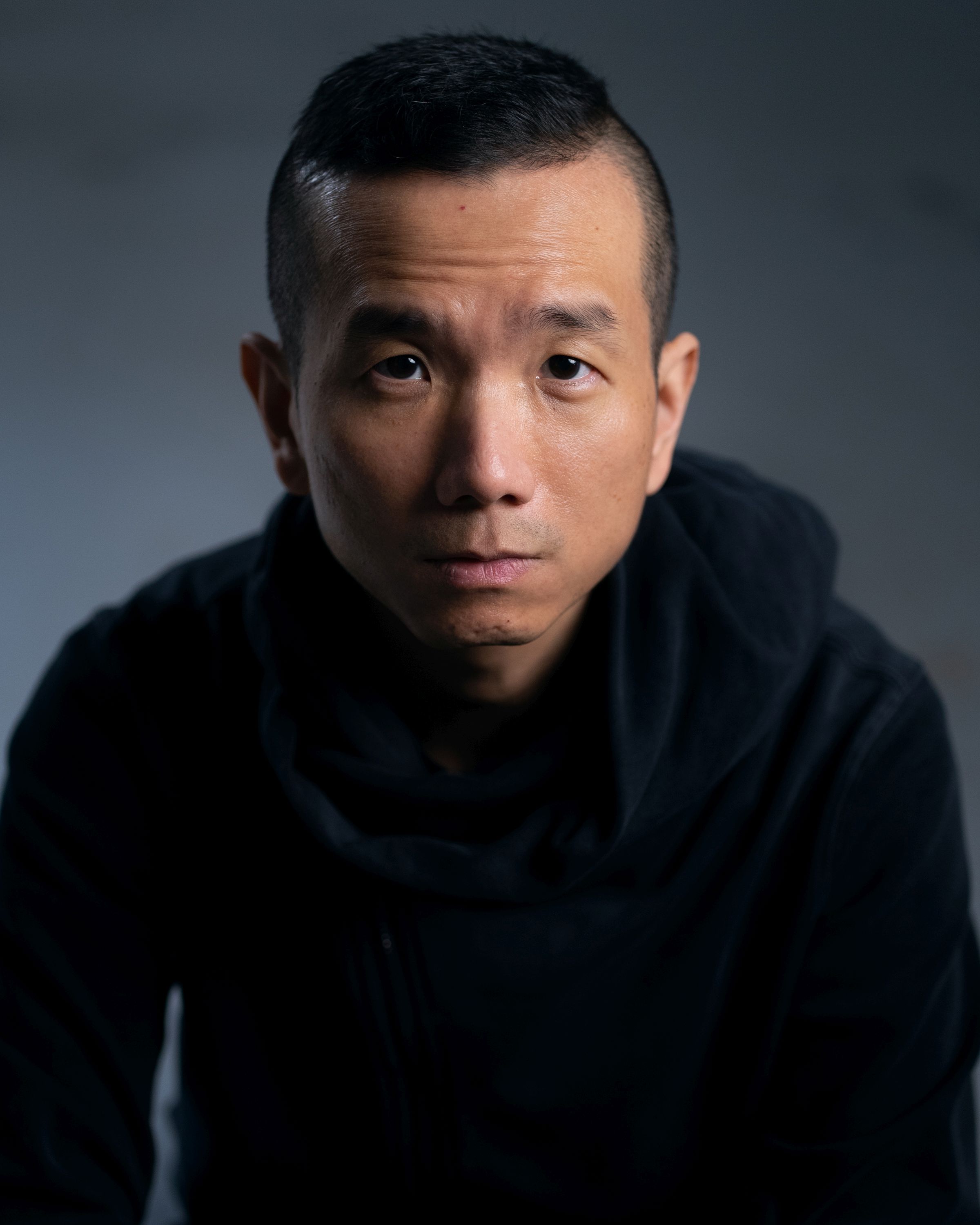
Name: Zihua Tan
Nationality: Malaysian-born, Canadian-based
Occupation: Composer
Current release: Zihua Tan teams up with no hay banda for their album what came before me is going after me, out via No Hay Discos. The ensemble features Sarah Albu (voice), Adrianne Munden-Dixon (violin), Audréanne Filion (cello), Daniel Áñez (ondes Martenot), Noam Bierstone (percussion ).
Shoutout: Check out the catalogue from this label: NO HAY DISCOS!
Recommendations for Montréal, Canada: When you’re in Montréal, take a moment to step away from the city’s bustle and wander through Parc La Fontaine, just a short walk from the city centre. It’s especially charming in autumn.
If you enjoyed this Zihua Tan interview and would like to stay up to date with his music, visit his official homepage, and bandcamp.
The borders between producers, sound artists, and even songwriters are becoming increasingly blurry. What does being a composer mean today, would you say?
I believe that every act of composing should, in itself, be a quiet redefinition of what it means to be a composer – not through deliberate provocation, but as a natural consequence of using whatever means are available to explore an artistic idea. The meaning of “composer” is therefore never fixed; it is constantly in flux.
In 2018–19, I was engaged with sound art and installation, which culminated in a bipartite work titled no names but thingless names. It exists simultaneously as an installative performance and a performative installation – two facets of the same artistic realm.
Presenting them together allowed the audience to inhabit that space in its entirety, where boundaries between music, sound art, and installation dissolve into one continuous experience.
Many people perceive classical music and contemporary composition as having high barriers of entrance, both for listeners and musicians. What have your own experiences been in this regard?
While formal education can certainly deepen one’s understanding of contemporary music, I believe that a truly powerful work will always transcend those barriers. With so many resources available today, access to musical knowledge has also become more democratized than before.
I’d argue that the perception of exclusivity is often misleading – in many cases, concert tickets and albums for contemporary music are much more affordable than those for mainstream ones!
It’s a bit like literature: people may assume it requires a certain level of sophistication to approach, yet some of the most interesting works can be found in public libraries at little to no costs. Ultimately, it’s curiosity, not credentials, that opens the door.
As of today, what kind of materials, ideas, and technologies are particularly stimulating for you?
Lately, I’ve been preoccupied with the possibilities of sound amplification through various microphones – including hydrophones, geophones – and unconventional setups.
Amplification, to me, is not merely about making sounds louder, but about revealing hidden worlds within them. It uncovers fragile, volatile textures that seem to have been dormant inside each instrument or object – as if the material itself were articulating its own voice.
This process blurs the boundaries between performing and being performed. Though it relies on electronic means, I’ve never found it gratuitous in a button-pushing manner; it demands sensitivity and thoughtfulness from both composer and performer.
In percussion music, for example, amplification transforms the very notion of playing – one is no longer limited to striking, but can wipe, brush, probe, scrape, or even caress a surface to draw out delicate resonances.
Tell me a bit about the sounds & creative directions, artists & communities, as well as the colleagues & creative hotspots of your current hometown, please. How do they influence your music?
There’s a vibrant contemporary music scene in Montréal.
One standout group is NO HAY BANDA (NHB) – an organization dedicated to producing and performing music that thrives on exploration and experimentation. As part of their concert series, NHB invites musicians and sound artists to present monographic programs with carte blanche freedom, allowing each artist to carve out a deeply personal and distinctive sonic space.
As an ensemble, NHB engages in special projects and commissions that grow out of close, collaborative relationships with composers and artists, often resulting in singular, genre-defying works.
One particularly striking example is their performance of Il Teatro Rosso, a large-scale music and film project by composer Steven Takasugi and cinematographer Huei Lin.
The piece has been presented not only in Montréal but also at the Darmstadt Summer Course and the TIME:SPANS Festival in New York – a testament to NHB’s international presence and artistic ambition.
Composing has always had an interesting relationship between honouring its roots and exploring the unknown and “new.” What does the balance between these two poles look like in your music?
I don’t see composing as a matter of either honouring tradition – as in adhering to established standards – or pursuing the “new” for its own sake. The old and the new are inseparable; one continually gives birth to the other. I tend to think that things unfold when the right time, place, and people converge – in Chinese, there’s an idiom for this: 天時地利人和 (the harmony of time, place, and human connection).
For instance, Gérard Grisey’s music emerged not from a desire to reject the past entirely, but from a confluence of forces: a reaction to the dominant compositional ideologies of the 1960s and 70s, contemporary scientific explorations of sound spectra and perception in Paris, and a community of musicians seeking new possibilities.
To ignore such developments would be to trap oneself in history; yet Grisey and his peers weren’t trying to erase it either. Their work was simply the next natural evolution – an inevitability born of its moment. The same can be said about many important music developments that took place in the 20th century.
Today, technology presents a paradox of its own. On one hand, composers have unprecedented access to the world’s musical traditions and innovations – we can study, reference, and integrate compositional ideas from virtually any culture or era.
Yet, we risk creating a kind of anthropological “non-place” (to borrow a term from anthropologist Marc Augé), where music can sound as though it belongs everywhere and nowhere at once – timeless, placeless, and curiously detached. Finding authenticity amid that vastness has become one of the most compelling challenges of composing today.
It is my impression that adding a conceptual, non-musical dimension to one's work is almost a prerequisite for commissions and grants. How do you view this tendency and how “conceptual” is your own approach to writing?
I believe that all concepts are interconnected across disciplines and domains. Yet it becomes precarious when a composer feels compelled to anchor their proposal to an external idea that bears little genuine connection to their artistic process.
While concepts and narratives can be powerful vehicles for communication, they should ultimately emerge from the composition or composing process itself. Grant providers can perhaps give more or as much weightage to the artworks themselves as that given to the narratives.
In my doctoral thesis, I explored the idea of musical ekphrasis – the act of responding to another artwork or text through music. Unlike programmatic music, which might narrate a poem’s imagery, musical ekphrasis seeks to re-present the details of another artwork by translating them into concrete musical terms.
For instance, in at the still point for orchestra – a response to T. S. Eliot’s Burnt Norton – I sought to engage with the poem’s underlying meditation on non-duality.
This exploration unfolded through the traversal of various musical continua, such as temporality (from linear to moment form to non-linear) and orchestration (from non-blend to half-blend to full blend). In this way, the conceptual is not a separate entity, and it actually informs the musical result.
Working with long forms, complex concepts or new vocabulary is potentially more challenging today because they require us to remember things that happened perhaps minutes ago – while most of us are finding it hard to focus even on what's happening right now. Both as a composer and as a listener yourself, how do you deal with this?
I’ve always been drawn to works of complexity, so I never shy away from attempting to create such works myself. But attention has indeed become a precious commodity today.
Beyond the music itself, I think concert organizers also play a role: the environment in which a work is presented should resonate with its spirit, allowing the audience to become fully immersed. A relaxed setting that encourages openness can reduce that restless urge to “escape” elsewhere.
As a listener, I see concerts as opportunities to disconnect – to let go of constant notifications for a couple of hours. And even if I find myself unable to engage with the work at hand, I will allow my thoughts to meander – and it’s in those quiet wanderings that compositional ideas sometimes emerge!
How, would you say are live performances of your music and your recording projects connected at the moment? How do they mutually influence and feed off each other?
In some ways, the live performance and the recording of the titular piece what came before me is going after me – from my solo debut album – arise from the same impulse: to listen closely to the inner workings of someone or something, as if a door had been left ajar.
In a live setting, one experiences the immediacy of space: the resonance, the atmosphere, the collective energy that no recording can fully capture. A recording, on the other hand, offers a different kind of intimacy. With greater control over the acoustic environment, it allows us to bring forward delicate nuances.
Together, they form two perspectives on the same act of listening: one spontaneous and ephemeral, the other focused and enduring.
To some, the advent of AI and 'intelligent' composing tools offers potential for machines to contribute to the creative process. What are your hopes, fears, expectations and possible concrete plans in this regard?
The works that intrigue me are often those imbued with subtle imperfections and unexpected turns – traces of human mind that, at least for now, remain beyond the reach of machines.
My hope is that some institutions and festivals will value this kind of creative vulnerability more – to focus less on the idea of “completeness” or technical perfection, and more on the vitality of exploration. A piece that takes risks, that reveals its own process and uncertainties, even if it’s deemed as not artistically resolved in some ways, often carries more artistic value than one that is flawlessly constructed yet derivative.
In that sense, even as AI evolves to reach perfections informed by our past (the current trajectory), it can’t be exploratory in the same humanly interesting way (I hope).
The Montreux Festival intends to preserve its archive of recordings for future generations. Do you personally feel it's important that everything should remain available forever - or is there something to be said for letting beautiful moments pass and linger in the memories of those that experienced them?
Let’s just say there are moments when we’re called to build the next indelible pyramid (figuratively speaking) and others when it feels right to write calligraphy on pavement with nothing but water as ink, even if there isn’t an audience.