Published
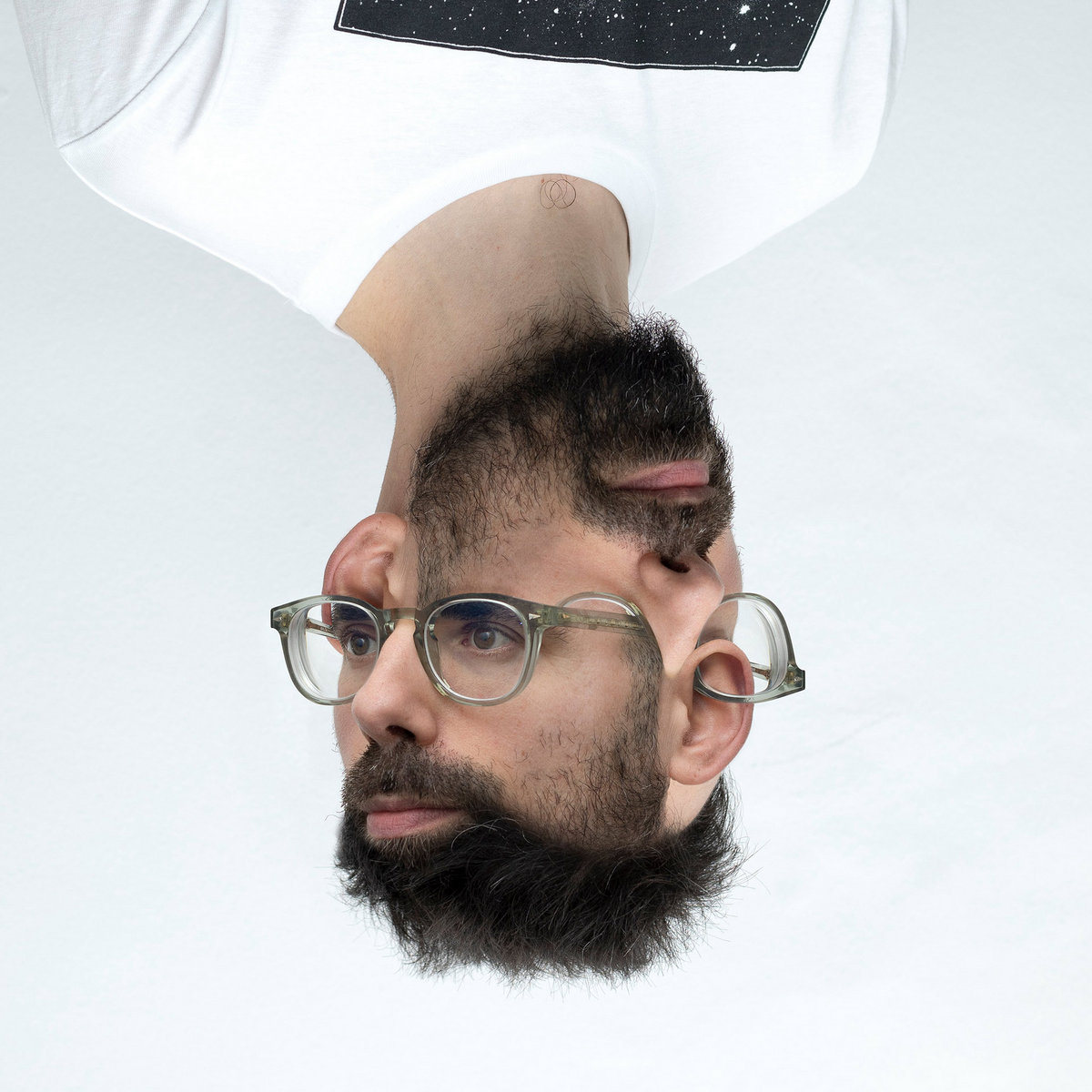
Name: Daniel Jacobson aka ZOiD
Nationality: Irish
Occupation: Producer, composer, multi-instrumentalist
Current release: ZoiD's new album Industrial Wind Quartet, a collaboration with Cassiopeia Wind Quintet, is out November 7th 2025 via Zoitrax. It includes remixes from Dan Curtin, Mu-ziq and Eomac.
Recommendations for Bristol, UK: Strange Brew is worth a visit!
[Read our Dan Curtin interview]
If you enjoyed this ZOiD interview and would like to know more about his music, visit his official homepage. He is also on Facebook, Instagram, and bandcamp.
What were some of the musical experiences which planted a seed for your interest in electronic music?
When I was 15 in the mid 90s, two friends in my neighbourhood introduced me to techno.
One of them was an incredible DJ. I spent hours in his room after school being introduced to incredible producer after incredible producer. Surgeon / Jeff Mills / Robert Hood / UR / Red Planet / Drexciya … it just went on and on, every day a new (to me) mind blowing record to listen to.
[Read our Jeff Mills interview]
After a year or two I felt a strong need to try to make this music for myself. Got a synth and cracked copy of Cubase on an old desktop PC and figured out how to make it work slowly and painfully! Added an Akai sampler, drum machine and couple of other bits and started making tapes that got passed around.
One of my friends kept a bunch of tapes and I recently digitised some of them and released some of that old music!
Disco, house, techno, drum n bass, IDM and many other genres were about a lot more than just music. For you personally, is electronic music (still) a way of life – and if so, in which way?
I kind of have a split personality because I’m equally a jazz musician as well as an electronic musician. At the moment I play way more jazz gigs than electronic ones but this could change in the future as I always get bored and switch my focus after a while of progressing in one area.
I would say music is a way of life, every day I am doing some kind of musical activity.
My last album was all about combining these two worlds:
Debates around electronic music tend to focus on technology. What, though, were some of the things you learned by talking to colleagues or through performing and/or recording with other musicians? What role does community play for your interest in production and getting better as a producer?
Well this is an interesting question because what I’ve learned is: I’d rather hang out with jazz musicians than electronic music producers haha!
I believe this is because of the social aspect of playing jazz. We play together, not alone. We communicate through music when we play and usually it forms a kind of bond and after playing there are many things to talk about. Whereas most electronic music producers make music alone in the studio and can be hard to talk to. That’s my experience anyway.
I think that makes me a good teacher and mentor to electronic music producers because I have these other non-electronic musical experiences. I know how to talk to them and encourage them.
What are examples for artists, performances, and releases that really inspired you recently and possibly gave you the feeling of having experienced something fresh and new?
I would have to say, seeing Mark Ernestus’ Ndagga Rhythm Force a few months ago in Bristol really blew me away. In fact it had such a strong effect on me that afterwards I found a Senegalese teacher in Bristol who could teach me Sabar Drumming. Batch Gueye!
I’ve had one lesson so far and want to get more and even go to Senegal for a couple of weeks to study there.
What kind of musical/sonic materials, and ideas are particularly stimulating for your own work right now?
Bassoon … I want to write more for this instrument. My own guitar playing, I practice a lot, lots of different kinds of things, fingerstyle, jazz lines, weird chords. Also I just got a Casio FZ-1, it’s getting serviced but when I get it back I’m gonna see what kind of sounds I can get from it.
My new album Industrial Wind Quartet features a Wind Quartet of bassoon, French horn, clarinet and flute. It was recorded in Dublin and finished in Bristol. The percussion is made from field recordings and drum machines. There are a few other synth parts but mostly it’s just those sounds.
Today, electronic music has an interesting relationship between honouring its roots and exploring the unknown. What does the balance between these two poles look like in your music?
Great question. I’ve always tried to do my own thing. The roots are there for sure. I formed my musical identity through early experiences going to raves in the Wicklow hills and listening to techno and Warp and Rephlex records with my friends – but I also listened to a lot of jazz.
So I find I can try to honour the roots of all this music and it will still be exploring the unknown – creating connections between sounds, chords, rhythms – that have never been connected before.
What were some of the recent tools you bought, used, or saw/read about which changed your perspective about production, performing, and making music?
My perspective hasn’t changed too much … I got Bitwig recently, it’s great, and use Logic sometimes but mostly use Ableton.
For years I’ve had the same hardware, some modular stuff, an MC202 and a Casio CZ101. A 707 with expansion pack. I’d love to get a good analogue polysynth like a Melbourne Instruments Nina.
But I can keep making music with what I have now for years to come. I’ve millions of unrealised ideas! My production philosophy is do the basic fundamentals well and concentrate on good musical ideas.
What are some of the most recent innovations in sound design for you - and what are currently personal limits to realising the sounds you have in your mind?
Well … I do like messing with audio. Shaperbox is a cool plug in, the time envelopes bit is cool, I enjoy getting some new sounds out of that.
Modular synth is good for sound design, like Alchemies Castle – crazy FM sounds, like a DX7 but in modular form with knobs and no screen.
I don’t really hear sounds in my head and then try to make them. I just work and tinker around and see what I can come up with that sounds good to me.
Even if AI will not entirely replace human composition, it looks set to have a significant impact on it. What does the terms composing/producing mean in the era of AI, do you feel?
I don’t think it will have any impact on what I do. I tried those Suno and Udio tools to see what they were like. Putting in prompts like “Detroit Techno with lashings of Aphex acid” results in … nothing. It can’t get anywhere near it.
Whereas it can make a country song that sounds like all the other country songs. Why? Because country is super formulaic AND there is a huge amount of it for the LLM to been trained on. It can do very popular formulaic music well, but not niche music.
Some could say that Detroit Techno is also formulaic … most music is to some extent or it would be hard to define as a genre. But there’s so much less of it because it’s a small niche. If you take the defining 30 best tracks of Detroit Techno there will be quite a wide array of different timbres and ideas in there.
It takes a LOT of data to train an LLM and it’s very expensive, so those companies are not going to bother with super niche musical styles that not many people care about reproducing an inferior AI version of.
Who wants AI music? People who need cheap, quick and easy music that no one cares about. Who wants actual art that moves their soul? Millions and billions of humans present and future.