Published
Part 2
What makes lyrics good in your opinion? What are your own ambitions and challenges in this regard?
To me, good lyrics are about truth told simply, but powerfully.
I know it sounds cliché, but the more I write, the more I realize it’s not about saying a lot, it’s about saying the right things in a way that feels honest and effortless. When a few well-chosen words roll off the tongue and somehow say everything… that's when lyrics really land. It’s that emotional core, the inner world expressed clearly and concisely, that people connect with.
I’m drawn to “show, don’t tell” writing. Lyrics that paint a picture, evoke a sensory moment, or capture something deeply personal without over-explaining. I love when you can feel what the writer is going through without them having to spell it out too literally. That kind of restraint - where a lyric is raw but still poetic and subtle - hits hardest for me.
Honestly, lyric writing has always been a bit of a challenge. Melody definitely comes more naturally to me. But over time, I’ve found that if I let the words come while humming melodies, almost subconsciously, they tend to reflect the emotion I’m trying to express. I hold on to those spontaneous phrases, then shape the lyrics around them.
Right now, I’m working on getting better at saying more with fewer words. That’s both a challenge and an ambition - to distil emotion and meaning without overcomplicating. I also try to pay attention to rhythmic flow - how words sound and move together, how they sit in the melody. I’m exploring more tools like metaphor, alliteration, and synesthesia to add color and texture and make the listener feel like they are there with me.
I'm aiming for lyrics that feel lived in - that carry weight not because they try to impress, but because they say exactly what they need to, no more, no less.
What are areas/themes/topics that you keep returning to in your lyrics?
I find myself constantly returning to themes of self-accountability, love, and spirituality.
Those are the spaces where I feel the most tension, growth, and truth - and naturally, they make their way into my lyrics. They always seem to be at the core of what I write.
There are many descriptions of the creative state. How would you describe it for you personally? Is there an element of spirituality to what you do?
For me, the creative state is deeply spiritual. I really believe one of the main reasons we’re alive is to express ourselves in whatever way we feel called to - and through that expression, uncover who we are on the surface, in that moment, and beneath the surface too: beyond the personality, the ego, the pressure to “be” something.
Creating brings me closer to the essence of who I am - closer to who I was as a child, before the filters, before the fear. The purest, or at least a purer, version of myself.
It’s not always clean or romantic. It can be chaotic, frustrating, beautiful, freeing, sometimes all at once. But that’s exactly what makes it sacred to me. It opens a direct line to my inner world, to my younger self, and to something much bigger than just me that I really cannot understand.
When I’m in that state, it reminds me that I’m not the one creating anything, really. I’m just the instrument in that moment - a vessel for creative energy moving through me. Whether that something is spirit, source, God, or intuition … all I can do is try to stay open and let it speak. There’s a sense of following that energy wherever it leads, which isn’t always easy. We’re so conditioned to inject ourselves into the process, but when I allow it to flow freely and then bring in the “editor” part of me afterward, it feels authentic and natural.
The creative state and process reveals what’s living inside me, whether I’m aware of it or not. It uncovers the fears I don’t want to admit to myself. That’s spiritual. Spirituality has to be authentic. It has to be truth. And creativity happens on its own - it’s my mirror, reflecting my demons and my light. It’s messy, beautiful, but necessary.
And it’s a space I try to protect, because when I honor it, it gives me back something far more valuable than a finished song: clarity, connection, purpose, confidence, a sense of lightness, and a deeper relationship with myself.
Once a piece is finished, how important is it for you to let it lie and evaluate it later on? How much improvement and refinement do you personally allow until you're satisfied with a piece?
I’d like to say I let a piece rest before revisiting it - maybe because it feels like the “right” thing to do - but honestly, I often listen to it over and over, sometimes picking it apart too much.
Especially when I’m too close to it, after spending so much time with the song, it’s hard to stay objective. I tend to lose sight of the song as a whole and get stuck focusing on the small details. But sometimes, the small details make up the larger whole. I’m learning to find the balance there.
I’m also learning to trust my instincts more, even if that means annoying others in the process — because I don’t want to have regrets later, and I think I do have pretty good instincts. I’m also discovering that refinement isn’t about adding more, but about taking away. It’s about stripping the piece down to its essence and making sure that core feeling or message still shines through.
I’m particularly picky about the mix. That’s where I really want to weigh in. The music has to work as a complete, harmonious whole, and the mix is crucial to that. As I continue making music, my goal is to refine and improve only as much as the piece needs, in service of the work itself, not to serve my ego.
Music and the accompanying artwork are often closely related. Can you talk about this a little bit for your current project and the relationship that images and sounds have for you in general?
During the process of crafting this song, the colors pink and green kept coming up. Pink had this ethereal, glowy, almost saturated vibrance to it, which felt like the blaring light of God in the midst of my darkness. Green, on the other hand, represented creation and growth, something more grounded and natural.
I also kept sensing flashes of gold and more futuristic tones, adding to a dreamlike, silky atmosphere that matched the emotional and sonic textures of the track.
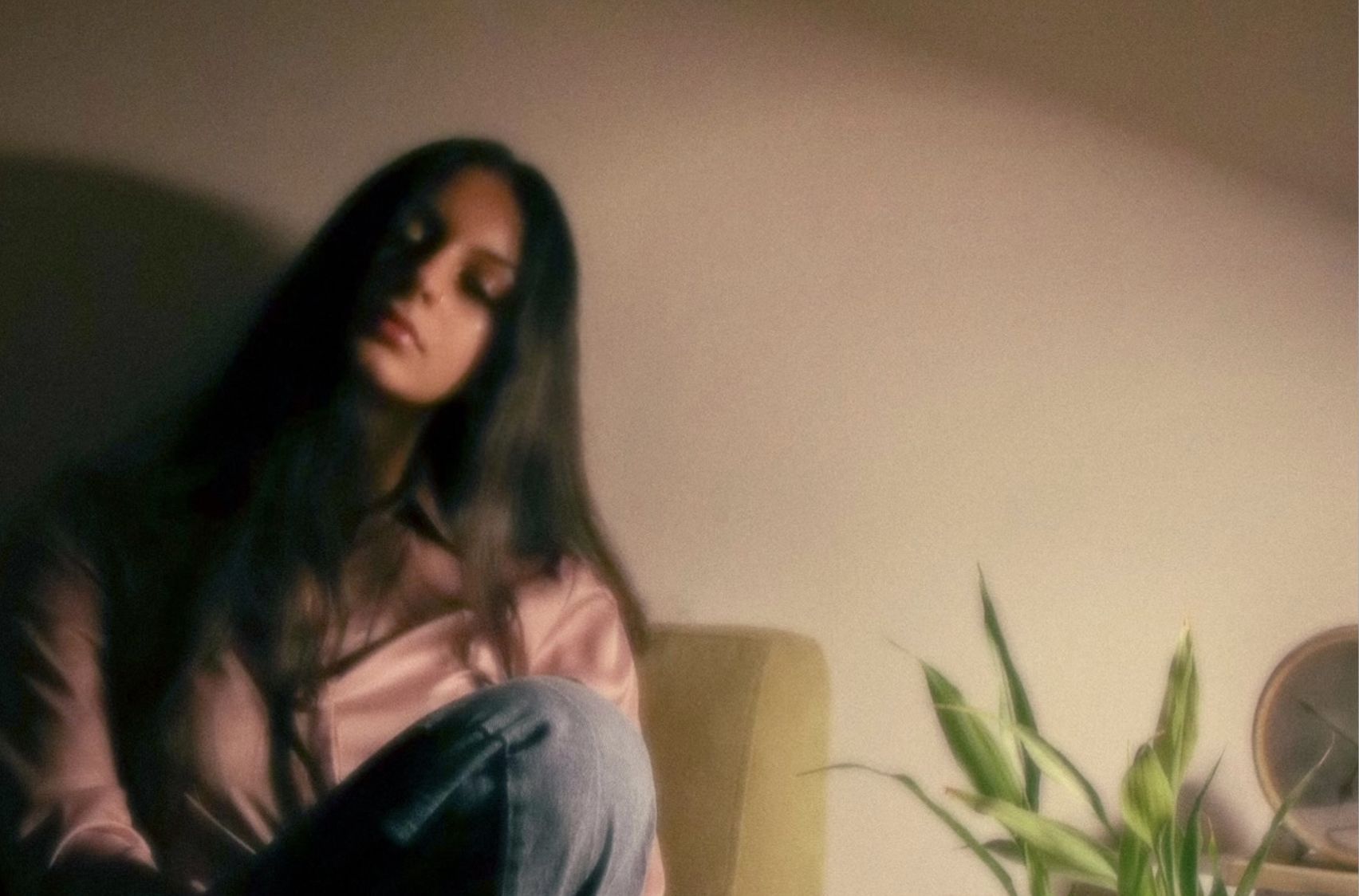
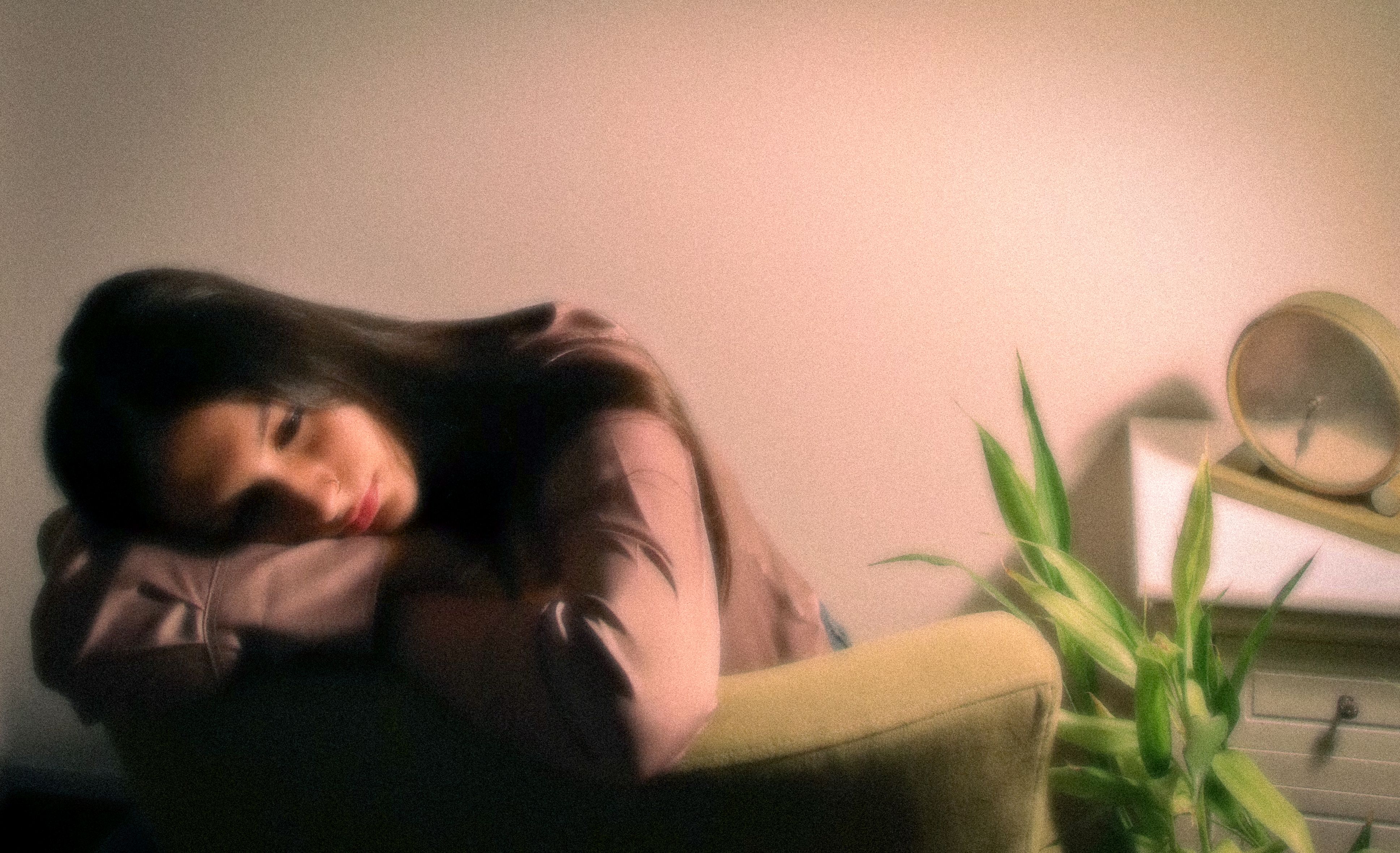
That visual language carried into the artwork. It shows me wearing a soft, faded pink silk shirt, blue jeans, sitting next to a green plant. There’s also a clock, hinting at the pressure of time and pace. I’m not looking at the camera, but off to the right - toward guidance, but also toward the success of others - with a tired, jealous, almost hopeless look. That expression captured the emotional tension behind the song: the search for validation, the comparison, the ache of it all.
The video visuals - both the lyric video and teasers - expand on that feeling. It’s mostly just my face, with a never-ending tunnel behind me, symbolizing the sense of being stuck or still while the world keeps moving forward without pause. I sometimes look down, around, and stare directly into the camera. That moment is meant to feel confronting, like a reckoning with myself and the viewer.
The color grading was especially important to me: it had to feel futuristic, a little dark, atmospheric, and otherworldly, but still grounded in emotion. That combination of visuals and sound helped bring the internal journey of the song to life.
For me, images and sounds are always closely tied. I often see things and visualize as I write: colors, textures, moods, and ideas for visuals or artwork. The visuals allow the emotion to live beyond the lyrics or melody. They create a full sensory experience - how the song looks, how it feels, how it moves through space. It’s the world the music lives in.
Visuals help accompany and elevate the sonic experience in a way that deepens the listener’s connection and allows them to feel a part of it too. Images make the music feel tangible.
After finishing a piece or album and releasing something into the world, there can be a sense of emptiness. Can you relate to this – and how do you return to the state of creativity after experiencing it?
I definitely understand that feeling. There is a kind of emptiness that comes after releasing something you’ve poured so much of your heart and time into. It’s the attachment, the reluctance to let go, and the uncertainty of stepping into something new, into the unknown.
Since this is only the second song I’ve released, I haven’t experienced that feeling in full yet. That’s not to say I haven’t felt that void, but honestly, it’s mostly been a “thank god it’s finally out” kind of relief, and an excitement to start the next thing.
I think part of that emptiness comes from tying your identity to a single piece. But it’s important to remember that a song isn’t a complete reflection of who you are, just who you were in that moment.
I might relate to this more - and have a better answer - once more music, like my EP or album, is out. Stay tuned! It’s going to be very different. 😉
Creativity can reach many different corners of our lives. Do you personally feel as though writing a piece of music is inherently different from something like making a great cup of coffee? What do you express through music that you couldn't or wouldn't in more 'mundane' tasks?
I completely agree that creativity can live in many corners of our lives, even in something as seemingly simple as making a great cup of coffee. There’s care, presence, and a kind of artistry in that too.
But for me, writing music is something entirely different. Through music, I express parts of myself I don’t usually access or let myself access in daily life. It’s where I go to process the harder, more abstract parts of myself, whether that be fear, shame, love, grief, guilt, hope, or the emotions and feelings that don’t have words.
In more mundane tasks, creativity can still be meditative or satisfying, but it’s not necessarily vulnerable for me. Music is. It opens a portal into the internal world. I guess I just feel it more than when I make a cup of coffee. ;)