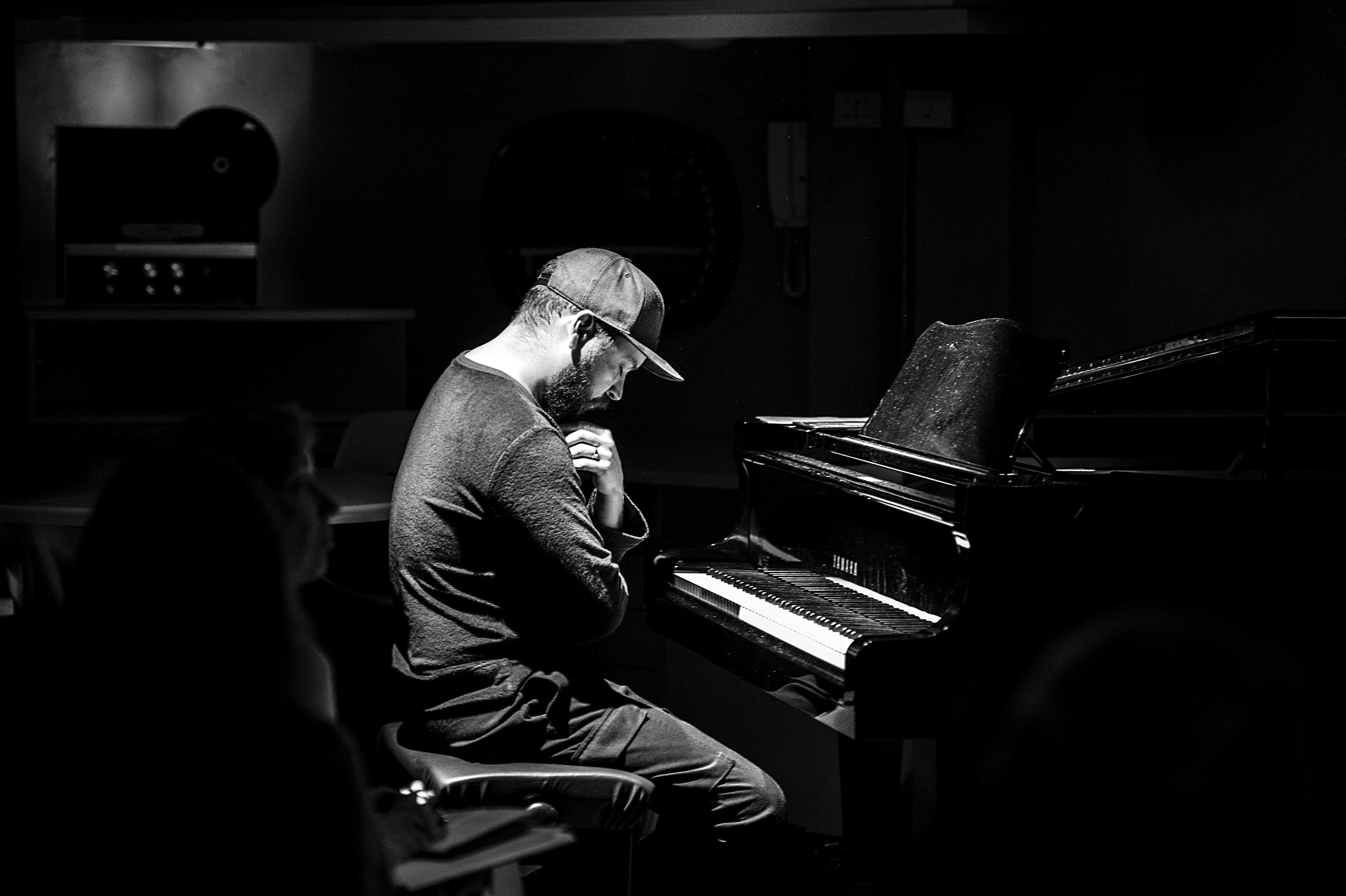
Published
Name: Alec Orea
Nationality: Brazilian
Occupation: Pianist, composer, improviser
Current Release: Alec Orea's new album Concerto for Piano and Universe is out via Unit. It features Alex Sipiagin (trumpet), Will Vinson (alto saxophone), Sidiel Vieira (double bass), and Rodrigo D. Braz (drums). To support the album, Alec will embark on a tour and perform at the following locations:
January 24th 2025 Unterfahrt
January 25th 2025 Birdseye
January 28th 2025 Ronnie Scott
January 29th 2025 ZigZag Berlin
January 30th 2025 Porgy and Bess
January 31st 2025 Ferrara Jazzclub
If you enjoyed this Alec Orea interview and would like to know more about his music, visit his official homepage. He is also on Instagram.
What were some of the musical experiences which planted a seed for your interest in jazz?
I came from a classical environment, and as a piano player I was always looking for freedom.
So, the first time I saw Chick Corea playing, then Gonzalo Rubalcaba, everything started to move within me.
How do jazz and jazz culture factor into your artistic processes and the music resulting from them?
I believe it is a natural process and an obligation for us musicians, to continue things, to develop them.
We're always seeing new composers, players, arising from so many different environments, and that seed was planted by that culture.
What does the term jazz mean today, would you say?
It's only a way of playing. Mostly contemplating instant composition (improvising), and the possibility of creating and manifesting something new.
There is no style attached to the term jazz anymore.
Jazz was about a lot more than just music in the 60s and 70s, from politics to fashion. For you personally, is jazz still a way of life – and if so, in which way?
I like to think of it as a way of thinking, therefore, a way of life. But not different then any other profession.
A lot of time must be spent, a lot of dedication, practice, etc.
Many people perceive jazz as a genre with high barriers of entrance, both for listeners and musicians. What have your own experiences been in this regard?
I think this is more related to the fact that such music is not disclosed as a “normal” one, or even presented as a regular music. It's also not being played in the regular media channels.
So, the barriers are an illusion created by those who “dictate” what people can or cannot listen to. Even in the jazz environment.
Every single concert I play, no matter where in this planet, is very well accepted and appreciated. The audience is always seeking to be surprised. They are not looking for analysis or understanding. They are ready for the manifestation of true art.
Derek Bailey defined improvising as the search for material which is endlessly transformable. As of 2024, what kind of materials are particularly stimulating for you?
Tigran Hamasyan, Shai Maestro, Chris Potter, Filo Machado, Hermeto Pascoal.
[Read our Tigran Hamasyan interview]
What, would you say, are the key ideas behind your approach to improvisation?
Satisfaction, hehe. The pleasure of playing piano is the main driver.
How would you describe your relationship with your instrument – is it an extension of your self/body, a partner and companion, a creative catalyst, a challenge to be overcome, something else entirely?
It's a daily opportunity to learn about yourself. Your limits, your goals, what you are actually made of.
And mostly having a certain kind of fun that's impossible to achieve doing any other thing.
Jazz has always had an interesting relationship between honouring its roots and exploring the unknown. What does the balance between these two poles look like in your music?
I really don't know. To me, tradition is something you must preserve for the sole reason of it laying the ground for a new direction or for discoveries.
There is no sense in repeating it.
What are currently direction in jazz or jazz-adjacent communities which you personally find interesting?
Every true art manifestation with a high level of performance and domain.
For many artists, life-changing musical experiences take place live. How do you see that yourself?
I totally agree. What you experience when you're playing in a live situation is irreplaceable. I'm addicted to it.
How, would you say are your live performances and your recording projects connected at the moment? How do they mutually influence and feed off each other?
I see it as two completely different things.
I like to record only when it's something that truly represents a new moment, conception, or discovery in my life, considering whatever I experienced to achieve that new “sound”. Living in India, for example, made me compose a song of 33 minutes.
Live performance, then, is a way of sharing these aspects and keep developing many ways of achieving the kind of creativity which will only happen in that moment.
There are various models to support jazz artists, from financial help to mentorships/masterclasses. Which of these feel like the best way forward to you?
I believe they are equally important. It depends on which phase you are.
Sometimes you will need one more than the other and vice versa.
Are there approaches, artists, festivals, labels, spaces or anyone/-thing else out there who you feel deserve a shout out for taking jazz into the future?
Maybe we should think about what, exactly, we mean when we talk about “taking jazz into the future”.
The Montreux Festival intends to preserve its archive of recordings for future generations. Do you personally feels it's important that everything should remain available forever - or is there something to be said for letting beautiful moments pass and linger in the memories of those that experienced them?
Preserving musical records is an essential responsibility for the future. Access to music should never become an elitist privilege. Ultimately, the more music is played, the more individuals will have the opportunity to experience its transformative power—a necessity in times like these.
As the world faces profound challenges and humanity drifts from what truly matters, music remains a profound medium to elevate our collective consciousness and reconnect us with deeper truths.
I firmly believe in its unparalleled ability to guide us to a higher level of perception.