Published
Part 2
Harmonic progressions and melodic development has often been described as a play with tension and release, with repetition and variation. When working with sound, what guides your decisions?
Narrative devices like suspense, tension, surprise, relief, closure, or the lacks thereof, definitely drive the work that I do.
As a student at the School of the Art Institute of Chicago, I took classes in sound composition with Bob Snyder, who eventually compiled the course materials into a book, Music and Memory. His intention was to break down how we hear things happening over time through the lenses of disciplines like cognitive psychology and time theory, both as an alternative to Western musical theory and as a way to be aware of what the fundamental rules of perception are - including the consequences of breaking them.
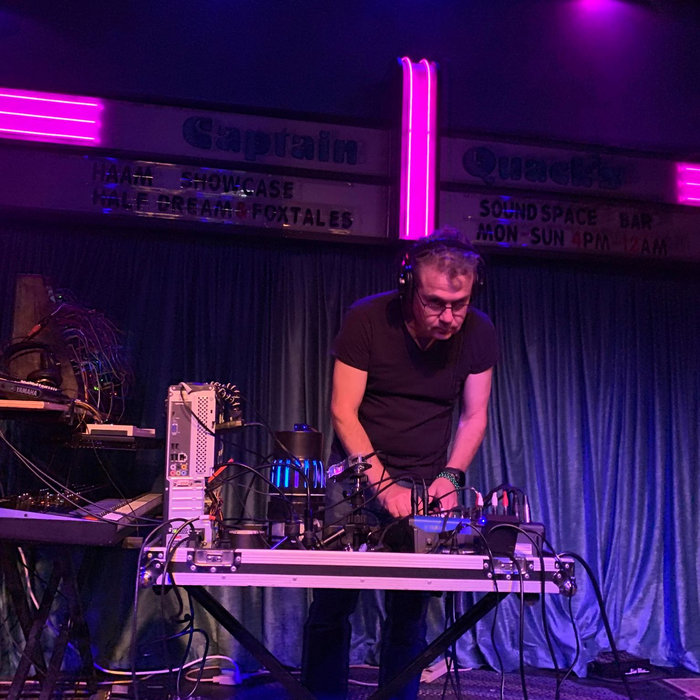
I’d spent a lot of time in my earlier work carefully assembling sounds into larger form works. In the last ten years my work has been largely driven by improvised or loosely scored performance, as the energy of trying to keep everything from falling apart created an undeniable tension.
Colin Sheffield from Elevator Bath attended a performance Sean O’Neill and I did together and offered to release a recreated studio version of that performance, which became Kruos, a meeting place between pieces created in real time and pieces that are scored.
Acoustic ecology, the biophony, and even the acoustics of public places have drawn a lot of attention. How important is sound for our overall well-being and in how far do you feel the "acoustic health" of a society or environment is reflective of its overall health?
Acoustic ecology is a key idea for me and helped me learn to listen with intention. Reading The Tuning of the World was an ear-opening experience. But it took me a long time to really wrap my head around the causality in the extreme changes to our urban soundscapes.
I took some time during the first year of the Covid pandemic to make field recordings in a much quieter world, in the same way phonographers in the US took the time after 9/11/11 when airplanes were grounded to record outside in places that experience noise pollution.
This recording I made in 2020 very clearly shows how wildlife responds to much louder sounds. Listen to the birdsong starting around 2:28. An airplane begins passing around 2:40, and the birdsong afterward, around 5:00, is much more agitated - louder, faster, more shrill. It’s clear that the birds are overwhelmed and aggravated by human-created loud sounds.
Vanessa Gelvin, Sean O’Neill and I co-founded Phonography Austin in 2016 to raise awareness of acoustic ecology by hosting an Austin-based World Listening Day event, which we’ve continued to do annually since then. Our most effective WLD event was The Invisible Suburb, in which a neighborhood that was returned to meadow was repopulated with the (imaginary) sounds of that neighborhood.
We host monthly meetings to discuss field recording and acoustic ecology, host an annual report compilation and event, and have collaborated with other organizations, the most effective example of which is Sound Surrounds: Field Recordings by Students of the Texas School for the Blind and Visually Impaired.
Tinnitus and developing hyperacusis are very real risks for anyone working with sound. Do you take precautions in this regard and if you're suffering from these or similar issues – how do you cope with them?
The truth is that I probably did a lot of damage to my ears before I started taking precautions seriously. I suffer from mild tinnitus that was triggered from an especially loud performance, and since then I’ve had checkups from an audiologist regularly. I was fitted for custom earplugs and now never leave home without them.
Tinnitus has not been an issue since then, though it’s never really gone away, and I strongly recommend that, if you have ever attended an event where your ears rang afterward, to begin using good hearing protection. If you haven’t, today is a good time to start.
Very specific sounds can be considered as pleasant – as in ASRM – or extremely disagreeable – as in Misophonia. Do you have any experience with this and ideas on the relation between certain sounds and strong emotional responses?
As a child I’d get occasional migraine headaches and would experience AIWS symptoms in my hearing, causing me to perceive the most gentle speech or sounds as threatening or hostile. Even then it was obvious to me that the symptoms were not real, but it did result in a lot more careful attention to the dissonance between the literal meaning conveyed by a sound in the world, and how it is interpreted between the ears.
An organized sound piece can push emotional buttons for me but overall I don’t react emotionally to most ambient sounds. I do experience visceral thrills on hearing certain sounds: dry leaves or snow crunching underfoot, a still quiet cold evening, a hand gliding across paper.
We can surround us with sound every second of the day. The great pianist Glenn Gould even considered this the ultimate delight. How do you see that yourself and what importance does silence hold from your point of view?
For me constant listening is something to be avoided. I enjoy listening more, and understand what I hear better, if that particular muscle is not being exercised all the time.
We can listen to a pop song or open our window and simply take in the noises of the environment. In which way are these experiences different and / or connected, do you feel?
I think both experiences are worth exploring.
When I listen to the sounds that artists have chosen to organize in time, I like to listen for intentionality, and generally assume that the artist made the decisions that drive the organization of the piece. I listen to a lot of pop music and try to separate the intentions of their particular idiom from any other ideas. I listen to less idiomatic sound work to try to sort out intention and understand what their idiomatic decisions are.
When I listen to environmental sounds with the intention of sensual pleasure I usually will focus on specific sounds and how they change in time and space. But I am not able to divorce my attention from the reality of their actual sources and the actual place, and don’t believe that’s productive - which puts me on the side of Schafer, not Schaffer.
I don’t make any real connection between listening to natural sound and artist-created sound. That ties into my take on AI art - if there is no sentient intention and will behind a creative sound piece, or the chaotic symbiosis of the sounds of biophony / geophony / anthrophony doesn’t exist, I don’t find anything interesting about it.
Maybe that will change.