Published
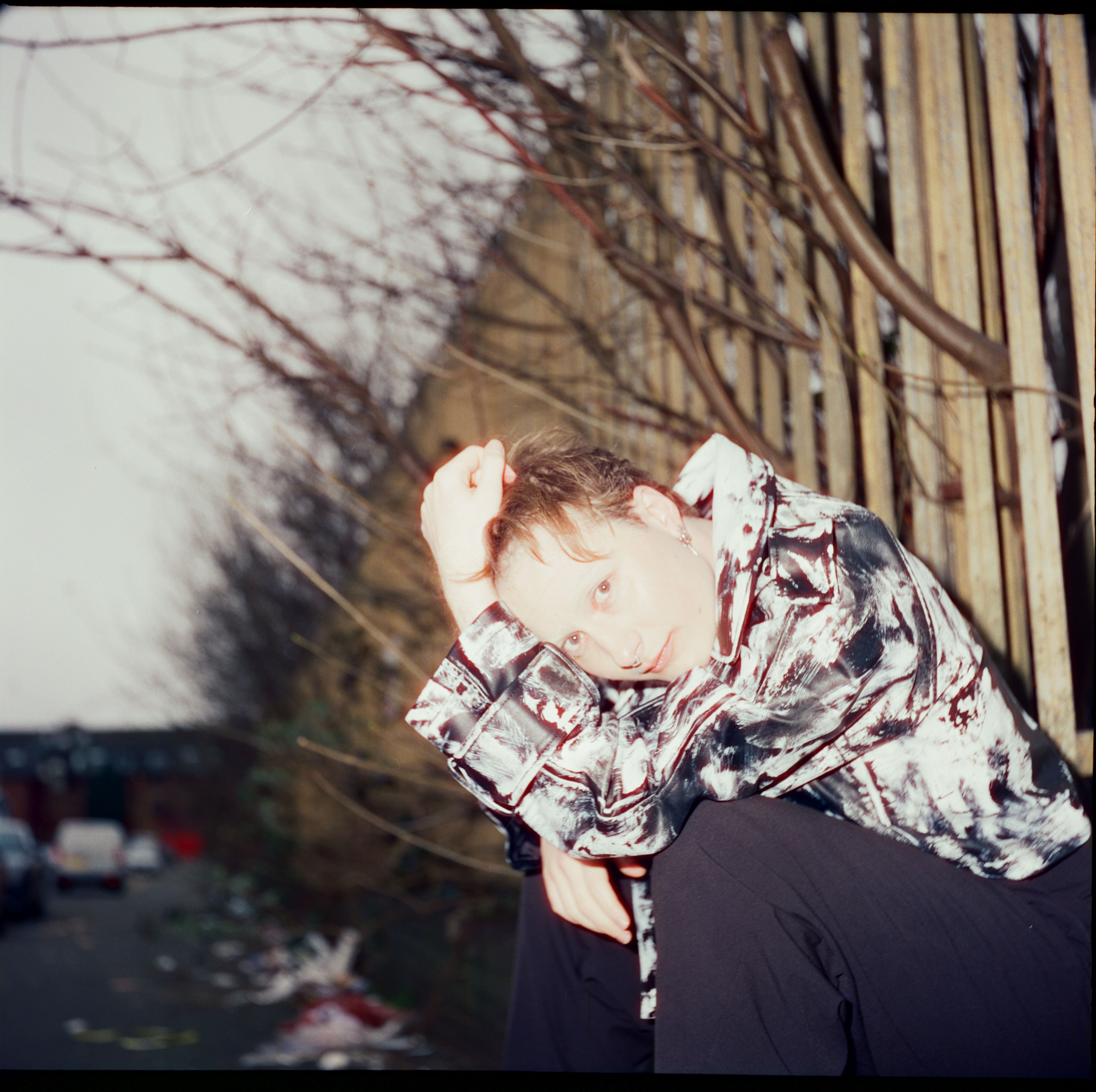
Name: Rylan Gleave aka All Men Unto Me
Nationality: Scottish
Occupation: Composer, vocalist, songwriter
Current Release: All Men Unto Me's new album Requiem is out via The Larvarium.
Recommendations for Leith, Scottland: Leith Market in Leith Market Dock Place, Saturday mornings, 10am-4pm. Local market traders with everything from records to house plants to fresh produce to hot snacks.
If you enjoyed All Men Unto Me interview and would like to know more about his music and current live dates and releases, visit his official homepage. He is also on bandcamp.
When was the first time you noticed you were drawn to darker themes and moods in music, literature or the movies?
I loved horror movies as a kid, I still do. I was maybe 9 or 10 when I watched The Wicker Man for the first time, and it gripped viscerally. It scared me in a way that I didn’t quite understand, but was so utterly thrilled by. It was the same feeling I got from reading my grandmother’s ancient medical textbooks, seeing the illustrations of various anatomies and surgical tools. Kind of like I shouldn’t be looking at it.
As I got older I devoured stuff that gave me that feeling; Charlotte Perkins Gilman’s The Yellow Wallpaper, José Saramangho’s Blindness, Sarah Kane’s Phaedra’s Love, Patrick Süskind’s Perfume.
Media with a sensory focus like smell or taste still gets stuck between my teeth.
“Darkness” is, of course, not strictly speaking a term related to sound. What constitutes darkness to you, especially in instrumental terms?
“Darkness” often translates to timbre for me as a vocalist.
I learned some low-larynx singing techniques for a darker effect in a Paraorchestra / Pulled by Magnets project, where Oliver Vibrans arranged Scott Walker’s The Drift for recording at Abbey Road Studios.
Scott Walker’s vocal colour is haunting it its maturity on the album, and the brightness in my voice wasn’t matching the tracks. I ended up learning how to change my laryngeal height when breathing in, altering the shape of my throat to darken the sound.
Charles Hazlewood was conducting, grinning at me to “sing so quiet only a dog could hear” in rehearsals. The combination of low volume and high pitched created this weird, mournful style, particularly in our version of "Cossacks Are."
Does your interest in darker musical themes extend into extra-musical fields such as fashion, or politics?
Fashion-wise I’m definitely (mostly affectionately) described by friends as a bit goth. I like dressing up for shows, be that campy charity-shop-upcycled bits for Ashenspire or working more seriously with costume and makeup artists.
I loved making the Requiem music videos with costume artist Frankie Mulholland; every piece she brought me was exactly something I’d wear. She really understood and enhanced the world we’d made.
For the “Lux Æterna” video, we used a mask made out of hair by Quentin Taillepied, a Vivienne Westwood corset, and a handmade latex skirt lubed up to look wet. I ended up choking back fits of laughter in front of a headstone, with Tobias Holmbeck holding the camera in my face, two of the team smearing handfuls of lube over the skirt, and Frankie giggling ‘lube him up girl!!!’. It was great. It looks amazing texturally in the video too. If I’m working from home though, I’m fully a ‘comfy clothes and don’t bother to do my hair’ kind of person.
The themes of my art and the art that I like are in harmony with my politics. My art isn’t inherently activistic, but is sometimes perceived as such because I can’t separate my identity from the creation of it. My politics exist to resolve some of the darkness that is reflected in the current sociopolitical climate.
Who/what are currently artists, labels or even genres which draw you in because of their darker approaches, aesthetics and sound(s)?
Backxwash’s Only Dust Remains is definitely on repeat.
It feels like a deeply honest and vulnerable exploration of Ashanti’s own journey as well as a testimony to the crumbling wider world, and the balance and intersection of these is really sensitive.
I’m in love with her performance energy and massive stage presence, her raw lyrics, and her myriad outfits. She’s got great taste in horror movies too.
I’m listening to a lot of industrial techno at the minute. Paula Temple is an ongoing favourite, especially with the sound design in her tracks. On her album Edge Of Everything, there’s two versions of the song "Joshua and Goliath": a techno version, and a slow version.
Thematically a lot of the material is the same, but the slow version drags you along in what feels like a much heavier and darker journey. I like listening to it when walking at night.
Bullyache are a music and dance-theatre duo approaching songwriting and live performance in a profoundly unique and electric way. They play with gender, identity, ritual and masculinity to express a spectrum of emotion and absurdity.
I think they describe themselves musically as doom-pop, it’s a brilliantly intense, sweaty sound. Never let is a stunning track.
What were some of the first performances or releases when you became active in exploring truly dark places in your music yourself?
I skirted the edges for a while, but really broached it in the first All Men Unto Me release, In Chemical Transit. It features my voice pre-transition, then 8 weeks to 2 years on Testosterone. It isn’t explicitly about gender dysphoria, it’s more of a time capsule of my voices hinged on a Mozart aria, but I found making it emotionally challenging.
Reckoning with the loss of my primary instrument when I started Testosterone and the uncertainty of its return was brutal. Transitioning was absolutely the right decision for me, but there were a few years where I wasn’t sure if I would ever be able to sing properly in pitched contexts again.
Making In Chemical Transit brought back a lot of memories of training classically whilst being deeply unwell, and feeling violently itchy in my body.
I think there is resounding darkness that spans the album, but it’s balanced with a lot of Queer joy and reclamation. It relies on both extremes to express how polarising much of that vocal and personal journey was.
I have had a hard time explaining that listening to death metal calms me down. When you're performing a piece with a darker energy, does it tend to fill you with the same energy or feeling – or are there “paradoxical” effects?
I think this makes a lot of sense. Scott McLean, my producer, often talks about listening to Xiu Xiu when he’s not feeling great. It absolutely gives me that feeling too, of ‘oh, I don’t feel as bad as the feeling that this music is expressing’ which is oddly but genuinely soothing.
[Read our Xiu Xiu interview]
When performing live, I have a mental pool of emotion I can tap into, but then keep a few steps away from as I’m focusing on technique and timing. I’ll dip into it throughout a show to top my performance stamina up.
It’s often though that I’m wildly energised by performing miserable or aggressive songs, there’s an electricity and a thrill to it that does feel rewarding — not “happy”, but maybe more manic. I definitely find this with Ashenspire, particularly in long sets where you have to find continual energy.
Tell me, if applicable, about the concrete lyrical themes that you felt drawn to for Requiem.
Requiem is modelled off of a traditional Requiem Mass, with the track names and lyrics connected to the Missa pro Defunctis. I started sketching out lyrics in April 2021 with the Mass skeleton in mind, reflecting on patriarchal power structures and the conditions of trans-masculinity in them.
It started with a few people and places in mind, but the more I wrote, the more I realised it applied to near-endless relationships and contexts I’d been in. There’s a lot in there surrounding seeking God or seeking a reason, what it feels like to try and forgive, to try to feel anger and pass judgement, and finding Queer reverence in place of or akin to holiness.
Tell me about the creative process for Requiem, please.
I ended up by chance in Cromarty, in the Scottish Highlands, on a solo residency where I had a lot of time to myself. I was spending time in several churches, one of which was decommissioned but had a working harmonium. I’d go late at night with lyric ideas and set lines at a time. I think I wrote “Kyrie Eleison” in one evening there.
I came back home and applied for Sound and Music’s New Voices programme, which came with an artist bursary and a production grant to get it moving. I made loads of scores for preproduction — certain tracks were fully scored out and stayed the same, some we needed to jam in the room to find the emotional core, some evolved into totally different beasts or were cut entirely. I was then appointed Musician in Residence with Paraorchestra and used this time to hone in on recording.
The majority of the process was Scott and I at his studio, figuring out the guts of it. He was really key in helping me translate my ideas off the page, collaboratively building a consistent soundworld that encompassed the more traditional elements with the modern.
For your most recent release, how did you realise your goals in terms of the production, including effects for your current release?
The trickiest part was balancing the church organ with the doom metal world. Scott and I spoke about this a lot, finding reference points like Kali Malone and Anna von Hausswolff where the use of organ is heavy and expressive and steering in a non-traditional sense.
[Read our creative profile of Kali Malone]
I found a church in Glasgow with electro-pneumatic stops, which means if you pull out a stop halfway, the instrument finds otherworldly microtones. Scott is to thank for the mixing and a lot of the sound design, blending this mammoth instrument with equally behemoth drums and bass.
Effects wise, Scott had some brilliant ideas to give the voice a sense of being bigger than it really was. I’m especially pleased with the choral vocal sounds on In Paradisum, where I recorded the tune, and then a harmony line above and below. We recorded three takes for these harmony lines, and Scott mixed them panning slightly left and right to create this sense of a choir supporting the lead line.
It still all sounds like me, but in a wider sense than some of the more intimate solo vocal lines.
I would love to know a little about the feedback you've received from listeners or critics about what they thought some of your darker songs are about or the impact it had on them – have there been “misunderstandings” or did you perhaps even gain new “insights?”
So far for Requiem, some critics have voiced this idea that “Sequentia” is about descending into Hell, one writer talking about feeling like they were on an elevator vanishing down into the darkness.
It was a good review, I was pleased that they liked it, but for me, Sequentia is more about stepping off that elevator and realising that I don’t have it in me to pass the Hell judgement onto anyone. It’s not that the music doesn’t have anger or condemnation, it just tips over the edge into brokenness and desperation at the final stretch.
It’s a useful insight for live performance though, and thinking about how I can convey that visually as well as sonically.
There was another review that praised the use of wind instruments, which I loved, because there are no wind instruments on the album. I think that speaks to the character than the organ takes on across the different tracks, and how well Scott integrated it.
Sharing music on stage can change the way it is experienced, both for musicians the listeners. Can you talk about this a bit, especially in the light of darker themes?
We’ve only had one showcase performance so far, at Loading Bay in Bradford as part of the PRSF New Music Biennial Festival.
I had some funny audience interactions afterwards. Some people really hated it! One woman left quite early on, our driver heard her scoffing at the sound and my takes on Evangelical Christianity and transness. I love when audiences have gut reactions to my music. I’d much rather someone hated it and left than sat through it feeling nothing.
I also had a beautiful moment with someone who shared that the music had let them commune with a friend who had recently passed away. They’d gone to loud clubs together and the volume and haze of our show had let them connect to her wholly unexpectedly. I don’t think they would have had that experience from listening to the album at home, it was that live setting that unlocked that feeling for them. That was a real privilege to hear, I felt really moved by that.
We’re playing at the Southbank Center in July and I’m looking forward to seeing what people think of it. I think the other performers will approach it with a different perspective after that first show too, now we’ve got more of a sense of how we perform live collectively.
Throughout the history of art, there have been artists who did not want to exorcise their demons, afraid they might lose their creative spark. What's your take on that?
If you’re only making music fuelled by your demons, you’re probably going to burn out. I can’t imagine that’s sustainable or healthy or even enjoyable.
I love tapping into dark places and expressing things musically that I wouldn’t verbalise, and the catharsis that comes with that, but I wouldn’t be able to do it if I lived in that feeling all the time. I’ve personally got to make time for non-musical experiences to draw on for the work that I make, and that balance can be hard to find, but it’s so deeply worth it.
I think my art can only benefit from me trying to get to know myself in both darkness and light, and all the spaces in between.