Published
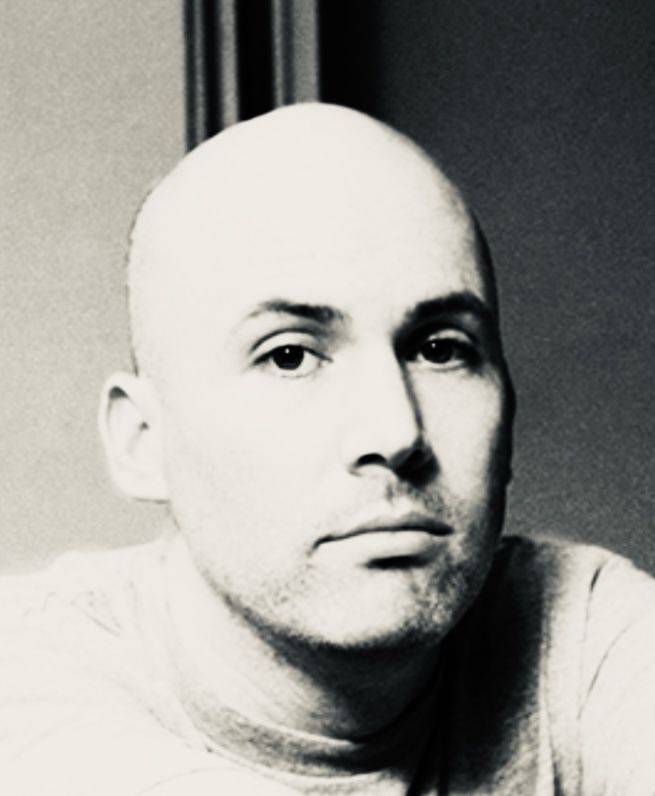
Name: Andrew Shapiro
Occupation: Composer, keyboard player
Nationality: American
Recent release: Andrew Shapiro’s new album Soft-Shapes was released October 17th, 2025 via Airbox Music. Listen on Bandcamp, Spotify, and Apple Music.
Recommendations: Edward Vilga writes about mindfulness and meditation. And he has a weekly email I enjoy. He created a nine-minute guided meditation entitled Vulnerability using my piano piece "Rejected Film Theme."
The Ambient Century (2000) by Mark Prendergast is the book I wish was assigned to me when I was at Conservatory. I’ve given the book as gifts to over 20 people. It’s required reading as far as I’m concerned.
A piece of music: Why Patterns? (1978) by Morton Feldman. It’s a chill, abstract landscape using flute, piano and percussion. At first it may seem underwhelming …but if you really dig in and listen, about 22 minutes into it a certain kind of resistance inside of you collapses. And then the last eight minutes or so feel like ecstasy. Once I was driving alone from New York to Montreal. And I was in the mountains and snow was falling … it was a spectacular experience.
If you enjoyed this Andrew Shapiro interview and would like to stay up to date with his music, visit his official homepage. He is also on Instagram.
For a deeper dive, read our earlier Andrew Shapiro interview. Also, Andrew Shapiro’s Playlist “Fifteen Questions” contains tracks discussed in his replies below.
When I listen to music, I see shapes, objects, and colours. What happens to you physically when you're listening? Do you listen with your eyes open or closed?
I’ve got shapes and colors covered! My new album, Soft-Shapes (2025), is eight piano pieces, and four of the eight have colors in the title …
Every now and then I see a striking combo of colors; a woman on the subway wearing a white top, brown slacks and carrying a red bag. The seventh track, “Brown Red White” is a go at (musically) depicting that combo.
But do I know the music I’m listening to or not? Is the nostalgia factor at work? If “Wake Me Up Before You Go Go” (1984) comes on the radio, I’m probably seeing myself dance around in a Montreal discotheque when I was like 15.
The third piece on Soft-Shapes, “Music in the Style of Richard Marx,” ended up as a commentary on seeing his videos on MTV. They were on all the time.
When I was about halfway through writing that piece it occurred to me it was reminiscent of that mega-hit ballad of his, “Right Here Waiting” (1989). I didn’t plan it. It just came out that way. So maybe I’m seeing memories more than anything else.
How do listening with headphones and listening through a stereo system change your experience of sound and music?
Sometimes the juxtaposition of what’s on my headphones and what I’m doing can be amusing.
Say I’m wondering around a museum looking at 16th century Dutch portraiture—a favorite genre of mine—and my headphones are on, my phone is on shuffle, and “(You Gotta) Fight for Your Right (To Party!)” (1986) comes on.
It makes me smile.
Tell me about some of the albums or artists that you love specifically for their sound, please.
It’s been said Steely Dan’s album, Gaucho (1980), is where they “perfected their aesthetic” and I agree. Extended harmonies bathed in a certain sort of smooth gloss.
Bass clarinets in “Babylon Sisters?” Fantastic.
Heaven or Las Vegas (1990) by The Cocteau Twins. The first time I heard it, it took just two measures of the first track to get me hooked.
They’re the BEST.
There’s a short Philip Glass track I really love called “Dreaming of Fiji” (1997), written for the Jim Carrey movie The Truman Show (1998).
Philip had written music where Michael Riesman, his producer, brought the manuscript to life with synthesizers using a plucked harp-like sound, a rhythm guitar sound, padded chords and a kind of pulsating pad and it was all surrounded by some kind of balm that brought it all together as “one thing.”
And seeing that manuscript on the music stand and watching and hearing what Michael was doing was one of the most aesthetically beautiful moments of my life. That was the demo. But Peter Weir, the director, used it in the final cut instead of an orchestral version of the cue recorded later.
Do you experience strong emotional responses towards certain sounds? If so, what kind of sounds are these and do you have an explanation about the reasons for these responses?
I’m someone who, while I'm not on the spectrum, so to speak, is extraordinarily sensitive to sound. So, if a neighbor is playing music where bass is coming through it really disturbs me. I wish it didn’t.
I remember someone once bounced a ball above me and I went crazy.
There can be sounds which feel highly irritating to us and then there are others we could gladly listen to for hours. Do you have examples for either one or both of these?
Irritation comes from having sound forced upon me and there’s no way out.
Someone watching videos without headphones or yelling into a cellphone on speaker with 40 people around them on the subway. I’m super sensitive to stuff like that.
On the flip side, every now and then I can listen to Grateful Dead bootlegs all day.
Are there everyday places, spaces, or devices which intrigue you by the way they sound? Which are these?
It’s the unexpected delight of an unexpected sound that excites me.
This summer, I was at the beach and put my bag down on a stone table and it made an absolutely gorgeous sound. The metal water bottle at the bottom of the bag hitting the stone was partially deadened by the fabric of the bag.
I picked it up and put it down many times.
Have you ever been in spaces with extreme sonic characteristics, such as anechoic chambers or caves? What was the experience like?
I like the complicated cocktail of echoes, the way the air feels and how things smell in caves.
But this is making me think of Severance Hall, the home of The Cleveland Orchestra. They performed Mahler’s Resurrection Symphony (1894) and the orchestra, the hall and the audience melted into one thing and it was brilliant.
That was a space with extremely awesome sonic characteristics!
What are among your favourite spaces in which to record and perform your music?
Definitely playing my piano music at McDonald’s.
A singular experience—a grand piano in a McDonald’s a block away from Ground Zero. Every Sunday afternoon I shared my music with people from all over the world and sold a lot of them CDs too. What does it mean that for a long while the only place willing to pay me to play my piano compositions was McDonald’s?
And one of my favorite gigs was when I gave the TEDTalk about it in Krakow.
I recorded Numbers, Colors and People (2009) at Glass’s Looking Glass Studio in New York. This was just about 10 years after I had been an intern there.
Michael Riesman was the producer and I’ve said it before and I’m sure I’ll say it again—the moment between him saying “Take one” and me starting to play … it was like everything I had had to do to get myself to the point of beginning that session flashed through me.
A dream come true.
Do music and sound feel “material” to you? Does working with sound feel like you're sculpting or shaping something?
When I’m composing in a sequencer it feels like that.
Changing my patches (sounds) around and moving blocks of MIDI around from one patch to another it’s more about the way I’m (synth) orchestrating the notes, rather than the notes themselves. It feels like sculpting with sound. The first time I worked this way—with a synthesizer (Yamaha EX5) and sequencer—was on Invisible Days (2003).
But when I work this way, things tend to get complicated very quickly. And then more sculpting or shaping happens.
I find myself using some kind of bizarre make-it-up-as-I-go version of algebraic factoring to bring the piece to a finish. The kind where a parenthetical, (x+2), for instance, can only be divided by itself and you have to toggle parts of the piece around so they can be divided by themselves and melt away.
And this takes a long time to do.
How important is sound for our overall well-being, and to what extent do you feel the "acoustic health" of a society or environment reflects its overall health?
A loud restaurant with loud people near me can wreck me. I wonder if enough people running restaurants are aware there are ways to improve the “acoustic health” of their environment.
A friend, Edward Vilga, made a healing meditation entitled Vulnerability and I love it. He’s got a beautiful voice and he took a piano piece of mine called "Rejected Film Theme" (2011) and looped it. It’s a guided meditation feeling healthy to me.
Sound, song, and rhythm are all around us, from animal noises to the waves of the ocean. What, if any, are some of the most moving experiences you've had with these non-human-made sounds?
Once I was hiking and camping about 20 miles up the coast from the Golden Gate Bridge. And about 15 deer came up really close. And then they scampered off together.
That sound was memorably delicious.
Many animals communicate through sound. Based either on experience or intuition, do you feel as though interspecies communication is possible and important? Is there a creative element to it, would you say?
It’s definitely possible. Why is one dog trainer more effective than another? Presumably it’s in the creativity of their methodology, right?
I don't know if I can communicate with a falcon but I’d love to try. I've been fascinated with falconry for a long time.
Tinnitus and developing hyperacusis are very real risks for anyone working with sound. Do you take precautions in this regard, and if you suffer from these or similar issues, how do you cope with them?
Fortunately, I'm not suffering from anything like that. But I do use ear plugs at shows.
I was sad to learn Huey Lewis had to retire from performing. He developed Meniere’s disease, an inner ear problem that can cause hearing loss.
We can surround ourselves with sound every second of the day. The pianist Glenn Gould even considered this the ultimate delight. How do you see that yourself, and what importance does silence hold?
It took me a long time to like Soft-Shapes. I was thinking, is this something I even want to release?
And it wasn’t until I had it on repeat and was listening to it for what felt like “every second of the day” for days that I started to love it.
Seth S. Horowitz called hearing the “universal sense” and emphasised that it was more precise and faster than any of our other senses, including vision. How would our world be different if we paid less attention to looks and listened more instead?
I’ll just say that, with age, I’m gaining a greater ability to keep my mouth shut and listen.