

Name: Anna Sophia Defant
Nationality: Austrian
Occupation: Pianist, composer, improviser, singer, songwriter
Current Release: Anna Sophia Defant's new album s:e, featuring Michael Prowaznik (drums), Jakob Gnigler (saxophone), and Kenji Herbert (guitar) is out via unit.
Shoutouts:
Artists: Isabella Forciniti, Georg Vogl, Christian Lillinger, Marta Warelis, Pak Yan Lau, Kenji Herbert, Vincent Pongrácz, Maja Osojnik …
Festivals / Spaces: Artacts Festival, Monday Improvisers Session, Jazzfestival Saalfelden, Grazer Improfest, Echoraum, Nim and Hear Session …
Labels: Unit Records, ECM, Plaist, Relative Pitch Records …
[Read our Marta Warelis interview]
[Read our Kenji Herbert interview]
If you enjoyed this Anna Sophia Defant interview and would like to know more about her music, current live dates and releases, visit her official homepage. She is also on Instagram, and Facebook.
What were some of the musical experiences which planted a seed for your interest in jazz?
The Jazzfestival Saalfelden definitely played a big role here. My parents and my grandfather started taking me to concerts there when I was about 12 years old, and I’ve been going ever since.
I’ve also worked at the festival, and in 2021 I had the chance and honour of playing there myself with my project søch. Here is an example of our work:
The Jazzfestival Saalfelden allowed me to experience artists like Carla Bley, Abdullah Ibrahim, Henry Threadgill, Archie Shepp, Sylvie Courvoisier, Vijay Iyer, Cecil Taylor, and more recently Marta Warelis, Jordina Millá, Pak Yan Lau, Christian Lillinger, Maja Osojnik, Kaja Draksler, or Mette Rasmussen.
These are just a few of the many great musicians who have played there over the years.
[Read our Vijay Iyer interview]
[Read our Kaja Draksler interview]
[Read our Mette Rasmussen interview]
What does the term jazz mean today, would you say?
I would say jazz today means being open to experimentation and being able to immerse yourself in music that may be abstract at times but can also have a vibey mood.
Interplay, listening to each other, having a conversation within the music, and being in the moment are also essential features for me.
Just like with my current project s:e, which is based on free improvisation.
As of today, what kind of materials, ideas, and technologies are particularly stimulating for you?
In my search for an individual musical language, I deliberately stayed away from preparations or electronic effects for quite some time. I found this challenge very rewarding.
Nevertheless, I’ve always been a fan of electronic music and find this world very intriguing. I admire artists like Isabella Forciniti, Rojin Sharafi, and Maja Osojnik.
More recently, after collaborating with Bernhard Hammer from Elektro Guzzi on one of his original compositions, I’ve started using electronics and piano preparations in combination with a transportable acoustic piano—and I must say, it’s growing on me more and more.
Where do most of your inspirations to create come from – rather from internal impulses or external ones? Which current social / political / ecological or other developments make you feel like you need to respond as an artist?
Coming from an artistic background—my grandfather, Anton Thuswaldner, was a painter, sculptor, and performance artist—I’ve grown up with high standards and clear expectations when it comes to art.
I’ve come to know art as something radical, political, individual, and abstract. It might be beautiful at times, but beauty or craftsmanship alone are never enough. There must be a strong philosophical concept behind a truly exceptional work of art. Individuality and staying true to one’s own personality are very important.
When it comes to important social developments, I strongly disapprove of the increasing commercialization of art and music. There’s nothing wrong with entertainment per se—it just gets mistaken for art far too often.
Tell me a bit about the sounds & creative directions, artists & communities, as well as the colleagues & creative hotspots of your current hometown, please. How do they influence your music?
There’s a regular free improv jam session in Vienna called the Monday Improvisers Session. It’s hosted by three very esteemed members of the Vienna improvisers' scene: Susanna Gartmayer, Thomas Berghammer, and Didi Kern.
This session has been a benchmark and a unique opportunity to connect and play with musicians I’d never imagined performing with. The session is curated, which means you can’t just sit in—it’s the hosts who put together small ensembles. They are exceptional at recognizing people’s musical identities and forming groups accordingly.
So on Monday nights, Celeste is definitely my creative hotspot and a great source of inspiration. I love returning whenever I get the chance because it always broadens my musical horizon. I’ve found various musical collaborators through this space, and I’m very grateful for that.
Also, my musical partners Kenji, Jakob, and Michael from my latest release Anna Sophia Defant – s:e are musicians I met at this very session.
What role do electronic tools and instruments play for your creative process?
I use electronics—especially in my solo project—as a sort of communication partner and as a way to build sound architecture. Electronic effects open up sonic spaces or spheres that are not always accessible through acoustic instruments alone.
I also use electronics in a new trio with Isabella Forciniti and Jakob Gnigler, as well as in a piano duo with Jul Dillier. Electronics help me bridge the acoustic sound of saxophone and piano with Isabella’s electronic soundscapes. Here’s a live snippet of the trio.
With Jul Dillier, we explore a wide spectrum of extended piano techniques— electronics on my end and acoustic preparations on his—while we both play the same instrument, the Keybird.
Thanks to technological advances, collaboration has become a lot easier. What have been some of the most fruitful collaborations for you recently and what approaches to and modes of collaboration currently seem best to you?
Regarding technological advances, I’d like to mention a course I took through my university (MDW) called Global Conservatoire. It’s a series of online courses organized between different international institutions.
The one I attended was taught by Yaniv Nachum (Amsterdam) and focused on free improvisation. I especially enjoyed the opportunity to have low-latency online jam sessions through special hardware/software, connecting musicians in NYC, London, Copenhagen, Amsterdam, and Vienna. It worked astonishingly well and holds great potential for international collaboration.
As for fruitful collaborations, I must again mention my current project Anna Sophia Defant – s:e with Kenji Herbert (guitar), Michael Prowaznik (drums), and Jakob Gnigler (tenor sax). We have released our debut album through Unit Records on June 27th, 2025. It’s 100% freely improvised music recorded in November 2023.
This quartet is unique in so many ways. We developed a very modern and individual musical language organically and quickly. I’m incredibly grateful for such wonderful partners—both musically and personally. The music ranges from complex sound structures to surprisingly harmonic and atmospheric soundscapes. Highly recommended listening.
Jazz has always had an interesting relationship between honouring its roots and exploring the unknown. What does the balance between these two poles look like in your music?
In s:e, we all have very different musical roots and backgrounds. I have a classical piano background, Kenji and Michael were socialized through what you could call traditional jazz, and Jakob has long been active in Vienna’s experimental and free improv scene.
Our recently released album Anna Sophia Defant – s:e demonstrates this blend. Hint: listen to the entire album – it may not end where you think it will…
Another project I’m working on is a quartet with Franz Hautzinger, Raphael Preuschl, and Michael Prowaznik. We’ve just recorded some (yet unreleased) music that sits somewhere between free jazz and early '70s avant-garde fusion. Look out for it next year.
How much potential for something “new” is there still in jazz? What could this “new” look like?
Assuming we share a similar definition of jazz, I think the potential for innovation is nearly endless. But it takes courage and an adventurous spirit to keep jazz alive. In an increasingly capitalistic world, I see a threat to creative freedom. Still, this very world needs art, music, and creativity to stay alive in a meaningful way. I hope we can maintain this balance for as long as possible.
I don’t like seeing art or music commercialized, even though the industry often pushes artists in that direction. But if people are willing to seek out new music, they will certainly find it.
For many artists, life-changing musical experiences take place live. How do you see that yourself?
To an extent, yes – but I wouldn’t be too rigid about it. For example, an evening where a group listens to good recordings together could be just as transformative. We shouldn’t underestimate the social factor in music. Music is a form of communication, and communication happens in social contexts.
We also shouldn’t underestimate art and music’s potential for society. If you engage with it deeply, you’ll learn something. Art offers a sort of playground for social interaction and can be a safe outlet for extremes.
How, would you say are your live performances and your recording projects connected at the moment? How do they mutually influence and feed off each other?
Both performing live and recording are essential – especially for improvised music.
Recording improvisations and listening back allows me to evaluate ideas. I even enjoy transcribing some of my improvisations to confront myself with them. This kind of reflection deepens my connection with my own musical style and helps solidify it.
Improvisation is obviously an essential element of jazz, but I would assume that just like composition, it is transforming. How do you feel has the role of improvisation changed in jazz?
That’s a tough one because it depends on how you define jazz. As I mentioned earlier, jazz can take many forms today. Improvisation has always been a cornerstone of jazz. Over time, it has branched into more compositional and more free approaches.
I mostly play freely improvised music, so improvisation is essential for me. But I also admire projects that are much more constructed – like Vincent Pongrácz’ Synesthetic 4 / Octet or Georg Vogl’s compositions. These musicians are masters of both improvisation and composition.
What, would you say, are the key ideas behind your approach to improvisation?
Listening, communicating, staying in the moment and focused, developing musical ideas in real time – which actually makes it instant composing, not just improvising. And, of course, making sure that with every note you play you has something to say.
An example of this "instant composing" can be found in three tracks from my latest album Anna Sophia Defant – s:e: “loft,” “luft,” and “aus.” Even though they are 100% improvised, they suggest a kind of leitmotif technique reminiscent of 19th-century music.
The Montreux Festival intends to preserve its archive of recordings for future generations. Do you personally feel it's important that everything should remain available forever - or is there something to be said for letting beautiful moments pass and linger in the memories of those that experienced them?
I do believe that some moments should remain fleeting – remembered , not preserved. Making everything available forever can sometimes diminish a moment’s radiance.
I recently saw a play about human immortality and how it might affect our perception of life – and the idea wasn’t all glamorous. Quite the opposite.
I think personal growth and individuality are inherently tied to life’s finitude—and that’s what makes it exciting.

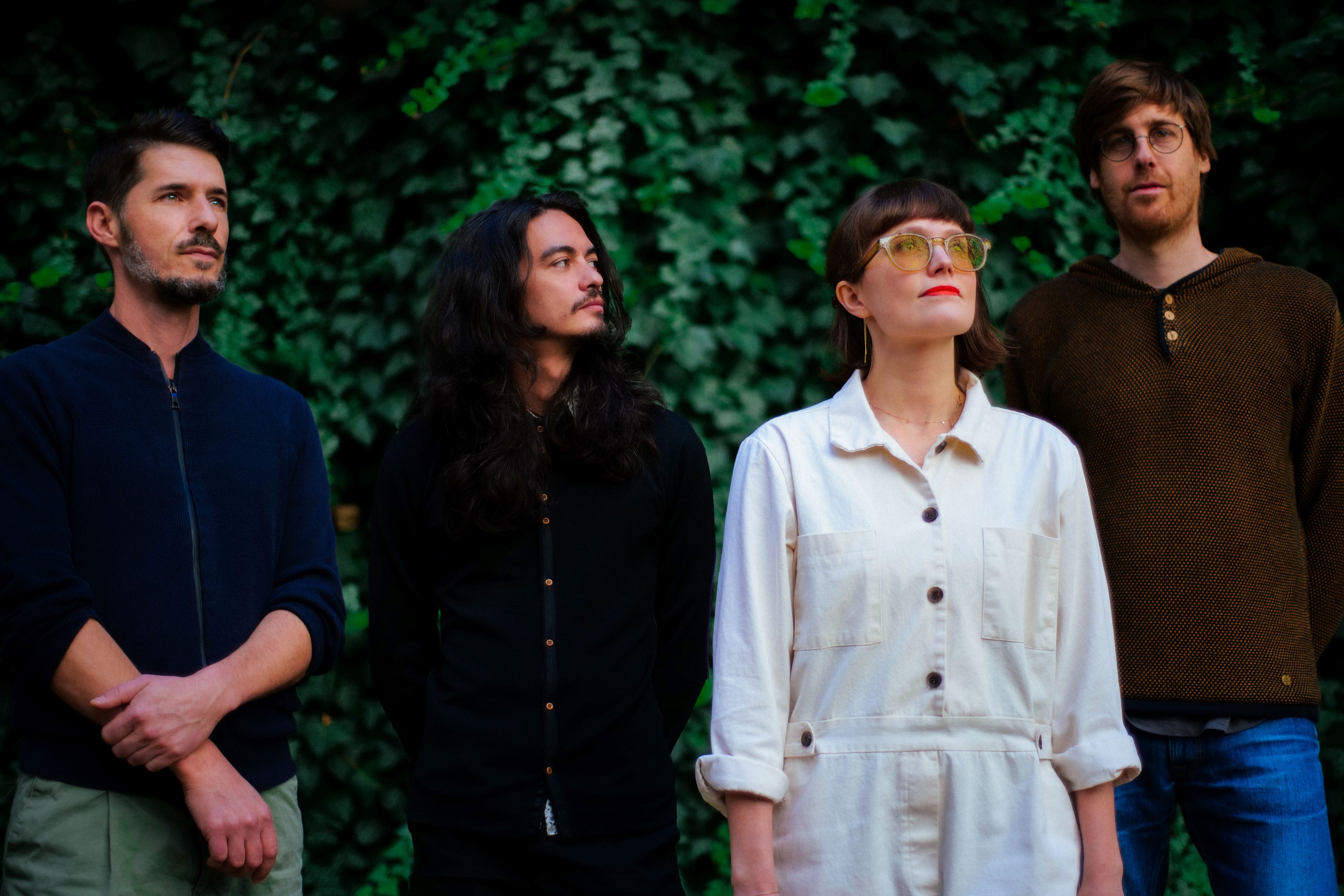 Anna Sophia Defant & Band Interview Image by Jay Choma
"Beauty or craftsmanship alone are never enough. There must be a strong philosophical concept behind a truly exceptional work of art."
Video
