Published
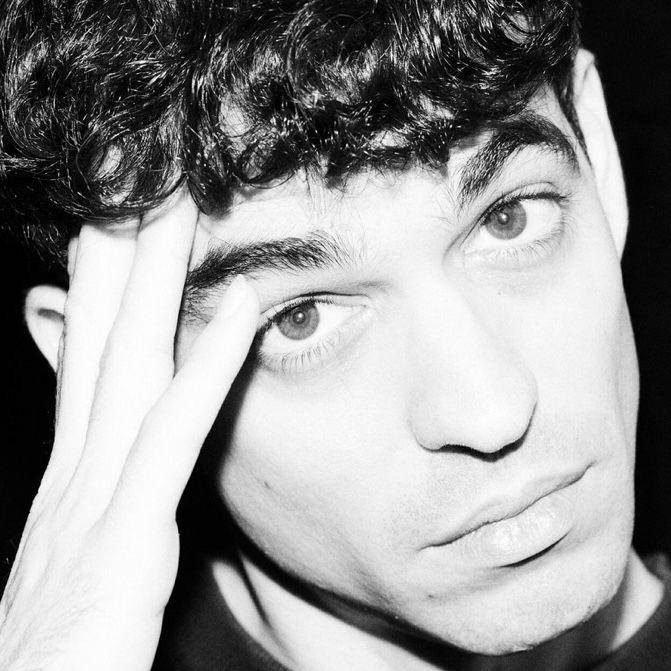
Name: Arnau Obiols
Nationality: Spanish
Occupation: DJ, producer, multi-instrumentalist
Current release: Arnau Obiols is part of the line-up for the new Family Affair Vol. 5 compilation on Razor-N-Tape, out now on vinyl. The album also includes contributions by Recloose ft. Hazmat Live, Mike Misiu, Medlar & Daisybelle, Mpharanyana, Saucy Lady, and Marina Trench.
Recommendation for Barcelona, Spain: Discos Paradiso which is a great record store.
Things I am passionate about but rarely get to talk about: I’m really passionate about cinema. I love how films can tell stories, create emotions, and transport you to different worlds. It’s something I enjoy deeply and I’m quite a freak about it.
[Read our Marina Trench interview]
[Read our Tesfa Williams interview]
If you enjoyed this Arnau Obiols interview and would like to stay up to date with his music, visit him on Instagram, Soundcloud, and bandcamp.
What were some of the musical experiences which planted a seed for your interest in electronic music?
I was really into psychedelic rock as a teenager. Once I discovered krautrock, I realized that many German bands like Cluster and early ’70s Kraftwerk were using electronic instruments. That opened up a whole new path for me.
I already liked soul and funk, and when I became a DJ, I found that beat-matching was much more fun. House and disco were perfect for it.
Most genres of music make use of electronic production means. What does the term “electronic music” mean today, would you say?
To me, electronic music is any music made using synthesizers and drum machines. Obviously, it’s a very broad category that actually includes many different genres.
My music is mainly electronic, but I like to record acoustic and electric instruments to give it a more organic and human feel.
Debates around electronic music tend to focus on technology. What, though, were some of the things you learned by talking to colleagues or through performing and/or recording with other musicians? What role does community play for your interest in production and getting better as a producer?
I started playing in bands at an early age, so for many years I was used to making music with other people. When I became a producer, I loved the freedom of creating on my own.
But it also feels very natural to make music with other musicians, so collaboration has always come easily to me. I love getting into the studio with friends, it’s very inspiring, as everyone has different ideas and ways of using DAWs. I’m still discovering new features in Ableton nowadays, even after 10 years of using it.
So yeah, I love being part of a community of producers. It’s very enriching and inspiring, and it also creates a healthy sense of competitiveness.
What are examples for artists, performances, and releases that really inspired you recently and possibly gave you the feeling of having experienced something fresh and new?
To be honest, I listen to new releases and discover artists constantly. However, I wouldn’t say I’ve been listening to anything particularly fresh or new.
Sometimes it feels like people have a strong fixation on creating a brand-new style or breaking boundaries, but I think honesty and quality are more important. I need the music to be good, not necessarily fresh or new.
What kind of musical/sonic materials, and ideas are particularly stimulating for your own work right now?
Mixing genres and blurring the boundaries between styles to make them my own is very important to me.
Where do most of your inspirations to create come from – rather from internal impulses or external ones? Which current social / political / ecological or other developments make you feel like you need to respond as an artist?
I guess both internal and external, other forms of art and life itself.
The current rise of racism, fascism, and homophobia, along with growing social inequality, makes me feel a strong need to respond as an artist. Art can create space for empathy, resistance, and solidarity, and I see it as a way to push back against exclusion while supporting openness, diversity, and collective care.
I believe that everything is political, art more than anything, and techno and house music even more, given the nature and history of their origins.
Tell me a bit about the sounds & creative directions, artists & communities, as well as the colleagues & creative hotspots of your current hometown, please. How do they influence your music?
I think the communities are a bit independent and isolated at the moment. There are many people doing great things, but often independently, and sometimes I miss a bit of unity and cooperation between them.
There are many great DJs, I’d highlight Gee Lane, Debora Kessler, Sonido Tupinamba, Julian Reca, Deckard, Pau Roca, Breixo Martínez, Zonzo.
Also Dante Lucero, who has recently released his debut EP as a producer, which I think is very promising.
Today, electronic music has an interesting relationship between honouring its roots and exploring the unknown. What does the balance between these two poles look like in your music?
I’m quite a nostalgic person, and my sound has a certain retrospective feel, but I don’t want to look only to the past.
I like to interpret the sounds of the ’70s, ’80s, and ’90s in my own way and bring them into the present, sometimes even in a futuristic direction.
What were some of the recent tools you bought, used, or saw/read about which changed your perspective about production, performing, and making music?
I recently bought the EP-80 from Teenage Engineering, which is a completely different way of working for me, since I’m very used to just plugging in synths and playing. This piece of gear really requires reading the manual, and it feels quite challenging.
It’s interesting how sometimes a certain instrument or element in the studio can shape your sound.
How do you see the role of sampling in electronic music today?
It’s more relevant than ever, and it’s certainly a great tool, even though I personally prefer to play the instruments myself and usually don’t use many samples.
What are some of the most recent innovations in sound design for you - and what are currently personal limits to realising the sounds you have in your mind?
Something that’s particularly exciting for me right now, from a creative perspective, is working mainly with VSTs and plugins.
For many years I focused on using only analog hardware, and I’ve realized that while the romanticism is lovely, working in the box is also great. You can work from anywhere, and I don’t believe it reduces the quality of my productions.
In as far as it is applicable to your work, how would you describe the interaction between your music and DJing/DJ culture and clubs?
For me, DJing and producing are two sides of the same coin. The club is like a lab, I get to test ideas in real time and feel how people respond to the music. That energy feeds back into my productions.
That’s something Prins Thomas once told me, he said he tested all this tracks on the dancefloor and found it very inspiring.
[Read our Prins Thomas interview]
How, would you say are your live performances and your recording projects connected at the moment? How do they mutually influence and feed off each other?
For me, the priority is the productions, and then I adapt them for live performance. I bring in some amazing musicians to give the set a more acoustic and electric vibe: Tomàs Fosch on keys, Miquel Mestres on guitar, Nala Rami on saxophone and flute and myself on percussion.
I try to offer something quite different when I play live, giving the music a more jazzy and dynamic approach
Even if AI will not entirely replace human composition, it looks set to have a significant impact on it. What does the terms composing/producing mean in the era of AI, do you feel?
I totally dislike AI, and I believe it will deteriorate creativity in the music field.
There are now software tools like Suno, a song generator that can pretty much make all the music for you. I think it’s an abomination, and I believe it will further harm the health of the industry.
I used to do a lot of music scoring for commercials, and I haven’t had a single job request in the past year, probably due to the rise of AI in music production.