

Name: Marina Trench
Nationality: French
Occupation: DJ, producer
Current release: Marina Trench is part of the line-up for the new Family Affair Vol. 5 compilation on Razor-N-Tape, out now on vinyl. The album also includes contributions by Recloose ft. Hazmat Live, Mike Misiu, Medlar & Daisybelle, Mpharanyana, Saucy Lady, and Arnau Obiols.
Recommendation for Saint-Ouen, France: Without a doubt, I recommend the Saint-Ouen flea market, in the city where I live. It’s an enormous antiques market where you can find a huge variety of second-hand records, across all genres. The atmosphere is really unique and enjoyable, with all kinds of objects to browse through. You can even stop by Café Jaune for a sesame latte, which makes the visit even more pleasant and welcoming.
Things I am passionate about but rarely get to talk about: It’s difficult to choose just one topic, as I’m passionate about many creative fields — art, architecture, and design all play an important role in my life.
But if I had to talk about something I rarely discuss, yet that is crucial to me both personally and professionally, it would be mental and physical health. I find it fascinating to understand just how complex we are as systems, where body and mind are intimately connected. The impact of the food we eat, stress, sleep, and our daily habits shapes not only our physical energy but also our mental clarity and creativity. Observing how our brain responds to our experiences, the choices we make, and the things we accumulate reveals just how much our mental and physical health is a continuous field of experimentation.
For me, this goes far beyond mere survival or well-being: understanding these dynamics directly influences how I work and create. It pushes me to be more attentive to my rhythms, my breaks, what I consume, and the practices that nourish my mind. It also transforms my approach to music-making: experimenting, composing, or performing becomes an act deeply connected to my balance, where every choice - sonic, structural, or emotional — is informed by my inner state.
Taking care of oneself thus becomes a vehicle for artistic exploration, and the awareness of this interaction between body, mind, and practice nourishes both my art and my daily life.
[Read our Tesfa Williams interview]
[Read our Arnau Obiols interview]
If you enjoyed this Marina Trench interview and would like to stay up to date with her music, visit her on Instagram, Soundcloud, Facebook, and bandcamp.
What were some of the musical experiences which planted a seed for your interest in electronic music?
Back in the days, two things were important for me as musical experiences.
When I was younger, I practised house dance and waacking with friends in some ‘underground’ places. I completely fell in love with these dance styles, and especially with the music that goes with them (house, afro, and disco)
The other important experience happened during my art studies: I created many projects in collaboration with electronic music. I was fascinated by the correlation between sound, form and emotion, as complementary materials. I think this influenced my way of listening and creating my own artistic universe a lot.
Most genres of music make use of electronic production means. What does the term “electronic music” mean today, would you say?
Today, the term “electronic music” seems to refer more to aesthetic and cultural codes than to the way music is produced. It is a constantly evolving notion, shaped by the trends of each decade and by its contexts of use.
In our time, I have the impression that it primarily refers to music that engages the body — music conceived for dance, movement, and physical experience into the space
Disco, house, techno, drum n bass, IDM and many other genres were about a lot more than just music. For you personally, is electronic music (still) a way of life – and if so, in which way?
Today, these electronic genres represent less of a comprehensive way of life than they once did.
Although niches and underground scenes still exist, bringing together communities, dedicated spaces, and strong systems of values, their impact is no longer comparable. They now function more as aesthetic languages than as genuine frameworks for living. Of course, they still carry the legacy of these past scenes, embedded in their codes, forms, and practices. But this heritage no longer structures ways of living with the same intensity as before.
This shift is also linked to new modes of connection, circulation, and dissemination, which fragment senses of belonging and redefine relationships to musical scenes.
Debates around electronic music tend to focus on technology. What, though, were some of the things you learned by talking to colleagues or through performing and/or recording with other musicians? What role does community play for your interest in production and getting better as a producer?
Through my own journey and the sharing of my practice with other peers, both as a producer and a DJ, I have come to realize that debates around technology are ultimately secondary. For me, technology and technical methods are all mediums - tools that serve as bridges toward creation.
By contrast, the question of sensibility and how it is interpreted is central. It allows us to move beyond a purely technical logic and to approach music as a space for dialogue, experimentation, transmission, and freedom. Each person, shaped by their personal history, references, and trajectories, develops a singular and sensitive way of approaching creation, along with their own artistic vision and creative desires.
Community is central to my interest in production and my desire to grow. The sharing of methods, doubts, and influences creates a form of collective learning that encourages attentive listening, self-questioning, and the development of an artistic identity.
Even when informal or fragmented, these communities give meaning to the practice and remind us that music production is, above all, about asserting a personal proposition and an artistic position.
What are examples for artists, performances, and releases that really inspired you recently and possibly gave you the feeling of having experienced something fresh and new?
During my tour in Asia in April 2025, I was invited by the Querico collective to perform at the iconic Womb club in Tokyo. It was a large-scale night bringing together many artists and a wide diversity of styles.
Womb is particularly interesting for the multiplicity of spaces it offers—four floors in total—allowing for different experiences to coexist within the same venue and the same night. I was deeply moved by a dual performance unfolding simultaneously: the live musical set by Kuniyuki Takahashi, which was deep, delicate, and poetic, accompanied in parallel by a live visual performance by Akiko Nakayama. We were immersed in an organic, colorful universe, where her moving paintings interacted with the music in real time.
Experiencing the live performance while being surrounded by Akiko’s visuals was both rare and spectacular. This immersive and sensory proposition touched me deeply through the sensitivity and precision of the collaboration between the two artists. It was a unique experience, unlike anything I had encountered before.
What kind of musical/sonic materials, and ideas are particularly stimulating for your own work right now?
I maintain an active listening practice toward all the music I hear, as well as the sounds that surround me.
I pay attention to grooves, harmonies, and the emotions a track evokes. This active listening never leaves me: whether at concerts, in clubs, or hearing music in a shop, a bar, or at home, it consciously and unconsciously informs my choices and stimulates my ideas.
Of course, digging for records in record shops or revisiting older albums - sometimes far removed from what I compose or play, such as classic French pop, psychedelic rock, lovers rock, or newer forms of rap—also greatly inspires me and deepens my relationship with music.
Where do most of your inspirations to create come from – rather from internal impulses or external ones? Which current social / political / ecological or other developments make you feel like you need to respond as an artist?
For me, creative inspiration is first and foremost an inner impulse.
I am often guided by intuition, a kind of sensitive compass that does not come from nowhere. I believe the unconscious continuously absorbs a multitude of information, emotions, and experiences, and that musical creation becomes an interesting space where these elements can surface, transform, and take shape.
This intuition is, of course, shaped by the context in which we live. The state of the world, social dynamics, climate crises, and an awareness of inequalities inevitably generate feelings of anxiety, sadness, or tension.
As an artist, my way of responding to this reality is not to represent it head-on, but rather to offer luminous, warm, and reassuring sonic spaces. Through music, I try to open moments of breathing, softness, and comfort - as a form of sensitive resistance to the harshness of the real.
Tell me a bit about the sounds & creative directions, artists & communities, as well as the colleagues & creative hotspots of your current hometown, please. How do they influence your music?
We are experiencing a particularly rich period of innovation, marked by a strong hybridization of practices and musical genres, whether on the side of artists, scenes, or venues.
Many women are finally gaining the visibility they deserve. I think, for example, of Tatyana Jane, who recently released an EP on the French label Ed Banger, becoming the first woman to join this iconic roster.
I also think of Soyoon, a remarkable DJ and producer, who brings a refreshing new energy to the scene. Her artists, combining rigor, talent, and inspiration, are contributing to a significant shift in the history of representation and references, opening up new imaginaries.
This dynamic is also reflected in the emergence of hybrid venues. Main d’Œuvres, in Saint-Ouen - a suburb on the outskirts of Paris - offers programming at the intersection of art and independent music.
In Paris, Essaim is a new space where you can hear artists like Jane Fitz, Octo Octa, and many others from international underground communities. And of course, the Rex Club remains true to its spirit of attentive, high-quality clubbing.
Today, electronic music has an interesting relationship between honouring its roots and exploring the unknown. What does the balance between these two poles look like in your music?
For me, it is essential to preserve this heritage. Electronic music has a history, codes, and aesthetics that have shaped generations of artists and audiences, and I believe it is important to respect and honor them.
I often try to combine some of these codes with my own sensibility, adding a personal touch that reflects my tastes, my emotions, and what moves me. My goal is not to spark a musical revolution or break with tradition, but rather to engage in a dialogue with it, to draw inspiration from it in order to create something that feels like me while remaining true to its roots.
Exploring the unknown also plays a role in my practice, but it mostly happens in private experimentation. I do not always present these experiments to the public, as I see them as steps of personal research and discovery that feed my musical language. Sometimes I keep only fragments, which I subtly reintroduce into my productions, like echoes of this intimate work.
This approach is closely tied to how I conceive my relationship with the audience: I want the music to be fully felt, to touch and move those who listen. Maintaining certain codes allows me to create common ground, a sense of familiarity that facilitates this transmission and resonance. In this way, my practice sits at the intersection of heritage, intuition, and experimentation: I strive to create music that reflects who I am and engages in a dialogue with its roots.
What were some of the recent tools you bought, used, or saw/read about which changed your perspective about production, performing, and making music?
The book Making Music: 74 Creative Strategies for Electronic Music Producers has been a real support for me. With humour and insight, it demystifies the creative process and offers a more nuanced approach to production, taking into account doubts, blockages, and failures.
Reading this book made me realize that these moments of uncertainty are not only normal but essential for nurturing creativity. The way the author describes them with kindness reassured me and helped me embrace them as natural stages of the creative process.
How do you see the role of sampling in electronic music today?
I see sampling as an essential foundation of electronic music, something that is difficult to do without today.
For me, a sample is raw material to be shaped, a malleable resource that can be reused endlessly. I understand sampling in a broad sense: it can be a very short fragment, a single word taken from a voice, or even a very simple element such as a kick or a rhythmic texture.
What interests me is the way a sound can be transformed, displaced, and reinterpreted depending on the context. A sample is never fixed; it comes alive through processing, intention, and the sensitivity of the person using it.
In my view, when sampling is not used as a form of appropriation or outright plagiarism, it is not a shortcut but a genuine compositional tool, a language in its own right.
How, would you say are your live performances and your recording projects connected at the moment? How do they mutually influence and feed off each other? In as far as it is applicable to your work, how would you describe the interaction between your music and DJing/DJ culture and clubs?
I see these elements as deeply intertwined and interconnected. Over time, I have become increasingly confident in asserting my artistic choices and positions.
For example, a track designed for the dancefloor needs to convey a certain sense of effectiveness, particularly through a mix that is suited to the energy and demands of the club environment. In this context, the club is also defined by collective listening and a shared physical experience, where music becomes a space of connection between the artist, the DJ, and the audience. By contrast, a more introspective piece can be approached in a more intimate way, with a less forward or less defined mix.
The choice of sounds and samples, the placement of the groove, and the way the sonic space is constructed all reveal my artistic intentions, which are always closely tied to the context and the intended setting of the track - whether that is the club, personal listening, or another environment.
Even if AI will not entirely replace human composition, it looks set to have a significant impact on it. What does the terms composing/producing mean in the era of AI, do you feel?
For me, “composing” and “producing” remain deeply tied to human investment, intuition, and personal sensitivity. Every choice — from the sample to the groove, from the sound to the structure — reflects a unique perspective and carries the artist’s imprint.
In the age of AI, this human dimension becomes even more valuable. I do not use AI for composing or producing, as authentic creation requires time, patience, and acceptance of imperfections. It is precisely these imperfections that open the way to experimentation and the emergence of singular music.
AI can speed up certain processes, but it cannot replace the living dialogue between intention, chance, and sensitivity that gives creation its richness.

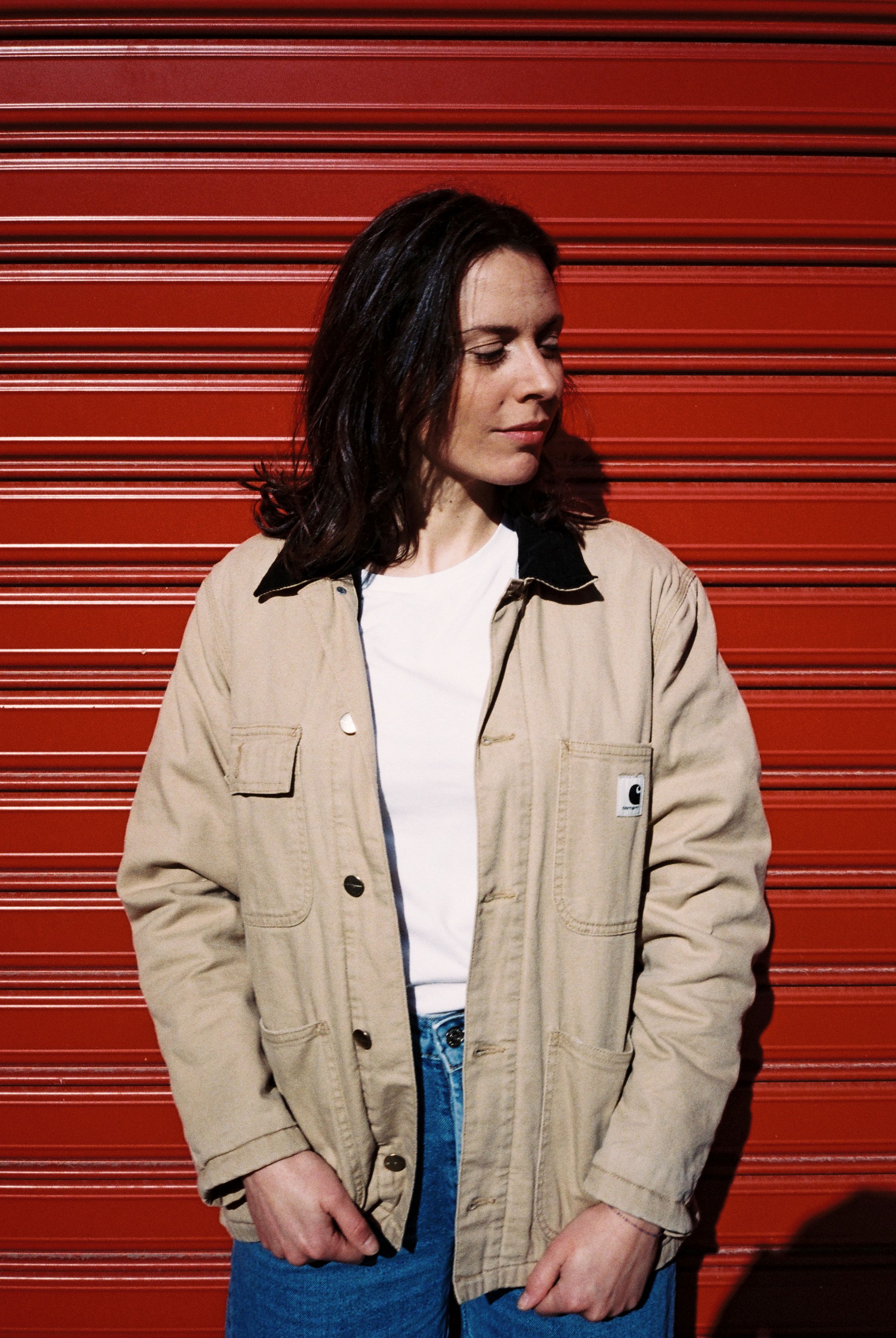 Marina Trench Interview Image (c) the artist
“Electronic genres represent less of a comprehensive way of life than they once did.”
Video
