Published
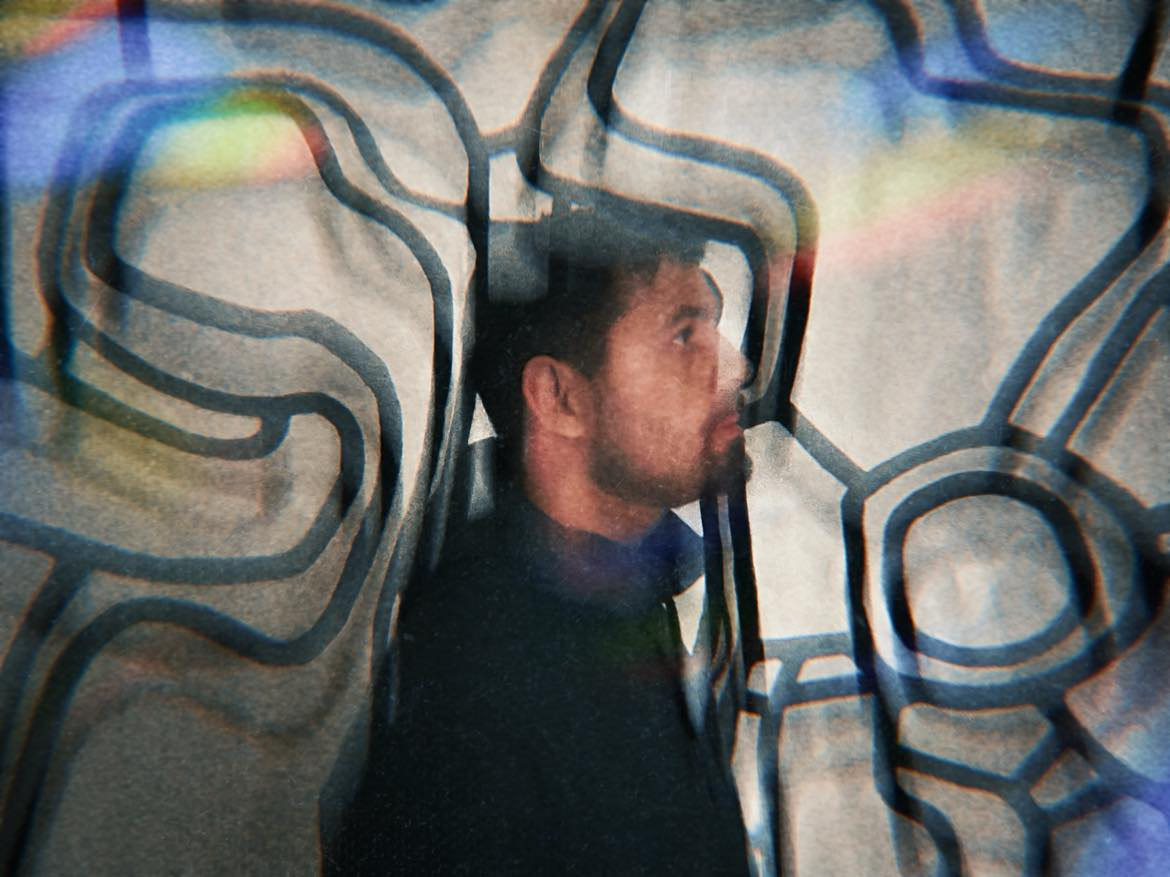
Name: Asta Hiroki
Nationality: British
Occupation: Producer, visual artist
Current release: Asta Hiroki's sophomore full-length album Continuation is slated for release in September of 2025 via Folded. Single "Understanding" is out now.
Shoutouts: There are a lot of talented folks pushing things forward right now in different ways. I’m enjoying corto.alto, Sam Gendel, Nala Sinephro, Okonski currently…
Also I have to shout out my two Most Least imprint jazz crews. Firstly, Ryan Wheless / space travelers union who are making some fantastic, expansive compositions over in Arizona. They have a new album out in October this year. Also Thierry LeMaitre of Biomania / Thierry LeMaitre Quartet - both these guys are riding that line of having a great melodic sense and sax chops while also exploring what’s possible with electronics, so for me it’s hitting the spot.
[Read our corto.alto interview]
[Read our interview with corto.alto about his 30/108 project]
[Read our Biomania interview]
[Read our review of Biomania's System D]
[Read our review of Okonski's Entrance Music]
If you enjoyed this Asta Hiroki interview and would like to stay up to date with his music, upcoming live dates and releases, visit his official homepage. He is also on Instagram, Soundcloud, Facebook, and bandcamp.
What were some of the musical experiences which planted a seed for your interest in jazz?
Listening to and buying records were the earliest kind of musical experiences I had. I always spent whatever money I had on records since I was probably around 5 or 6.
Tom Waits was a favourite in our house when I was growing up so his earlier records and ‘Nighthawks at the Diner’ were probably some of the more formative jazz material I heard on a regular basis.
After this entry point as an early teenager I discovered Charles Mingus via ‘Mingus Ah Um’ , followed by Thelonious Monk, and Charlie Parker and just never looked back.
What does the term jazz mean today, would you say?
I think the term ‘jazz’ is used so broadly nowadays that it can almost mean any music that features 7th chords or extended harmonies to most people.
To me its meaning is probably more about a primary focus on improvisation. But it’s a good question, I think everyone has their own understanding and definition for what it is!
As of today, what kind of materials, ideas, and technologies are particularly stimulating for you?
I spend a lot of time trying to find interesting ways to fuse ideas from electronica and jazz.
Combining the explorative and improvisational ideology of jazz within the vast palette of sounds and textures of electronic equipment are usually at the forefront of what I do.
I’ll use whatever materials seem right for the idea but these days I do have a tendency to use live played drums and some form of keys instrument, be it piano or synth when composing.
Where do most of your inspirations to create come from – rather from internal impulses or external ones? Which current social / political / ecological or other developments make you feel like you need to respond as an artist?
For me creative inspiration comes from both unknown and known sources. I like to keep my work conceptual and there is always a meaning and intention behind what I release.
My album ‘Entropy’ was generally inspired by taking a macro look at a host of topics and communicating what I was seeing through that lens.
The new record ‘Continuation’ certainly carries on with those ideas but also incorporates a bit more of the micro, human approach with inner thoughts and feelings. Thematically the idea of carrying on and continuing are present both metaphorically and literally within the musical ideas, lyrics, and titles.
I prefer not to tell people outright what the tracks are about, but typically leave hints or general ideas within them and around them for folks that might be interested.
Tell me a bit about the sounds & creative directions, artists & communities, as well as the colleagues & creative hotspots of your current hometown, please. How do they influence your music?
Well I just moved to Paris last year so I’m still getting to know these myself to be honest.
One thing I’ve noted and admire about France is the willingness to support cultural activities including music, from grassroots up to government level. Coming from the UK it seems like the music venues are more valued here and there are more of them. Some of my favourites so far have been Le Hasard Ludique (an old railway station turned into gig venue), Point Éphémère (a riverside arts venue) and Supersonic (many high quality free gigs).
I’m not sure yet how Paris influences my music as I have been mainly mixing rather than composing since moving but I am interested to find out in the future!
What role do electronic tools and instruments play for your creative process?
I often compose on an 88 key MIDI keyboard to give me the flexibility for performance of a full piano range and allow me the ability to adjust sounds after the fact.
I will usually record at least some live instruments on most tracks but electronic tools are imperative to my workflow. The flexibility and options that come with electronic composition is unique so I embrace that and the creative power it provides.
Thanks to technological advances, collaboration has become a lot easier. What have been some of the most fruitful collaborations for you recently and what approaches to and modes of collaboration currently seem best to you?
I have to take the opportunity to show gratitude to all the folks on the forthcoming album here …
Moving between Cyprus, UK and France during the production and recording of the forthcoming record meant that some of my collaborations were remote this time around. Which might seem odd for an album with heavy jazz influences but it somehow worked.
Many parts were recorded live in various studios which is great to bounce off each other but we did remote recording with okcandice on vocals for ‘Light Rain’, Stephen Patota (Beth Orton, Madeline Kenney) on a few bass parts across the album, Teis Ortved and Thierry LeMaitre on saxophone, Robbie Hookins and Thomas Buckley on drums.
The calibre of musician and person who ‘gets’ the project tends to be more important than the method of collaboration as they can make it work whatever the method.
Jazz has always had an interesting relationship between honouring its roots and exploring the unknown. What does the balance between these two poles look like in your music?
‘Exploring the unknown’ is more likely the area I’d be situated as there’s as much electronica, psychedelia, ambient, and soul influences as there are jazz in my work.
I respect and love the roots of jazz, but I’m not strictly a ‘jazz artist’. The music I’m making is whatever it is from track to track and I don’t consider genre much when creating as it would hold me back from getting the ideas out as intended.
Playing around and not adhering to formats or genres is how jazz originated so perhaps I honour the spirit of it in that way.
How much potential for something “new” is there still in jazz? What could this “new” look like?
I think there’s always potential and room for ‘new’ everywhere in art. What that looks like is open to interpretation I guess.
The way things are going with technology I can see AI and learning models being able to be a part of jazz in the not-so-distant future. How big a part I don’t know, but it seems inevitable it will play a bigger role in music and many other life aspects with the rate it is developing.
What, would you say, are the key ideas behind your approach to improvisation?
I like to have some kind of a theme in mind when composing so typically any kind of improvisation has some kind of concept behind it. That can vary greatly from: expansion on a motif, specific modes to work with, or just something that captures a feeling or an idea in a piece.
Starting out with a basic idea like this, whether it’s musical or not, for me helps guide the improvisation rather than just noodling about without a particular focus.
The Montreux Festival intends to preserve its archive of recordings for future generations. Do you personally feels it's important that everything should remain available forever - or is there something to be said for letting beautiful moments pass and linger in the memories of those that experienced them?
I think it’s important some things are available forever and equally important others are not.
Some of my favourite live musical moments remain only in memories. To spend time trying to document everything would undoubtedly result in capturing a lot of interesting stuff, but sometimes misses out or perhaps re-contextualises that feeling of being in the moment which is arguably the best thing that music has to offer.
As with anything - balance is key in my opinion.