Published
Name: Ayumi Ishito
Nationality: Japanese
Occupation: Saxophonist, composer, improviser
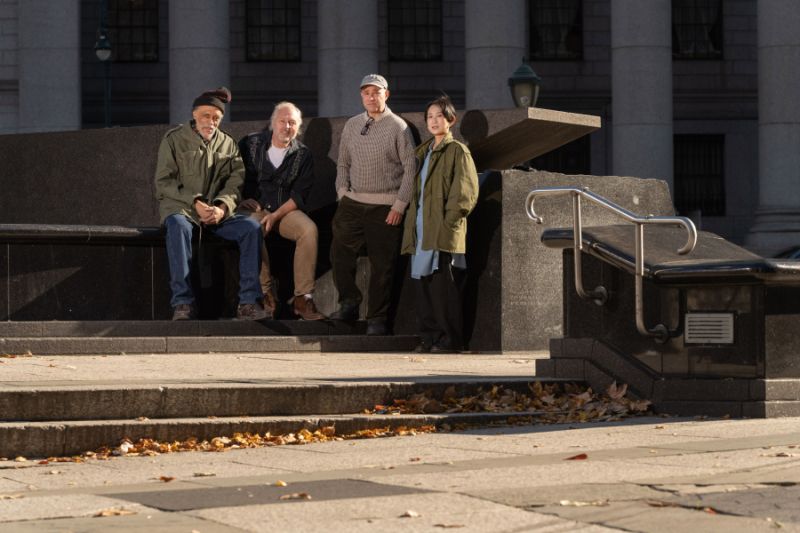
Current Release: Ayumi Ishito teams up with Daniel Carter, George Draguns and Ed Wilcox as Makeshift Spirituals. The band's eponymous album is out now via 577. Out Beyond Orbit, her release with Flying Sutra, is slated for publication July 25th 2025, also on 577.
Topic that I am passionate about but rarely get to talk about: Pandas
[Read our George Draguns interview]
If you enjoyed this Ayumi Ishito interview and would like to know more about her music and upcoming tour dates, visit her official website. She is also on Instagram, and Facebook.
For a deeper dive, read our earlier Ayumi Ishito interview.
What were some of the musical experiences which planted a seed for your interest in jazz?
In the 90s, while I was in high school, I was really into ska and ska-punk, which were quite popular in Japan at the time.
One day, I came across an article about The Skatalites. It mentioned that they had two tenor sax players, Roland Alphonso and Tommy McCook. The article compared Roland Alphonso to Lester Young and Tommy McCook to John Coltrane. That’s how I first learned about jazz.
What does the term jazz mean today, would you say?
Swing.
As of today, what kind of materials, ideas, and technologies are particularly stimulating for you?
Lately, I've been getting into the automatic playing options in Logic Pro and other devices. It's pretty cool how it can come up with unexpected stuff that can be kind of cute.
I'm thinking about some fun experimental projects I can try out with automatic playing.
Where do most of your inspirations to create come from – rather from internal impulses or external ones? Which current social / political / ecological or other developments make you feel like you need to respond as an artist?
My creative inspiration comes from my inner urges, my daily life, and the performances of musicians around me.
I am fortunate to be in an environment where I can play and discuss music almost every day. This allows me to draw inspiration from their performances and the artists they recommend. Rather than seeking inspiration from distant sources, I prefer to find it in the things that are closest to me, as I believe this approach is more organic.
I view music as something inherently unrealistic, so I do not intentionally reflect political or social issues in my own work.
Tell me a bit about the sounds & creative directions, artists & communities, as well as the colleagues & creative hotspots of your current hometown, please. How do they influence your music?
As I mentioned earlier, I am influenced daily by the talented musicians around me.
Fortunately, I also have the opportunity to play in rock and pop bands in addition to jazz, and it is always refreshing to collaborate with people from different backgrounds. While I haven't thoroughly analyzed how they influence my music, I believe the most important aspect is to enjoy the moment while playing.
To share a bit about my musical journey, I started performing in Japan three years ago, which has allowed me to play alongside many Japanese musicians. During this time, I realized how much my music has been influenced by American styles.
However, I was also able to easily adapt to the wabi-sabi aesthetic in the performances of the musicians I collaborated with in Japan. This isn’t surprising, as I lived there until I was 24 years old. I would like to explore the Japanese improvisation scene more deeply.
What role do electronic tools and instruments play for your creative process?
Using effect pedals has enabled me to create sounds and textures that I cannot produce with the saxophone alone, thereby expanding my expressive range.
However, I also admire those who can use extended techniques to achieve a wide variety of sounds using only the saxophone.
Thanks to technological advances, collaboration has become a lot easier. What have been some of the most fruitful collaborations for you recently and what approaches to and modes of collaboration currently seem best to you?
Technology is cool and all, but I’m more of an old school person. I want to meet the people I’m playing with face to face and spend some real time together.
It’s important for me to get to know them as people, not just connect through music. That way, I can play with trust and feel relaxed, which is very important for my mindset when playing.
Jazz has always had an interesting relationship between honouring its roots and exploring the unknown. What does the balance between these two poles look like in your music?
I've never thought of incorporating something as ambitious as exploring the future of jazz into my music. I try to incorporate musical elements that I'm into at the time, but I think it naturally becomes jazz because I and many of my band members have a strong jazz background.
I think it's very interesting to see it come out organically from various directions, and I don't force it or deny it.
How much potential for something “new” is there still in jazz? What could this “new” look like?
Again, I’m old school, so I'm not very familiar with the latest jazz music.
For many artists, life-changing musical experiences take place live. How do you see that yourself?
I agree. The sound of live instruments is completely different from a recording, and experiencing the vibrations of a live performance has a hundreds of times greater impact than experiencing it through a recording.
If I could see Coltrane live I would be so excited I would faint.
How, would you say are your live performances and your recording projects connected at the moment? How do they mutually influence and feed off each other?
I think a recording is like an album that captures the past, whereas performing live is something completely different because it's just for that moment.
What, would you say, are the key ideas behind your approach to improvisation?
It's important to listen carefully to your surroundings and express the sounds you hear inside you as honestly as possible.
The Montreux Festival intends to preserve its archive of recordings for future generations. Do you personally feels it's important that everything should remain available forever - or is there something to be said for letting beautiful moments pass and linger in the memories of those that experienced them?
I think that's a very good thing, because art is usually more appreciated when it's no longer available to the general public.