Published
Name: Bänz Oester
Nationality: Swiss
Occupation: Bassist, composer, improviser
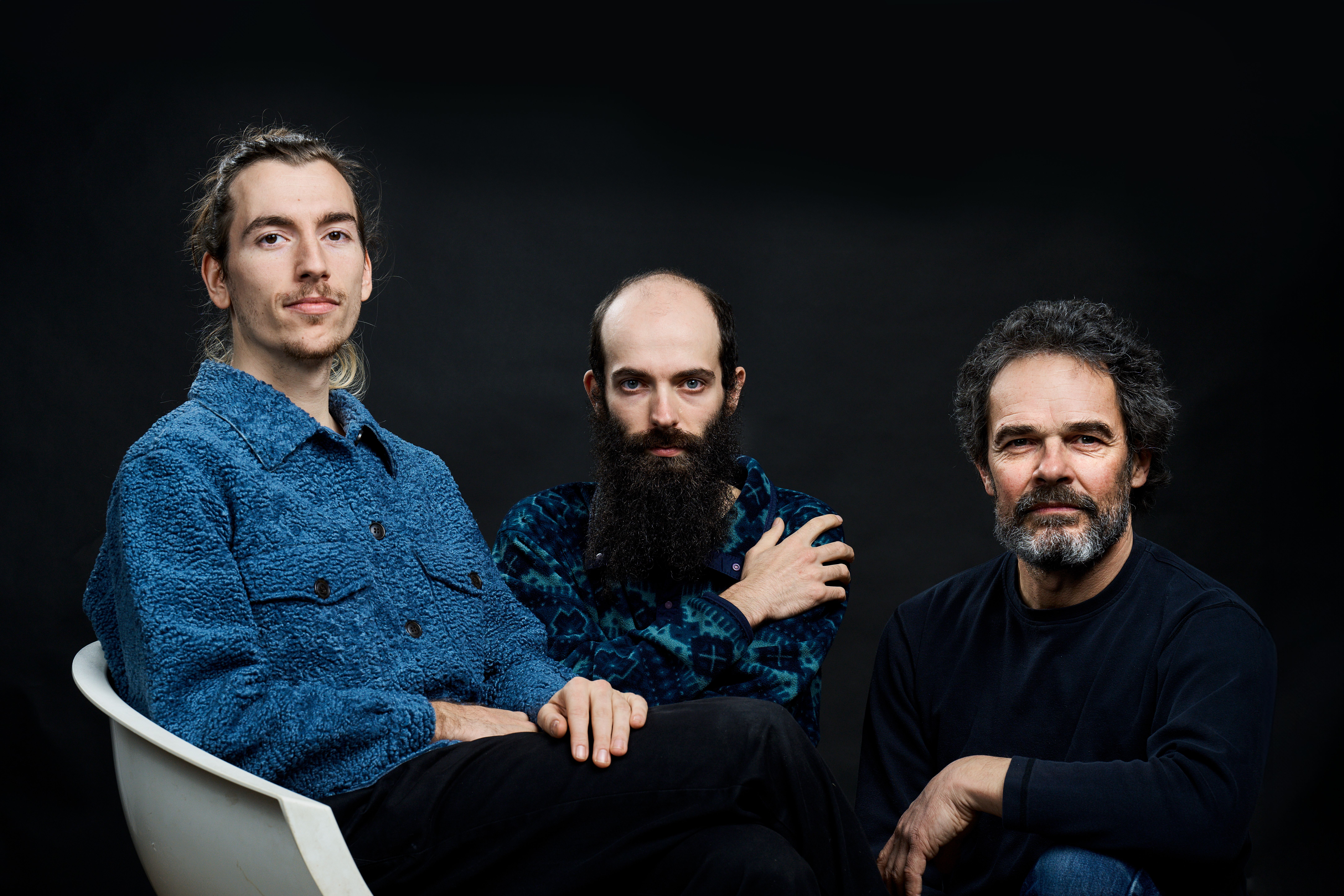
Current Release: Bänz Oester teams up with Alvin Schwaar, and Noé Franklé for their new trio album Playground, out September 6th 2024 via Unit.
Recommendations: I don’t expect other people to be touched the same way by the same things. The world is big, everybody finds their own inspirations.
[Read our Alvin Schwaar interview]
[Read our Noé Franklé interview]
If you enjoyed this Bänz Oester interview and would like to know more about his work and music, visit his official website.
Over the course of his career, Bänz Oester has played with a wide range of artists, including Gerald Cleaver, Samuel Rohrer, Erik Truffaz, and Nils-Petter Molvaer.
[Read our Samuel Rohrer interview]
[Read our Erik Truffaz interview]
[Read our Gerald Cleaver interview]
[Read our Gerald Cleaver interview about Griots, Ghost Orbits and Modular Synthesis]
[Read our Nils-Petter Molvaer interview]
[Read our Nils-Petter Molvaer interview about Certainty of Tides and Orchestral Meditations]
Do you think that some of your earliest musical experiences planted a seed for your interest in improvisation?
Totally! As a small kid I was playing around on a harmonica and on a 4-string plastic guitar, and I had a small planet on these.
When did you first consciously start getting interested in musical improvisation? Which artists, teachers, albums or performances involving prominent use of improvisation captured your imagination in the beginning?
Age 9 I heard an Erroll Garner record and I knew this is it!
Tell me about your instrument and/or tools, please. What made you seek it out, what makes it “your” instrument, and what are some of the nost important aspects of playing it?
Like many other bass players, I first played something else, guitar. In my village we were 4 friends, and all of them played guitar!
So I started playing bass age 11. I never regretted that choice, as my main fascination for music is the zones you can reach when playing together that you can never reach alone, and bass is an archetypical “team player” instrument.
How would you describe your own relationship with your instrument – is it an extension of your self/body, a partner and companion, a creative catalyst, a challenge to be overcome, something else entirely?
Yes, kind of a body extension to speak music.
Derek Bailey defined improvising as the search for material which is endlessly transformable. What kind of materials have turned to be particularly transformable and stimulating for you?
Any piece of music that touches me will tempt me to integrate it in my musical and improvisational language.
When you're improvising, does it actually feel like you're inventing something on the spot – or are you inventively re-arranging patterns from preparations, practise or previous performances? What balance is there between forgetting and remembering in your work?
My desire is to play the present moment as much as I can. Of course my memory, experience and even my body memory always influence my playing, but I always try to play “what I hear” and not “what I know”.
This is difficult to achieve and an important part of my path of developing.
In terms of your personal expression and the experience of performance, how does playing solo compare to group improvisations?
Playing solo performances is for me very different from playing in groups.
In groups I am guided and inspired by what I hear from the other players, when playing alone I try to find inspiration and energy from inside.
In your best improvisations, do you feel a strong sense of personal presence or do you (or your ego) “disappear”?
I love to be completely in the flow of the collective energy with the other players and the audience, and go beyond my ego.
In a live situation, decisions between creatives often work without words. From your experience and current projects, what does this process feel like and how does it work?
It feels great when it works! The telepathic guidance of a band is a mysterious piece of magic.
I have no recipes how to get there. It depends a lot on the involved persons, the common wish to experience this is important.
Stewart Copeland said: “Listening is where the cool stuff comes from. And that listening thing, magically, turns all of your chops into gold.” What do you listen for?
The whole music!
There can be surprising moments during improvisations – from one of the performers not playing a single note to another shaking up a quiet section with an outburst of noise. Have you been part of similar situations and how did they impact the performance from your point of view?
Surprises are always welcome! One of the very inspiring ingredients of interactive music.
I have always been fascinated by the many facets of improvisation but sometimes found it hard to follow them as a listener. Do you have some recommendations for “how to listen” in this regard?
If music needs a user manual to be understood, then to me something is missing. All the listener needs is to open the ears and the heart to hopefully enjoy the music.
In a way, improvisations remind us of the transitory nature of life. When an improvisation ends, is it really gone, just like a cup of coffee? Or does it live on in some form?
It’s a sacred moment, and then it’s gone.
I do have some memories of very intense musical moments from way back.