Published
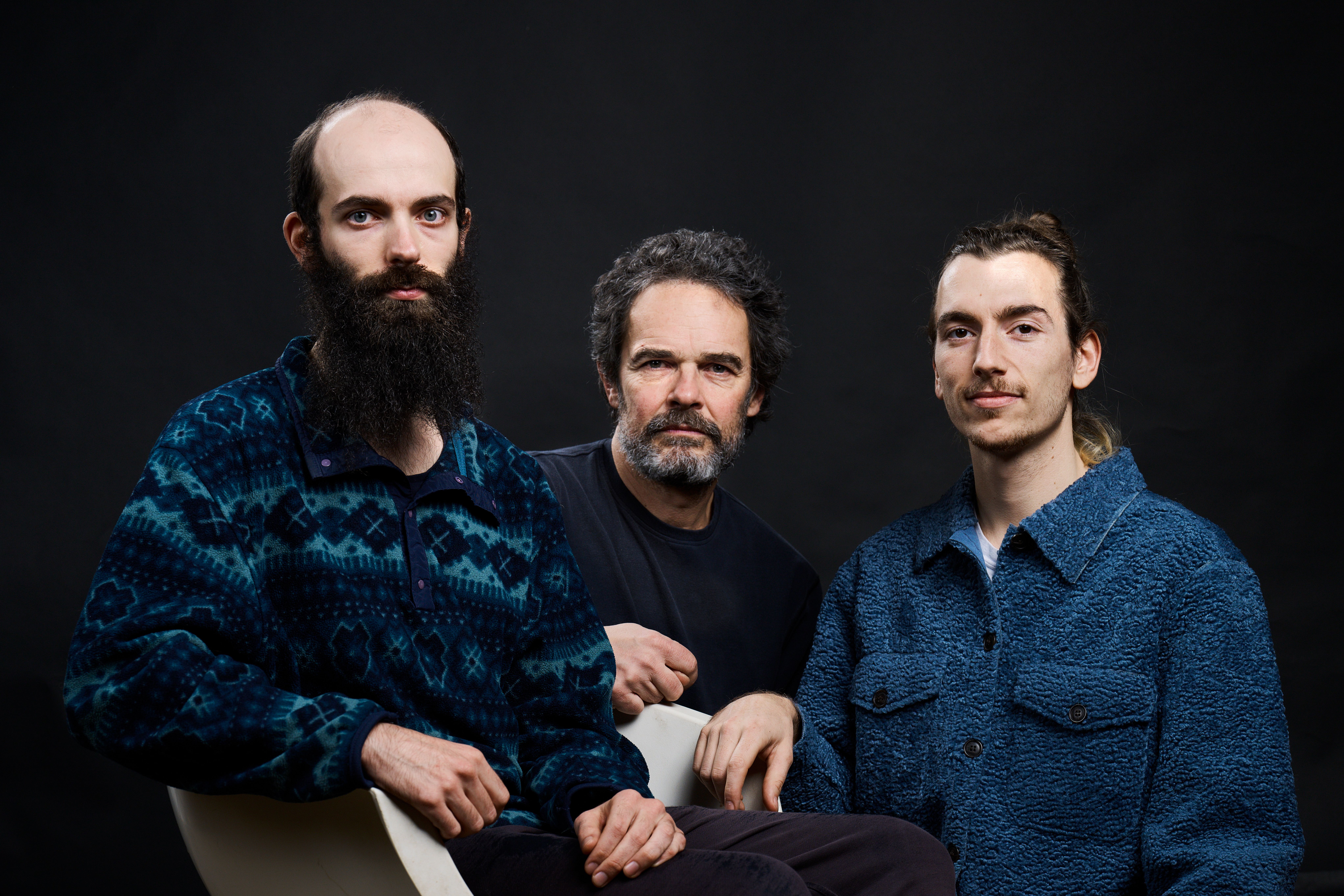
Name: Noé Franklé
Nationality: Swiss
Occupation: Music-producer, sound-engineer, multi-instrumentalist
Current release: Noé Franklé teams up with Alvin Schwaar, and Bänz Oester for their new trio album Playground, out September 6th 2024 via Unit.
Recommendations: I love the soundtrack to the movie Monster. The movie is by Hirokazu Kore-eda and the music by Ryuichi Sakamoto. Loved the movie too.
I had the pleasure to record and mix Michael Cina’s projet “Fish’n’Ships”. They released a music video made with AI and it’s really fun. They used it to recreate species of fishes that are extinct.
[Read our Bänz Oester interview]
[Read our Alvin Schwaar interview]
If you enjoyed this Noé Franklé interview and would like to know more about his music, visit his official homepage. He is also on Instagram, and Facebook.
For the thoughts of one of his collaborators, read our Gina Été interview.
Tell me about one or two of your early pieces that you're still proud of (or satisfied with) in terms of production – and why you're content with them.
I sometimes listen to the first album we did with Alvin and Bänz (“Travelin’ Light), and I’m very happy with it.
I hear quite some things I would do differently now but I think this recording has a freshness to it. Its “live” approach really fits what we are doing musically.
Do you keep up with recent developments in terms of gear and software? If not, why not? If so, what are you looking for?
No I don’t. I like technology, I can be quite geeky about any kind of stuff, but I try not to get tricked by brands trying to sell stuff when I see new developments in gear and software.
At the moment I’m reading La Convivialité by Ivan Illich. He gives a great analysis on how at some point tools become dangerous and make you loose your autonomy as a creative person. I want tools that generate efficiency and improve my capabilities without destroying my autonomy and my capacity to creatively shape my work as I wish.
For example I love the idea of integrating AI in music software, but not when developers use it to implement an automatic mastering processing or something stupid like this … I don’t want a software to tell me how to EQ my kick or how loud I should make my track.
How and for what reasons has your music set-up evolved over the years and what are currently some of the most important pieces of gear and software for you?
My mixing setup is quite simple. A computer, couple of software and plugins, speakers, couple of headphones. Sometimes I use a couple outboards, only for some effect processing that I directly print back in the computer -for example a reverb.
When recording it depends. I usually book studios with gear and rooms that will fit the music, and the backline that the musicians want. I also have a portable setup, which consist of a 16 track recording system and it’s with this one that we recorded Playground.
Jean-Michel Jarre maintained that, despite the advances in virtual technology, we are still "analogue animals made out of blood and bones who need buttons and knobs to touch.” In how far is this statement true or false for your own music?
I don’t like statements like this one. It’s just a bold try to make himself feel superior by making up a pseudo natural law about making music that fits him.
We need analog devices with knobs? But then, what about singers? They don’t have knobs and buttons to touch when making music. Their relation to music is way more abstract and virtual than anyone that works with virtual synths for example … And what about musicians that do live coding with Supercollider?
Humans are always trying to find something to justify that what they do is better than what the others are doing and JMJ gives us here a good example.
What are examples of production tools/instruments that you bought for a specific purpose?
U47 fet for kick.
Late producer SOPHIE said: “You have the possibility with electronic music to generate any texture, and any sound. So why would any musician want to limit themselves?” What's your take on that?
Giving yourself limitations is a great way to be creative. It pushes you to dig deeper into things and forces you to use your creativity to find solutions. And anyway, we are always limited by something.
We can’t generate every sound, otherwise we would have a great grand piano vst, which we don’t! And then when you record an instrument, every recording is different, it depends on so many factors: the instrument, recording system, processing, the room and most of all the musician. All these things are limitations and they are the identity of the sound you’re getting. You can’t re-create them, it’s a one time thing.
Then we are clearly limited by ourselves. We have a certain culture, certain ears, ideas about what is good or bad … Those are some pretty heavy limitations there.
I think that it’s again one of those big superficial sentences that don’t mean much except self-acknowledging yourself over other people’s creative process.
From the earliest sketches to the finished piece, tell me about the production process for your current release, please.
We have been meeting regularly with Alvin and Bänz for a couple of years now. We improvise, play some tunes in a very free way. Before recording this album Alvin and Bänz brought some compositions that we integrated in our way to improvise around tunes. We then recorded those tunes and couple more.
We did it in two days, in a big attic in Bern where I brought my mobile recording system. I mixed the whole thing, send it to mastering. We then asked UNIT to release it and here we are.
What does your own way of working with sound look like? Do you find using presets lazy?
Not at all. I sometimes use presets as starting points. I never use session templates though. Presets are very practical and also they teach you about your gear. A preset is just a certain way to use a tool. When recording or mixing I try to quickly get familiar with the music, to understand what the artist wants.
When mixing I’ll usually do first a balance between instruments, check the phases, maybe add a couple eq and effects if I need them to get a big idea of the sound. Doing this I can find out what else needs to be done. Then I’ll go in more details to shape the sounds and make automations.
But it depends on the style of music, the session, the sounds and how I feel like it should be done that day. For example, if I’m not inspired by the usual approach, I sometimes like to use the “burning-bignou” technique. I’ll find which musician was burning the most, playing the coolest shit. I’ll start with her/his instrument and build the rest around that.
That doesn’t mean this instrument will be up front, I will still make a mix for a global sound. But the mix will be differently organized than if I would have started by doing a global balance.
Richie Hawtin, speaking about semi-modular equipment, has stated that a deeper understanding of sound synthesis can lead to “life lessons that go beyond what we can hear.” Can you relate to that statement?
Yes and No. It depends what life lessons he means. Anytime you get a deeper understanding of something it can lead to life lessons.
But we are so easily fooled. It can also lead to make generalities and be completely wrong. Oh my god the number of people I hear, that think they had a revelation about something and they draw a parallel between something very particular in music to something more global in society and it’s just terribly wrong.
But in that case, I think Richie Hawtin meant the problem-solving mentality that you need when working with modular equipment. I think this kind of work improves your understanding how a system works in itself and interacts with other systems. Maybe he found out he could apply this process for some other things in his life, I don’t know …
What were some of your most positive collaboration experiences? How did this "human element" enhance your solo approach? Did you record via filesharing or in the same room and if so, what did the recording process look like?
I think this trio is one of the most simple and direct experience of music I had. It’s just about playing together, free of constraints, being there to support the others in their ideas while still having an open space to use your creativity.
It’s never about trying to “nail” something, or to not make any mistakes. It’s just pure joy of sharing a space together.
We were all in the same room while recording. No overdubs, almost no edits.
Have you used AI or generative music tools for your own productions? If so, in which way and what did they add?
No.
To some, the advent of AI and 'intelligent' composing tools offers potential for machines to contribute to the creative process. What are your hopes, fears, expectations and possible concrete plans in this regard?
I don’t have any special expectations about AI. I think that as usual it could be great but it will mostly be used in very stupid ways. There I’m not even talking about the music output but more on a global scale.
I love the idea of using technology to free me from tasks that I don’t want to have to do or when I wish my human capabilities could use some more efficiency. But in the end it creates more tasks that I don’t want to do, while destroying the planet, making people dumb and make them work as much as they were without AI.
This whole thing is rigged!